
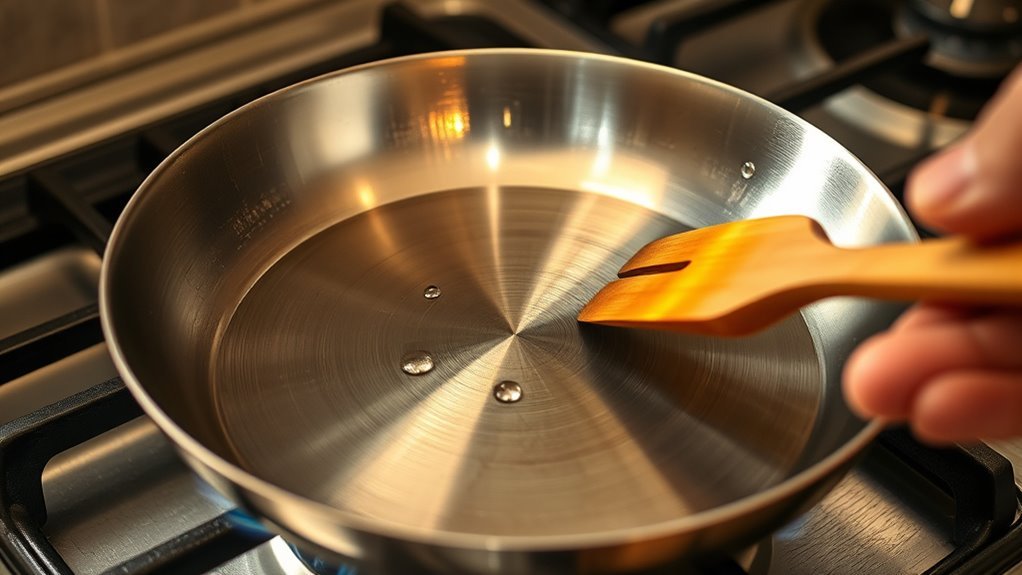
The clearest signs of a stainless steel pan too hot to cook in are oil that smokes the moment it hits the surface, water droplets that shatter into tiny beads and dart around, and food that blackens outside while staying raw inside. If you see any of these, take the pan off the heat for 30 to 60 seconds and let it settle before you continue.
This guide covers the signs, what to do right away, and how to prevent it. For the opposite problem, a pan that is not hot enough yet, see when a stainless steel pan is ready.
How to Know If a Stainless Steel Pan Is Too Hot: 6 Signs
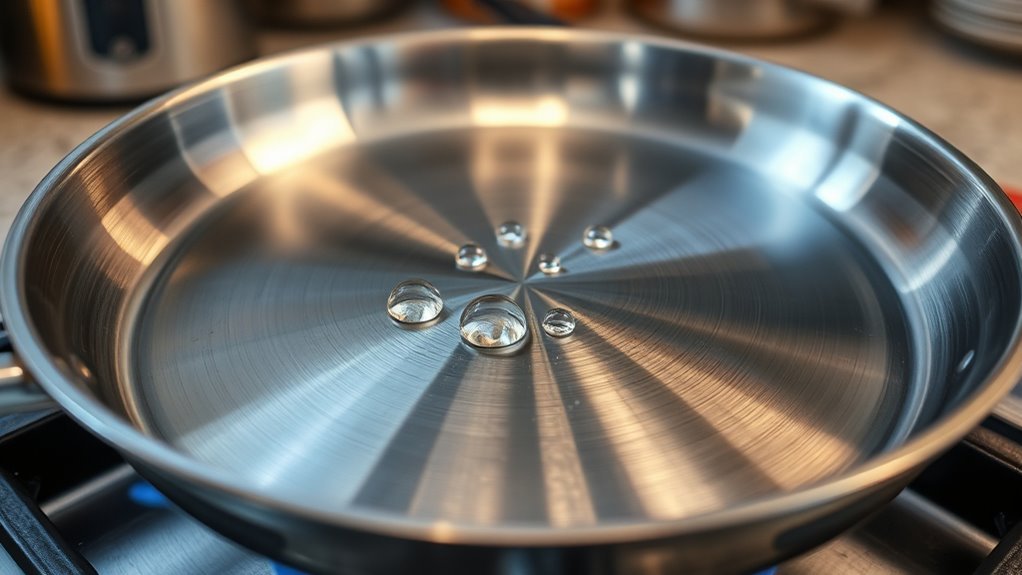
- Oil smokes right away. A thin wisp is a warning. Steady smoke means the oil is past its smoke point and starting to break down.
- Water breaks into many tiny beads. At the right temperature, one drop forms a single ball that glides. A much hotter pan splits it into small beads that race around or vanish almost instantly.
- Oil looks hazy or thick. Oil that goes from shimmering to dark, hazy or sticky is burning.
- Food scorches fast. Garlic, spices and onions turn bitter and dark within seconds.
- The fond turns black. The brown bits on the pan should be golden to deep brown. Black, acrid bits will taste burnt.
- The pan or handle is uncomfortably hot. Handles on stainless pans can heat up too, so use a dry pot holder.
Water Test: Ready vs Too Hot
| Pan condition | What water does | Next step |
|---|---|---|
| Not hot enough | Sizzles and evaporates in seconds | Keep heating |
| Ready | Forms one ball that glides | Add oil and food |
| Too hot | Splits into many tiny, fast beads | Remove from heat, cool briefly |
The water test relies on the Leidenfrost point of water, which is roughly 380°F (193°C). Treat the “too hot” reading as a clue rather than an exact measurement. Smoking oil is a more reliable alarm.
Oil Smoke Points: When Oil Is Too Hot for the Pan
Each fat starts to smoke at a different temperature. These are approximate ranges, and they vary by brand and how refined the oil is.
| Fat | Approximate smoke point | Good for |
|---|---|---|
| Butter | About 300 to 350°F | Low to medium heat, finishing |
| Extra-virgin olive oil | About 350 to 410°F | Medium heat sautéing |
| Refined canola oil | About 400°F | General searing |
| Refined avocado oil | About 500°F | High-heat searing |
If your oil is smoking, your pan is hotter than that oil can handle. Switch to a higher smoke point oil or lower the heat.
What to Do If Your Stainless Steel Pan Is Too Hot
- Remove the pan from the burner and turn the heat down. On induction, lower the power level.
- Turn on the vent fan and open a window if there is smoke.
- Do not add water or put the pan in the sink. Water hitting very hot oil can spatter, and sudden cooling can warp the pan.
- Let the pan cool for 30 to 60 seconds. If the oil is blackened or acrid, carefully discard it once cool, wipe the pan, and start again with fresh oil.
- If food is already in the pan, move it off the heat and keep it moving until the pan settles. Burnt garlic or spices cannot be saved.
If oil in the pan ever catches fire, turn off the heat and slide a lid over it. Do not use water.
Can an Overheated Stainless Steel Pan Be Damaged?
Stainless steel is tough, but extreme heat can still leave marks.
- Rainbow or blue-gold tint: harmless discoloration from heat. Wipe it with white vinegar or a non-abrasive stainless cleanser such as Bar Keepers Friend.
- Warping: thin pans on high heat, or a hot pan hit with cold water, can bow and spin on the burner.
- Burnt-on residue: boil water with a spoonful of baking soda in the pan, then scrub gently with a nylon pad.
Cookware makers list oven limits for their lines. All-Clad’s stainless pans are rated to 600°F, with discoloration possible after prolonged exposure above 500°F. Other brands and lids, especially glass lids and plastic handles, have different limits, so check your manufacturer’s rating.
How to Avoid Overheating a Stainless Steel Pan
- Preheat on medium rather than high, and use the water test to confirm.
- Turn the heat down once the pan is ready, especially on powerful gas or induction burners.
- Never leave an empty pan on a hot burner.
- Use an oil with a smoke point above your cooking temperature.
- Match the pan size to the burner so the heat does not climb the sides.
- Choose a fully clad pan with an aluminum or copper layer, which spreads heat more evenly and reduces hot spots. Our guide to which ply of stainless steel cookware is best explains the options.
Frequently Asked Questions
How do I know if my stainless steel pan is too hot?
Look for oil smoking immediately, water splitting into many tiny fast beads, and food scorching within seconds. Remove the pan from the heat for 30 to 60 seconds, lower the burner setting, and use fresh oil if the first batch darkened.
Is it bad to heat a stainless steel pan on high?
Occasionally using high heat for boiling is fine, but preheating empty on high can scorch the pan, burn oil and warp thinner cookware. All-Clad advises preheating stainless on low to moderate heat. Medium heat usually sears well.
Why is my stainless steel pan turning rainbow colors?
Rainbow or blue-gold discoloration is heat tint. It is usually harmless and does not affect cooking. Wipe it off with white vinegar or a non-abrasive stainless cleanser, then rinse and dry.
What temperature is too hot for stainless steel cookware?
The metal itself tolerates very high heat, and some brands rate stainless pans to around 600°F in the oven. The practical limit is your oil, handles and lid. Check your cookware maker’s rating, and stop if oil smokes heavily.
Conclusion
A stainless steel pan that smokes oil, shatters water into tiny beads or scorches food is too hot. Take it off the heat, let it settle, and restart with medium heat and fresh oil.
Related guides: when is a stainless steel pan ready, is stainless steel hard to cook with, and can stainless steel go in the dishwasher.
