
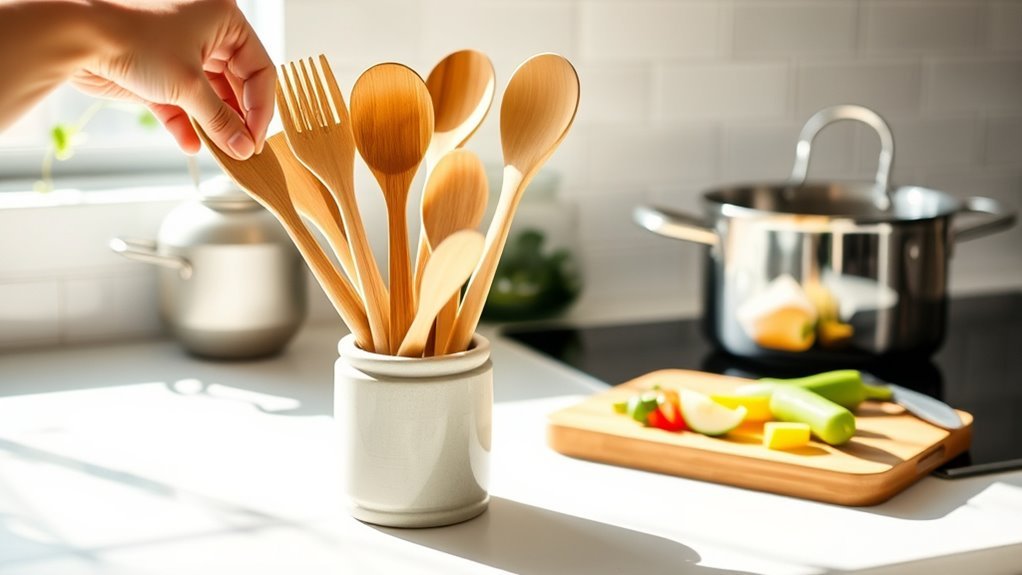
When considering kitchen safety, material choice, and hygiene, bamboo cooking utensils stand out. Their natural antimicrobial properties, combined with their durability, make them a compelling option. However, not all bamboo utensils are created equal, and understanding how to select and care for them is essential. Are you aware of the best practices for maintaining their integrity and safety? Let’s explore what you need to know about bamboo utensils before you make your next purchase.
Why Bamboo Is a Safe Choice for Cooking Utensils
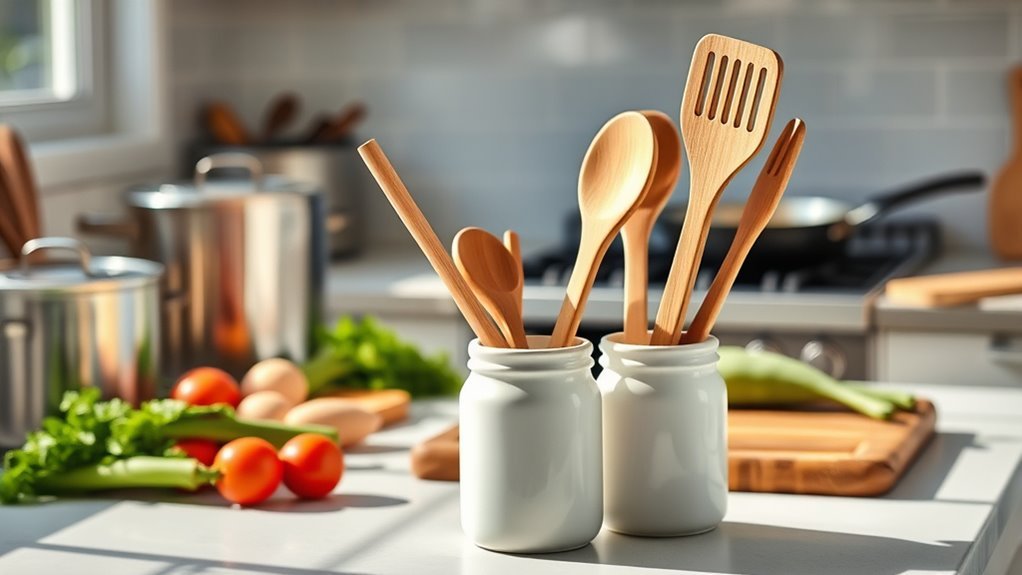
When you choose bamboo cooking utensils, you’re opting for a safe and sustainable kitchen tool. Bamboo is eco-friendly, made from a renewable resource that regrows quickly without the use of pesticides. Its durability and lightweight nature make it perfect for daily cooking, while its density helps prevent warping.
High-quality bamboo utensils are crafted with food-safe adhesives and finishes, minimizing the risk of harmful chemical exposure. You’ll appreciate bamboo’s natural antimicrobial properties, which inhibit bacterial growth, promoting food safety in your kitchen.
To keep your utensils in top shape, regular maintenance is key. Simple practices like hand washing and conditioning with mineral oil will preserve their integrity over time.
How Bamboo’s Antimicrobial Properties Enhance Kitchen Safety
While many materials in the kitchen can harbor bacteria, bamboo stands out for its natural antimicrobial properties that enhance safety. The presence of bamboo kun in these bamboo cooking utensils inhibits bacterial growth, creating a safer cooking environment for you and your loved ones.
University research backs this up, confirming bamboo’s effectiveness in resisting bacteria, making it a preferred choice among natural materials. Unlike other utensils that may require chemical treatments, bamboo doesn’t need such additives to maintain its antimicrobial benefits, further enhancing kitchen safety.
The unique structure of bamboo minimizes scratches where bacteria thrive, ensuring a cleaner surface for food prep. To maximize these antimicrobial properties, regular maintenance is key; proper washing and conditioning will preserve the quality of your utensils.
Spotting Quality Bamboo Utensils: How to Avoid Common Risks?
Bamboo utensils offer a safe and stylish choice for your kitchen, but not all bamboo products are created equal.
To guarantee you’re making a wise choice, keep these tips in mind:
To ensure a smart purchase, consider these essential tips for selecting quality bamboo utensils.
- Check for Food-Safe Certification: Look for utensils that are certified food-safe and free from harmful adhesives, as low-quality products may harbor health hazards like formaldehyde.
- Inspect for Glue Joints: Visible glue joints can indicate poor craftsmanship, increasing the risk of chemical contamination in your bamboo utensils.
- Choose Moso Bamboo: Opt for utensils made from Moso bamboo, known for its density and durability, which reduces splintering and wear.
Care Tips for Bamboo Utensils
To keep your bamboo utensils in top condition, you need to follow a few essential care tips. First, hand wash your bamboo utensils with mild soap and water. Avoid dishwashers, as their high heat can cause splits and warping.
Monthly, condition your utensils with food-grade mineral oil to maintain their moisture barrier and prevent drying out.
Store your bamboo utensils upright to guarantee proper air circulation, which helps fend off mold and bacteria. Regularly perform a wear inspection for any signs of splintering or mold to confirm they’re safe for food preparation.
Finally, steer clear of prolonged moisture and high temperatures to extend the lifespan and maintain the integrity of your bamboo utensils. By following these care tips, you’ll enjoy the natural beauty and functionality of your bamboo utensils for years to come.
Bamboo Utensils vs. Other Kitchen Materials: A Safety Comparison
When choosing kitchen utensils, safety is a key factor, and bamboo offers some unique advantages over other materials. Here’s how bamboo utensils stack up against others:
- Antimicrobial Properties: Bamboo naturally reduces bacterial growth, unlike beechwood, which can harbor bacteria in scratches if not properly cleaned.
- Durability and Care: While bamboo needs replacement every 12-18 months with heavy use, beechwood can last 3-5 years with proper care.
- Temperature Tolerance: Bamboo tolerates up to 400°F (204°C), but silicone withstands up to 450°F, making it better for high-heat tasks.
Choosing high-quality bamboo utensils from reputable manufacturers is essential, as low-quality options may contain harmful adhesives like formaldehyde.
While bamboo’s lightweight nature is appealing, be mindful of its susceptibility to wear and avoid dishwasher conditions to maintain safety and longevity.
Frequently Asked Questions
Are Bamboo Cooking Utensils Non-Toxic?
Yes, bamboo cooking utensils are generally non-toxic when sourced from reputable manufacturers. You’ll enjoy bamboo benefits like natural antimicrobial properties, enhancing cooking safety.
For durability, inspect them regularly and avoid low-quality options that may contain harmful chemicals. To maintain your utensils, hand wash them and condition with mineral oil.
Many users appreciate these eco-friendly options, sharing positive experiences that highlight their longevity and safety in everyday cooking.
Why Do Chefs Not Use Wooden Spoons?
Chefs often avoid wooden spoons due to concerns over flavor impact and hygiene. They prefer alternatives like silicone or metal for their durability and heat resistance.
Wooden spoons can absorb odors and harbor bacteria in scratches, making them less hygienic. Plus, they require more maintenance—regular oiling—to keep them in shape.
If you want to elevate your cooking, consider these factors and explore wooden spoon alternatives that suit your needs better.
What Is the Healthiest Material for Cooking Utensils?
When it comes to cooking utensils, you can’t go wrong with bamboo, beechwood, or silicone—each offers unique health benefits.
Bamboo’s eco-friendly nature makes it a top choice, while beechwood’s durability and lower odor absorption stand out.
Silicone boasts impressive heat resistance and easy maintenance.
Consider your cooking style and frequency; regular upkeep, like hand washing and oil conditioning, will keep your utensils in tip-top shape, ensuring you’re always cooking with the best materials.
Is Bamboo Better Than Stainless Steel?
Bamboo’s definitely a better choice than stainless steel for several reasons.
It boasts impressive durability and lower heat retention, making it safer for handling hot foods. Plus, bamboo’s aesthetic appeal adds a touch of warmth to your kitchen.
For maintenance, keep it clean and dry to prevent scratches that can harbor bacteria.
Environmentally, bamboo is sustainable, unlike plastic, which burdens the planet.
Choose bamboo for a stylish, eco-friendly cooking experience!
Conclusion
In choosing bamboo cooking utensils, you’re opting for a natural ally in the kitchen, much like a trusted knight guarding your culinary castle. Their antimicrobial properties and durable nature make them a safe choice for any home chef. Remember to select Moso bamboo and care for your utensils properly to guarantee they serve you well. Just as the finest swords need maintenance, so do your bamboo tools to keep your cooking environment safe and hygienic.
