
The 8 best self-propelled lawn mowers for 2027 include the Greenworks 60V 21-inch, YARDMAX 22-inch, BILT HARD 20 Inch, EGO Power+ LM2134SP-2, Greenworks 60V 25-inch, EGO Power+ LM2123SP-2, PowerSmart 21-Inch 170cc, and Greenworks 80V 21-inch. These models stand out for power, traction, battery life, and ease of use. Electric options run quieter and need less maintenance, while gas models deliver longer runtime. A closer look reveals which one fits each yard best.
Greenworks 60V 21in Self-Propelled Lawn Mower, (2) 4.0 Ah Battery Kit
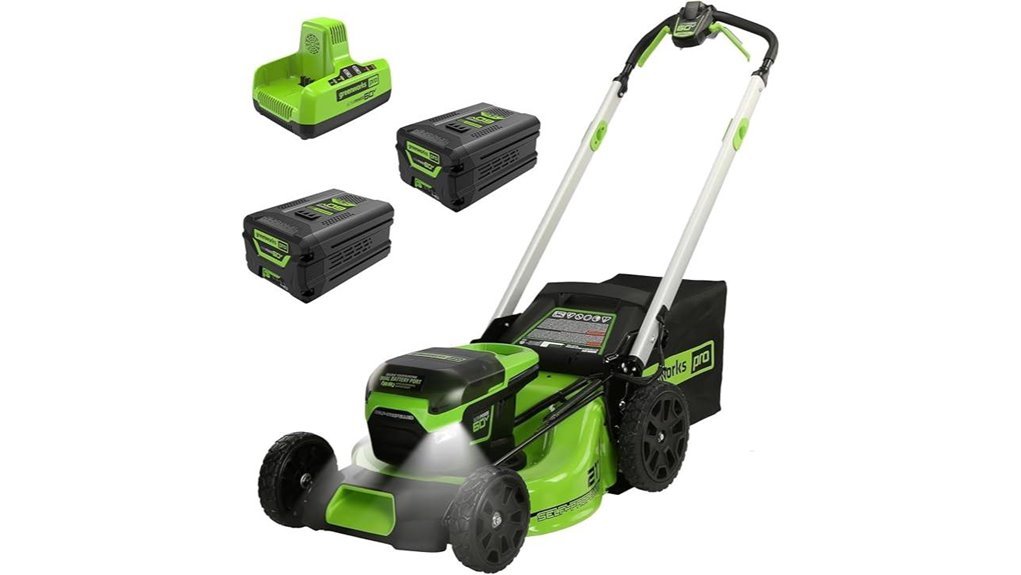
The Greenworks 60V 21-inch Self-Propelled Lawn Mower with (2) 4.0 Ah batteries is a strong fit for homeowners who want gas-like cutting power without the noise, fumes, or maintenance. Its brushless 60V motor handles demanding lawns, and the rear-wheel drive system improves traction on slopes and thick grass. Adjustable self-propelled pacing adds control, while the deck supports mulch, bag, side discharge, and turbo leaf pickup. A 4-year warranty adds reassurance. It runs quietly, starts instantly, and serves yards up to 3/4 acre per charge, depending on terrain and technique.
Best For: Homeowners with medium to large yards who want a quiet, low-maintenance, battery-powered mower with strong cutting performance and self-propelled control for hills and thick grass.
Pros:
- Gas-like power from a 60V brushless motor with quiet, zero-emission operation
- Self-propelled rear-wheel drive improves traction on slopes and in thicker grass
- Versatile 4-in-1 cutting options plus two 4.0 Ah batteries and a 4-year warranty
Cons:
- Runtime can vary based on terrain, grass thickness, and mowing technique
- Battery-powered performance may not match endless runtime of gas mowers for very large properties
- Heavier and more expensive than basic push mowers due to self-propelled design and battery kit
YARDMAX 22 in. Self-Propelled Gas Lawn Mower (YG2860)
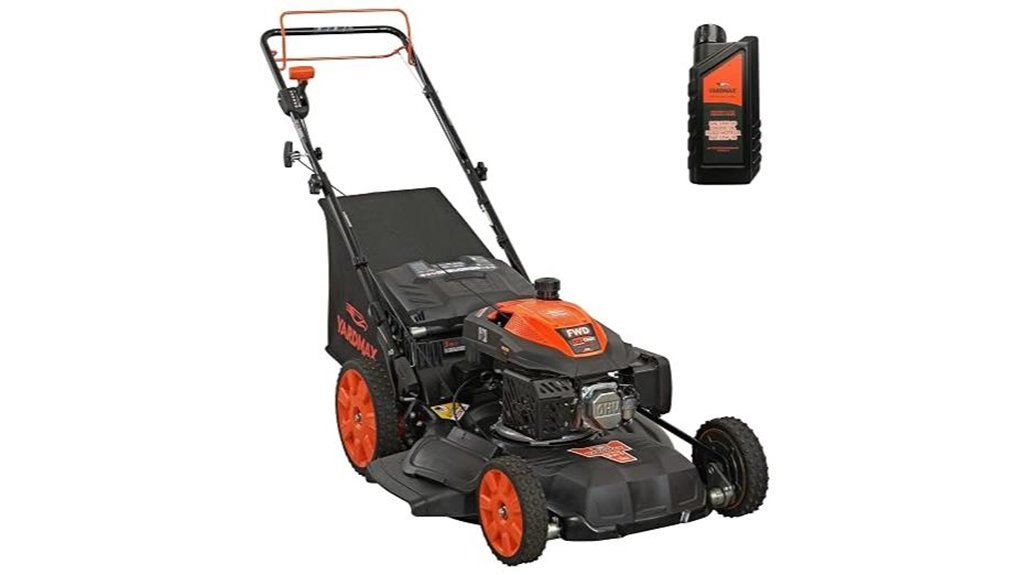
Built for uneven yards, the YARDMAX YG2860 suits homeowners who want traction and pace control. Its 22-inch steel deck and 201cc gas engine pair with a Select PACE CVT system, letting the mower match walking speed through a six-position lever. The automatic choke removes priming and choking from startup. High wheels and spiked rubber tires improve grip and steering on rough ground. A single-lever height adjustment streamlines cut changes, while the deck cleanout port eases maintenance. Its 3-in-1 design handles mulching, bagging, and side discharge for flexible lawn care across varied conditions.
Best For: Homeowners with uneven yards who want a self-propelled mower with strong traction, pace control, and flexible 3-in-1 mowing options.
Pros:
- Select PACE CVT system with a 6-speed lever helps match mower speed to your walking pace.
- High wheels and spiked rubber tires improve traction and maneuverability on rough terrain.
- 3-in-1 capability offers mulching, bagging, and side discharge for versatile lawn care.
Cons:
- Gas-powered operation requires fuel and more maintenance than battery models.
- Heavier than smaller push mowers, which may be less convenient for tight storage or transport.
- Best suited for rough or medium-sized yards, so it may be more mower than needed for small, simple lawns.
BILT HARD 20 Inch Gas Lawn Mower
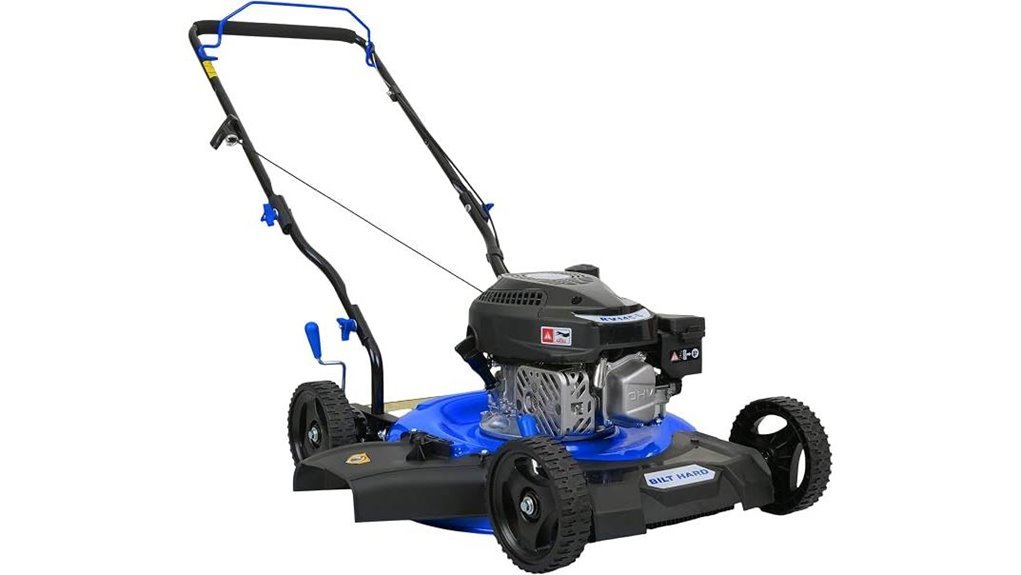
With a 144cc Rato engine and 20-inch steel deck, it suits homeowners needing reliable, efficient cutting. The BILT HARD 20 Inch Gas Lawn Mower uses a 4-stroke OHV engine producing 3.4HP and 7.8N.m of torque, delivering steady performance for routine residential mowing. Its straight 20-inch blade and durable steel deck provide broad coverage and lasting outdoor use. A dual-lever, 6-position height system adjusts cutting from 0.6 to 2.4 inches. Push operation, 7-inch wheels, and side discharge support control and continuous clipping flow. The 27.1 fl.oz fuel tank and 16.9 fl.oz oil capacity help extend mowing sessions.
Best For: Homeowners looking for a reliable, easy-to-use push mower for routine residential lawn maintenance with efficient cutting and adjustable height settings.
Pros:
- 20-inch steel deck and straight blade provide broad cutting coverage and durable outdoor performance.
- 4-stroke 144cc engine delivers steady power, good torque, and consistent mowing results.
- Dual-lever 6-position height adjustment offers flexibility for different grass conditions.
Cons:
- Push-only design may require more effort on larger or hilly lawns.
- Side discharge means no built-in bagging or mulching convenience.
- Gas-powered operation requires fuel and oil maintenance.
EGO Power+ 21″ Cordless Electric Lawn Mower, Self-Propelled – LM2134SP-2
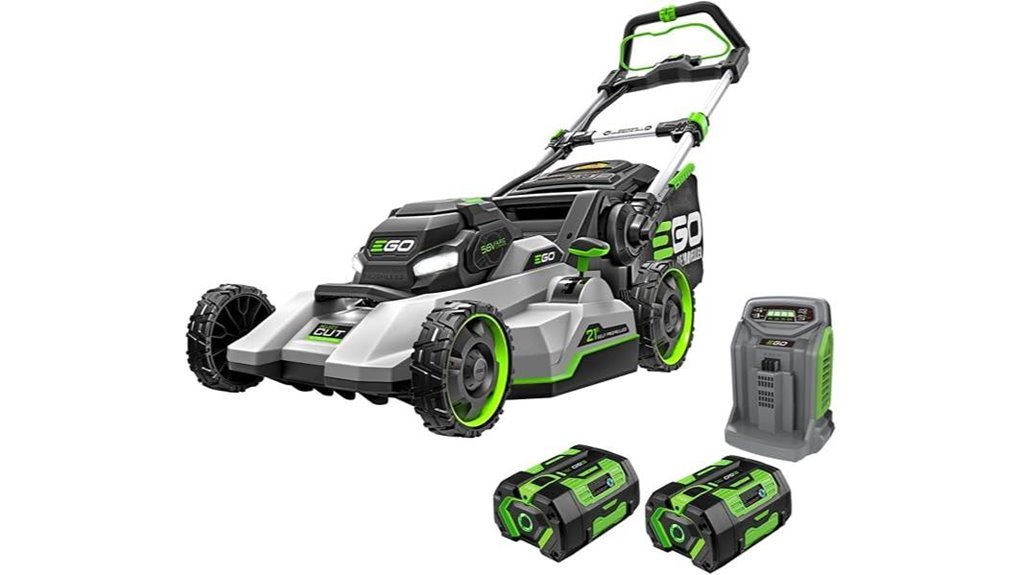
EGO’s LM2134SP-2 suits homeowners who want cordless convenience with strong cutting control. Its self-propelled drive delivers up to 7.0 ft-lbs of torque, while two 56V 6.0Ah batteries can provide up to 100 minutes of runtime. The brushless motor helps limit vibration and improve reliability. Select Cut technology supports mulching, bagging, or longer runtime through interchangeable blades. Touch Drive speed control, an adjustable 0.9 to 3.1 mph range, and eight cutting heights from 1 to 4 inches add flexibility. LED headlights, a two-bushel bag, and warranties enhance practicality for residential lawns.
Best For: Homeowners who want a cordless, self-propelled mower with strong cutting control, flexible mowing options, and long runtime for residential lawn care.
Pros:
- Up to 100 minutes of runtime with two 56V 6.0Ah batteries
- Select Cut multi-blade system supports mulching, bagging, and extended runtime
- Touch Drive control, LED headlights, and adjustable cutting heights improve ease of use
Cons:
- Battery-powered runtime may still be limiting for very large yards
- Higher upfront cost than many gas or basic corded mowers
- Requires battery charging time between mowing sessions
Greenworks 60V 25in Self-Propelled Lawn Mower, (2) 4.0 Ah Battery Kit

The Greenworks 60V 25in Self-Propelled Lawn Mower is a strong fit for homeowners with medium-sized yards. Model MO60L427 uses battery power to deliver gas-like performance with 50% more power than 40V mowers while producing 60% less noise than gas. Its rear-wheel drive and variable speed control help on hills, and SmartCut technology adjusts output in thick or wet grass. A dual-blade deck improves mulching by 30%. Two 4.0Ah batteries and a dual-port rapid charger support about 70 minutes of runtime. LED headlights, rust-resistant aluminum handles, and a 4-year warranty add practical appeal.
Best For: Homeowners with medium-sized yards who want a quiet, battery-powered self-propelled mower with strong hill handling and low-maintenance operation.
Pros:
- 60V battery system delivers gas-like power with less noise than gas mowers.
- Self-propelled rear-wheel drive with variable speed makes mowing hills easier.
- Dual-blade deck and SmartCut technology improve mulching and performance in thick or wet grass.
Cons:
- Runtime of about 70 minutes may not be enough for larger yards without recharging.
- Heavier than some push mowers at 67.2 pounds.
- Higher upfront cost than basic corded or lower-voltage electric mowers.
EGO Power+ 21″ Cordless Electric Lawn Mower, Self-Propelled – LM2123SP-2
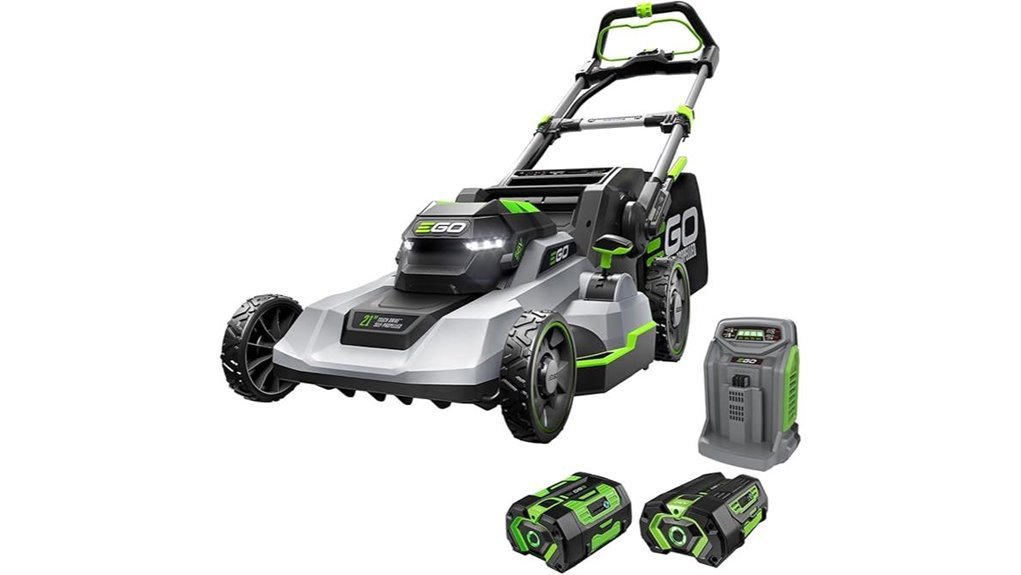
Delivering gas-mower-level torque without fumes, this EGO self-propelled model suits homeowners wanting cordless power and convenience. Its high-efficiency brushless motor delivers up to 6.0 ft-lbs of cutting torque, with low vibration and strong reliability. Included 56V 6.0Ah and 4.0Ah batteries provide up to 80 minutes of runtime, and the charger replenishes them quickly. Touch Drive self-propulsion engages through palm pressure, while a fingertip dial sets speed. The mower offers mulching, side discharge, and bagging, plus seven height settings. LED headlights extend usability, and the five-year tool warranty adds reassurance.
Best For: Homeowners who want a powerful, low-maintenance cordless lawn mower with self-propelled convenience and flexible cutting options.
Pros:
- Delivers gas-mower-level cutting torque with a quiet, low-vibration brushless motor.
- Includes two batteries for up to 80 minutes of runtime and fast recharge times.
- Offers self-propelled Touch Drive control, three cutting modes, and seven height settings.
Cons:
- Battery runtime may still be limiting for larger yards compared with a gas mower.
- Higher upfront cost than many standard push mowers.
- Best performance depends on battery charge, so extended mowing may require waiting for recharging.
PowerSmart 21-Inch 170cc Self Propelled Gas Lawn Mower
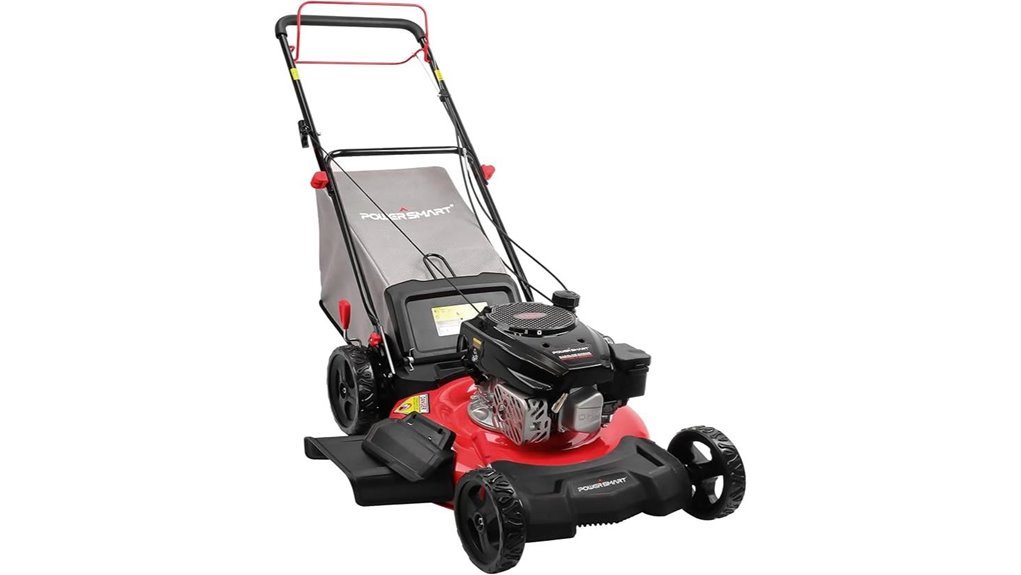
PowerSmart’s 21-inch self-propelled mower suits homeowners handling thick, damp grass with less effort. The DB8621S uses a 170cc OHV four-stroke gas engine, auto choke, and recoil start to deliver steady cutting power. Its steel deck and 59-pound frame add durability without excess bulk. A 21-inch cutting path and six height settings, from 1.5 to 3.9 inches, support varied lawn conditions. Three-in-one capability covers mulching, side discharge, and rear bagging. An easy-fold handle improves storage. Manufacturer warranty support and Amazon’s 30-day return guarantee provide added purchase confidence.
Best For: Homeowners who want a durable, easy-to-store self-propelled gas mower that handles thick or damp grass with less effort.
Pros:
- 170cc OHV engine with auto choke and recoil start delivers dependable cutting power.
- 21-inch steel deck and self-propelled design help reduce mowing time and effort.
- 3-in-1 versatility lets you mulch, side discharge, or rear bag clippings.
Cons:
- Gas-powered operation requires more maintenance than electric alternatives.
- At 59 pounds, it may still be somewhat heavy for some users to maneuver.
- Assembly, fueling, and engine starting may be less convenient than cordless mowers.
Greenworks 80V 21in Self-Propelled Lawn Mower, 4.0 Ah Battery and Charger
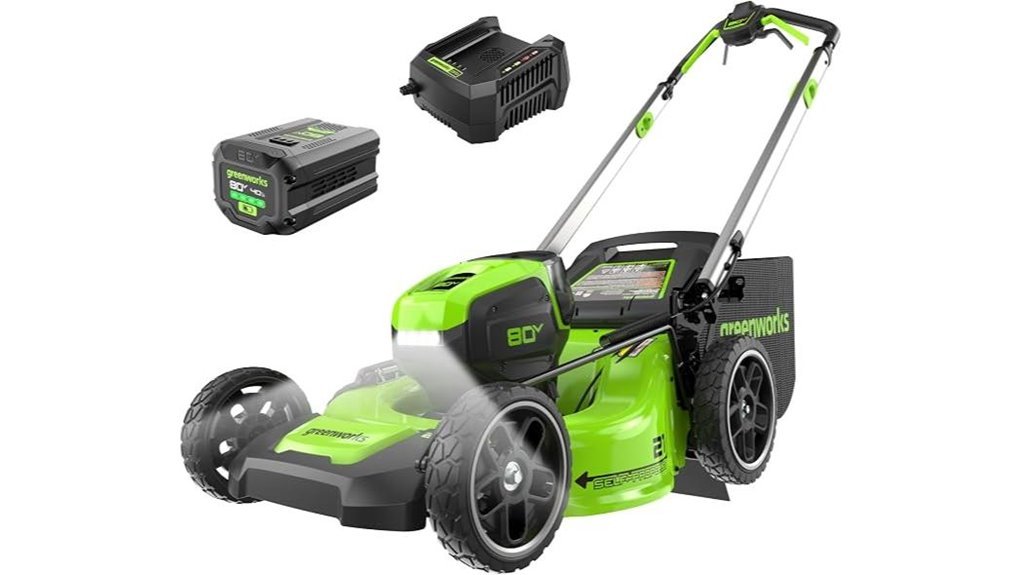
Ideal for medium-sized yards, Greenworks’ 80V self-propelled mower balances runtime, traction, and quiet operation. Its 4.0Ah battery can cover up to half an acre, while the brushless motor delivers strong torque with minimal noise. The 21-inch steel deck adds durability, and rear-wheel drive with variable speed control improves handling on uneven ground. LED headlights extend mowing into early mornings or late evenings. Rated three times quieter than gas models, it suits noise-sensitive neighborhoods. A four-year warranty and compatibility with 75+ Greenworks 80V tools add practical long-term value.
Best For: Medium-sized yard owners who want a quiet, easy-to-maneuver, battery-powered mower with good runtime and the convenience of compatibility with other Greenworks 80V tools.
Pros:
- 4.0Ah battery can mow up to half an acre on a charge.
- Brushless motor and rear-wheel self-propelled drive provide strong performance and better traction.
- LED headlights, low noise, and a 4-year warranty add convenience and value.
Cons:
- May not be ideal for very large yards beyond half an acre.
- Battery runtime can vary depending on grass thickness and terrain.
- Heavier than a non-self-propelled mower, which may be less convenient for some users.
Factors to Consider When Choosing Self-Propelled Lawn Mowers in 2026

When choosing a self-propelled lawn mower in 2026, cutting power, drive speed control, battery runtime, deck width, and terrain traction remain the main factors to evaluate. Strong cutting performance supports clean results, while adjustable speed and reliable battery life improve ease of use and efficiency. Deck size and traction also matter, especially for properties with uneven ground or wider mowing areas.
Cutting Power
Cutting power is one of the most important factors in choosing a self-propelled lawn mower in 2026, especially for yards with thick, wet, or uneven grass. Torque is a useful measure, since higher torque usually means stronger cutting performance in demanding conditions. Brushless motors often improve efficiency and durability while delivering steady power that can rival gas models with less upkeep. Deck width also matters: wider cutting decks can cover more ground quickly, but they may require more power to maintain clean cuts across rough terrain. Adjustable cutting heights help tailor the finish to different grass types and seasonal growth. For battery models, runtime specifications are equally important, because available operating time directly affects practical cutting power in larger yards.
Drive Speed Control
Drive speed control is a key consideration because it lets a mower match the user’s walking pace, improving comfort and efficiency across the yard. Variable speed settings give the machine flexibility on tight turns, rough patches, and changes in terrain, allowing smoother operation than a fixed pace. Models with continuously variable transmission, or CVT, make these adjustments seamless by removing the need for manual gear changes. That kind of responsiveness is especially useful on slopes and uneven ground, where steady control can reduce slipping and improve handling. In electric self-propelled mowers, lower speeds can also support more efficient use during lighter mowing tasks. Overall, speed control contributes to easier maneuvering, better user comfort, and more consistent performance across different yard conditions.
Battery Runtime
Battery runtime is a major factor in choosing a self-propelled lawn mower, especially for homeowners with larger or more demanding yards. Many models deliver 70 to 100 minutes on a single charge, but actual results depend on battery capacity and motor demand. Higher-voltage systems, such as 60V or 80V, usually provide stronger output and longer runtime than lower-voltage options, making them better suited to extended mowing sessions. Performance can drop on thick grass, uneven terrain, or higher speed settings, reducing the area covered per charge. Some mowers use smart controls to adjust power automatically, improving efficiency in changing conditions. Quick-charge features also matter, since recharge times as short as 30 to 80 minutes help limit downtime between mowing tasks.
Deck Width
Deck width is a key factor in how efficiently a self-propelled lawn mower handles a yard, with most models ranging from 20 to 25 inches. A wider deck cuts more grass per pass, which can shorten mowing time on larger lawns and reduce the number of passes needed. Narrower decks, however, tend to be easier to guide around flower beds, trees, and other tight spaces. Yard size should guide the choice; a 21-inch deck is often a practical fit for medium-sized lawns up to 3/4 acre. Deck design also matters, since wider decks may improve mulching and bagging performance. The best width balances speed, control, and the lawn’s overall layout for efficient results.
Terrain Traction
Terrain traction becomes especially important when a yard includes slopes, uneven ground, or thick grass. Rear-wheel-drive self-propelled mowers typically provide stronger grip on inclines and rough surfaces, helping the machine stay steady where front-drive units may slip. Tires with aggressive tread patterns add another advantage by improving bite in wet or dense grass, which supports cleaner movement and fewer stalls. Variable speed control also matters because it lets the mower match the operator’s walking pace, making control easier across changing conditions. High-wheel designs further improve travel over bumpy ground by rolling more smoothly and lowering the chance of scalping or getting stuck. Together, these features help a mower handle demanding terrain with better stability, traction, and overall efficiency.
Height Adjustment
Height adjustment is a key factor when choosing a self-propelled lawn mower in 2026 because it lets users set cutting heights to match grass type, seasonal growth, and lawn condition. Typical ranges from 1 to 4 inches give enough flexibility for most yards, while models with six or more positions offer finer control. A single-lever or dual-lever system can make changes faster, especially when mowing areas with different needs. Correct settings also support healthier turf by avoiding scalping and encouraging deeper roots. Adjusting deck height through the season helps maintain consistent results as grass growth changes. Efficient height control reduces repeated passes and supports a cleaner finish, making it a practical feature for homeowners seeking reliable performance and improved lawn care.
Noise Levels
Noise levels are an important consideration when choosing a self-propelled lawn mower in 2026, especially for households in residential areas. Electric self-propelled models usually run much quieter than gas mowers, often producing about 60 to 70 decibels instead of the 90 decibels or more common with gas units. That lower output can make mowing feel less disruptive and more suitable for early morning or evening use. The quieter operation also reduces noise pollution, which can benefit nearby wildlife and local ecosystems. Many modern mowers add noise-dampening features that cut vibration and soften sound further. For buyers prioritizing comfort and neighborhood courtesy, a quieter mower can offer a noticeably better experience without sacrificing cutting performance.
Warranty Coverage
Warranty coverage is another key factor when comparing self-propelled lawn mowers in 2026, especially after evaluating features like quiet operation and overall comfort. Coverage often ranges from three to five years for tools and batteries, which helps protect against defects and supports long-term reliability. Battery-powered models commonly include a four-year limited warranty, a useful sign for buyers concerned about battery life and performance. Some manufacturers go further with extended plans that add years of service or protect specific parts, improving overall value. The exact terms should be reviewed carefully, since the mower, motor, and battery may not share identical coverage. A strong warranty often signals confidence in product quality, making it an important part of the purchase decision.
Frequently Asked Questions
How Long Do Self-Propelled Mower Batteries Typically Last?
Self-propelled mower batteries typically last 3 to 5 years, or about 300 to 500 charge cycles, depending on usage, storage, and maintenance. In lighter use, some batteries endure longer before noticeable capacity declines.
Are Self-Propelled Mowers Harder to Maintain Than Push Mowers?
Not usually; they can be slightly harder to maintain because drive belts, transmissions, or motors add parts. Yet the difference is modest, and many owners find the extra effort worthwhile for easier mowing.
Can Self-Propelled Mowers Handle Steep Slopes Safely?
Yes, they can handle steep slopes more safely than push mowers when used properly, but traction, braking, and weight still matter. Operators should mow across slopes, not up or down, and follow the manufacturer’s limits.
What Wheel Size Works Best for Uneven Terrain?
Large rear wheels, typically 8 to 12 inches, usually work best on uneven terrain because they roll over bumps more easily and improve traction. Smaller front wheels can help steering, but larger overall diameters add stability.
Do Self-Propelled Mowers Require Special Winter Storage?
Yes, they practically beg for special winter storage: fuel stabilized, battery removed, blades cleaned, and kept dry. Without that royal treatment, corrosion and spring-start misery can appear like unwelcome weeds in a garage.
Conclusion
In the quiet kingdom of the yard, each mower serves as a different steed for the caretaker’s journey. Some glide on electric wind, others thunder with gasoline resolve, yet all answer the same summons: to tame the wild and restore order. Choosing wisely means matching the steed to the terrain, the tempo, and the season ahead. In that small domestic quest, the lawn becomes a map of stewardship, and the mower, a trusted companion.
