
Ventilation can make or break a grow tent, and 2027 brings a stronger lineup of exhaust fan kits than before. From the MARS HYDRO 2-in-1 to the smart VIVOSUN models and compact Hon&Guan option, each system serves a different space and airflow need. The differences are not always obvious at first glance, which is why the best choice depends on more than just CFM.
MARS HYDRO 2-in-1 Inline Fan Carbon Filter Kit

The MARS HYDRO 2-in-1 Inline Fan Carbon Filter Kit is a strong choice for indoor growers who want a simple, all-in-one ventilation solution with effective odor control. It combines a 6-inch inline fan, carbon filter, ducting, clamps, hangers, vent cover, and speed controller into one plug-and-play system. The EC motor delivers up to 305 CFM while using less power than conventional fans. Variable speed support suits changing crop stages, and compatibility with Mars Hydro controls adds flexibility. Premium activated carbon removes odors and VOCs, while ABS+PC construction, IP42 protection, and noise-dampening foam improve durability and discretion.
Best For: Indoor growers, hydroponic users, and greenhouse hobbyists who want an easy-to-install, all-in-one 6-inch ventilation system with strong odor control and quiet operation.
Pros:
- All-in-one kit includes the fan, carbon filter, ducting, clamps, hangers, vent cover, and speed controller for simple setup
- Up to 305 CFM EC motor offers strong airflow while using less energy than traditional fans
- Activated carbon filter helps remove odors, VOCs, and other contaminants, with tool-free maintenance for easy replacement
Cons:
- 6-inch size may not be suitable for very small or very large grow setups
- Higher-end features and compatibility may make it more expensive than basic ventilation kits
- Noise is reduced, but it may still not be completely silent in very quiet environments
VIVOSUN G6 Air Filtration Kit, Inline Fan, Controller, Carbon Filter, Duct
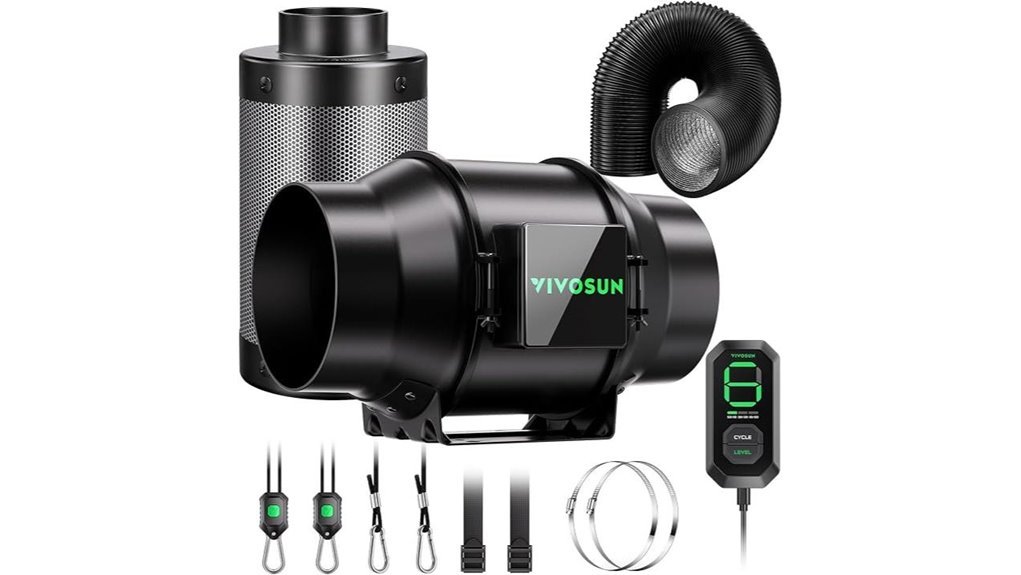
VIVOSUN’s G6 suits growers needing a quiet, all-in-one ventilation and odor-control setup. The kit pairs an AeroZesh G6 6-inch inline duct fan with an E12 speed controller, a 6-inch black carbon filter, and matching ducting for complete airflow management. The fan delivers 388 CFM, uses PWM control for ten speeds, and runs at a low 32 dBA. The controller retains settings after power loss and supports app-based remote use. A 1200+ IAV charcoal filter and durable aluminum ducting with stainless clamps complete the package for efficient tent ventilation.
Best For: Growers and indoor gardeners who want a quiet, all-in-one 6-inch ventilation and odor-control kit for efficient tent airflow management.
Pros:
- Includes the fan, speed controller, carbon filter, and ducting for a complete setup
- Quiet operation at 32 dBA with 388 CFM airflow and ten adjustable speeds
- Carbon filter and durable ducting help control odors and support reliable tent ventilation
Cons:
- 6-inch size may not suit larger grow spaces or higher-capacity ventilation needs
- Best used in setups that benefit from app control and speed presets, which may be unnecessary for basic users
- Full kit may be more than needed if you only want to replace one component
Hon&Guan 4″ Inline Duct Fan Filtration Kit
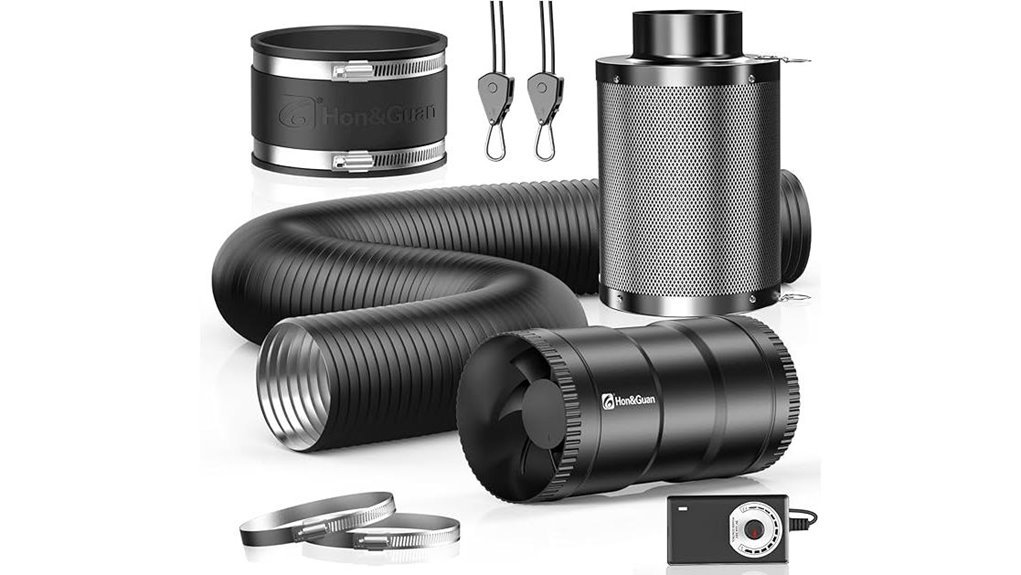
Hon&Guan’s filtration kit suits growers needing quiet, compact ventilation with solid odor control. Its 4-inch inline fan moves 130 CFM while keeping noise at 26 dB, making it appropriate for discreet indoor use. The included speed controller, 10-inch carbon filter, 8 feet of ducting, and rubber coupler simplify installation. The RC 48 activated carbon, rated above 1200 IAV, and 38 mm charcoal bed improve odor absorption. A three-layer duct resists rips and pinholes. Beyond grow tents, it supports temperature control in closets, kitchens, bathrooms, basements, and equipment rooms.
Best For: Growers and home users who want a compact, quiet 4-inch ventilation kit with decent odor control for tents, closets, bathrooms, kitchens, basements, or equipment rooms.
Pros:
- Quiet operation at 26 dB with 130 CFM airflow makes it suitable for discreet indoor use.
- Includes the fan, speed controller, carbon filter, ducting, and coupler for easier setup.
- RC 48 activated carbon and a 38 mm charcoal bed provide solid odor absorption.
Cons:
- 130 CFM may be too limited for larger spaces or more demanding ventilation needs.
- The 4-inch size is best for smaller setups, not high-capacity applications.
- Primarily focused on odor control and air movement, so it may not suit users needing advanced filtration or heavy-duty performance.
VIVOSUN T6 Air Filtration Kit, Inline Fan, Controller, Carbon Filter, Duct
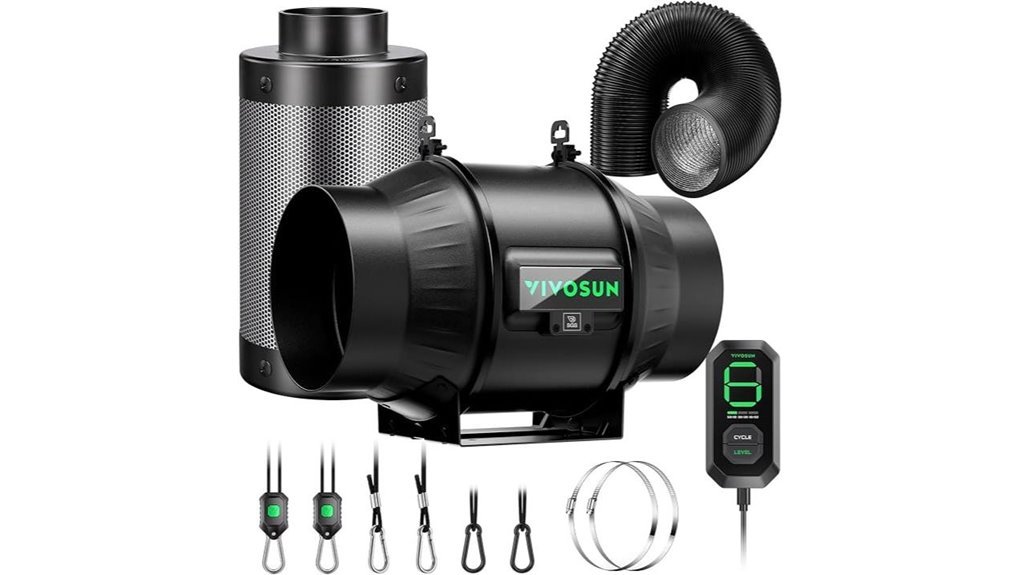
Built for growers who want quiet, odor-controlled ventilation, the VIVOSUN T6 Air Filtration Kit stands out. It pairs an AeroZesh T6 6-inch inline duct fan, E12 speed controller, 6-inch carbon filter, and 8-foot ducting for complete airflow management. The fan moves up to 408 CFM with mixed-flow performance, while PWM control and ten speed settings allow precise adjustment. Operating at just 32 dBA, it stays discreet. The carbon filter uses 1200+ IAV Australian virgin charcoal and a 38 mm bed for strong odor removal. Durable aluminum ducting and stainless clamps support secure installation.
Best For: Growers and indoor gardeners who want a quiet, high-airflow, odor-controlling ventilation kit with easy speed adjustment and complete ducting included.
Pros:
- Moves air strongly at up to 408 CFM with mixed-flow performance for effective ventilation.
- Runs quietly at 32 dBA and includes a 10-speed PWM controller for precise airflow control.
- Includes a premium carbon filter plus durable ducting and clamps for a more complete setup.
Cons:
- The 6-inch kit may be more than needed for smaller grow spaces.
- Carbon filters require eventual replacement as odor-control performance declines over time.
- Installation may still take some setup effort for users new to inline ventilation systems.
VIVOSUN G4 Smart Filtration Kit, Inline Fan, Controller, Carbon Filter,Duct
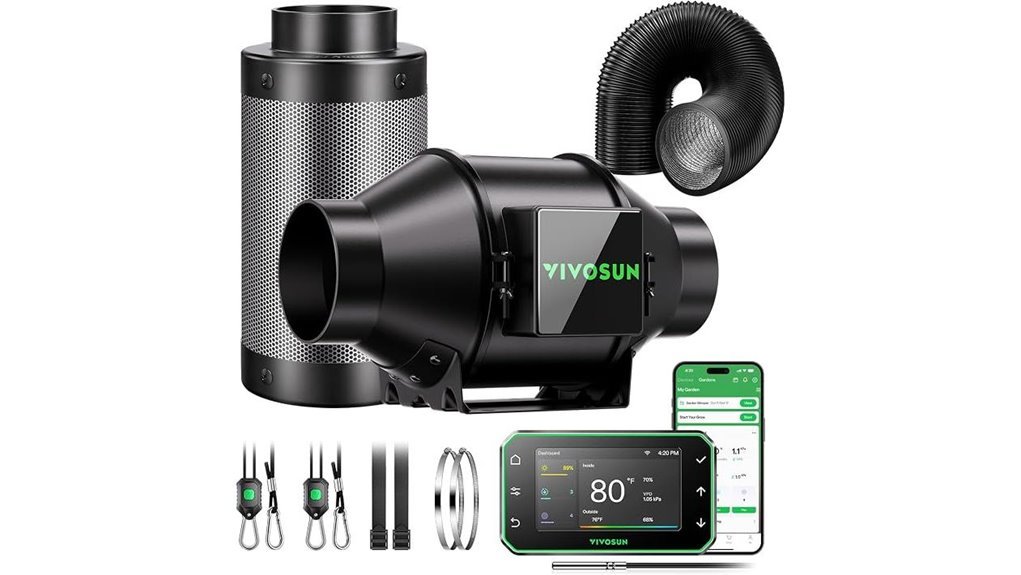
The VIVOSUN G4 Smart Filtration Kit suits growers who want quiet, app-controlled ventilation. It pairs an AeroZesh G4 4-inch inline duct fan with a GrowHub E42A+ controller, a 4-inch carbon filter, and 8 feet of black ducting. The fan delivers 195 CFM at 39 dBA, using 20 watts and 10 speeds for efficient airflow. The controller tracks temperature, humidity, and VPD through WiFi and app access. The carbon filter uses RC 412 Australian virgin charcoal for odor control. Durable ducting and stainless clamps simplify installation in grow tents and compact indoor spaces.
Best For: Growers who want a quiet, app-controlled 4-inch ventilation and odor-control setup for grow tents or compact indoor spaces.
Pros:
- Quiet operation at 39 dBA makes it suitable for indoor use.
- WiFi and app-enabled controller provides convenient remote monitoring and control.
- Carbon filter with RC 412 Australian virgin charcoal helps control odors effectively.
Cons:
- 4-inch size may be too small for larger grow setups.
- Requires setup and installation of multiple components.
- Higher-end smart features may be more than casual users need.
Factors to Consider When Choosing Grow Tent Exhaust Fan Kits for Ventilation in 2026
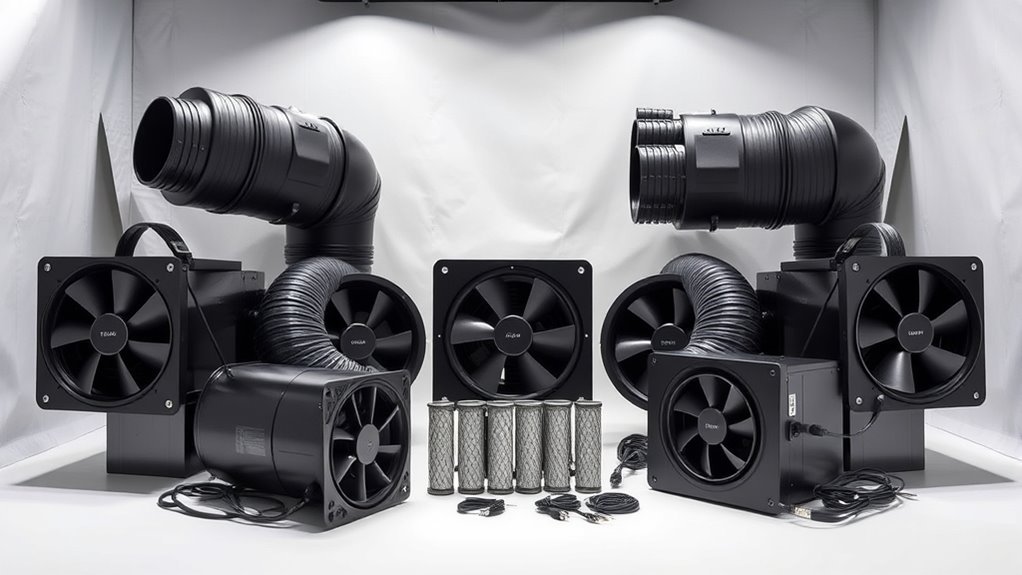
Selecting a grow tent exhaust fan kit in 2026 starts with airflow capacity, since the unit must match the tent size and heat load. Noise levels, energy efficiency, and filter quality also matter because they affect daily operation and air cleanliness. Speed control adds flexibility, allowing ventilation to be adjusted as growing conditions change.
Airflow Capacity
Airflow capacity is one of the most important specifications to check when choosing a grow tent exhaust fan kit, since it determines how effectively the system can exchange air, control temperature, and manage humidity. Measured in cubic feet per minute, or CFM, it should match the tent size and plant count. A practical guideline is at least 1 CFM per square foot of grow space to support steady air exchange. Higher CFM ratings improve circulation, help remove excess humidity, and reduce heat buildup while supplying fresh CO2. Larger inline fans are usually better for spacious tents or setups with several plants, where stagnant air can encourage mold. Adjustable fan speeds also add flexibility, allowing airflow to be tailored to different growth stages and plant needs.
Noise Levels
Noise becomes a major consideration once airflow capacity is matched to the tent, since stronger exhaust fans often bring more sound with them. Grow tent exhaust fan kits commonly range from about 26 dBA on quieter units to roughly 39 dBA on more powerful models, and that difference can affect comfort and discretion. Lower dBA ratings are usually better for bedrooms, apartments, and shared rooms, especially at night. Fan design also matters: mixed-flow models often run more quietly because they move air more evenly. Installation can raise noise further, since ducting and loose mounts may amplify vibration. Sound-absorbing materials and secure mounting help reduce this effect. A practical choice balances airflow needs with acceptable noise, rather than chasing maximum CFM alone.
Energy Efficiency
Energy efficiency has become a key factor in choosing grow tent exhaust fan kits, especially as operating costs add up over time. Efficient models can cut electricity use by as much as 50% compared with traditional fans, which helps lower monthly utility bills. Kits with variable speed controls let growers match airflow to plant needs, avoiding wasted power during early or less demanding stages. EC motors further improve performance by delivering strong ventilation with lower energy draw. PWM-enabled controllers add finer speed adjustments, supporting even tighter power management. Another useful metric is the airflow-to-power ratio, or CFM per watt, since a higher ratio indicates more ventilation for each unit of electricity used. This balance supports healthy growth while keeping costs controlled.
Filter Quality
Filter quality plays a central role in grow tent exhaust fan kits, because the carbon filter determines how well odors and VOCs are captured before air is vented out. High-quality activated carbon, especially filters rated at least 1200 IAV, offers stronger adsorption and more reliable odor removal. A thicker charcoal bed, such as 38mm, increases contact time and extends service life, which supports sustained filtration in enclosed spaces. Premium media, including Australian Virgin charcoal, generally outperforms standard carbon by providing denser, more consistent absorption. Easy maintenance also matters; tool-free replacement designs help preserve performance without complicated upkeep. Since filtration affects overall air quality inside the tent, better filters can indirectly support healthier plant development and more stable growing conditions over time.
Speed Control
Beyond filtration, speed control is another major factor in grow tent exhaust fan kits because it lets airflow be matched to plant needs at different growth stages. Adjustable settings help maintain gentler circulation for young plants and stronger ventilation as canopies thicken. Many modern kits use PWM technology, which supports fine-tuned speed changes and helps balance airflow with energy use. Variable controllers may also include backup memory, so preferred settings return after a power outage without manual reset. Some models add ON/OFF cycle modes, reducing unnecessary runtime when conditions shift. A well-designed controller improves climate consistency, cuts fan noise, and supports a quieter indoor growing space while maintaining efficient ventilation throughout the crop cycle.
Ducting Durability
Durable ducting plays a key role in preserving airflow efficiency in grow tent exhaust fan kits, since weak hoses can develop rips, pinholes, or leaks that reduce ventilation performance. Aluminum ducting is often preferred because it combines strength with flexibility, helping it resist damage while remaining easy to route. A central PET thermoplastic layer can further improve resilience, allowing the duct to handle heat changes and pressure shifts inside ventilation systems. Thickness also matters, as heavier material usually offers better protection against abrasion and wear. Heavy-duty stainless clamps help secure connections and reduce the risk of disconnections over time. Ducting that supports multiple configurations can also fit different layouts, maintaining effective air circulation in varied installation environments.
Smart Controls
Smart controls have become a major factor in grow tent exhaust fan kits, giving growers the ability to monitor temperature and humidity remotely while adjusting performance with less effort. App connectivity lets users change fan speeds and settings from a smartphone, which helps fine-tune conditions without constant manual checks. Advanced controllers can also store backup memory, restoring prior preferences after a power interruption and maintaining consistent operation. PWM technology adds another layer of precision by regulating fan speed more accurately, often reducing noise and improving energy efficiency. Some kits also integrate with smart home systems, allowing automated reactions to environmental shifts. For growers seeking tighter environmental control, these features can improve convenience, consistency, and plant health while supporting more efficient ventilation management overall.
Easy Installation
Easy installation is a major advantage in grow tent exhaust fan kits, especially for growers who want to set up ventilation quickly and with minimal hassle. All-in-one kits that combine the fan, carbon filter, and ducting reduce assembly steps and shorten setup time. Plug-and-play designs are especially useful because they remove the need to source separate parts or make complex connections. Kits with clear instructions or diagrams further improve installation by guiding users through each stage. Tool-free filter replacement also supports easier maintenance after the system is running. Adjustable speed controllers add convenience during setup, allowing airflow to be tuned without extra equipment. Systems designed with these features generally offer a smoother start and less frustration for first-time and experienced users alike.
Frequently Asked Questions
How Often Should Grow Tent Exhaust Fan Filters Be Replaced?
Grow tent exhaust fan filters should usually be replaced every 3 to 6 months, depending on dust, humidity, and how heavily the tent is used. In cleaner environments, they may last longer; in high-particle or high-moisture setups, they may need earlier replacement. If airflow drops, odors increase, or the filter looks clogged, replacement is likely needed sooner. Regular inspection helps maintain ventilation efficiency and protects equipment.
Can Exhaust Fan Kits Reduce Humidity Inside Grow Tents?
Yes, exhaust fan kits can reduce humidity inside grow tents by exchanging damp, stagnant air with drier outside air. Their effectiveness depends on fan strength, ducting, intake airflow, and room conditions. They do not remove moisture directly; rather, they help prevent humidity buildup by improving ventilation. In very humid environments, a dehumidifier may still be needed to maintain appropriate levels and protect plants from mold or mildew.
Are Smart Controllers Worth It for Grow Tent Ventilation?
Smart controllers are often worth it for grow tent ventilation because they automate fan speed, temperature, and humidity responses, reducing manual adjustment and improving stability. They can save energy, limit noise, and help prevent stress from swings in climate. Their value is highest in larger or more variable setups. For simple tents or tight budgets, a basic timer and thermostat may still be enough.
What Noise Level Is Acceptable for Indoor Grow Tent Fans?
Acceptable noise depends on the room, the crop, and the neighbors. For a living area, around 35 to 45 dB is usually comfortable; for a separate grow space, 50 to 60 dB may be tolerable. Quieter fans reduce stress, quieter fans improve discretion, quieter fans often signal better airflow design. In practice, a steady low hum is preferable to rattling, buzzing, or sharp tonal noise.
Do Grow Tent Exhaust Fans Need Regular Maintenance?
Yes, grow tent exhaust fans need regular maintenance to keep airflow strong and noise low. Dust, lint, and moisture can accumulate on blades, filters, and vents, reducing efficiency and stressing the motor. A periodic inspection, cleaning, and lubrication, when applicable, helps prevent failures and prolongs service life. Belts, bearings, and electrical connections should also be checked for wear or looseness, especially in humid growing environments.
Conclusion
Ultimately, the best grow tent exhaust fan kit depends on tent size, airflow needs, and desired automation. The MARS HYDRO, VIVOSUN G6, Hon&Guan, T6, and G4 each offer distinct strengths, from compact efficiency to smart control. Proper ventilation remains the key to healthy plants and stable conditions. As with any modern grow setup, choosing the right kit is not exactly rocket science—it is simply the foundation for consistent, successful cultivation.

