

Is All-Clad cookware non-toxic? The answer depends on which collection you own. All-Clad makes uncoated stainless steel cookware, traditional PTFE nonstick pans, and ceramic-coated options. Understanding these differences helps you choose cookware that fits your health concerns, cooking habits, and maintenance preferences.
Quick Answer
All-Clad’s uncoated stainless steel cookware is generally safe for everyday cooking and does not use PTFE nonstick coatings. However, several All-Clad nonstick collections contain PTFE, a type of PFAS. Stainless steel can also release small amounts of nickel and chromium, especially during prolonged cooking with acidic foods. Most people can use it safely.
Last checked: November 14, 2026. Dates and figures were verified against official sources.
Key Takeaways
- D3 Stainless, D5 Stainless, and Copper Core have uncoated stainless steel cooking surfaces, while their nonstick versions may contain PTFE.
- PFOA-free does not mean PFAS-free. Check the exact collection and its disclosed coating materials.
- Nickel-sensitive individuals may need extra care when cooking acidic foods in stainless steel.
- Hand washing helps protect cookware finishes and reduces the risk of damage associated with repeated dishwasher use.
- All-Clad’s ceramic nonstick collections offer another option for people who prefer to avoid traditional PTFE coatings.
What Makes All-Clad Cookware a Popular Choice?
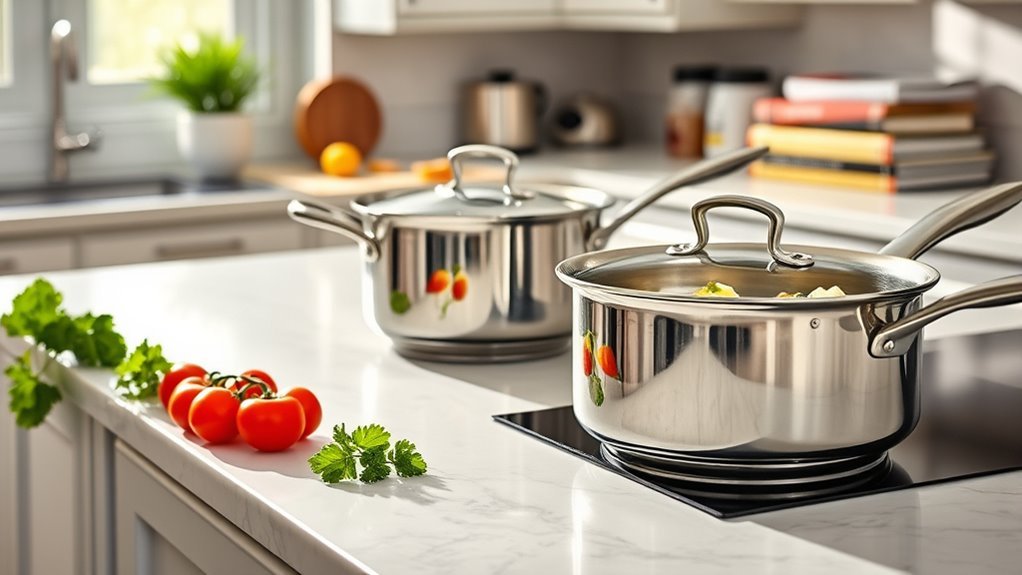
All-Clad cookware is popular because its bonded metal construction offers even heating, strong cooking performance, and long-term durability. Its uncoated stainless steel collections are especially useful for searing meat, sautéing vegetables, and preparing sauces.
Unlike pans with a thin layer of conductive metal only on the bottom, many All-Clad collections use bonded layers that extend through the cookware’s sides.
This design helps distribute heat across the cooking surface and reduces uneven hot spots.
For example, the D3 Stainless collection uses three bonded layers, with aluminum between stainless steel surfaces. D5 Stainless uses five bonded layers for more controlled heat distribution.
The cooking surface is stainless steel rather than a chemical nonstick coating. That makes these collections appealing if you want to avoid PTFE.
Another advantage is manufacturing quality. All-Clad’s fully bonded cookware is engineered, bonded, and assembled in Canonsburg, Pennsylvania, using domestic and imported materials.
However, not every All-Clad product is made in the United States. Some hard-anodized nonstick and ceramic-coated collections are manufactured overseas.
Durability is a major advantage, but no cookware is completely maintenance-free. Choosing the right material and caring for it properly matters more than the brand name alone.
Understanding the Materials Used in All-Clad Cookware
All-Clad uses different materials depending on the collection. Its most recognizable products combine stainless steel with conductive metals such as aluminum or copper.
These materials serve different purposes. Stainless steel provides a durable cooking surface, while internal metal layers help transfer heat.
Stainless Steel Cooking Surfaces
All-Clad’s traditional stainless steel cooking surfaces use a proprietary formulation of 304-grade stainless steel, commonly associated with 18/10 stainless steel.
The designation 18/10 generally refers to approximately 18% chromium and 10% nickel.
Chromium helps stainless steel resist corrosion by forming a protective surface layer. Nickel improves corrosion resistance and helps maintain the steel’s structure.
All-Clad confirms its stainless steel specifications and material testing in its official customer service information.
Stainless steel is resistant to reactions with many foods, but it is not completely inert. Small amounts of certain metals can migrate into food under specific conditions.
Aluminum and Copper Cores
Aluminum conducts heat more effectively than stainless steel. All-Clad uses it in bonded construction to improve heating speed and consistency.
Some collections also contain copper, which responds quickly to temperature changes.
In an intact stainless steel bonded pan, these conductive layers sit beneath the stainless steel cooking surface.
As a result, food normally contacts stainless steel rather than the aluminum or copper core.
High heat does not automatically expose the aluminum core. However, cookware with visible separation, corrosion, or exposed internal layers needs careful inspection.
Nonstick and Ceramic Coatings
All-Clad also sells cookware with applied nonstick coatings. These products are different from its uncoated stainless steel collections.
Traditional nonstick cookware uses PTFE to help food release easily. Ceramic-coated cookware uses a different type of nonstick surface.
Because these coatings have different compositions and care requirements, you should identify the exact collection before making safety assumptions.
Is All-Clad Cookware Non-Toxic and Free From PFAS?
All-Clad’s uncoated stainless steel collections are generally suitable for everyday food preparation and do not rely on PTFE coatings. However, it is incorrect to claim that every All-Clad product is PFAS-free.
The manufacturer’s official chemical disclosures identify PTFE and other PFAS in several nonstick product lines.
Here is how the main collections differ.
| All-Clad Collection | Cooking Surface | PFAS/PTFE Information |
|---|---|---|
| D3 Stainless and D5 Stainless | Uncoated stainless steel | No PTFE coating or PFAS listed in the manufacturer’s material disclosure |
| Copper Core | Uncoated stainless steel | No PTFE coating or PFAS listed for the uncoated collection |
| D3, D5, and Copper Core Nonstick | PTFE nonstick coating | PFAS disclosed |
| HA1 Expert, NS Pro Nonstick, and Essentials Nonstick | PTFE nonstick coating | PFAS disclosed |
| HA1 Ceramic and NS Pro Ceramic | Ceramic nonstick coating | No PFAS identified in the manufacturer’s collection-specific disclosure |
Does PFOA-Free Mean PFAS-Free?
No. PFOA is one chemical within the broader PFAS family. PTFE is another fluorinated material classified within that family.
Therefore, a nonstick pan advertised as PFOA-free may still contain PTFE.
This distinction matters if your goal is to avoid intentionally added PFAS rather than only PFOA.
All-Clad’s traditional nonstick products should not be described as universally PFAS-free. Its uncoated stainless steel and ceramic-coated collections are different options.
Are PTFE Nonstick Pans Dangerous?
PTFE-coated cookware is not automatically unsafe during normal cooking. The primary safety concern is severe overheating, especially when a pan is left empty on a hot burner.
According to the German Federal Institute for Risk Assessment, PTFE coatings can break down at approximately 360°C (680°F), releasing gases that may harm health.
Warning: Never leave an empty PTFE-coated pan heating unattended. Use low to medium heat, avoid overheating, and follow the manufacturer’s temperature limits. If a coating is badly damaged, stop using the pan until you have assessed whether it should be replaced.
The agency’s PTFE cookware safety assessment states that adverse health effects are not expected when these products are used as intended without overheating.
If you prefer to avoid PTFE entirely, choose an uncoated stainless steel collection or a ceramic-coated model without PTFE.
Potential Health Risks of Cooking With All-Clad Cookware
All-Clad stainless steel cookware is generally safe for most home cooks. However, metal sensitivity, cooking conditions, and physical damage can affect whether a particular pan is suitable for you.
The most relevant concerns involve nickel and chromium migration, overheating coated cookware, and damage to bonded cookware edges.
Can All-Clad Stainless Steel Leach Nickel and Chromium?
Yes. Stainless steel can release small amounts of nickel and chromium during cooking, particularly when exposed to acidic ingredients for long periods.
Tomatoes, citrus ingredients, and vinegar-based foods create more acidic cooking conditions than plain water.
A 2013 stainless steel cookware study examined metal migration into tomato sauce during repeated cooking cycles.
Researchers found that nickel and chromium release depended on the steel grade, cooking duration, and previous use.
In one experimental series, the tenth cooking cycle produced approximately 88 micrograms of nickel and 86 micrograms of chromium per 126-gram serving of tomato sauce.
These were controlled experimental results, not measurements taken from All-Clad cookware. They should not be treated as typical exposure values for every stainless steel pan.
A separate 2017 study of stainless steel pots examined common foods cooked for one hour.
Although researchers detected some metal migration, the amounts measured remained below known allergy-triggering thresholds in their experiments.
These findings show why cooking conditions matter. Ordinary short-duration cooking does not produce the same results as unusually prolonged exposure to acidic food.
Who Should Be More Careful?
People with diagnosed nickel sensitivity or systemic reactions to nickel may need to be more cautious.
Most people with nickel contact allergies do not necessarily react to the small amounts present in cooked food. However, highly sensitive individuals can have different thresholds.
Note: If you have a diagnosed nickel allergy, systemic nickel allergy syndrome, or unexplained reactions associated with meals, consult a qualified healthcare professional before making major dietary or cookware changes. Your individual sensitivity matters more than a general cookware safety label.
Is the Aluminum Core a Health Concern?
The aluminum core in intact bonded stainless steel cookware is normally separated from food by the stainless steel cooking surface.
This means an aluminum core does not automatically create the same direct-contact exposure as an uncoated aluminum pan.
However, damaged cookware deserves attention. Separation between bonded layers or visible exposure of internal materials can indicate deterioration.
Stop using cookware that has developed sharp, separating, or damaged edges until its condition has been assessed.
Maintenance Tips for Safe All-Clad Cookware
Proper cleaning and cooking habits help All-Clad cookware last longer and reduce avoidable damage. The best method depends on whether your pan has an uncoated stainless steel surface or a nonstick coating.
Follow these practical steps to maintain your cookware.
- Let the pan cool before washing. Sudden contact between a very hot pan and cold water can cause thermal shock and possible warping.
- Wash with warm, soapy water. Use a soft sponge or cloth. Hand washing is the safest routine for protecting most finishes over time.
- Remove stubborn food gently. For burnt residue on stainless steel, add baking soda and water, bring the mixture to a gentle boil, and loosen the food with a wooden spoon.
- Treat discoloration appropriately. White vinegar can help remove rainbow-colored heat stains. Avoid steel wool, oven cleaner, and harsh bleach-based detergents.
- Protect coated surfaces. Use wooden, silicone, or nylon utensils on nonstick cookware. Avoid abrasive pads that can damage the coating.
- Inspect the rim and cooking surface. Look for sharp edges, separation, or peeling coatings. Contact the manufacturer if you notice significant damage.
For uncoated stainless steel, ordinary metal utensils can be used, although they may leave cosmetic scratches. These superficial marks do not necessarily make the cookware unsafe.
Coated cookware requires more care because scratching can shorten the coating’s useful life.
Is All-Clad Dishwasher-Safe?
Dishwasher compatibility varies by collection. You should not assume that all All-Clad cookware can go in the dishwasher.
All-Clad currently identifies its D3 Stainless, D5 Stainless, Copper Core, and ceramic nonstick collections as hand-wash-only in its published comparison information.
Some other nonstick collections, including HA1 Expert and Essentials Nonstick, are listed as dishwasher-safe. Even for those products, hand washing may help preserve their appearance.
Follow the specific instructions for your cookware in All-Clad’s official care and cleaning guide.
Pro Tip: Before cooking acidic sauces for a long time, inspect your stainless steel pan for pitting, corrosion, or damaged bonded edges. Routine surface discoloration is different from structural damage, and treating both as the same problem can lead to unnecessary replacement or unsafe continued use.
How Does All-Clad Stack Up Against Other Brands?
All-Clad competes well with other quality cookware brands because of its bonded construction, heat control, and durable stainless steel surfaces. However, safety depends on materials and use rather than price or brand reputation alone.
The most useful comparison is between cookware materials.
- Uncoated stainless steel: Durable, resistant to corrosion, and suitable for searing and everyday cooking. It may release small amounts of nickel and chromium.
- Traditional PTFE nonstick: Easier for cooking delicate foods with less sticking, but it requires careful temperature control and protection from surface damage.
- Ceramic-coated cookware: Provides a nonstick alternative without a traditional PTFE coating. Its release performance may decline as the coating wears.
- Cast iron: Strong and suitable for high-heat cooking, but it needs appropriate maintenance and can contribute iron to food.
- Enameled cast iron: Uses a protective enamel surface that reduces direct food contact with iron. Chipped enamel requires careful assessment.
All-Clad’s main advantage over inexpensive, thin stainless steel cookware is its bonded heat-conducting construction.
That construction can offer more consistent cooking results, especially when preparing foods that need controlled heating.
However, a properly manufactured, lower-priced stainless steel pan can also provide a suitable food-contact surface. Paying more does not automatically eliminate metal migration or every possible safety concern.
User Reviews: Safety and Durability Insights on All-Clad Cookware
Long-term durability is a common reason buyers choose All-Clad cookware. The brand’s stainless steel collections are designed for repeated use, but actual lifespan depends on cooking habits, cleaning methods, and physical wear.
User feedback can help identify practical issues, but individual reports are not scientific evidence of chemical safety.
Material Safety Concerns
Material-related concerns generally fall into three groups: metal exposure from stainless steel, damage to nonstick surfaces, and deterioration around bonded cookware edges.
These issues should be assessed separately rather than treating all All-Clad products as having the same risks.
- Nickel and chromium: Migration is possible under certain cooking conditions, with greater relevance to people who have specific sensitivities.
- PTFE coatings: Overheating is a more important concern than ordinary use within the manufacturer’s recommended temperature range.
- Ceramic and enameled surfaces: Scratches, chips, and coating deterioration can affect continued usability and maintenance needs.
If you are considering a specialty cookware finish, identify its exact coating material before accepting claims about nanoparticles or other potential contaminants.
The construction and chemical disclosures of a particular product provide a more reliable starting point than assumptions based on its appearance.
Durability Over Time
All-Clad stainless steel cookware is designed to withstand years of regular cooking when properly maintained.
Bonded construction supports even heat distribution, while stainless steel provides a surface that does not depend on a removable nonstick coating.
Some owners report using their All-Clad pans for decades. However, these experiences should be treated as individual reports rather than a guaranteed lifespan.
Nonstick cookware generally has a different durability profile because its food-release coating can wear with use.
Minor scratches on bare stainless steel are often cosmetic. In contrast, peeling coatings, damaged enamel, or sharp exposed edges deserve closer attention.
The best measure of durability is whether a pan remains structurally sound and performs properly, not simply whether it still looks new.
Choosing the Right All-Clad Cookware for Your Needs
The best All-Clad cookware depends on what you cook and which materials you prefer. If avoiding traditional PFAS nonstick coatings is your priority, an uncoated stainless steel collection is a practical starting point.
For other cooking needs, a ceramic-coated or conventional nonstick pan may offer greater convenience.
Which Collection Should You Choose?
- D3 Stainless: A versatile choice for everyday cooking, searing, browning, and preparing sauces without a nonstick coating.
- D5 Stainless: Suitable if you want five-ply bonded construction and controlled heat distribution.
- Copper Core: Designed for cooks who value responsive temperature control and an uncoated stainless steel cooking surface.
- HA1 Ceramic or NS Pro Ceramic: Options for people who want easier food release without choosing traditional PTFE nonstick cookware.
- HA1 Expert or Essentials Nonstick: Convenient for delicate foods, but they contain PTFE and require appropriate heat management.
You can compare construction, materials, induction compatibility, and dishwasher recommendations using All-Clad’s official collection comparison.
Check Cooktop Compatibility
Many All-Clad collections work on gas, electric, and induction cooktops, but not every model is induction-compatible.
D3 Stainless, D5 Stainless, and Copper Core are compatible with induction.
Some nonstick products, such as Essentials Nonstick, are not designed for induction use.
If you use an induction cooktop, make sure the specific pan has a compatible magnetic base.
Check the Cooking Surface Before Buying
Read the complete product name rather than relying on the collection prefix alone.
For example, D3 Stainless and D3 Stainless Nonstick do not have identical food-contact surfaces.
One uses bare stainless steel, while the other includes a nonstick coating.
If your primary goal is avoiding PTFE, the exact product description matters more than whether the cookware is marketed as premium, professional, or PFOA-free.
Frequently Asked Questions
Which All-Clad Is Non-Toxic?
All-Clad D3 Stainless, D5 Stainless, and uncoated Copper Core cookware are generally suitable choices if you want to avoid PTFE nonstick coatings. Their food-contact surfaces use stainless steel. However, people with significant nickel sensitivity should consider whether stainless steel is appropriate for their individual needs.
What Is the Least Toxic Cookware?
Uncoated stainless steel, cast iron, and quality enameled cookware are common options for people seeking durable cooking surfaces without traditional PTFE coatings. No single material is ideal for everyone. Your health sensitivities, cooking methods, and the condition of the cookware all affect which choice is best.
Does All-Clad Have Forever Chemicals?
Yes, certain All-Clad nonstick collections contain PFAS, sometimes called forever chemicals. The manufacturer identifies PTFE in several traditional nonstick product lines. Its uncoated stainless steel collections do not use PTFE coatings. A PFOA-free label does not necessarily mean a pan is free from all PFAS.
What Is the All-Clad Lawsuit?
The All-Clad dishwasher lawsuit involved allegations that certain D3, D5, and LTD cookware could develop sharp edges after dishwasher cleaning despite dishwasher-safe marketing. A federal court approved a settlement in 2023. All-Clad denied wrongdoing, and the settlement did not establish that the company’s cookware was chemically toxic.
Is All-Clad Stainless Steel Safe for People With Nickel Allergies?
All-Clad stainless steel may be suitable for some people with nickel allergies, but individual sensitivity varies. Stainless steel can release nickel, particularly during prolonged acidic cooking. People with severe or systemic nickel reactions should seek medical advice about suitable cookware rather than assuming all stainless steel is safe.
Can All-Clad Cookware Go in the Dishwasher?
Some All-Clad cookware is dishwasher-safe, but many bonded stainless steel and ceramic collections require hand washing. The company currently lists D3 Stainless and D5 Stainless as hand-wash-only. Check your exact model’s care instructions because dishwasher compatibility differs between collections and may affect long-term durability.
Conclusion
All-Clad’s uncoated stainless steel cookware is generally a safe, durable choice for everyday cooking, especially if you want to avoid PTFE nonstick coatings.
However, not every All-Clad collection has the same materials. Traditional nonstick products may contain PFAS, while stainless steel can release small amounts of nickel and chromium under certain conditions.
Before buying or replacing a pan, identify its cooking surface, consider your health sensitivities, and follow the manufacturer’s care instructions. These steps will help you make a more informed decision without relying on broad non-toxic marketing claims.
Sources
- All-Clad: Nonstick and Chemical Safety Disclosures: Identifies PTFE, PFAS, stainless steel, and other disclosed materials across cookware collections.
- All-Clad: Cookware Collection Comparison: Supports construction, coating types, manufacturing locations, induction compatibility, and dishwasher recommendations.
- All-Clad: Customer Service and Product Specifications: Supports stainless steel composition, material standards, and manufacturing information.
- All-Clad: Official Use and Care Guide: Supports cleaning methods, heat precautions, coating maintenance, and dishwasher guidance.
- National Library of Medicine: Stainless Steel Leaches Nickel and Chromium Into Foods During Cooking: Research on metal migration during acidic cooking and repeated use.
- National Library of Medicine: Release of Nickel and Chromium in Common Foods: Research on metal migration during typical cooking conditions and implications for sensitive individuals.
- German Federal Institute for Risk Assessment: PTFE Cookware Safety: Explains normal-use safety, overheating risks, and thermal breakdown of PTFE coatings.
- U.S. District Court for the Western District of Pennsylvania: All-Clad Settlement Opinion: Court record concerning the 2023 dishwasher-safe cookware class-action settlement.
