
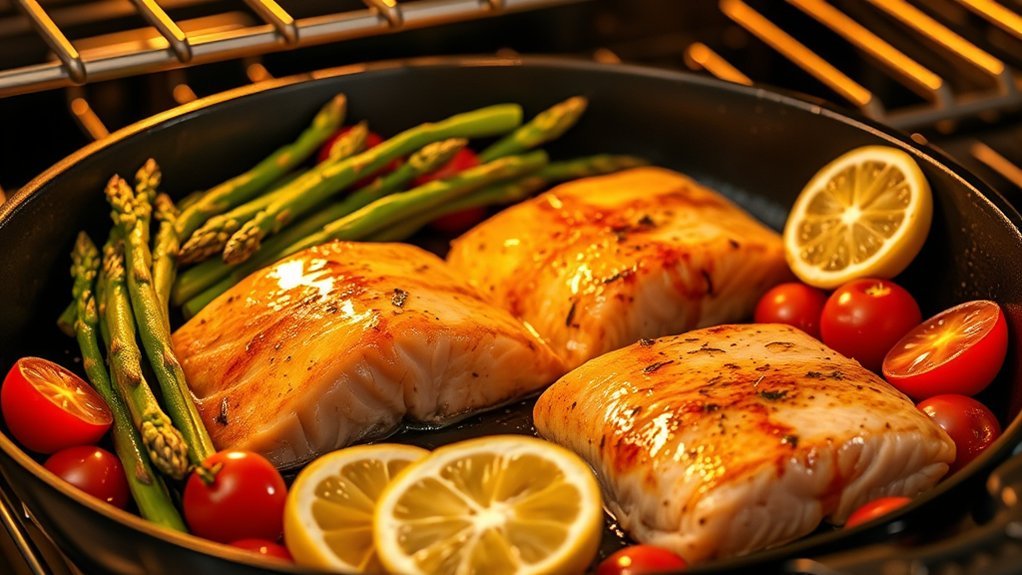
Broiling works especially well for thin meats, fish, seafood, vegetables, fruit, bread, and cheese-topped dishes that benefit from fast browning under intense direct heat. Good choices include steaks, pork chops, chicken cutlets, salmon, shrimp, bell peppers, zucchini, asparagus, pineapple, nachos, and casseroles. The safest setup depends on your oven, food thickness, cookware, rack position, and the instructions in your appliance manual.
Quick Answer
The best foods to broil are relatively thin foods that cook or brown quickly, including steaks, pork chops, chicken cutlets, fish fillets, shrimp, vegetables, fruit, toast, and cheese-topped dishes. Use broiler-safe cookware, position the rack for the food and your oven, watch continuously, and verify meat and seafood doneness with a food thermometer.
Key Takeaways
- Broiling uses strong direct heat, so thin or quick-browning foods are the easiest choices.
- Rack position is not one-size-fits-all. Thin foods generally go closer to the element, while thicker foods need more distance or a lower broil setting.
- Use a broiler pan, cast-iron skillet, or other cookware specifically approved for broiling; do not place ordinary glass bakeware under the broiler.
- Broiling times are estimates. Use color and tenderness for vegetables, but use a food thermometer for meat, poultry, and fish.
- Because oven designs differ, follow your owner’s manual for preheating, rack positions, and whether the door should be open or closed.
At a Glance
| Time Required | About 5–20 minutes for many foods, plus any model-specific preheating time |
| Difficulty | Easy, but requires close attention |
| Tools Needed | Broiler-safe pan, tongs or spatula, oven mitts, and a food thermometer for meat, poultry, and fish |
| Cost | No extra cost if you already have broiler-safe cookware and a food thermometer |
What Is Broiling and When Should You Use It?
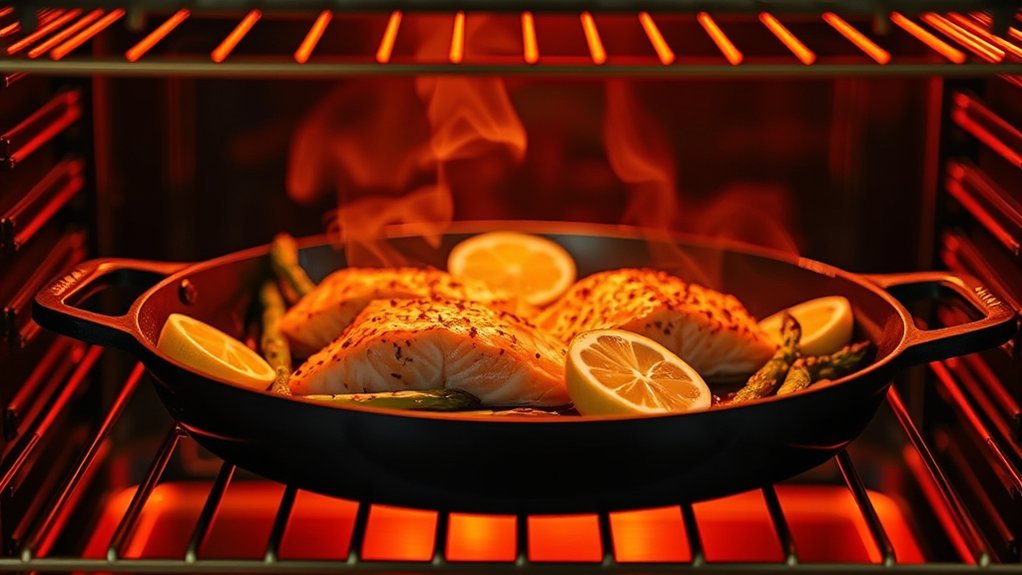
Broiling is a high-heat cooking method that exposes food to concentrated radiant heat. In many ovens the broil element or burner is above the food, producing fast surface browning much like cooking close to a grill.
Broiling is useful when you want a browned crust, charred edge, melted cheese, toasted surface, or quick cooking on relatively thin food. It works well for fish fillets, chicken cutlets, steaks, pork chops, vegetables, fruit, toast, nachos, and already-cooked dishes that only need their tops browned.
The method is fast because the food sits relatively close to the heat source. That same intensity means food can move from browned to burned quickly, so continuous attention matters more with broiling than with most baking.
Many ovens benefit from a short broiler preheat, and Maytag recommends about five minutes in its general broiling guidance. However, preheating instructions vary by appliance, so use your recipe and owner’s manual rather than treating five minutes as a universal requirement.
Note: Oven-door position also varies. Many newer ovens are designed for closed-door broiling, while some older models use a partially open broil position. Follow the instructions for your exact oven rather than automatically leaving the door open or closed.
Broiling vs. Baking: What Is the Difference?
Broiling concentrates high heat on one side of the food, while baking surrounds food with gentler oven heat for slower, more even cooking. That makes broiling better for rapid browning and baking better for thick foods that need time for heat to reach the center.
| Method | Best For | Typical Result |
|---|---|---|
| Broiling | Thin proteins, vegetables, toast, fruit, melting or browning toppings | Fast searing, charring, caramelization, or crisping |
| Baking | Thicker meats, casseroles, breads, cakes, foods needing even internal cooking | Slower, more even cooking throughout |
| Bake then broil | Thick foods or casseroles needing a browned finish | Cooked interior plus a crisp or golden surface |
If a thick food is browning too quickly under the broiler while its center remains undercooked, move it farther from the element, select a lower broil setting if available, or switch to Bake until it is nearly done and use Broil only for the final browning.
What Foods Broil Best?
Broiling works especially well with foods that can cook quickly or that only need their surfaces browned. Thin proteins such as steaks, pork chops, fish fillets, chicken cutlets, shrimp, and scallops are strong candidates because intense heat can brown their surfaces without a long oven time.
Vegetables, fruit, bread, and cheese-topped dishes also respond well. Bell peppers, zucchini, asparagus, tomatoes, pineapple, peaches, nachos, casseroles, open-faced sandwiches, and garlic bread can develop browned or lightly charred surfaces within minutes.
Thickness matters as much as the food itself. A thin pork chop may broil comfortably near the element, while a thick chop may need a lower rack position or lower broil setting to keep the exterior from becoming too dark before the center is safely cooked.
Best Broiling Foods
- Beef: steaks, burgers, thin steak strips, and cooked beef that needs surface browning.
- Pork: chops, tenderloin medallions, and other relatively thin cuts.
- Chicken: thin cutlets, boneless thighs, wings, and smaller pieces that can cook through without excessive surface burning.
- Fish: salmon, tilapia, cod, trout, and similar fillets.
- Seafood: shrimp and scallops.
- Vegetables: bell peppers, asparagus, zucchini, tomatoes, onions, mushrooms, and thinly sliced vegetables.
- Fruit: pineapple, peaches, bananas, grapefruit, and other fruit that benefits from caramelized edges.
- Finished dishes: nachos, gratins, casseroles, pizza, macaroni and cheese, and toast that need a browned top.
For meat with visible exterior fat, trimming excess fat can reduce smoke and spattering. A broiler pan with a grid also lets rendered juices drain below the food instead of pooling around it.
Foods To Avoid
Some foods and cookware need a different approach rather than an absolute ban. The main concern is whether the surface will burn before the center cooks or whether the cookware is approved for intense direct heat.
| Food or Cookware | Issue | Better Approach |
|---|---|---|
| Ordinary glass bakeware | Direct broiler heat may cause breakage | Use broiler-approved metal or other cookware specifically rated for broiling |
| Very thick meat | Surface may brown before the center reaches a safe temperature | Move farther from the element, use Low Broil, or bake first and broil to finish |
| Large raw root vegetables | Centers may stay firm while surfaces darken | Slice thinly or precook before broiling |
| Very fatty food | Rendered fat can increase smoke and spattering | Trim excess fat and use a draining broiler pan/grid |
| Sugar-heavy sauces | Sugar can scorch quickly | Apply late or move food farther from the heat |
Warning: Do not assume normal oven-safe glass is broiler-safe. Pyrex specifically states that its glassware should not be used under a broiler because direct heat can damage the glass. Use cookware that its manufacturer explicitly approves for broiling.
How Do You Set Up the Broiler Safely?
Start by checking the oven cavity and broiler area for accumulated food or grease. Intense broiler heat can produce heavy smoke from old residue, so a reasonably clean cooking area improves both safety and results.
- Read the oven instructions. Confirm the recommended rack position, Broil setting, preheating procedure, and required door position.
- Move the rack before heating. Thin foods usually go closer to the element, while thicker foods benefit from more distance.
- Choose broiler-safe cookware. A broiler pan and grid, cast-iron skillet, or suitable shallow metal pan is usually appropriate when permitted by the cookware manufacturer.
- Preheat if directed. Many ovens use roughly five minutes, but follow your model’s instructions.
- Arrange food in one layer. Leave enough room for heat to reach the food evenly.
- Broil while watching closely. Stay nearby and check progress frequently.
- Measure safe doneness. Use a food thermometer for meat, poultry, and fish rather than judging safety by color alone.
A broiler pan with a grid is particularly useful for fatty meat because the grid holds food above the drippings. Whirlpool recommends this setup to help reduce smoke and spatter.
Pro Tip: Set the rack and gather your pan, thermometer, tongs, and oven mitts before turning on the broiler. Broiling moves too quickly to search for equipment after the food begins browning.
What Broiling Times and Rack Positions Work Best?
There is no single rack distance or cooking time that works for every oven. A common starting point is roughly 3 to 5 inches between the food and broiler for thin, quick-cooking foods, but your owner’s manual and recipe should take priority. Thicker food generally needs more distance from the element.
Some ovens also provide High and Low Broil. High Broil is useful for thin foods and quick browning. Low Broil reduces the rate of surface browning, which can give thicker food more time to cook internally.
The following times are practical starting ranges based on common manufacturer guidance, not guarantees:
| Food | Example Starting Position | Approximate Time | Doneness Check |
|---|---|---|---|
| 1-inch beef steak | About 4 inches from heat | About 8–12 minutes | At least 145°F plus a 3-minute rest for whole-cut beef |
| Chicken cutlet | About 3 inches from heat | About 10–12 minutes | 165°F |
| 1/2-inch fish fillet | About 3–4 inches from heat | About 5–6 minutes | 145°F, or follow current seafood safety guidance |
| 1/2-inch pork chop | About 3 inches from heat | About 10–15 minutes | 145°F plus a 3-minute rest |
| Zucchini, peppers, onions, or tomatoes | Close enough to brown without scorching | About 5–15 minutes depending on size | Desired browning and tenderness |
| Garlic bread or cheese topping | Near broiler with close supervision | Often 1–3 minutes | Golden surface; remove before burning |
Thickness, starting temperature, pan material, oven design, and the Broil setting can all change these times. Start checking early rather than treating a timer as proof that food is done.
Under a broiler, the thermometer determines safe doneness for meat, poultry, and fish; the clock only tells you when to start checking.
Safe Internal Temperatures for Broiled Food
Use a food thermometer at the thickest part of the food. Current U.S. food-safety guidance lists these minimum temperatures:
| Food | Safe Minimum | Rest / Additional Guidance |
|---|---|---|
| Beef, pork, lamb, veal steaks and chops | 145°F / 63°C | Rest at least 3 minutes |
| Ground beef, pork, lamb, or veal | 160°F / 71°C | No separate 3-minute rest requirement |
| Chicken, turkey, and other poultry | 165°F / 74°C | Applies to breasts, thighs, wings, ground poultry, and other poultry parts |
| Finfish | 145°F / 63°C | FoodSafety.gov also gives visual seafood guidance when appropriate |
| Leftovers and casseroles | 165°F / 74°C | Check the center |
These temperatures come from FoodSafety.gov’s safe minimum internal temperature guidance. Personal preference may lead you to cook some foods to a higher temperature.
How Do You Broil Meat, Fish, and Chicken?
Thin, evenly sized portions are the easiest proteins to broil because they can brown quickly while cooking through. Uneven chicken breasts can be pounded to a more uniform thickness, while steaks and pork chops should be chosen with thickness in mind when setting the rack.
Before cooking, pat wet surfaces dry when strong browning is the goal. A light coating of oil or a marinade can add flavor, but heavy oil and sugary marinades may smoke or scorch under intense heat. Always marinate raw meat, poultry, and seafood in the refrigerator.
Place the food in a shallow broiler-safe pan or on a broiler pan and grid. Turn thicker pieces when needed for more even cooking. Very thin fish or meat may not need turning, depending on the recipe and oven.
For fish such as salmon or tilapia, check early because thin fillets cook quickly. Fish should reach the applicable safe doneness standard; FoodSafety.gov lists 145°F for finfish.
Chicken needs particular care because browning is not proof of safety. Broiled chicken should reach 165°F in the thickest portion. Do not routinely remove poultry several degrees early and rely on carryover cooking.
Whole cuts of beef, pork, lamb, and veal should reach at least 145°F before removal from the heat and then rest for at least three minutes. Ground meats require 160°F.
How Do You Broil Vegetables, Cheese, and Fruit?
Vegetables broil best when pieces are cut to a similar size so they brown at roughly the same rate. Bell peppers, asparagus, zucchini, tomatoes, mushrooms, and onions can be lightly coated with oil and seasoning, then spread in one layer on a broiler-safe pan.
Dense vegetables need more preparation. Thinly slicing potatoes, carrots, or other root vegetables—or partially cooking them first—helps prevent the outside from scorching while the center remains hard.
Cheese-topped foods such as nachos, casseroles, toast, pizza, and macaroni and cheese often need only a brief period under the broiler. Watch continuously once the cheese begins bubbling because browning accelerates quickly.
Fruit such as peaches and pineapple can develop caramelized edges under the broiler. Halves, rings, or thick wedges are easier to handle than tiny pieces. Sugar can speed browning, so sweetened fruit requires especially close supervision.
- Use a broiler-safe pan or an approved foil-lined setup.
- Arrange pieces in a single layer.
- Keep pieces similar in size for even cooking.
- Check frequently rather than waiting for the full estimated time.
- Remove the food when it reaches the desired browning and tenderness.
How Do You Prevent Smoke, Grease, and Spattering While Broiling?
Some smoke can occur during high-heat cooking, but heavy smoke usually means excess fat, old grease, sugary drippings, unsuitable rack placement, or a dirty pan or oven.
- Trim excess exterior fat from meat when practical.
- Use a broiler pan and grid so rendered fat can drain away from the food.
- Keep the pan centered and use the rack position recommended for your oven and food.
- Do not allow grease to pool near intense heat.
- Clean old residue from the broiler area and pan before cooking.
- Use foil only as your appliance and pan manufacturer permit. If foil covers a draining broiler grid, openings generally need to remain unobstructed so grease can drain.
- Move food farther from the element or reduce the broil setting if its surface is burning before the center cooks.
Whirlpool’s broiling guidance specifically recommends a broiler pan and grid, trimming excess fat, and keeping drainage openings functional to help control smoke and spatter.
What Broiling Mistakes Should You Avoid?
One common mistake is placing every food at the same rack height. Food close to the element browns faster, while thicker pieces often need more distance. Use the recommended position in your owner’s manual or recipe and adjust if browning is occurring too quickly.
Another mistake is using cookware simply because it is labeled oven-safe. Broiling exposes cookware to intense direct heat, so it must also be approved for broiler use. Pyrex, for example, specifically instructs consumers not to use its glassware under a broiler.
Choose cookware specifically approved for broiling. Ordinary glass bakeware can be unsafe under direct broiler heat, and a draining broiler pan is useful for foods that release fat.
Do not assume that every oven should be preheated or used with the door open. Manufacturer instructions differ. GE’s current guidance on broiler door position, for example, explains that many newer models are designed for closed-door broiling while certain older models differ.
Finally, do not leave broiling food unattended. High direct heat can turn a golden topping into a burned surface quickly. Stay nearby, check food early, and use a thermometer whenever internal temperature determines safety.
Frequently Asked Questions
When should I use Broil in the oven?
Use Broil when you want fast surface browning, searing, charring, crisping, or melting. It is especially useful for thin meat and fish, vegetables, toast, fruit, and the tops of already-cooked casseroles, nachos, pizza, or macaroni and cheese.
What part of the oven do you broil food in?
On many modern ovens, food broils on an upper oven rack beneath a top heating element or burner. Other oven designs differ, including models with separate broiler compartments. Select the Broil function and follow the location and rack-position instructions in your owner’s manual.
What dishes can you broil in?
Use cookware that is specifically approved for broiling. Common options include a broiler pan and grid, cast-iron skillet, or suitable shallow metal pan. Do not assume ordinary glass bakeware is safe under a broiler; check the cookware manufacturer’s instructions.
What types of food are suitable for broiling?
Good broiling foods include steaks, pork chops, chicken cutlets, fish fillets, shrimp, scallops, bell peppers, asparagus, zucchini, tomatoes, pineapple, peaches, toast, nachos, sandwiches, and cheese-topped casseroles. Thin or quick-cooking foods are usually the easiest to broil.
Should the oven door be open or closed when broiling?
Follow your oven’s manual. Many newer ovens are designed for closed-door broiling, while some older electric ovens use a partially open broil-stop position. Door position affects temperature control and can also affect nearby controls, so it should not be guessed.
Do you need to preheat the broiler?
Many ovens and recipes call for a short broiler preheat, commonly around five minutes, to establish strong direct heat before the food goes in. However, oven designs vary, so follow your owner’s manual and recipe for the correct procedure.
Conclusion
Broiling is most useful for foods that benefit from fast, concentrated heat: thin steaks and chops, chicken cutlets, fish and seafood, vegetables, fruit, toast, and cheese-topped dishes. Good results depend on matching the rack position and Broil setting to the food instead of relying on one fixed distance or time. Use broiler-safe cookware, control excess grease, follow your oven’s instructions for preheating and door position, and stay close while food cooks. For meat, poultry, and fish, finish by checking the appropriate safe internal temperature rather than relying only on browning.
Sources
- FoodSafety.gov — Safe Minimum Internal Temperatures — safe temperatures for beef, pork, poultry, fish, ground meat, leftovers, and required rest times.
- Maytag — How to Broil in the Oven — general broiler setup, preheating, rack placement, cookware, and example cooking times.
- Whirlpool — Helpful Tips for Broiling — broiler pan use, rack positioning, fat trimming, smoke reduction, and drainage guidance.
- GE Appliances — Oven Door Position During Broil — explains why open-versus-closed door instructions depend on the appliance model.
- Pyrex — Frequently Asked Questions — manufacturer warning against using Pyrex glassware under a broiler.

1 thought on “What to Broil in the Oven: Best Foods & Cooking Tips”