
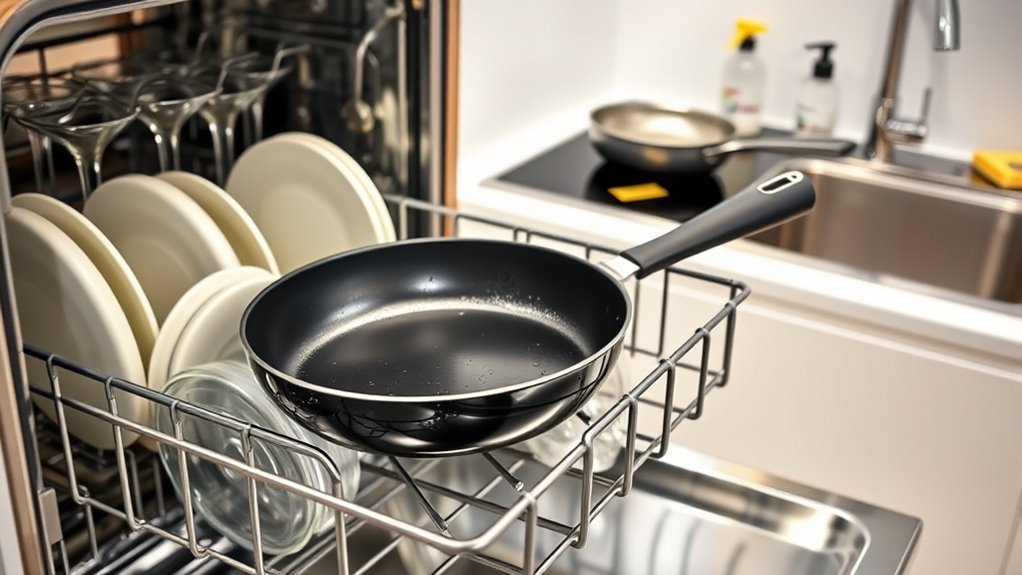
You might’ve heard that Teflon pans are dishwasher-safe, but is that really true for everyday use? You’ll want to know how heat, harsh detergents, and rack abrasion quietly shorten a nonstick surface and when the label can be trusted. Keep going to learn clear checks and practical steps to protect your cookware and avoid stains, scratches, or a pan that no longer releases food like it should.
Can Teflon Go in the Dishwasher?
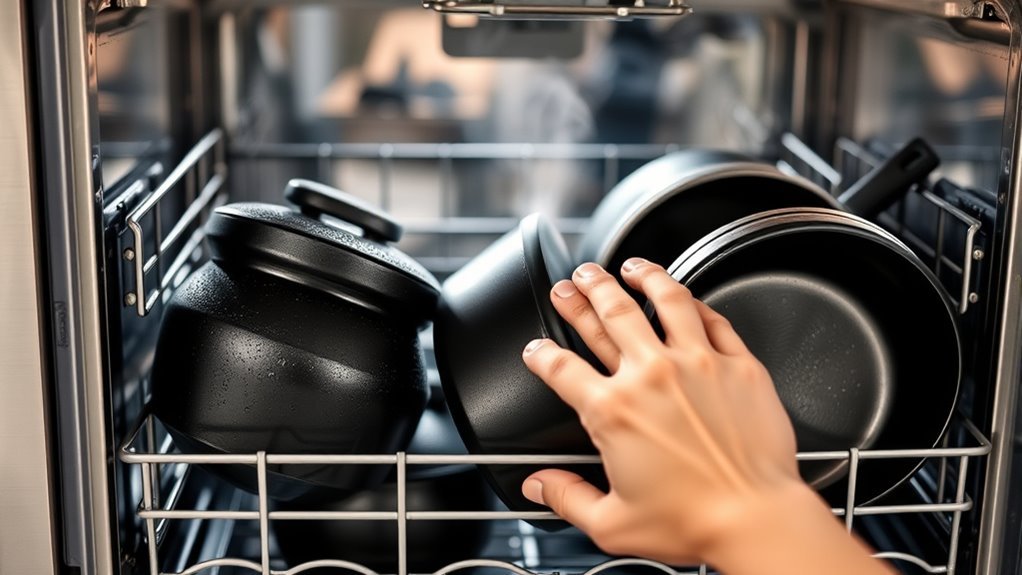
Can Teflon-coated pans go in the dishwasher? You should avoid it. Teflon’s nonstick coating is vulnerable to the dishwasher’s high heat and harsh detergents, which can roughen the surface and shorten the pan’s lifespan.
If you want freedom from replacing cookware often, follow strict care guidelines: prioritize hand washing with mild detergent and a soft sponge, skip abrasive pads, and dry thoroughly. Some manufacturers warn that repeated dishwasher cycles and extreme temperatures may even release harmful fumes, so you’ll protect both your kitchen and health by washing gently.
Treat Teflon as a tool that deserves intentional maintenance rather than disposable convenience. That means resisting the easy cycle, inspecting the surface for wear, and retiring pans once coating flakes or performance drops.
These precise steps keep you in control of cleaning, extend cookware life, and align practical upkeep with a desire for lasting autonomy.
How Dishwashers Damage Teflon
Don’t put Teflon pans in the dishwasher regularly: abrasive detergents can strip the coating and make surfaces rough and prone to scratching.
High-heat cycles accelerate coating breakdown and can even release harmful fumes if the pan gets too hot.
Strong spray jets and trapped utensils also cause mechanical erosion that chips the nonstick layer over time.
Abrasive Detergent Effects
When you put Teflon-coated pans through a dishwasher, abrasive detergents and high heat work together to wear down the nonstick layer, causing scratches, loss of release, and eventual discoloration or warping; over time this makes food stickier and cleanup harder and raises the risk of overheated coatings releasing fumes. You want freedom from extra work, so protect your cookware: abrasive detergents attack Teflon coatings, strip the protective layer, and degrade nonstick performance, while high temperatures can amplify damage and harmful fumes. The result is more food sticking and shorter longevity. Choose hand washing with mild soap to preserve finish and ease cleanup. Resist convenience when it compromises performance and safety.
| Scratch marks | Loss of release |
|---|---|
| Discoloration | Warping |
| Food sticking | Shorter longevity |
High-Heat Cycle Damage
Although dishwashers save time, their high-heat cycles can seriously damage Teflon: temperatures above about 475°F and repeated exposure to hot, moist conditions accelerate coating breakdown, causing loss of release, scratches, and even the release of harmful fumes.
You want freedom from replacement and unsafe cookware, so avoid subjecting pans to those heat cycles. High temperatures plus detergent and moisture weaken the non-stick surface and can strip protective layers, reducing longevity and performance.
Manufacturers often void the warranty if you run Teflon through a dishwasher, so respect care instructions.
To reclaim control, have your cookware hand-washed with mild soap and a soft sponge after use. That simple habit preserves release, safety, and your right to reliable cookware.
Mechanical Spray Erosion
Because powerful spray arms and concentrated detergent collide with Teflon at high speed, the coating can be abraded over time, reducing release and exposing the substrate beneath. You’ll see mechanical erosion from high-pressure jets and abrasive detergents that scratch surfaces, cut nonstick performance, and shorten lifespan. Routine dishwasher use can drop effectiveness—studies show about a 30% loss after a few cycles—so take control: avoid the mechanical assault, choose hand washing, and separate fragile pans from heavy items. Be practical—inspect pans for wear, stop using damaged pieces, and follow manufacturer guidance. Liberation here means preserving cookware you value by resisting convenience that causes irreversible damage.
| Cause | Effect | Action |
|---|---|---|
| High-pressure jets | Surface abrasion | Hand washing |
| Abrasive detergent | Scratches | Mild soap |
| Contact with items | Chipping | Separate items |
Check Your Pan: Label, Warranty, and Surface Signs
Check the manufacturer’s label before you load a Teflon pan, since many brands explicitly recommend hand washing to preserve the coating.
Inspect the cooking surface for scratches, flaking, or dull spots that signal the nonstick finish is compromised.
Also verify your warranty terms—dishwasher damage or improper care can void coverage, so know whether repair or replacement is eligible.
Check Manufacturer Labeling
1 clear step before you toss a Teflon pan into the dishwasher: read the manufacturer’s label and warranty details so you know exactly what the maker allows.
Check for explicit “dishwasher safe” claims; brands vary and some list warnings against dishwasher use because high heat and harsh detergents can cause potential damage.
If labeling is absent or vague, consult warranty information—dishwasher use may void coverage.
When labels advise hand washing, follow that guidance to preserve nonstick performance, longevity, and ideal cooking results.
You’re aiming for freedom from avoidable replacements, so prioritize the maker’s instructions over convenience.
Treat manufacturer labeling as your authority; it protects the coating and guarantees your cookware lasts without compromising safety or performance.
Inspect Surface Wear
Now that you’ve confirmed the maker’s instructions and warranty terms, take a close look at the pan’s cooking surface for signs of wear before deciding to run it through the dishwasher.
You want freedom from replaceable mistakes, so inspect Teflon cookware for visual and tactile cues: scratches, dull patches, or persistent burnt spots. If the nonstick coating shows damage, dishwasher safe labeling won’t save you—dishwasher detergents can hasten degradation and food sticking.
Prefer hand care when in doubt.
- Check for scratches or flaking on the surface wear
- Rub gently to feel a gritty or dull nonstick coating
- Note any persistent food sticking after washing
- Consider warranty terms if damage is present
- Use mild detergent when cleaning Teflon pans by hand to extend lifespan
Verify Warranty Coverage
Before you toss a Teflon pan into the dishwasher, confirm the maker’s label and warranty terms so you don’t unintentionally void coverage or speed up coating failure.
Check the manufacturer’s label for explicit dishwasher safety guidance; some cookware lines mandate hand washing to protect nonstick surfaces.
Verify warranty coverage language—look for clauses that void repair or replacement if dishwasher detergents or high-heat cycles cause wear and damage.
If the label’s unclear, contact the maker for compliance confirmation and keep records of their response.
Inspect your pan for scratches or flaking; even “dishwasher safe” items with visible wear merit hand washing.
Protect your freedom to cook boldly by choosing care that preserves performance and preserves warranty protection.
Dishwasher-Safe Steps for Teflon Pans
One simple rule will keep your Teflon pans lasting longer: avoid the dishwasher when possible and hand wash with mild detergent and a soft sponge.
But if you choose dishwasher use, proceed with care to protect the nonstick coating and your freedom to cook without limits. Always check the manufacturer’s care instructions first to confirm if your pan is labeled dishwasher-safe.
- Place pans on the top rack only to minimize direct heat exposure.
- Choose a gentle cycle and low-heat drying to reduce thermal stress.
- Use dishwasher detergent formulated for delicate cookware; avoid abrasive cleaning agents.
- Don’t nest cookware; allow water to circulate and dry thoroughly to prevent damage or rust.
- Inspect regularly for scratches or coating wear; stop dishwasher use if you see deterioration.
These steps balance convenience and preservation.
You’ll guard the coating, honor care guidance, and keep your kitchen liberated from premature replacements.
Don’t Use the Dishwasher : How to Hand-Wash Teflon Safely
If you prefer to keep Teflon pans out of the dishwasher altogether, hand-washing is the safest route and only takes a few careful steps. You’ll preserve the non-stick surface and extend longevity by using a soft sponge, warm water, and a mild detergent; avoid abrasive cleaners or scouring pads that create scratches. Rinse gently to remove residue, then dry thoroughly to prevent water spots and maintain appearance. Inspect cookware regularly for wear signs so you can act before sticking becomes a problem. This care guide keeps you free from machine heat and potential fume risks, empowering you to control dishwasher safety on your terms.
| Step | Tool | Purpose |
|---|---|---|
| 1 | Soft sponge | Remove food without scratching |
| 2 | Mild detergent | Clean without degrading coating |
| 3 | Warm water | Loosen residue safely |
| 4 | Soft towel | Thorough drying, prevent water spots |
| 5 | Visual check | Monitor wear signs for longevity |
Signs It’s Time to Replace or Recoat a Damaged Teflon Pan
Spotting the right signs can save you from cooking disappointments and health risks, so replace a Teflon pan when the surface no longer feels slippery, food burns on contact, or you see frequent scratches, flaking, or peeling.
You want freedom from doubt in the kitchen, so act decisively when the nonstick surface shows wear.
- Visible flakes or peeling: stop using the pan immediately to avoid ingesting particles and replace it.
- Loss of slipperiness and burned food: a clear sign the coating is compromised; recoating usually won’t fix deep wear.
- Frequent scratches: these undermine performance and can harbor residues despite rigorous cleaning methods.
- Failed restoration attempts: if vinegar, salt, or other cleaning methods don’t restore the surface, choose replacement over risk.
- Age and heavy use: replace Teflon every 3–5 years if used often to minimize health risks.
Don’t risk your liberation: prioritize safety over saving a damaged pan or running it in the dishwasher.
Frequently Asked Questions
Is Teflon Safe if Scratched?
Not really — if your Teflon’s scratched you should be cautious.
You’ll weigh Teflon durability against Scratch impact: minor marks may only hurt Nonstick performance, but deeper gouges raise Cooking safety and Health concerns.
Track Replacement frequency and favor Maintenance tips like gentle Surface care and Scratch prevention using silicone, wood, or plastic utensils.
Adjust Cooking methods to lower heat, but liberate yourself by replacing heavily damaged pans for safer, reliable cooking.
How Do I Clean a Teflon Coated Pan?
Hand-wash your Teflon-coated pan with a soft sponge, mild detergent, and warm water to preserve non-stick properties.
Use safe scrubbing only for stubborn residues after soaking; avoid abrasives and the dishwasher per dishwashing tips to protect Teflon maintenance.
Rinse, dry fully, and apply a light oil application before storage.
Mind heat resistance and longevity factors; consider cookware alternatives and gentle cooking methods to keep your freedom from ruined pans.
Should I Throw Out My Teflon Pans?
Like a weathered flag, you shouldn’t automatically toss Teflon pans — but you should act.
Check Teflon longevity and nonstick properties; if deep scratches, flaking, or poor heat resistance appear, replace them for safety concerns.
Use scratch prevention, approved cooking techniques and maintenance tips to extend life.
Compare cookware and consider Teflon alternatives and eco friendly options.
Choose pans that match your liberation: durable, safe, and aligned with your values.
Which Is Better, Stainless Steel or Teflon?
Stainless steel is generally better if you want durability comparison and long term usage; Teflon wins on food release and cooking performance for delicate foods.
Evaluate heat retention, maintenance tips, environmental impact and cost analysis: stainless’s higher heat tolerance and easier maintenance suit liberation-minded cooks; Teflon costs less and offers slick user experiences but needs cautious care.
Check popular brands, read user experiences, and weigh short-term convenience versus long-term safety.
Conclusion
Think of your Teflon pan as a delicate shield you’ve been entrusted with — you wouldn’t toss armor into a corrosive bath. If the label says dishwasher-safe and you’re gentle with low heat and mild detergent, you can risk a wash now and then; otherwise hand-wash in warm, soapy water and inspect for scratches or flaking. Don’t gamble with damaged coating: replace it. Treat it with care, and it’ll repay you with easy, safer cooking.

