
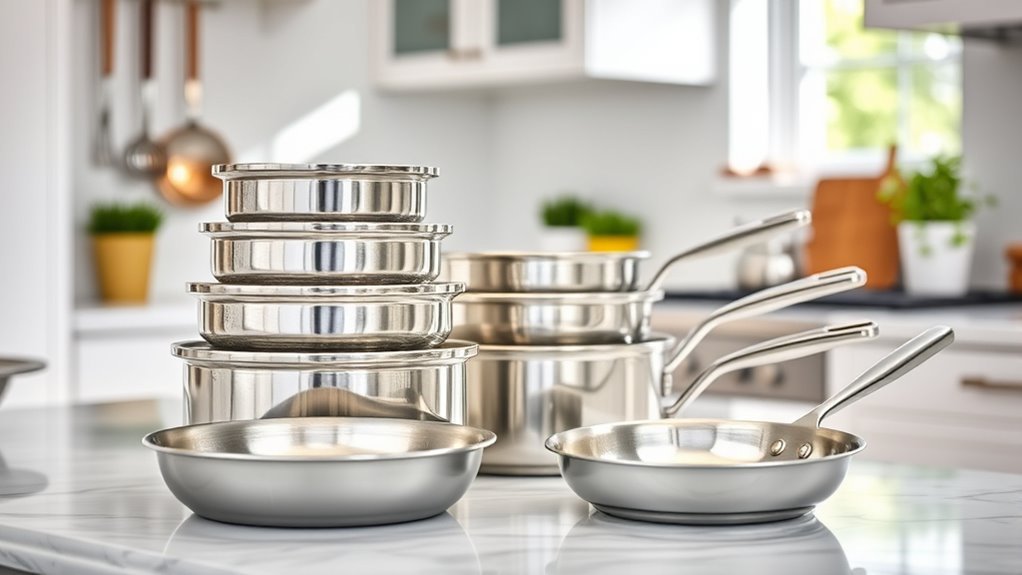
It’s funny how many people stack their stainless steel pans without a second thought, only to find themselves facing scratches and uneven heating later on. If you’re one of them, you might want to reconsider your approach. Stacking can be convenient, but it comes with risks that could affect your cookware’s performance. So, what’s the best way to safely organize your stainless steel pans while preserving their quality? Let’s explore some effective tips and practices.
Why You Should Think Twice Before Stacking Stainless Steel Pans
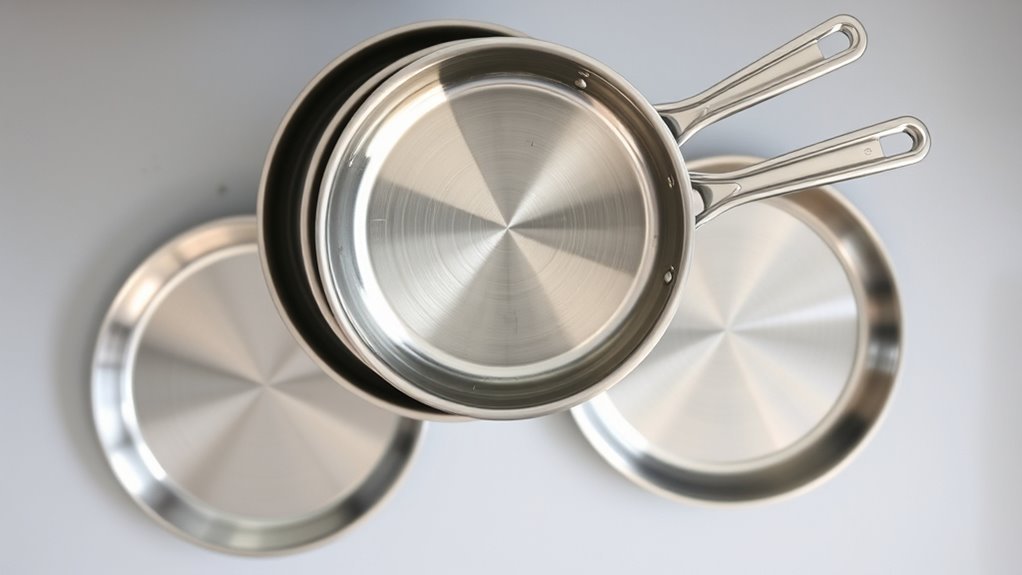
While it might seem convenient to stack your stainless steel pans for storage, you should think twice before doing so. Stacking can lead to unsightly scratches, compromising their polished finish and overall appearance.
Plus, moisture trapped between the pans fosters rust or corrosion, which can shorten their lifespan. Improper alignment increases the risk of damage, so careful storage is essential to avoid contact.
Moisture trapped between stacked pans can lead to rust and damage, making careful storage essential for longevity.
Moreover, stacked pans disrupt heat distribution, negatively impacting your cooking performance and leading to uneven results.
If you want to maintain the beauty and functionality of your cookware, consider alternatives. Using protective covers or dividers between your stacked pans can help preserve their condition and keep them looking new.
Safely Stack Your Stainless Steel Cookware
If you want to stack your stainless steel cookware without damaging it, there are some key practices to follow.
First, make sure your pans are completely dry before stacking. Moisture can lead to rust or corrosion on your stainless steel.
Next, use pan protectors or soft cloths between each pan to minimize contact and prevent scratches.
Finally, align your pans properly to maintain even weight distribution and avoid misalignment that could cause damage.
- Use pan protectors or cloths to cushion surfaces.
- Stack only dry pans to prevent rust.
- Consider dedicated cookware racks for best storage.
Effective Practices to Prevent Scratches on Stainless Steel Cookware
To keep your stainless steel cookware looking pristine, adopting effective practices is essential. Start by using pot and pan protectors or felt liners between stacked pans; this simple step can greatly reduce scratches and maintain their finish.
Always make sure your pots and pans are completely dry before stacking them to minimize moisture, which can lead to rust. When stacking, carefully align each pan to avoid misalignment that could cause scratches during retrieval.
Consider storing your cookware in a dry, climate-controlled environment to preserve its quality over time. If you want to enhance organization, think about using a dedicated cookware rack or organizer. This keeps your pans separate and easily accessible, further reducing the likelihood of scratches.
Ongoing Care for Your Stainless Steel Cookware
Stacking your stainless steel pans properly sets the stage for ongoing care that keeps them in top shape. To maintain their performance and appearance, follow these essential tips:
- Clean regularly: Use warm soapy water to prevent residue buildup, ensuring your steel pans stay shiny and effective.
- Dry thoroughly: After washing, dry your pans completely to avoid water spots and rust, especially when stored stacked.
- Protect surfaces: Apply a small amount of cooking oil before storing to create a barrier against moisture and tarnishing.
Additionally, avoid using high heat consistently, as it can lead to discoloration and warping, diminishing your cookware’s effectiveness.
By implementing these straightforward practices, you’ll enjoy your stainless steel pans for years to come, maintaining their beauty and functionality with ease.
With ongoing care, you’ll liberate your culinary experience, making cooking a joy rather than a chore.
Alternatives to Stacking: Smart Storage Solutions for Your Kitchen
While stacking your stainless steel pans might seem like a space-saving solution, exploring alternative storage options can enhance both your kitchen’s organization and the longevity of your cookware.
You can use cookware dividers to create designated spaces for each pan, reducing scratches and guaranteeing quick access when cooking. Specifically designed pot and pan protectors add cushioning between stacked cookware, helping maintain your pans’ pristine condition.
Consider implementing pull-out racks or drawer organizers in your cabinets, making it easier to retrieve frequently used pans without the hassle of stacking.
Vertical storage solutions like pot racks not only save space but also keep your pans well-protected and accessible.
Finally, regularly assess and reorganize your cookware storage to adapt to your changing needs. This way, you’ll guarantee your kitchen remains clutter-free and functional, liberating you to enjoy your cooking experiences even more.
Frequently Asked Questions
What Not to Do With a Stainless Steel Pan?
Don’t stack your stainless steel pans directly on top of each other; it scratches the surface.
Skip soaking them in saltwater, too, as it leads to corrosion.
Avoid abrasive cleaners and steel wool, which ruin their shine.
Don’t leave food in the pans for long, especially acidic ingredients, as they can cause discoloration.
Finally, steer clear of high heat for extended cooking; it can warp your pan and mess with heat distribution.
Does Stainless Steel Give off Microplastics?
No, stainless steel doesn’t give off microplastics.
When you choose stainless steel cookware, you’re opting for safety and longevity. Unlike non-stick options, it’s durable and resistant to wear, ensuring your meals stay free from harmful substances.
Proper care means your pans won’t leach anything into your food, making them a smart, eco-friendly choice.
Embrace the liberation of cooking with stainless steel, knowing you’re making a safe and sustainable decision.
When Should I Throw Away My Stainless Steel Pan?
You should toss your stainless steel pan when you notice significant signs of wear, like deep scratches or rust.
For instance, if you’ve got a pan that used to sizzle perfectly but now has uneven heating, it’s time to evaluate its lifespan.
Dents or loose handles also signal it’s time for a replacement.
Keeping an eye on these signs guarantees your cooking remains safe and enjoyable, freeing you from worry.
What Are the Downsides of Using Stainless Steel Pans?
Stainless steel pans offer great durability, but they’ve downsides. They can scratch easily, compromising both their appearance and cooking performance.
If moisture gets trapped, rust and corrosion may develop over time. Improper stacking can lead to warping, affecting heat distribution.
Plus, accessing stacked pans can be frustrating during meal prep. Finally, the weight might stress the handles, risking damage.
Being aware of these issues helps you maintain your kitchen tools effectively.
Conclusion
In summary, while stacking stainless steel pans can save space, it’s essential to prioritize their care. Keep them dry, use protective liners, and store them thoughtfully. Embrace proper alignment to guarantee even weight distribution, and regularly clean to maintain their shine. Whether you stack or explore alternative storage, remember: protect your investment, preserve their performance, and prolong their lifespan. With these practices, your stainless steel cookware will serve you beautifully for years to come.

