
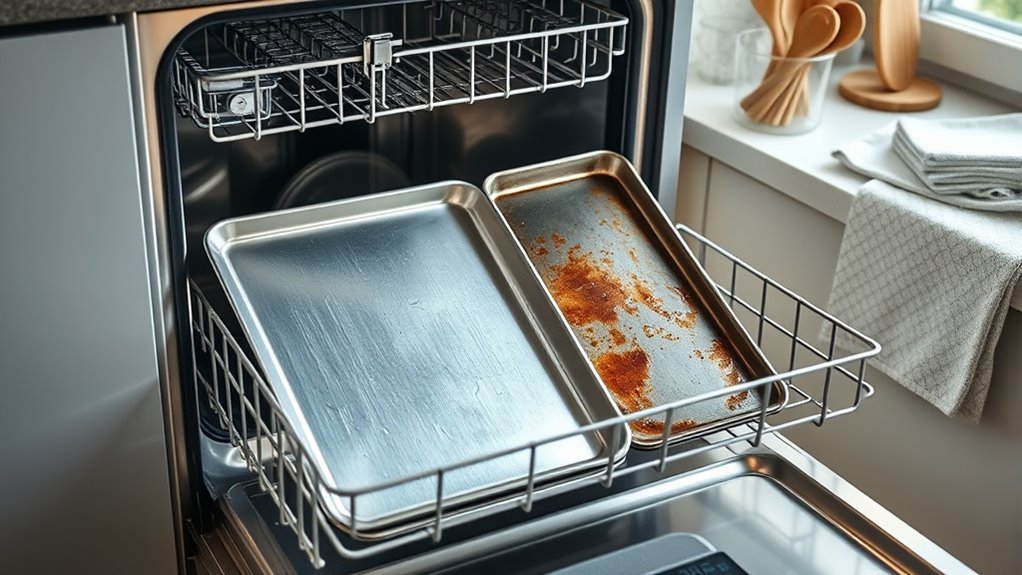
You might be surprised how much the dishwasher can shorten a cookie sheet’s life. You’ll want to know which materials can actually handle the cycle, which need gentle hand care, and what common dishwasher habits cause rust, dulling, or coating loss—so you can avoid mistakes that ruin bakeware. Keep going and you’ll get clear rules by material, safe dishwasher tips when allowed, plus simple hand‑washing and maintenance practices that really extend performance.
Quick Answer: Can You Put Cookie Sheets in the Dishwasher?
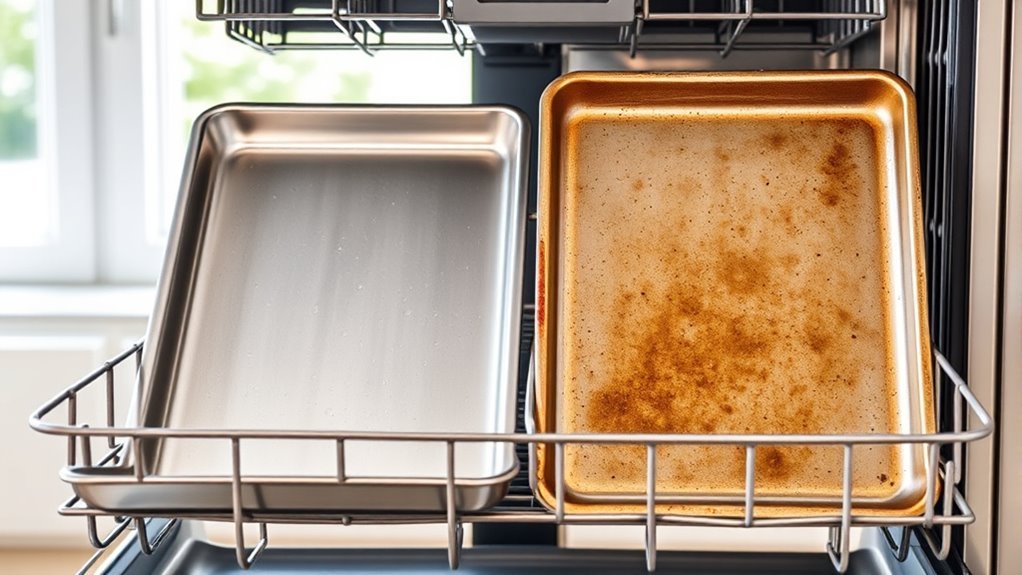
Wondering whether you can just toss cookie sheets in the dishwasher? The short, practical answer: it depends.
You can put some stainless cookie sheets labeled dishwasher safe in there, but many metal sheets will rust or discolor under harsh dishwasher conditions. Aluminum often holds up well over years, yet nonstick coatings usually need hand washing to preserve their finish.
Air bake pans should never go in the dishwasher or be submerged—you’ll compromise their structure.
Whatever material you choose, avoid leaving wet bakeware sitting: immediate drying after washing prevents rust and prolongs life.
So, don’t treat all cookie sheets the same; check labels, prioritize hand washing for nonstick and air bake, and only trust dishwasher safe markings on stainless pieces.
That way you reclaim time without sacrificing performance—clean efficiently while protecting the tools that help you create.
Are Cookie Sheets Dishwasher‑Safe? Rules by Material (Stainless, Aluminum, Nonstick, Air‑Bake)
Check the manufacturer’s label for stainless steel sheets, because while many are dishwasher-safe you’ll still risk dulling or discoloration over time.
For aluminum, watch for rust if you run them through the dishwasher and don’t dry them immediately.
For nonstick and Air‑Bake pans you should avoid the dishwasher to prevent surface and structural damage.
To keep any cookie sheet looking and performing its best, hand wash and dry promptly whenever possible.
Stainless Steel Guidelines
Although many stainless steel cookie sheets are labeled dishwasher-safe, you’ll usually get the best results—and avoid dulling or rust—by hand washing and drying them promptly.
Treat stainless steel like a tool that earns your freedom: rinse off crumbs, use warm water with a mild detergent, and scrub gently with a nonabrasive pad to keep the surface bright.
If you choose the dishwasher occasionally, know prolonged cycles and harsh detergents can promote rust at edges and lips, so inspect and dry immediately.
High-quality brands like Nordicware often tolerate more wear, but habits matter more than brand.
To extend lifespan, towel-dry or air-dry upside down right after washing.
Your care choices preserve function and let you bake without limits.
Aluminum, Nonstick & Air‑Bake Care
If you want your cookie sheets to last, treat aluminum, nonstick, and Air‑Bake pans differently: You’ll want to avoid the dishwasher for most of these.
Aluminum can look fine after machine cycles, but dishwasher exposure risks rust and pitting over time — hand wash and dry promptly to preserve finish.
Nonstick coatings are vulnerable to abrasive detergents and high heat; hand washing with a soft sponge prevents dulling and scratching so your release stays reliable.
Air‑Bake pans shouldn’t go in the dishwasher either: trapped water and heat can warp or damage their construction.
In short, reclaim control: wash these pans gently by hand with mild soap, rinse thoroughly, and towel‑dry immediately to extend performance and freedom from premature replacement.
How Dishwashers Damage Pans: Rust, Dulling, Warping, and Coating Loss
When you put metal bakeware into the dishwasher regularly, the combination of hot water, strong detergents, and prolonged moisture can speed up rust formation—especially along edges and lips where water pools—and will also dull finishes on aluminum and nonstick surfaces, strip protective coatings, and make thin pans more prone to warping from rapid temperature changes.
You’ll see rust appear as tiny pits or brown streaks that start at seams and rims; once it begins, immediate drying often won’t reverse it.
Detergent abrasives chemically attack finishes, so aluminum and nonstick lose their sheen and release less consistently-browned results.
Detergent abrasives eat away finishes, leaving aluminum and nonstick dull and more likely to stick and brown unevenly.
Thin-sheet pans flex when heated and then cooled quickly in the dishwasher cycle, so they warp and sit unevenly on racks.
Repeated cycles chip or thin nonstick layers—coating loss—so food adheres and shortens pan life.
If you want durable, dependable bakeware, rely less on automatic cycles and more on deliberate, hands-on care to keep control over performance and lifespan.
Cleaning Rules for Each Material: Stainless Steel, Aluminum, Nonstick, Air‑Bake
You’ll follow different cleaning rules depending on the sheet: stainless steel can usually handle the dishwasher but will fare better with gentle hand washing to avoid dulling and discoloration.
Nonstick and air‑bake pans should be hand washed to protect coatings and hollow cores, while aluminum is best cleaned by hand to prevent dishwasher‑induced rust and etching.
Use parchment or foil when possible to cut down on scrubbing and prolong each material’s life.
Stainless Steel Care
Although stainless steel cookie sheets can usually go in the dishwasher, you’ll get the best results by washing them by hand with mild dish soap and warm water, avoiding abrasive scrubbers that can scratch the surface.
Treating stainless steel this way keeps them looking sharp and easy to clean without dulling from harsh detergents. Let sheets cool before you wash to avoid warping from thermal shock.
Rinse and dry immediately to prevent spots or rust—air drying leaves mineral residue. Hand washing regularly reduces exposure to dishwasher chemicals and extends lifespan, so you’ll save money and hassle.
Be deliberate: use soft cloths or nonabrasive pads, gentle soap, and prompt drying to preserve shine and performance for years.
Nonstick, Aluminum, Air‑Bake
Because each cookie sheet material handles heat and cleaners differently, you should match your cleaning method to the sheet type to avoid damage.
Protect your tools so you stay free to cook without worry.
1. Nonstick: Hand wash with warm, soapy water and a soft sponge.
Dishwasher detergents can discolor and degrade the coating, so avoid the dishwasher to preserve release and longevity.
2. Aluminum: Hand wash is safer even if durable; dishwashers can promote spotting, discoloration, or rust in some cases.
Rinse promptly and dry thoroughly to keep sheets like new.
3. Air‑Bake: Never submerge or load in a dishwasher—these can warp the composite layers.
Let cool, wipe with a damp cloth, and gently scrub stubborn bits by hand.
How to Run the Dishwasher Safely for Cookie Sheets (When Manufacturer Allows)
If the manufacturer says your cookie sheets are dishwasher safe, load them flat in a single layer so water can circulate and prevent warping, avoiding crowding with other items.
Use a mild detergent and a gentle cycle to reduce discoloration or surface damage, and remove the sheets immediately when the cycle finishes to dry them and prevent rust, especially along edges and lips.
Use mild detergent and a gentle cycle, then remove sheets promptly to dry and prevent rust.
Treat each baking sheet like a tool for freedom: avoid mixing heavy pots or sharp utensils that can scratch or dent the surface.
Place sheets on the lower rack if the manual recommends it, keeping nonstick faces upward only when instructed.
Skip heated dry and high‑heat sanitizing options—those settings accelerate corrosion and ruin coatings.
Check the gasket and spray arm for debris that can fling grit against the metal.
After unloading, inspect edges and seams for water spots or pitting; if you see wear, stop machine cycles and revert to hand washing to protect your bakeware and maintain control over its lifespan.
Best Hand‑Washing Routine to Extend Your Cookie Sheets’ Life
Start by letting your cookie sheets cool completely, then wash them with warm water and a mild dish soap to avoid the harsh chemicals that can dull or discolor metal. You’ll protect finish and shape by avoiding extreme temperature changes and aggressive detergents.
Use a soft sponge or no‑scratch scrubbie to lift crumbs and stuck bits; don’t use metal pads or knives.
- Soak briefly in warm, soapy water to loosen baked‑on residue, then gently scrub with circular motions to avoid scratches.
- Rinse thoroughly with warm water to remove all soap film that can attract grime or promote corrosion.
- Immediately towel‑dry with a clean, soft cloth to stop water spots and prevent rust on aluminum or stainless cookie sheets.
This hand washing routine gives you control and freedom from dishwasher damage. It’s efficient, deliberate, and keeps your pans performing longer so you can keep baking boldly without replacing gear prematurely.
Preventive Tips for Cookie Sheets: Parchment, Foil, Liners, and Greasing
When you want to cut cleanup time and protect your cookie sheets, use liners like parchment or foil and skip relying solely on grease—parchment prevents most sticking and keeps moisture from bonding to metal, while foil catches drips and stains (though it can feel wasteful).
Use parchment paper for cookies, delicate pastries, and anything prone to caramelizing; it lets you lift baked goods without scraping and preserves the sheet’s finish. Reserve foil for messy roasts or spills that would otherwise stain.
Don’t assume greasing beats liners: pre-greasing sometimes fails with high‑moisture or sticky batters and invites buildup over time. Always avoid cutting or forcing food directly on the metal to prevent scratches.
Rotate liners and replace when browned or brittle. For liberation from constant maintenance, treat liners as a small trade-off: they extend sheet life, reduce scrubbing, and let you focus on creating rather than repairing cookware.
When to Stop Repairing and Replace Your Cookie Sheets
Although you can patch up minor scratches and stains, know when those fixes stop being worth your time: significant warping, deep gouges, persistent rust, or an uneven surface that ruins browning are signs to replace the sheet.
You want reliable results and freedom from fussy maintenance, so don’t cling to a tool that undermines your baking.
Think of replacement as empowerment — choosing clean, even-heating cookie sheets and baking sheets that let you focus on recipes, not repairs.
Replacement is empowerment—pick clean, even-heating sheets so you can bake, not repair.
Check for heat spots, peeling coatings, or aluminum that’s lost its non-stick performance. If cleaning grows harder or scorch marks persist, you’re wasting effort and ingredients.
Evaluate with these three quick checkpoints:
- Surface integrity — deep scratches, pits, or flaking coating that affect food contact.
- Shape and heat — visible warping or uneven browning across batches.
- Corrosion and cleanliness — rust, stubborn discoloration, or trapped residues that don’t respond to safe cleaning.
Replace when any checkpoint fails; freedom comes from tools that perform.
Frequently Asked Questions
Which Cookie Sheets Are Dishwasher Safe?
Stainless steel sheets and some aluminum pans are usually dishwasher safe, but nonstick materials often aren’t — detergents and heat can dull or damage their coating.
You’ll want to hand-wash nonstick trays to keep them effective and long-lasting.
If you crave freedom from tedious care, choose sturdy stainless steel or durable aluminum, use parchment to minimize mess, and avoid putting air-bake or warped pans in the dishwasher.
Why Can’t Aluminum Pans Go in the Dishwasher?
You shouldn’t put aluminum pans in the dishwasher because aluminum reactions with harsh detergents, heat, and moisture cause discoloration, warping, and even rust at edges.
Don’t buy into dishwashing myths that claim dishwashers are harmless; they abrade and scratch protective surfaces, speeding deterioration.
You’ll extend your pans’ life by hand washing, drying promptly, and avoiding abrasive cleaners so your cookware stays reliable and free from premature damage.
When to Throw Out Cookie Sheets?
Imagine your cookie sheet staging a dramatic resignation, flimsy and stained, waving a tiny white flag.
You should trash it when its cookie sheet lifespan ends—noticeable warping, rust, deep grooves, dull or scratched nonstick, or heavy scorching.
These signs of damage ruin baking consistency and flavor.
Don’t cling to worn pans; liberate your kitchen by replacing compromised sheets to keep results reliable, safe, and satisfying.
What Is the Best Way to Clean a Cookie Sheet?
You should hand wash it: soak in warm water, apply mild dish soap, then scrub gently with a no-scratch pad to protect non-stick and aluminum surfaces.
Rinse and dry completely to prevent warping or discoloration.
Use parchment or foil as baking tips to cut cleanup and prolong life.
These maintenance techniques free you from constant scrubbing, let you reclaim time, and keep your sheets performing like new.
Conclusion
You can usually wash cookie sheets, but it depends on the material and care: stainless may tolerate a dishwasher but hand washing lasts longer; aluminum and Air‑Bake should never go in; nonstick needs gentle handling. Want your pans to bake like new for years? Use liners, wipe or hand wash promptly, avoid harsh detergents and high heat, and replace warped or damaged pans. Follow manufacturer instructions and treat your sheets with simple, consistent care.
