
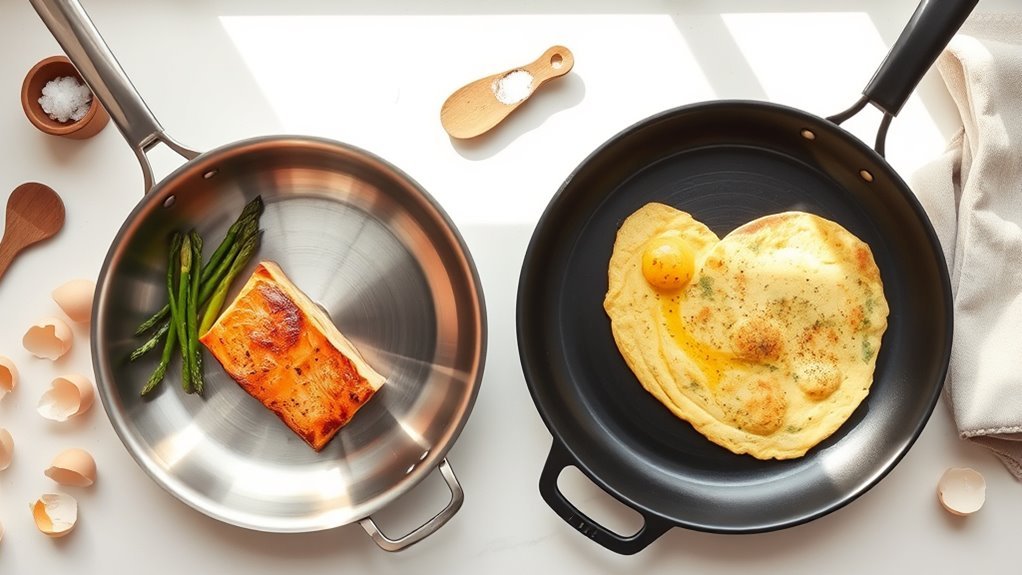
When considering whether stainless steel is better than nonstick cookware, it’s crucial to weigh the distinct advantages and disadvantages of each. Stainless steel shines in durability and high-heat cooking, while nonstick offers convenience and ease of use. However, the longevity and maintenance of these options can vary considerably. As you explore these key differences, you’ll find that your cooking style and preferences might dictate which type is truly the best fit for you.
Key Differences Between Stainless Steel and Nonstick Cookware
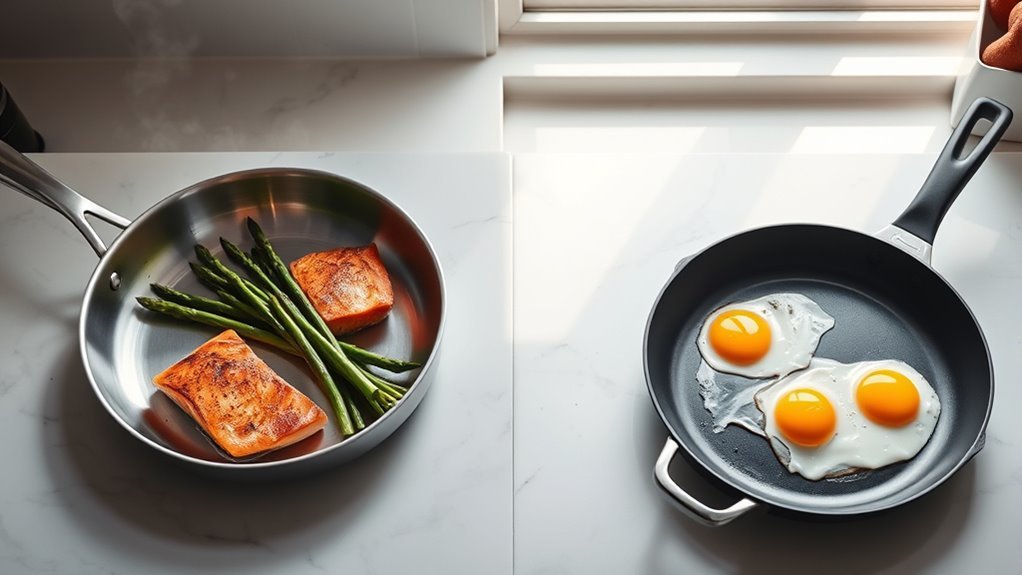
When choosing between stainless steel and nonstick cookware, understanding their key differences can greatly impact your cooking experience.
Stainless steel cookware excels in durability and heat retention, making it ideal for high-temperature cooking techniques like searing and browning. It can last decades with proper care, while nonstick cookware typically needs replacement every 1-5 years due to coating wear.
Conversely, nonstick cookware is better for low-fat cooking of delicate items like eggs and pancakes, but requires gentle maintenance to preserve its coating.
Health considerations also play a role; stainless steel is free from chemical coatings, reducing the risk of toxins when overheated.
Regular cleaning is essential for stainless steel to prevent buildup, while nonstick should be hand-washed with mild soap.
Everyday Benefits of Nonstick Cookware
Nonstick cookware offers a range of everyday benefits that can enhance your cooking experience. A nonstick pan features a non-stick surface that requires less oil, promoting healthier meal preparation while reducing calorie intake.
Nonstick cookware enhances your cooking by requiring less oil, promoting healthier meals and reducing calorie intake.
This highly functional cookware is ideal for delicate foods like eggs and pancakes, ensuring they cook evenly without sticking or breaking apart. With advancements in nonstick technology, many options are now PFOA-free and built to withstand excellent heat, enhancing both safety and durability.
Furthermore, the slick surface makes cleaning a breeze, often requiring just a simple wipe with a sponge after use. Additionally, nonstick cookware is made to resist acidic reactions, allowing you to cook with ingredients like tomatoes and wine without altering flavors.
These benefits make nonstick cookware an essential tool for those seeking convenience and efficiency in the kitchen.
Pros of Stainless Steel Cookware for High-Heat Cooking
Stainless steel cookware stands out for high-heat cooking due to its exceptional heat retention and conductivity, which allows you to achieve powerful searing and ideal browning of proteins.
Unlike nonstick options, stainless steel can handle temperatures up to 500°F without degrading or releasing harmful chemicals, making it perfect for various cooking techniques.
Here are three key advantages:
- Durable Surface: Stainless steel is resistant to scratching and offers longevity, often lasting decades with proper care.
- Natural Nonstick Surface: With seasoning and care, your stainless steel pans can develop a natural nonstick surface, enhancing their versatility for delicate foods.
- Versatile Cooking: These pans can shift seamlessly between stovetop and oven, accommodating diverse cooking methods and temperatures.
Choosing stainless steel cookware not only elevates your high-heat cooking but also contributes to healthier meal preparation.
Maintaining Durability: How Each Type Stands Up
Choosing the right cookware goes beyond performance; durability plays a significant role in long-term satisfaction. Stainless steel cookware stands out with its impressive lifespan, often lasting decades with proper care. In contrast, traditional non-stick cookware generally needs replacement every 1-5 years due to wear from high temperatures and metal utensils.
Here’s a quick comparison to illustrate:
| Cookware Type | Durability |
|---|---|
| Stainless Steel Cookware | Lasts decades with maintenance |
| Traditional Non-Stick Pans | 1-5 years, sensitive to heat |
| Coated Cookware | Requires careful handling |
| Maintenance Needs | Regular for stainless; minimal for non-stick |
While stainless steel can withstand high heat and scratches, non-stick pans require careful cleaning to avoid damage. Ultimately, your choice will shape your cooking experience and satisfaction over time.
How to Pick the Right Cookware for Your Cooking Style?
How do you determine the best cookware for your unique cooking style? Choosing the right cookware hinges on several factors, including your cooking preferences and health considerations. Here’s what to keep in mind:
1. Cooking Techniques: If you enjoy searing and browning, stainless steel is your best bet due to its heat retention.
For delicate foods like eggs, nonstick is ideal as it requires less oil.
2. Durability and Maintenance: Stainless steel can last for decades if cared for, while nonstick often needs replacing every 1-5 years.
Nonstick is easier to clean but can be damaged by metal utensils.
3. Versatility: Stainless steel works on all stovetops, including induction.
Nonstick may not be suitable for high-heat cooking and can have limitations.
Consider these elements to guarantee your cookware aligns with your cooking style, offering both functionality and peace of mind regarding health.
Frequently Asked Questions
Is Stainless Steel or Non-Stick Healthier?
When considering health, stainless steel offers greater safety due to its durability and resistance to harmful food reactions at high cooking temperatures.
Nonstick coatings, while convenient, can pose risks if overheated. For long-term health, stainless steel’s longevity means less frequent replacements, reducing waste.
However, maintaining stainless steel requires more effort. If you prioritize low-fat cooking, nonstick might suit you, but weigh the potential risks against the benefits of stainless steel’s robust construction.
What’s the Downside of Stainless Steel Cookware?
Stainless steel cookware might seem like a shining star in your kitchen, but it has its downsides.
You’ll face durability concerns, as improper care can lead to corrosion. Maintenance challenges arise with food sticking, especially if you don’t preheat properly.
It’s heavier than alternatives, impacting your ease of use. While it offers great aesthetic appeal, the higher price can be a tough pill to swallow, especially when considering heat distribution issues.
What Is the Healthiest Cookware to Use?
The healthiest cookware options include cast iron, ceramic coating, glass cookware, and enameled cast iron.
Each provides unique benefits, like cast iron’s natural nonstick properties and excellent heat retention.
Ceramic coatings are eco-friendly and free from harmful chemicals.
For quick cooking, aluminum frying pans are lightweight, while copper pots offer superior heat conductivity.
Why Do Chefs Prefer Stainless Steel?
Chefs prefer stainless steel for its exceptional cooking performance and heat retention, allowing you to create perfectly seared meats that burst with flavor.
The surface durability guarantees it withstands the test of time, while food release becomes effortless with proper technique.
Its aesthetic appeal adds sophistication to your kitchen, and maintenance needs are minimal compared to nonstick.
You’ll find that stainless steel empowers your cooking, elevating your culinary creations to new heights.
Conclusion
In the end, choosing between stainless steel and nonstick cookware boils down to your cooking habits and preferences. Will you embrace the durability and high-heat capabilities of stainless steel, or do you crave the ease and convenience of nonstick surfaces? Each option has its own strengths and weaknesses, leaving you to ponder which aligns best with your culinary adventures. The choice is yours—will you take the plunge into the world of stainless steel, or stick with the comfort of nonstick?
