
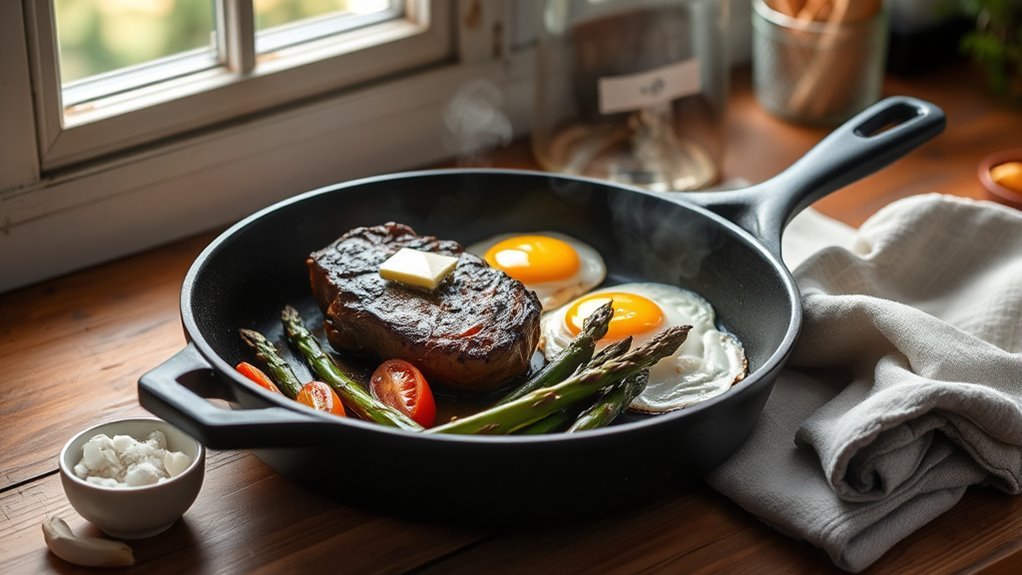
If you’ve got a cast iron pan, you’re in for a culinary treat. This kitchen staple isn’t just for frying; it’s a powerhouse for searing meats, sautéing vegetables, and even baking. Knowing how to maximize its potential can elevate your cooking game. From juicy steaks to gooey cookies, there’s much to explore. Let’s uncover the top dishes and essential tips that will help you get the most out of your cast iron skillet.
Getting Started With Cast Iron Cooking: Why It Matters
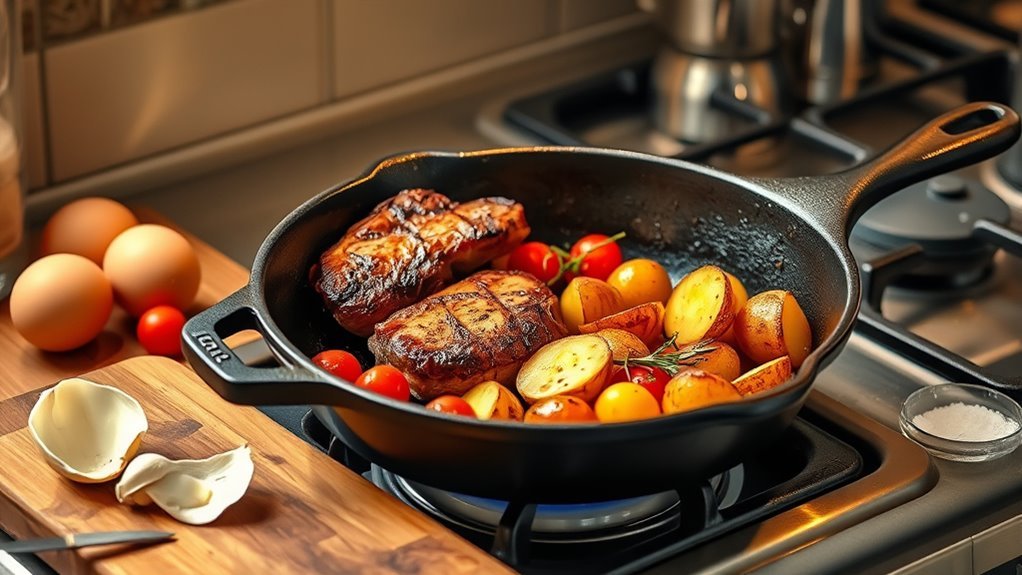
When you plunge into cast iron cooking, you’ll discover why this timeless cookware is a favorite among chefs and home cooks alike. The exceptional heat retention and distribution of cast iron pans allow you to achieve that perfect sear on meats and cook vegetables evenly.
Discover the magic of cast iron cooking, where exceptional heat retention meets culinary versatility for perfect sears and evenly cooked dishes.
You’ll find them versatile—ideal for frying, baking, sautéing, and even braising, expanding your culinary repertoire.
To get the most out of your cast iron, proper cast iron care is essential. A well-seasoned pan develops a natural non-stick surface that only improves with use, making food release effortless.
Regular cooking not only enhances the seasoning but also guarantees your pan lasts a lifetime, proving to be a cost-effective investment.
Embrace the liberation of cooking with cast iron; with the right care, you’ll open up a world of flavors and techniques that elevate your kitchen experience.
Top 5 Must-Try Dishes to Cook in Your Cast Iron Skillet
Cooking with a cast iron skillet opens up a world of delicious possibilities. First, try perfect pan-seared steaks; the high heat creates a mouthwatering crust while keeping the meat juicy and tender.
Next, whip up a skillet ratatouille, showcasing seasonal veggies like zucchini and eggplant sautéed with fragrant herbs. For dessert, bake a chocolate chip skillet cookie with crunchy edges and a fudgy center—ideal for sharing with friends.
Craving something savory? Quickly char Spanish-style blistered Padrón peppers in your cast iron skillet with coarse sea salt for a simple, flavorful appetizer.
Finally, make an easy no-knead olive-rosemary focaccia. The highly hydrated dough bakes beautifully in your skillet, topped with olives and fresh rosemary.
Each dish highlights the versatility of your cast iron skillet, inviting you to explore and enjoy every bite!
Perfect Meat Cooking Tips for Cast Iron
When cooking meat in your cast iron skillet, choosing the right cuts is just as important as mastering your techniques.
You’ll want to focus on perfect searing and seasoning to enhance those rich flavors.
Let’s explore how to make the most of your cast iron for mouthwatering results.
Ideal Cuts of Meat
Choosing the right cuts of meat greatly enhances your cast iron cooking experience. Ideal cuts like ribeye, porterhouse, and bone-in pork chops shine in a cast iron skillet. Their thickness allows for even heat distribution, helping you achieve that perfect crust while keeping the inside juicy.
Opt for well-marbled options, such as Wagyu or grass-fed beef, as the fat renders beautifully, adding flavor and moisture.
For best results, try the reverse sear technique: cook thicker cuts in the oven first, then finish in the hot skillet.
Don’t forget to let your meat rest for 5-10 minutes after cooking; this redistributes juices, ensuring a tender bite.
With these tips, you’ll master your cast iron skillet in no time!
Techniques for Perfect Searing
Achieving the perfect sear on meat requires just a few essential techniques. Start by preheating your cast iron skillet over medium-high heat for several minutes. This guarantees even heat distribution, vital for a great crust. Use a high smoke point oil like canola or avocado to avoid burning and enhance browning. Avoid overcrowding the skillet; cook in batches to maintain temperature. Let the meat rest after searing, allowing juices to redistribute for a tender result. For thicker cuts, try the reverse-sear technique: cook slowly in the oven first, then finish in the hot skillet.
| Technique | Description |
|---|---|
| Preheat | Heat skillet for even cooking |
| High Smoke Point Oil | Prevents burning and enhances browning |
| Avoid Overcrowding | Cook in batches for best results |
| Resting | Redistributes juices for tenderness |
| Reverse-Sear | Starts in the oven, finishes in a hot skillet |
Seasoning for Enhanced Flavor
Seasoning your cast iron pan is essential not just for preventing sticking, but also for enhancing the flavor of the meats you cook. A well-seasoned pan creates a durable, non-stick surface perfect for achieving that mouthwatering crust on steaks and pork chops.
To season your pan, apply a thin layer of cooking oil, like flaxseed or vegetable oil, then bake it upside down at 500°F for an hour. Cooking fatty meats helps build up your seasoning, as the rendered fat contributes to the pan’s coating.
Regularly using your cast iron for proteins and vegetables maintains this seasoning. Just remember to avoid overly acidic ingredients, as they can strip away your hard-earned flavor. Enjoy the liberation of perfectly seasoned cooking!
Vegetable Dishes That Shine in Cast Iron
When it comes to cooking vibrant vegetable dishes, a cast iron pan is your best ally. Its ability to retain heat enhances flavor, making every bite a delight.
Here are three dishes that truly shine:
- Sautéed Greens: Use your cast iron skillet to quickly sauté spinach or kale, preserving their nutrients and crunch. The high heat creates a beautiful caramelization.
- Roasted Root Vegetables: Toss Brussels sprouts, carrots, and potatoes in olive oil, then roast in your skillet. The even heat gives them a crispy exterior and tender insides.
- Frittatas: Whip up a vegetable frittata with your well-seasoned cast iron skillet. It shifts seamlessly from stovetop to oven, ensuring even cooking and a perfectly browned top.
With a cast iron skillet, you can explore endless vegetable possibilities, making each dish not just a meal but an experience.
A cast iron skillet unlocks a world of vibrant vegetable creations, transforming every meal into a delightful culinary adventure.
Embrace the art of cooking and let your creativity flourish!
Baking and Desserts: Cast Iron’s Sweet Side
When it comes to baking, your cast iron pan can turn out desserts that are both delicious and visually appealing.
Imagine whipping up crispy skillet cookies or a moist cake that bakes evenly, thanks to cast iron’s excellent heat retention.
Plus, you can simplify cleanup by mixing and baking in the same pan, making dessert time even sweeter.
Baking Cakes Perfectly
Baking cakes in a cast iron pan not only enhances their flavor but also transforms your baking experience. The heat retention of a cast iron skillet guarantees a golden crust, while its seasoned surface deepens flavors and prevents sticking.
To bake perfectly, follow these tips:
- Preheat your skillet: This creates a delightful crust that adds texture.
- Choose well-seasoned cast iron: This maximizes non-stick properties and prevents dryness.
- Try rustic recipes: Cakes like skillet chocolate chip cookie or hummingbird cake shine in a cast iron skillet, offering easy serving and a charming presentation.
Embrace the joys of baking with cast iron, and watch your cakes transform into delicious masterpieces!
Crispy Skillet Cookies
If you’re craving a sweet treat that perfectly balances crispy edges with a chewy center, crispy skillet cookies are the answer. A chocolate chip skillet cookie combines cookie dough that bakes evenly in your cast iron pan, creating a delicious dessert perfect for sharing. The high heat retention of cast iron guarantees quick browning, enhancing flavor and texture, making your cookies feel gourmet.
| Step | Tips |
|---|---|
| Preheat Skillet | Guarantees a crispy crust |
| Add Dough | Spread evenly |
| Serve Warm | Top with ice cream! |
Cleaning your cast iron after baking is a breeze—just a gentle scrub with salt and a soft cloth, and it’s ready for your next sweet creation! Enjoy!
Easy Fruit Cobblers
After enjoying those crispy skillet cookies, it’s time to explore another delightful creation: easy fruit cobblers. Using a cast iron skillet, you can create a dessert that’s not only simple but also bursting with flavor. Here’s how to make it shine:
- Choose Your Fruit: Seasonal favorites like peaches, berries, or apples work beautifully.
- Perfect Your Topping: A simple biscuit or crumble topping adds the right crunch.
- Bake and Enjoy: The skillet’s heat retention caramelizes the fruit, enhancing its sweetness.
With its even heat distribution, your cobbler will boast a golden crust and juicy filling.
Plus, you can effortlessly transport it from oven to table, making it ideal for gatherings. Immerse yourself in this sweet cast iron adventure!
Keep Your Cast Iron Skillet in Top Shape!
To keep your cast iron skillet in top shape, it’s essential to establish a consistent cleaning routine that preserves its seasoning. Here’s a quick guide to help you maintain your skillet:
| Task | Frequency | Tips |
|---|---|---|
| Clean with salt | After each use | Use kosher salt and a towel |
| Dry immediately | After washing | Prevent rust by drying quickly |
| Re-season | Every few months | Apply oil and bake at 500°F |
| Avoid harsh cleaners | Always | Skip metal pads and detergents |
| Cook fatty foods | Regularly | Enhance seasoning with bacon or butter |
Frequently Asked Questions
What Cannot Be Cooked in a Cast Iron Pan?
You can’t cook delicate fish like flounder or sole in a cast iron pan, as they’ll easily flake apart.
Highly acidic foods, such as marinara or tomato sauce, can react with the iron, ruining the flavor and damaging the seasoning.
Sweet dishes might absorb savory tastes from previous meals.
Also, avoid using metal utensils for deglazing with vinegar or wine, as they can strip the pan’s seasoning and hinder its performance.
What Are the Disadvantages of Cast Iron Pans?
What’s the downside of cast iron pans?
You’ll face maintenance challenges, as these heavy pans require regular seasoning to keep them non-stick and rust-free.
They’re slow to heat, which can be frustrating when you’re in a hurry.
Plus, cooking acidic foods can create off-flavors and damage the seasoning.
Cleaning isn’t a breeze either; you can’t toss them in the dishwasher, so you’ll need to wash and dry them manually.
Can I Cook Eggs in Cast Iron?
Yes, you can cook eggs in a cast iron pan! Just make sure your skillet’s well-seasoned to prevent sticking.
Preheat it over medium-low heat, adding enough fat like butter or oil to create a non-stick surface.
Cast iron retains heat beautifully, ensuring even cooking for your eggs.
Regularly cooking eggs will enhance your skillet’s seasoning, making it even more reliable for perfectly cooked dishes.
Enjoy the liberation of mastering this classic technique!
Is Cast Iron the Healthiest Thing to Cook On?
Cooking on cast iron can be like embracing a warm hug from your kitchen. It’s one of the healthiest options available, thanks to its excellent nutrient retention.
When you use cast iron, you’re not just preventing harmful chemicals from leaching into your food; you’re also enhancing the flavors while ensuring an even heat distribution.
Plus, its durability means you’re investing in a lifelong companion for your culinary adventures, promoting both health and sustainability.
Conclusion
When you embrace the versatility of your cast iron skillet, you might just discover a hidden culinary talent you never knew you had. Whether it’s sizzling steaks, vibrant veggies, or mouthwatering desserts, the possibilities are endless. Plus, with proper care, your skillet can last a lifetime, becoming a cherished kitchen companion that keeps surprising you. So, why not heat it up tonight? You might whip up something extraordinary—and who knows, it could become your new favorite dish!