
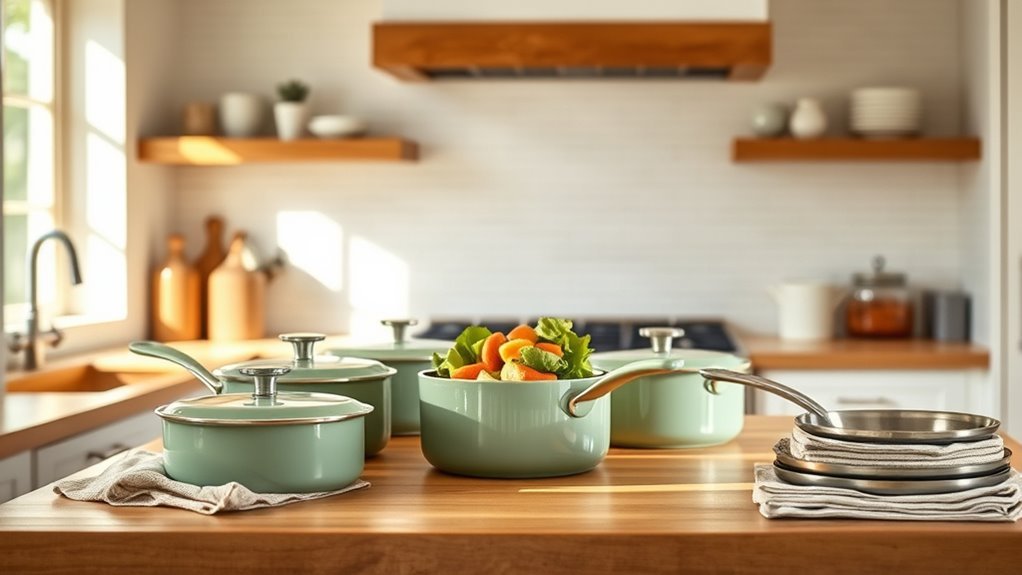
Did you know that 70% of consumers prioritize non-toxic cookware for their health and safety? If you’re considering Caraway pans, you might be wondering if they truly deliver on performance and durability for the price. With their eco-friendly materials and attractive design, these pans have garnered attention, but are they really worth the investment? Let’s explore what you can expect from Caraway cookware and whether it meets your culinary needs.
Caraway Cookware Performance: What to Expect
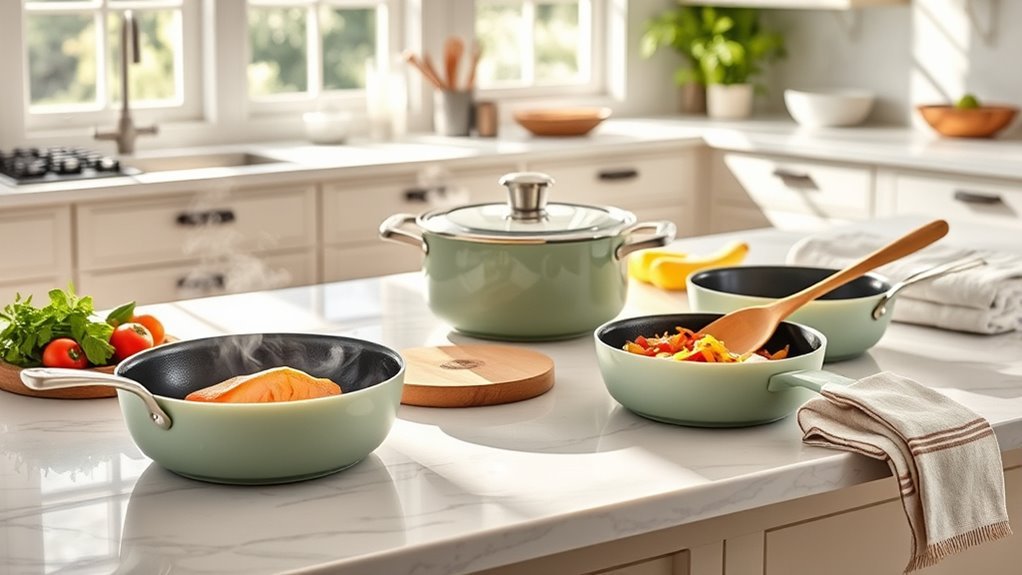
When you choose Caraway cookware, you can expect impressive performance thanks to its non-toxic ceramic coating. This non-stick surface allows for easy food release, meaning you won’t need to rely on oils, making healthy cooking simpler.
The even heat distribution eliminates hot spots, ensuring your dishes cook consistently, whether you’re whipping up omelets or simmering sauces. Users often report that Caraway pans retain heat well, allowing for efficient cooking even after the burner is turned off.
Even heat distribution ensures consistent cooking, while excellent heat retention allows for efficient meals even after the burner is off.
While medium heat is ideal for best results, you’ll find that the non-stick properties remain intact with minimal maintenance, making cleanup a breeze.
Over time, Caraway cookware demonstrates durability against chipping and scratching, with many satisfied users noting that it maintains both functionality and appearance after months of daily use.
In this Caraway Cookware Review, you’ll see that its performance truly stands out in the kitchen.
Key Advantages and Disadvantages of Caraway Cookware
When considering Caraway cookware, you’ll notice distinct advantages and disadvantages that can impact your decision.
Their non-toxic materials and durable design offer health benefits and long-lasting performance, while the initial cost might raise some eyebrows.
Let’s break down these key points to see if the investment aligns with your cooking needs.
Health Benefits Overview
There’s a growing interest in cookware that prioritizes health and safety, and Caraway pans stand out for several compelling reasons.
Their non-toxic ceramic coating is free from PTFE, PFOA, and heavy metals, ensuring a safer cooking environment. This feature not only enhances your health benefits but also reflects a commitment to eco-friendly practices, as the pans use sustainable materials and come in plastic-free packaging.
Users appreciate the excellent non-stick performance, allowing for easy food release with minimal oil, further contributing to healthier cooking habits.
While the initial investment may be higher, the durability of Caraway cookware means it lasts longer without chipping or scratching, potentially reducing the need for replacements and justifying the cost for health-conscious consumers.
Performance and Durability
Caraway cookware boasts several key advantages that enhance both performance and durability, making it a popular choice among health-conscious cooks. Its non-toxic ceramic coating resists chipping and scratching, ensuring a reliable non-stick surface even with daily use.
Users appreciate the excellent heat distribution, which eliminates hot spots and promotes consistent cooking results. However, maintaining this durability requires care; hand washing and avoiding metal utensils are essential to preserve its appearance.
While many enjoy long-lasting performance, some report variability, experiencing chipping after a few weeks. Additionally, the aesthetic appeal of Caraway pans may necessitate more upkeep, especially for lighter colors, as they can show wear more readily.
Cost Considerations Explained
While you may find Caraway cookware priced higher than traditional options, its unique features often justify the investment. A complete Caraway set typically retails around $400, reflecting its non-toxic, eco-friendly materials.
The non-stick ceramic coating is free from harmful chemicals like PTFE and PFOA, ensuring a healthier cooking experience that many prioritize. However, these pans require hand washing, which mightn’t suit those who prefer dishwasher-safe cookware.
Some users report chipping after just weeks of use, raising concerns about durability. Still, the aesthetic appeal of Caraway’s modern colors can enhance your kitchen décor, adding value beyond functionality.
Weigh these advantages and disadvantages carefully to decide if the Caraway set aligns with your cooking needs and lifestyle.
User Experiences With Caraway Cookware: Real Feedback
How do real users feel about their experiences with Caraway cookware? Feedback is mixed, reflecting both satisfaction and concerns. While many appreciate the non-stick ceramic performance, noting easy food release without oil, some report chipping after heavy use, raising durability questions. The aesthetic appeal, especially in bold colors like Marigold, adds vibrancy to kitchens, yet this beauty can’t overshadow longevity issues.
| Positive Feedback | Negative Feedback | Notable Features |
|---|---|---|
| Excellent non-stick | Chipping after weeks | Easy to clean |
| Minimal staining | Longevity issues | Attractive designs |
| No soaking needed | Variable satisfaction | Lightweight and manageable |
Caraway vs. Stainless Steel: A Comparison
When comparing Caraway pans to stainless steel, you’ll notice key differences in durability, cooking performance, and maintenance.
Caraway offers a non-toxic, non-stick surface that’s easy to clean, while stainless steel is known for its long-lasting durability.
Understanding these factors can help you decide which option best fits your cooking style and needs.
Durability Over Time
Although Caraway pans offer a modern aesthetic and a non-toxic ceramic coating, their durability over time raises concerns for many cooks. While they’re designed to resist chipping, some users report issues after limited use.
In comparison, stainless steel cookware is renowned for its long-lasting nature and resistance to wear.
Here are key durability factors to evaluate:
- Lifespan: Stainless steel can last decades, while Caraway’s longevity may vary.
- Maintenance: Caraway requires hand washing; stainless steel is often dishwasher safe.
- Heat Resistance: Stainless steel handles higher temperatures without warping.
- Aesthetic vs. Practicality: Caraway’s visual appeal contrasts with stainless steel’s reliability.
Ultimately, if you prioritize durability, stainless steel is your best bet.
Cooking Performance Comparison
While durability plays a significant role in choosing cookware, cooking performance is equally important. Caraway pans, with their non-stick ceramic coating, allow for oil-free cooking, making them ideal for beginners. Their exceptional heat distribution eliminates hot spots, ensuring consistent results. In contrast, stainless steel pans require oil and careful temperature management to avoid uneven cooking.
| Feature | Caraway Pans | Stainless Steel Pans |
|---|---|---|
| Non-Stick Coating | Yes | No |
| Heat Distribution | Even | Variable |
| Oven-Safe Temp | Up to 550°F | Typically 450°F-550°F |
| Durability | Moderate (can scratch) | High (long-lasting) |
Ultimately, your choice will hinge on your cooking style and preferences.
Maintenance and Care Differences
Caring for your cookware can greatly impact its longevity and performance, especially when comparing Caraway pans to stainless steel options. Here’s what you need to know:
- Cleaning: Caraway cookware set requires hand washing to maintain its non-stick ceramic coating, while stainless steel is typically dishwasher safe.
- Utensils: Avoid metal utensils with Caraway pans to prevent scratches; stainless steel is more durable in this regard.
- Cooking Oil: Caraway pans need no oil for food release, but stainless steel often benefits from using oil for better results.
- Heat Tolerance: Caraway pans are sensitive to high heat, whereas stainless steel can withstand higher temperatures without damage.
Understanding these differences can help you choose the best maintenance approach for your cookware.
How to Care for Your Caraway Cookware
Proper care is essential for maintaining the longevity and performance of your Caraway cookware. Start by hand washing with mild soap and a soft sponge; this prevents damage to the non-stick surface. Avoid abrasive cleaners or scouring pads that can scratch the ceramic coating.
While your cookware can handle temperatures up to 550°F, cooking on medium heat is best to protect the ceramic layer.
When cooking, always opt for wooden or silicone utensils. Using metal utensils can compromise the integrity of the non-stick surface, leading to decreased performance over time.
After use, store your cookware carefully. Utilize the included canvas lid holders and magnetic pan racks to avoid chipping and scratching.
Regularly inspect your cookware for any signs of wear and diligently follow these care instructions to guarantee it remains a reliable companion in your kitchen.
Best Storage Solutions for Caraway Cookware
How can you maximize your kitchen space while keeping your Caraway cookware organized? With Caraway’s smart storage solutions, you can achieve an efficient setup that looks great too. Here are some tips to ponder:
- Utilize the Magnetic Pan Rack: This innovative design allows you to stack your pans vertically, saving precious counter space.
- Incorporate the Canvas Lid Holder: This holder keeps your lids organized and scratch-free, ensuring easy access when you need them.
- Stackable Design: Each piece is designed to be stackable, which is perfect for kitchens with limited storage.
- Color Coordination: The vibrant colors not only brighten your kitchen but also help you quickly identify different pieces when stored together.
Choosing the Right Caraway Cookware Set for Your Needs
When you’re selecting the right Caraway cookware set for your needs, what factors should you consider? Start by evaluating your cooking style. Caraway offers a range of options, including fry pans, sauté pans, Dutch ovens, and saucepans, tailored to different culinary tasks.
If you frequently bake or roast, a Dutch oven might be essential for your kitchen.
Next, pay attention to safety. Caraway’s non-toxic ceramic coating is free from PTFE, PFOA, lead, and cadmium, ensuring a healthy cooking environment. You’ll also appreciate the oven-safe feature, allowing you to cook at temperatures up to 550 degrees Fahrenheit.
Pay attention to safety with Caraway’s non-toxic ceramic coating, free from harmful chemicals and oven-safe up to 550°F.
Lastly, consider your kitchen space. With smart storage solutions like magnetic pan racks and canvas lid holders, Caraway helps you keep everything organized.
Plus, the modern colors, such as Marigold, not only function well but elevate your kitchen décor. Choose wisely to make the most of your cooking experience!
Are Caraway Pans Truly Non-Toxic and Eco-Friendly?
Are Caraway pans genuinely non-toxic and eco-friendly? Yes, they’re designed with your health and the planet in mind. Here’s what sets them apart:
- Non-Toxic Coating: Their ceramic coating is free from harmful substances like PTFE, PFOA, lead, and cadmium, ensuring a safer cooking experience.
- Sustainable Materials: Crafted from eco-friendly materials, Caraway emphasizes sustainability throughout production and packaging.
- Rigorous Testing: Each pan undergoes thorough testing, meeting high safety standards for consumer protection.
- Eco-Conscious Packaging: Using recycled cardboard and avoiding plastic bags, Caraway reduces its environmental footprint.
With a non-stick surface that minimizes the need for oils, these pans promote healthier meal preparation.
If you’re looking for cookware that aligns with non-toxic and eco-friendly values, Caraway pans are a solid choice. You can enjoy cooking while supporting your health and the environment.
Where to Find the Best Deals on Caraway Cookware?
For those enthusiastic to invest in Caraway cookware, finding the best deals can greatly enhance the value of your purchase. Start by checking Caraway’s official website for promotions and discounts, especially during seasonal sales or holidays. These can markedly reduce your total cost.
Make sure to sign up for their newsletter; it often grants exclusive access to special deals and early notifications about upcoming sales.
You should also explore Amazon, where Caraway products frequently appear at competitive prices or in discounted bundles. Bundles can offer substantial savings compared to buying items individually.
Additionally, consider using cashback websites or apps when making your purchase, as this can earn you extra savings on your order. By being strategic and aware of these options, you can enjoy high-quality cookware without breaking the bank.
Frequently Asked Questions
What Are the Negatives of Caraway Cookware?
Caraway cookware has some downsides that you should consider.
You might face durability concerns, as some users report chipping or scratching after limited use.
The price comparison with traditional cookware highlights a higher initial investment, which mightn’t fit your budget.
Additionally, the heavier weight can make handling less convenient.
You’ll also need to hand wash these pans, and lighter colors can stain, requiring more maintenance to keep them looking fresh.
What’s Better, Hexclad or Caraway?
When it comes to cooking performance, Hexclad often shines brighter than Caraway. Its hybrid design offers durability and versatility, allowing you to sear and sauté with confidence.
Caraway, while excellent for non-stick tasks, lacks the heat resistance Hexclad provides. In a durability comparison, Hexclad’s stainless steel can handle more wear and tear, making it a strong contender for everyday cooking.
Ultimately, your choice depends on whether you prioritize style or resilience in the kitchen.
What Is the Lawsuit Against Caraway?
The lawsuit against Caraway focuses on claims that their cookware doesn’t meet advertised performance standards.
Plaintiffs cite consumer experiences of chipping and scratching shortly after purchase, challenging the brand’s claims of durability and non-toxic ceramic coating. They argue that misleading marketing has violated consumer trust.
Caraway, however, asserts its commitment to addressing these concerns and maintaining product quality, emphasizing their dedication to customer satisfaction amidst the ongoing legal challenges.
Which Is Better, Greenpan or Caraway?
When Sarah switched from Caraway to GreenPan, she noticed a significant difference in durability.
GreenPan consistently delivered better cooking performance, resisting chipping and retaining its non-stick qualities longer.
While both brands are non-toxic and stylish, GreenPan’s reputation for longevity often makes it the better choice.
If you prioritize durability and reliable cooking performance, GreenPan might suit your needs more effectively than Caraway.
Conclusion
To sum up, investing in Caraway pans is like planting a seed for a healthier cooking future. With their non-toxic, eco-friendly design and impressive performance, they can elevate your kitchen experience. While some durability concerns exist, proper care can extend their lifespan considerably. By understanding their benefits and drawbacks, you can make an informed decision. Ultimately, if you value quality and sustainability, Caraway cookware is a worthy addition to your culinary arsenal.
