
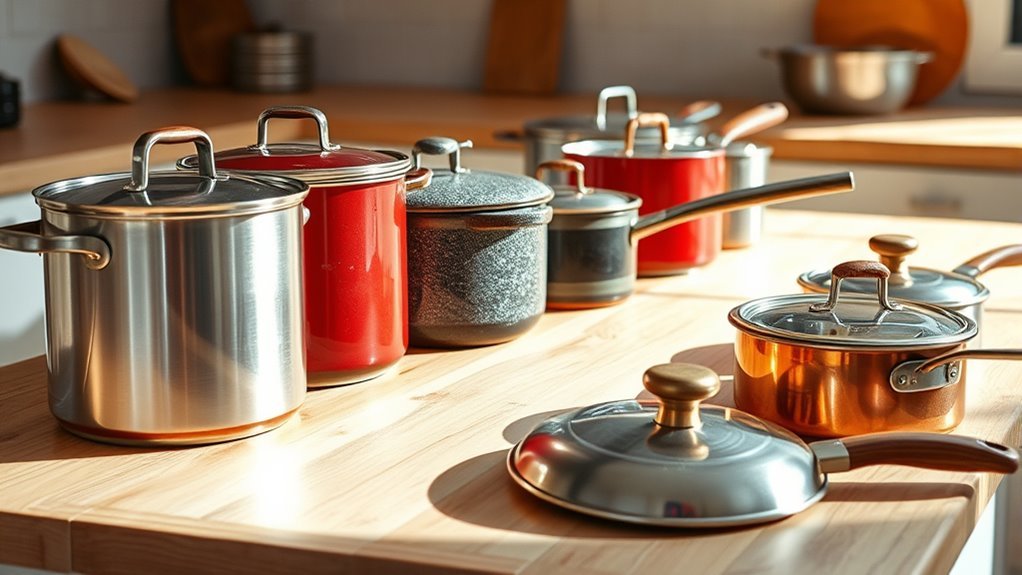
By coincidence, the pot on your windowsill and the one outside the porch were likely made from very different materials, and that difference changes how you water and care for plants. You’ll learn precise trade-offs—porosity, thermal mass, weight, biodegradability—and how construction alters root oxygenation and moisture cycles. Keep going to match material properties to plant needs and environmental priorities.
What This Guide Covers: Choosing the Right Pot Material
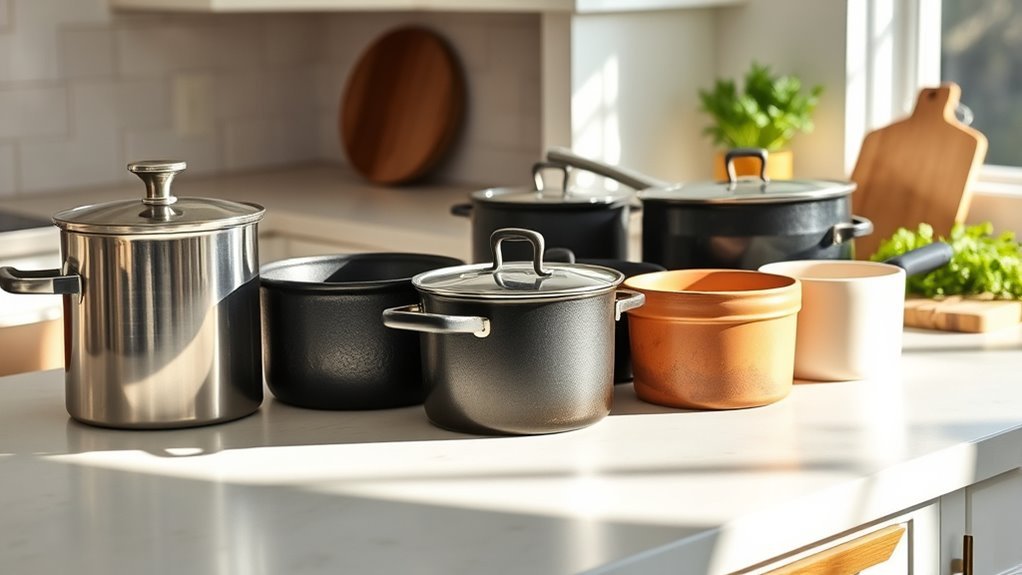
Although pot choice might seem cosmetic, picking the right material directly affects moisture retention, root temperature, durability, and environmental impact.
Although pot choice seems cosmetic, material dictates moisture, root temperature, durability, and environmental impact.
So you’ll want to match material properties to your plants’ physiological needs and your sustainability goals. This guide assesses three primary plant pot materials—biodegradable, plastic, ceramic—against objective criteria: decomposition rate, thermal conductivity, mass, porosity, transportability, and lifecycle emissions.
You’ll learn when biodegradable pots suit one-time transplantation and low-impact aims, how plastic pots deliver lightweight, durable versatility for sowing and propagation, and when ceramic’s insulating mass favors temperature stability despite reduced portability.
For each material we provide decision rules: align pot porosity with root oxygen requirements; select thermal mass relative to ambient fluctuation; prioritize biodegradables only if disposal pathways exist.
You’ll leave with a reproducible selection matrix that converts plant physiology and personal sustainability preferences into a precise material choice for your next plant pot.
Why Pot Material Matters for Watering and Plant Health
Because a pot’s material governs water flow, retention, and gas exchange at the root-soil interface, it directly shapes irrigation frequency, risk of anaerobic conditions, and nutrient mobility.
You’ll adjust watering techniques based on porosity: terracotta wicks moisture and aids aeration, reducing overwatering risk, while plastic retains moisture and demands stricter drainage solutions to avoid root rot.
Ceramic’s thermal buffering stabilizes soil temperature, supporting metabolic consistency and nutrient uptake.
Biodegradable Sogo-style pots decompose, improving soil structure and promoting root health through gradual organic input.
- Assess porosity to set irrigation intervals and drainage solutions.
- Use pots with adequate holes or add substrate amendments for better drainage.
- Match watering techniques to material: lighter, more frequent for porous; measured, less frequent for non-porous.
- Monitor roots for signs of anaerobic stress or nutrient deficiency; act fast.
You’ll gain autonomy by selecting materials that align with your watering regime and liberate plants to thrive.
Quick Guide: Which Pot Material to Pick (Indoor, Outdoor, Succulents)
Choose pot material based on placement and plant physiology: indoors, prioritize glazed ceramic or plastic for stable moisture and insulation; outdoors, use treated wood or durable plastic that withstands weather; for succulents and cacti, select unglazed terracotta to maximize evaporation and reduce root‑zone moisture.
When you choose indoor pots, glazed ceramic gives you controlled thermal buffering and strong indoor aesthetics; plastic delivers lightweight handling, consistent moisture retention, and sizes from small (6 cm) to medium (13 cm) for staging and propagation.
For outdoor placement, pick treated wood for thermal insulation and natural integration, or heavy‑gauge plastic for impact resistance and outdoor durability; expect wood to require rot treatment.
For succulents, unglazed terracotta promotes rapid surface evaporation and reduces overwatering risk. If you want eco friendly options, use biodegradable pots for seed starting and herbs, then transplant directly to larger containers.
Select based on root physiology, microclimate, and maintenance capability to maximize plant autonomy and your freedom to curate thriving spaces.
Ceramic & Terracotta Pots: Breathability, Moisture Control, Best Uses
You’ll evaluate ceramic and terracotta primarily on breathability and drainage: unglazed terracotta is porous and promotes air exchange, while glazed ceramic limits evaporation and holds more moisture.
Use terracotta for plants that need consistent aeration and quick drying—succulents, cacti, and Mediterranean herbs—and choose glazed ceramic when you want greater water retention or a decorative finish.
Consider weather exposure and pot thickness, since both affect moisture dynamics and suitability for indoor versus outdoor placement.
Breathability And Drainage
When planted in terracotta or unglazed ceramic, roots get better air exchange because those materials are porous and let moisture and gases pass through their walls. You’ll rely on breathable materials to regulate moisture retention and sustain root health; terracotta’s clay matrix wicks excess water outward, reducing saturation and lowering root-rot risk.
Drainage is twofold: gravity through drainage holes and capillary evaporation through pot walls. You’ll control substrate moisture by matching pot porosity to species needs and watering cadence. Use measured actions to free plants from overwatering constraints.
- Porosity promotes steady gas exchange and prevents anaerobic zones.
- Wall evaporation complements bottom drainage.
- Clay absorbs and redistributes moisture semi-passively.
- Choose porosity to balance drought tolerance and humidity.
Best Plants And Uses
Because terracotta and unglazed ceramic wick moisture through their porous walls, they’re best paired with species that tolerate or prefer a drier root zone and good air exchange; think succulents, cacti, Mediterranean herbs (rosemary, lavender), and many bulbs.
You’ll exploit plant compatibility by matching drought-tolerant physiology to the pot’s evaporation rate and weight, which stabilizes taller specimens.
Use glazed ceramic where decorative styles demand color or sheen, but select unglazed terracotta for functional moisture control and rustic presentation.
For seasonal considerations, shift watering frequency rather than container type: reduce irrigation in dormancy to avoid rot, increase in growth periods.
Apply this methodical pairing to free your planting choices from overwatering constraints while achieving coherent aesthetics and reliable performance.
Glazed or Unglazed? How Finishes Change Porosity and Care
When you compare glazed and unglazed finishes, note that glazing creates a vitreous, non-porous surface that limits water uptake and resists staining.
Porosity directly alters watering frequency—glazed pots retain moisture longer while unglazed terracotta permits evaporation and root aeration.
Maintenance follows from those properties: glazed vessels clean with mild soap and are chemically resistant, whereas unglazed pots need periodic scrubbing for mineral buildup and can be more fragile.
Glazed Surface Effects
Surface finish critically alters a pot’s porosity and care requirements, so you should choose glaze or unglazed based on the water retention and aeration your plants need.
Glazed surfaces produce non-porous finishes that retain moisture, lower watering frequency, and resist mineral buildup; they also deliver glazed aesthetics, distinct color variations, and controlled surface textures from kiln techniques.
Unglazed clay increases gas exchange at roots, demanding attentive irrigation for drier-preferring species.
- Glazed: moisture retention, easier cleaning, consistent appearance
- Unglazed: higher aeration, faster evaporation, tactile clay feel
- Glaze effects: glossy to matte finishes, layered colors, textural glazing
- Maintenance: glazed pots simplify routine; unglazed require monitoring
Adopt the finish that aligns with plant physiology and your liberating gardening practice.
Porosity And Watering
How does a pot’s finish change how you water it? You’ll apply different schedules based on a porosity comparison: glazed pots present a non-porous barrier that maximizes moisture retention, reducing watering frequency.
Unglazed terracotta, conversely, wicks water into its matrix, promoting evaporation and air exchange at the root zone, so you’ll water more often.
Choose matte glazes when you want partial breathability; choose high-gloss when you need a sealed reservoir.
For plants that demand drier substrates, unglazed vessels actively prevent overwatering by absorbing excess moisture.
For moisture-loving species, glazed containers maintain consistent substrate wetness.
Assess species-specific needs, monitor substrate moisture directly, and adapt watering frequency rather than assuming one finish suits every plant.
Maintenance And Durability
Because finish dictates porosity and mechanical resilience, choosing glazed versus unglazed pots directly alters how you maintain them and how long they last.
You’ll rely on glazed durability when you want moisture retention, easier cleaning, and greater resistance to chipping and staining. Unglazed maintenance demands vigilance: porous clay wicks water, needs more frequent watering, and absorbs soils that require scrubbing.
- Glazed pots: lower porosity, simple wipe-clean, stable temperature, extended pot longevity.
- Unglazed pots: higher porosity, enhanced root aeration, more frequent cleaning, careful watering.
- Climate impact: dry environments amplify unglazed watering needs; sun exposure raises thermal stress.
- Mechanical care: inspect for hairline cracks in glazed finishes; replace severely stained unglazed vessels to protect roots.
Choose based on the freedom you want in plant care.
Plastic Pots: Pros, Cons, Durability, and When to Choose Them
Plastic pots combine light weight, cost-efficiency, and durability to meet a wide range of planting tasks: you can easily move SOGO Plastic Plant Pot 6cm trays (30 pcs) for sowing or use larger terracotta-colored sets (13cm, 12 pcs) for propagation without straining.
You’ll value plastic pot benefits: affordability, shatter resistance, standard drainage provision and broad size availability that support sowing, growing and propagating indoors or out.
Assess plastic pot drawbacks methodically: UV-induced embrittlement over extended outdoor exposure and limited breathability compared with porous materials.
For durability, inspect wall thickness, UV-stabilized formulations and drainage design; thicker, UV-treated pots last years and maintain root health by preventing waterlogging.
When choosing plastic pots, match pot size and drainage to root architecture, prioritize UV-stabilized plastics for outdoor use, and prefer stackable modular designs for efficient storage and transport.
This technical guidance helps you select durable, economical containers that free you to scale planting efforts without unnecessary cost or fragility.
Biodegradable Pots (Peat, Paper, Coir): Eco Benefits and Transplant Tips
When you choose peat, paper, or coir pots, they break down in soil over time, cutting plastic waste and returning organic matter to the substrate.
For best transplant outcomes, plant the whole pot where feasible or remove only the upper rim to avoid disturbing the root ball.
Monitor moisture and soil contact during the first two weeks so the pot material softens and roots can penetrate without restriction.
Eco-Friendly Breakdown
Although various biodegradable pots—peat, paper, and coir—serve the same end of reducing plastic use, each material has distinct physical properties and ecological trade-offs you should consider.
You’ll choose based on moisture retention, structural strength, and lifecycle impacts to practice sustainable gardening and leverage composting benefits.
Peat pots retain moisture and suit seed starts but entail peatland disturbance.
Paper pots are low-impact, DIY-friendly, and fully compostable for eco-friendly materials enthusiasts.
Coir pots balance durability and drainage, derived from coconut husks with minimal ecosystem harm.
- Peat: high moisture retention, lightweight, ecological cost to harvest
- Paper: readily recyclable, simple to produce, direct-plantable
- Coir: durable, good drainage, low-impact feedstock
- Overall: supports nutrient return and reduced landfill waste
Transplanting Best Practices
Having considered material properties and ecological trade-offs, you’ll next focus on how to handle peat, paper, and coir pots during planting to preserve root structure and realize their environmental benefits.
For root health strategies, plant pots directly into prepared beds at ideal transplant timing—after hardening off and when soil temperature and moisture suit the species—to avoid shock and root circling.
For peat pots, guarantee responsible sourcing and maintain even moisture; for paper pots, handle gently to avoid collapse but exploit their aeration; for coir pots, allow drier intervals to prevent rot while benefiting breathability.
In soil preparation, loosen surrounding soil, remove competing debris, and match pot depth to root crown. These steps minimize disturbance, speed integration, and uphold regenerative gardening principles.
Metal & Concrete Pots: Heat, Weight, and Outdoor Performance
Because metal and concrete differ markedly in thermal conductivity, density, and porosity, you’ll need to match pot material to your plant’s thermal and moisture requirements: metal pot benefits include rapid heat transfer that can accelerate growth in cool climates, but metal may overheat in full sun.
Concrete pot drawbacks include high mass and moisture retention that suit stability but can challenge plants preferring dry root zones. Both materials resist weathering and last long, though sealing may be required to limit moisture absorption and freeze-thaw damage.
Consider climate impact: in hot regions, avoid thin metal; in windy, exposed sites, favor heavy concrete to prevent tipping. You’ll balance mobility versus permanence, insulating metal when necessary and accepting concrete’s weight when you need anchoring.
- Use metal where winter warming and mobility matter.
- Choose concrete for large specimens and wind-prone locations.
- Seal either material to reduce porosity and cracking.
- Match choice to local climate and plant water needs.
Sizing & Drainage: Pot Features That Protect Root Health
When you match pot size and drainage to a plant’s root habits, you control oxygen availability, moisture dynamics, and long-term growth potential. You select pot sizes to permit root expansion; undersized containers induce root binding and constrain growth. You prioritize drainage systems—adequate holes and permeable materials—to prevent water accumulation and root rot. Terracotta’s porosity promotes evaporation and airflow; biodegradable pots provide temporary structure, nutrients, and sufficient drainage as they decompose. Use trays to capture effluent and avoid waterlogging in situ, then discard or reuse appropriately.
| Feature | Function | Practical tip |
|---|---|---|
| Pot sizes | Allow root architecture development | Match pot diameter to root mass + 25% |
| Drainage systems | Remove excess water, maintain aerobic soil | Guarantee multiple holes, avoid single central hole |
| Material porosity | Regulate moisture exchange | Choose terracotta for airflow; biodegradable for shift |
Apply these methods methodically to safeguard root health while claiming autonomy over your growing system.
Durability, Styling, and Environmental Lifecycle: Comparing Real-World Tradeoffs
Although each pot material serves the same basic function of holding soil and roots, you’ll weigh clear tradeoffs in durability, aesthetics, and environmental lifecycle when choosing containers. You’ll assess plastic for resilience and low cost, ceramic for styling versatility but fracture risk, and biodegradable options for aligned sustainability practices despite higher upfront price.
Evaluate lifecycle: plastic persists, ceramic requires energy-intensive firing, biodegradable pots return to soil and enable regenerative cycles. Consider maintenance, replacement cadence, and embodied energy when planning plant systems.
Evaluate lifecycle: plastics persist, ceramics demand energy, while biodegradable pots return to soil and enable regenerative cycles.
- Compare longevity versus disposal impact to match your liberation-driven goals.
- Prioritize material innovations that reduce embodied carbon without sacrificing performance.
- Balance aesthetic choices with functional needs: glazing, weight, and breakage probability.
- Implement sustainability practices like reusing plastic pots and composting biodegradable ones.
Make choices methodically: quantify expected service life, aesthetic value, and end-of-life pathway to free yourself from wasteful cycles.
Frequently Asked Questions
What Materials Are Used to Make Pots?
You can use plastics, terracotta, ceramic, glazed ceramics, wood and biodegradable fibers.
You’ll assess ceramic finishes for aesthetics and waterproofing, evaluate pot durability across plastics and terracotta, and prefer eco friendly options like Sogo biodegradable pots for compostability.
You’ll select materials based on porosity, thermal mass, weight and load limits, ensuring transporters meet an 80 kg capacity.
You’ll choose what frees your gardening practice.
Which Material Is the Best for Pots?
About 62% of serious gardeners prefer ceramic for durability, so you’ll likely choose ceramic when you want longevity.
You’ll value ceramic durability, controlled heat retention, and strong aesthetic appeal; it resists cracking, buffers temperature swings, and complements varied design schemes.
If you need lighter, biodegradable, metal, plastic, or wooden options for portability or sustainability, select by tradeoffs, but for lasting structure and visual freedom, ceramic usually wins.
What Are Plant Pots Usually Made Of?
They’re usually made from plastic, ceramic, terracotta, and biodegradable mixes.
You’ll choose plastic for plastic durability and lightweight handling during propagation; ceramic benefits include aesthetic finish and thermal buffering for roots; terracotta drainage is excellent because porous clay wicks moisture and prevents waterlogging.
Biodegradable pots decompose to free seedlings into soil.
Evaluate thermal properties, porosity, weight, and end-of-life impact to reclaim control over your gardening practice.
What Are the Common Metals Used to Make Pots?
Remember your grandmother’s copper pan gleaming like a compass — you’ll find copper, aluminum, stainless steel, cast iron, and carbon steel as common metals used to make pots.
You’ll choose based on metal conductivity, cooking efficiency, and pot durability: copper for precise control, aluminum for quick heating, stainless for corrosion resistance, cast iron for heat retention, carbon steel for high-heat work.
You’ll liberate your cooking by matching metal to method.
Conclusion
You’ve seen how materials change moisture, aeration, weight and lifespan—so which pot suits your plant and routine? Match material to species and site: terracotta for breathability, glazed ceramics for moisture retention, plastics for lightness, metals or concrete for stability, and biodegradables for easy transplanting. Prioritize correct size, drainage, and finish to prevent root stress. Make choices methodically, test outcomes, and adjust based on real-world performance.
