
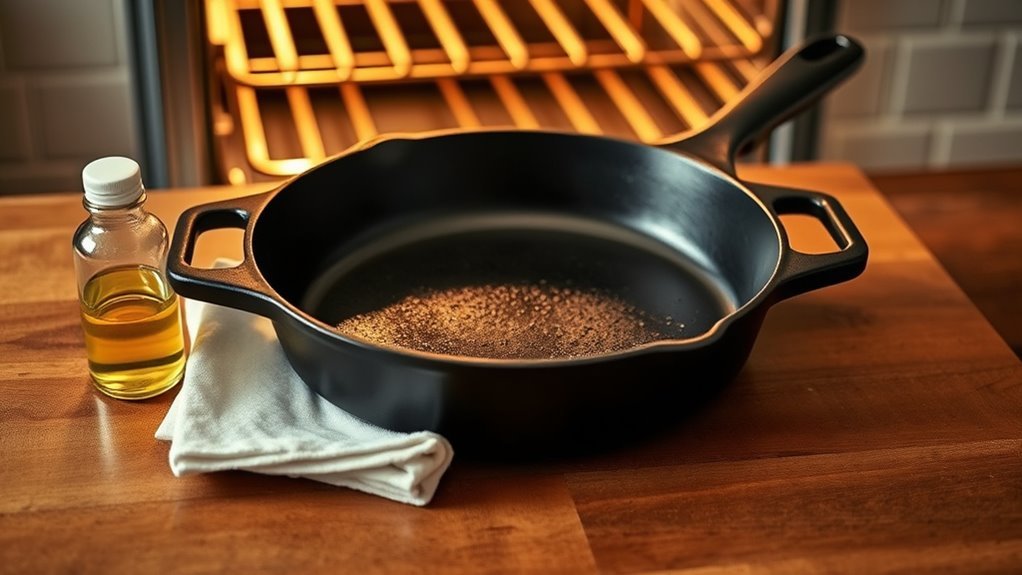
If you’re new to Lodge pans, you might wonder whether they come seasoned. The answer is yes, but that initial layer is just a starting point. To truly reveal the potential of your skillet, a proper seasoning process can elevate its performance. This guide will walk you through the steps, share the best oils, and highlight common pitfalls to avoid. Plus, you’ll learn how to maintain that perfect seasoning for years to come.
Understanding Seasoning for Lodge Pans: What Pre-Seasoned Means
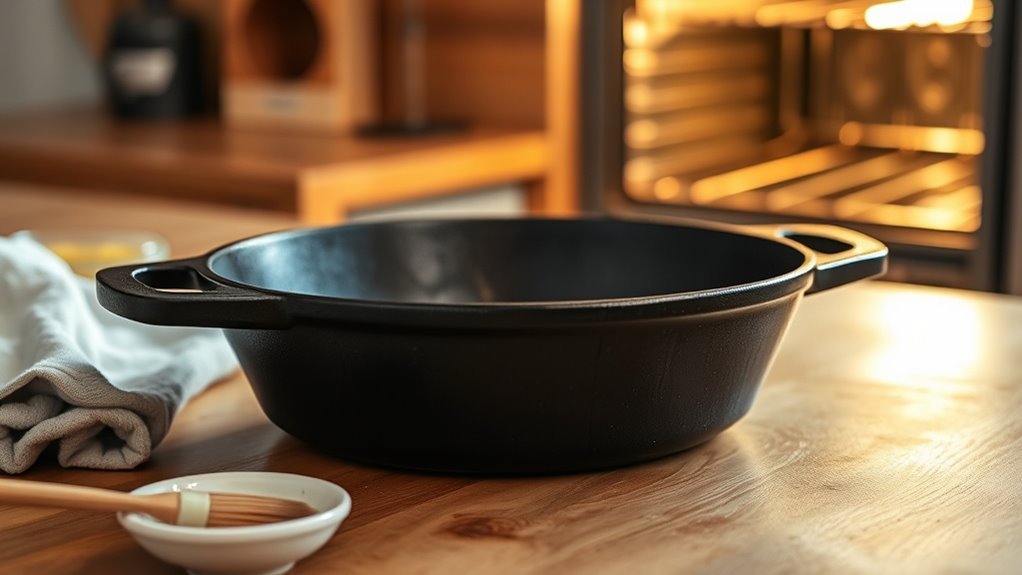
When you first unwrap your Lodge pan, you might wonder what “pre-seasoned” really means. Fundamentally, it’s ready for action straight out of the box.
Lodge pans come coated with 100% vegetable oil, undergoing a baking process that forms a layer of carbonized oil. This layer enhances the non-stick properties of your cast iron skillet, making cooking a breeze.
While the initial seasoning might look uneven, don’t fret—it’ll improve with regular use. Each time you cook with oil or fat, you’re building additional layers of seasoning, reinforcing that vital non-stick surface.
However, it’s wise to avoid acidic foods until your seasoning is well established; they can harm that precious initial layer.
Embrace the journey of seasoning, and your Lodge pan will reward you with delicious meals for years to come!
Why Is Seasoning Important for Cast Iron Cookware?
Seasoning plays an essential role in maximizing the performance of your cast iron cookware. When you season your skillet, you create a layer of polymerized oil that forms a natural, non-stick surface. This enhancement allows your food to slide effortlessly, making cooking a joy rather than a chore.
Properly seasoned cast iron excels in heat retention and distribution, ensuring even cooking without pesky hot spots. With each use, your skillet develops additional layers of seasoning, boosting its non-stick properties and longevity. This not only protects against rust and corrosion but also enhances the durability of your cookware.
A well-seasoned skillet can elevate the flavor profiles of your dishes, especially for favorites like fried eggs and sautéed vegetables. Embrace the art of seasoning to reveal the full potential of your cast iron cookware, and enjoy a lifetime of delicious meals!
How to Reseason Your Lodge Skillet
To keep your Lodge skillet in top shape, reseasoning it periodically is essential. Start by washing your cast iron pan with warm, soapy water, then dry it thoroughly to eliminate any moisture. This prepares the surface for the next layer of protection.
Next, apply a thin layer of high smoke point oil—like vegetable or canola oil—on both the inside and outside of the skillet.
Preheat your oven to 450–500°F, placing aluminum foil on the bottom rack to catch any drips. Bake the skillet upside down for one hour; this helps bond the oil to the pan.
After baking, let the skillet cool inside the oven. Remember, regular use will naturally build up and maintain the seasoning, enhancing your Lodge seasoned cast iron over time.
Top Oils for Effective Seasoning of Cast Iron
Choosing the right oil can make all the difference when it comes to seasoning your cast iron. For effective seasoning, you’ll want oils that can handle high temperatures without breaking down. Here are three top options:
Selecting the right oil is crucial for seasoning cast iron effectively, especially oils that withstand high temperatures.
- Vegetable Oil: Versatile and affordable, it’s a great choice for Lodge cast iron.
- Canola Oil: With a high smoke point, it effectively creates a durable seasoning layer.
- Lodge Seasoning Oil: Specifically formulated for cast iron, this Kosher-certified oil guarantees reliable results.
Using high smoke point oils not only helps you achieve a solid seasoning layer but also enhances the pan’s non-stick properties over time.
Avoid oils with lower smoke points, like olive oil, which can leave a sticky residue.
Avoid These Common Mistakes When Seasoning Your Pan
Many home cooks make the mistake of overlooking key steps when seasoning their cast iron pans. First, avoid using soap after the initial seasoning; it strips away essential layers, compromising your pan’s non-stick surface.
After washing, make sure your pan is completely dry—moisture invites rust and ruins that beautiful seasoning.
Next, steer clear of low-quality oils; instead, choose oils like vegetable or canola for effective polymerization at high heat.
When reseasoning, apply a thin, even coat of oil—too much can hinder proper bonding.
Finally, hold off on cooking with acidic ingredients like tomatoes or citrus until your seasoning is well established. These can damage your hard-earned seasoning layer.
How to Maintain Your Lodge Skillet’s Seasoning Over Time
Maintaining the seasoning on your Lodge skillet is essential for ensuring its longevity and ideal performance. With a little care, you can keep your cast iron cookware in top shape and enjoy its nonstick qualities for years to come.
Maintaining your Lodge skillet’s seasoning is key to its longevity and performance, ensuring a nonstick experience for years to come.
Here’s how to maintain that precious seasoning:
- Hand Wash After Use: Clean your skillet with warm, soapy water, and dry it thoroughly to prevent rusting.
- Apply Oil: After cleaning, rub a light layer of oil onto the skillet’s surface. This protects the seasoning and enhances its nonstick properties.
- Avoid Acidic Ingredients: Until the seasoning is well-established, steer clear of tomatoes or lemons, as they can break down your seasoning layers.
What Should You Do If Your Seasoning Isn’t Working?
If your seasoning isn’t working, you might notice flaking or a sticky residue on your pan.
These issues often mean the oil layers haven’t bonded properly, so it’s time for a complete reseasoning.
Let’s explore how to fix these common problems and get your skillet back in top shape.
Common Seasoning Issues
While seasoning your Lodge pan can be a straightforward process, issues like sticky surfaces or flaking layers can crop up unexpectedly.
If you encounter these problems, here’s what to do:
- Sticky surfaces: This often means the seasoning layers didn’t bond properly. Strip the pan and start over with a fresh seasoning.
- Uneven seasoning: Apply a thinner layer of oil next time. Make sure it’s evenly distributed before baking to avoid uneven spots.
- Rust issues: Scrub any rusted areas with steel wool, then re-season to restore the protective layer.
Also, steer clear of acidic ingredients like tomatoes until your seasoning is well-established; they can break down your hard work.
Happy cooking!
Fixing Flaking Seasoning
Flaking seasoning can be frustrating, especially after putting in the effort to achieve a well-seasoned Lodge pan. If you notice those pesky flakes, it’s time for reseasoning.
Start by cleaning your pan thoroughly with warm, soapy water to eliminate any loose bits. Next, apply a thin layer of high smoke point oil, making sure to coat both the inside and outside. This step is essential for creating a solid bond.
Preheat your oven to 450–500°F and place the pan upside down for an hour, letting excess oil drip off. Once done, let it cool in the oven to set the seasoning.
Repeat this process if needed to build a robust, non-stick surface that’ll serve you well for years!
Frequently Asked Questions
Why Are Lodge Skillets so Cheap?
Lodge skillets are affordable due to their efficient manufacturing process and strong brand reputation. By leveraging local materials, they cut costs while maintaining cast iron durability.
Their high-volume production keeps pricing competitive against rivals, catering to consumer preferences for quality at lower prices.
Plus, their commitment to sustainability enhances their appeal, allowing you to enjoy a reliable skillet without breaking the bank.
You’re getting great value with every purchase!
How Can I Tell if My Cast Iron Pan Is Seasoned?
You can tell if your cast iron pan is seasoned by checking its surface. It should be smooth, shiny, and dark, indicating good seasoning benefits. If food sticks, your seasoning might need attention.
Try the water test: pour some water into a heated pan; if it beads and dances, your cooking performance is on point.
Regular cast iron maintenance, including proper cleaning techniques, enhances flavor and prevents rust, ensuring your pan stays in top shape.
Is Lodge Just as Good as Le Creuset?
Absolutely, Lodge can be just as good as Le Creuset, depending on what you need.
Lodge offers impressive quality at a more affordable price, while Le Creuset shines in durability and a chic design.
When it comes to cooking performance, both excel. Customer reviews often praise Lodge for its non-stick surface that improves over time.
Can You Use Dawn Dish Soap on Lodge Cast Iron?
Yes, you can use Dawn dish soap on your Lodge cast iron, but limit its use to occasional deep cleaning.
For daily maintenance, stick to warm water and a non-abrasive scrubber to preserve the seasoning.
If you do use soap, dry the pan thoroughly and apply a light layer of oil afterward.
These cleaning tips help maintain your pan’s durability and non-stick surface, ensuring it serves you well for all your cooking methods.
Conclusion
In the world of cooking, your Lodge pan can become like a trusty steed, ready for culinary adventures. By understanding and perfecting the seasoning process, you’re not just enhancing its non-stick magic; you’re forging a bond that transforms each meal. So, embrace the ritual of care and maintenance, and your skillet will reward you with golden-brown pancakes and seared steaks, a reflection of your dedication. Let your Lodge pan become a cherished heirloom in your kitchen.
