
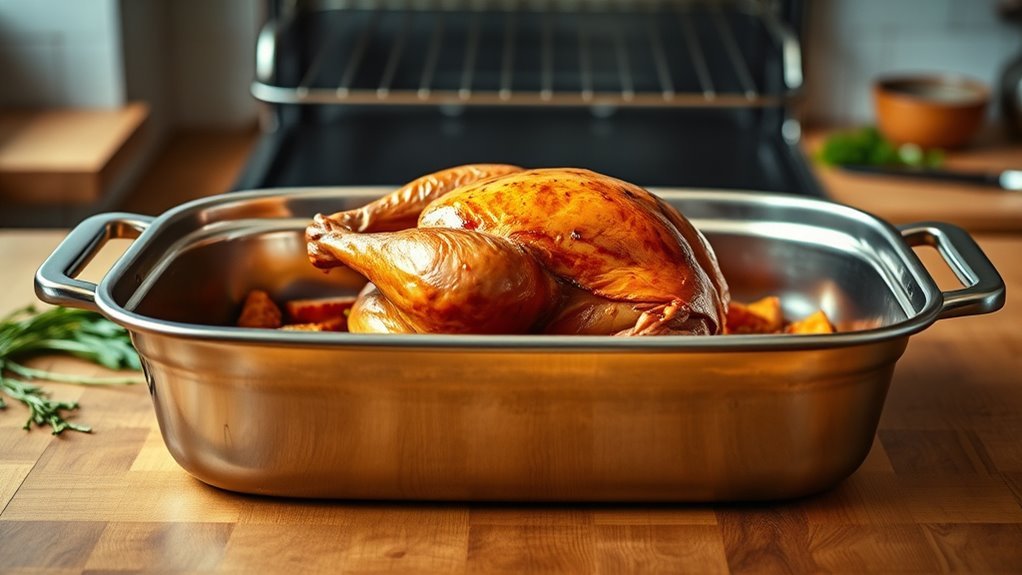
Think of a roasting tin as the unsung hero of your kitchen, quietly transforming simple ingredients into delicious meals. It’s not just a vessel; it’s a tool designed for perfection. From perfectly roasted meats to vibrant vegetables, its design fosters even cooking. But what makes a roasting tin truly indispensable? Let’s explore its features, uses, and some key facts that might just change how you approach your next culinary adventure.
What Is a Roasting Tin and Its Purpose?
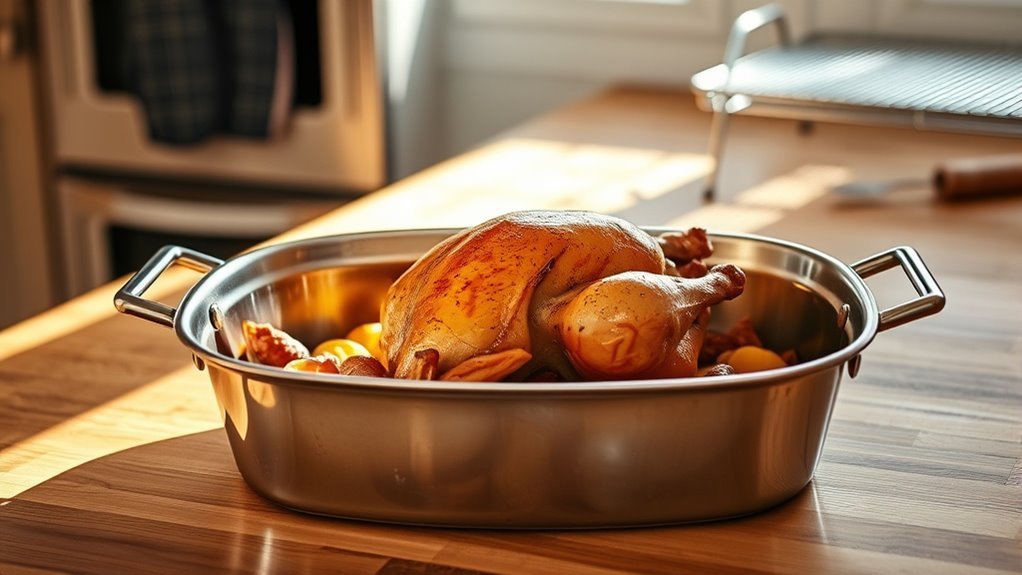
When you think about cooking succulent roasts or perfectly browned vegetables, a roasting tin is an essential tool in your kitchen arsenal. This large, rectangular roasting pan is designed for ideal airflow, ensuring even cooking for your favorite dishes.
A roasting tin is a must-have for achieving succulent roasts and perfectly browned vegetables with even cooking every time.
With high sides, it contains splatters and collects drippings, making it easy to whip up delicious gravies and sauces. Most roasting tins are crafted from durable stainless steel, allowing them to withstand high oven temperatures with ease.
Many come with a roasting rack that elevates your food, enhancing air circulation and promoting that perfect golden-brown finish. Whether you’re preparing whole poultry or large cuts of meat, a roasting tin accommodates them effortlessly, typically measuring at least 16 x 13 inches.
Plus, the easy cleanup means you can focus more on enjoying your meal and less on scrubbing pans. Embrace the liberation of cooking with this versatile kitchen essential!
Essential Features of an Effective Roasting Tin
An effective roasting tin is a culinary powerhouse, designed to elevate your cooking experience. When selecting the right one, consider these essential features:
- High Sides: Typically 2-3 inches high, they contain splatters and promote ideal heat circulation for even cooking.
- Durable Construction: Look for materials like stainless steel or aluminum for even heat distribution and long-lasting performance.
- Integrated Racks: These elevate your food, enhancing airflow for perfect browning and cooking.
With sturdy handles, you can safely maneuver your hot, heavy pan in and out of the oven.
Opt for a nonstick roasting pan that’s easy to clean, so you can enjoy your delicious meals without the hassle of post-cooking cleanup.
Whether you’re roasting veggies or a succulent turkey, these features guarantee your culinary creations are nothing short of spectacular.
Best Materials for Roasting Tins: What You Need to Know
When choosing the best roasting tin, the material you select can make a huge difference in your cooking experience.
Different materials, like stainless steel, aluminum, and cast iron, offer unique benefits in heat conductivity and durability.
Understanding these options will help you pick a roasting tin that suits your needs and cooking style.
Material Types Explained
Selecting the right material for your roasting tin can greatly impact your cooking results. Here are three popular options:
- Stainless Steel: Durable and easy to clean, these roasting pans resist rust and maintain their shine over time, ensuring longevity in your kitchen.
- Aluminum: Lightweight and affordable, aluminum tins are convenient for single-use. However, they can warp under high heat, making them less ideal for demanding tasks.
- Cast Iron: Known for excellent heat retention and even cooking, cast iron is perfect for slow-roasting meats and veggies.
Just remember, they require proper seasoning and care to maintain their performance.
Whichever you choose, understanding these materials will elevate your culinary adventures!
Heat Conductivity Matters
Understanding the materials of your roasting tin lays the groundwork for mastering heat conductivity, which plays a pivotal role in achieving perfectly cooked dishes. Stainless steel and aluminum are your best bets for even browning, especially when handling large cuts of meat. Their excellent heat conductivity guarantees uniform cooking, while stainless steel’s non-reactive properties let you roast acidic foods without worry. Plus, these durable materials can withstand high temperatures, making them versatile for various cooking methods. Cleaning up is a breeze, too.
| Material | Benefits |
|---|---|
| Stainless Steel | Non-reactive, easy cleaning |
| Aluminum | Excellent heat conductivity |
| Carbon Steel | Requires seasoning |
| Thick Stainless Steel | Durable, stable |
| Lightweight Aluminum | Easy to handle |
Durability and Maintenance Tips
While you might be tempted to overlook the importance of durability in roasting tins, choosing the right material can greatly impact both performance and longevity. Here’s what to take into account:
- Stainless Steel: Easy to clean and resistant to warping, making it a reliable option for everyday use.
- Aluminum: Lightweight and heats quickly but may not endure as long as its counterparts.
- Cast Iron: Offers exceptional heat retention for slow-roasting but requires seasoning and careful maintenance to prevent rust.
For ideal maintenance, avoid abrasive cleaners; stick to warm, soapy water and non-abrasive sponges.
Proper storage is essential as well; keep your tins in a safe place to prevent scratches or dents that can affect cooking performance.
Choosing the Perfect Roasting Tin: Key Considerations
A reliable roasting tin is vital for achieving perfectly cooked meats and veggies. When you’re on the hunt for the right roasting pan, focus on durable construction materials like stainless steel or aluminum. These options guarantee even heat distribution, which is essential for consistent cooking results.
Choose a pan with high sides—ideally between 2 to 3 inches—to contain splatters and catch those delicious drippings for gravies.
Size matters too; look for a roasting tin that meets your cooking needs, with a minimum dimension of at least 16 x 13 inches for larger cuts or whole poultry. Don’t overlook the handle design; wide, stable handles make it easier and safer to transport hot, heavy pans.
If you can, opt for a roasting tin with a removable rack. This feature enhances air circulation, promoting even cooking and browning, guaranteeing your dishes are nothing short of perfection.
Alternative Options If You Don’t Have a Roasting Tin
If you find yourself without a roasting tin, don’t worry—you’ve got several handy alternatives that can still deliver delicious results. Here are some options to take into account:
- Cake Pan: A 9-by-13-inch cake pan works well for smaller cuts of meat or vegetables, making it a versatile choice for your roasting needs.
- Casserole Dish: Confirm your casserole dish can withstand high oven temperatures, and it can easily step in as a roasting dish for your favorite recipes.
- Broiler Pan: This option, with its lower sides and rack, allows for great airflow, effectively mimicking the function of a roasting tin for smaller roasts.
For added support, place foil roasting pans on a sturdy baking sheet, or elevate meat with a cooling rack inside a baking sheet or casserole dish.
These alternative options will keep your culinary creativity alive!
Maintaining Your Roasting Tin for Longevity
To keep your roasting tin in top shape, it’s essential to adopt a few simple maintenance habits.
Always clean your roasting tin immediately after use with warm, soapy water and a non-abrasive sponge to prevent food from drying and sticking. This quick action helps maintain its surface and guarantees it lasts longer.
Clean your roasting tin right after use with warm, soapy water and a non-abrasive sponge to keep it in top condition.
Avoid using harsh cleaners or steel wool, as these can scratch your tin, especially if it’s stainless steel or non-stick. To enhance performance, apply a light layer of oil before cooking, making it easier to clean afterward.
Regularly check for signs of warping or damage, particularly with aluminum or non-stick materials. Store your roasting tin in a safe place to avoid scratches or dents that can affect cooking.
Versatile Uses for Your Roasting Tin
While many think of a roasting tin solely for meats, its versatility goes far beyond that. This versatile roasting pan is your go-to for everyday cooking, allowing you to explore various culinary creations.
- Roasting Vegetables: Toss your favorite veggies with olive oil and herbs; the large size guarantees they roast evenly, developing a crispy exterior while the pan collects delicious juices.
- Baking Casseroles: Use it as a baking dish for hearty casseroles. The depth keeps everything contained, making cleanup a breeze.
- One-Pan Meals: Combine proteins with grains and veggies for a complete meal. The rack promotes air circulation, assuring everything cooks uniformly and retains moisture.
With its sturdy construction and high sides, your roasting tin transforms into an essential tool, elevating your cooking experience and inspiring creativity in the kitchen.
Frequently Asked Questions
What Can You Use Instead of a Roasting Tin?
Instead of a roasting tin, you can use several roasting alternatives like a sturdy cake pan or a casserole dish—just check their heat tolerance.
Broiler pans are great for drippings, while foil pans work for single-use occasions.
An oven-safe skillet, especially cast iron, offers excellent heat distribution for smaller cuts.
What Is the Difference Between a Baking Tin and a Roasting Tin?
A baking tin and a roasting tin may seem like mere kitchen companions, but they’re culinary superheroes in their own right!
The main difference lies in their size variations and intended food types. Roasting tins handle larger cuts of meat, while baking tins shine with pastries.
Made from different tin materials, roasting tins excel at heat distribution for high-temperature cooking.
What Does a Roasting Tin Look Like?
A roasting tin typically features high, straight sides and comes in various sizes, often around 16 x 13 inches. Made from materials like stainless steel or aluminum, it guarantees even heat distribution.
You’ll find it in different shapes, often with integrated racks, sturdy handles, and a range of colors. Brands may vary, but maintenance is simple—just clean it after use.
If you need alternatives, consider cast iron or glass dishes for roasting.
Can I Use a Baking Pan Instead of a Roasting Pan?
You can absolutely use a baking pan instead of a roasting pan, especially if it’s at least 9-by-13 inches with raised sides.
Just keep in mind that baking pans don’t usually have racks, which can affect heat distribution and cooking times for larger meats. For smaller roasts or veggies, they work great.
Make sure your pan’s materials can handle the heat and make cleanup easier by lining it with foil.
Enjoy your cooking!
Conclusion
In the warm glow of your kitchen, a roasting tin stands ready to transform simple ingredients into a symphony of flavors. Whether you’re crafting a succulent roast or baking a comforting casserole, this versatile vessel is your trusty companion. With proper care, it’ll serve you well for years, capturing the essence of countless meals. Embrace its possibilities, and let your culinary creativity flourish, turning every dish into a celebration of taste and togetherness.
