
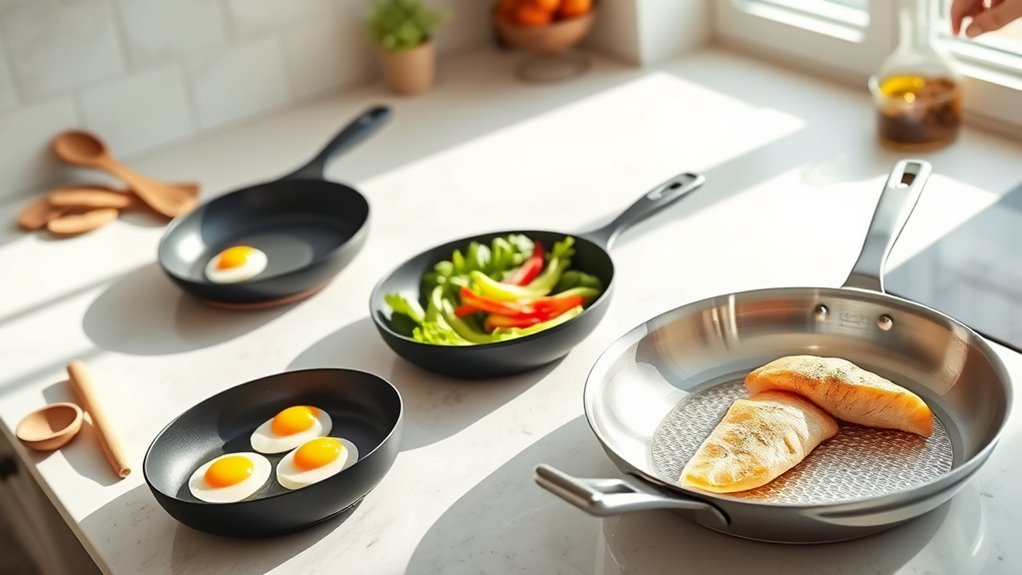
When it comes to nonstick pans, you might find that “conventional” options aren’t as trustworthy as they seem. Understanding the materials and coatings is essential for your kitchen safety. PFOA-free PTFE pans are often recommended, but there are nuances to take into account. Exploring their maintenance and potential alternatives can help you make more informed choices. What should you prioritize to guarantee your cookware is both safe and effective?
Identifying Unsafe Nonstick Cookware: Safety Risks and Solutions
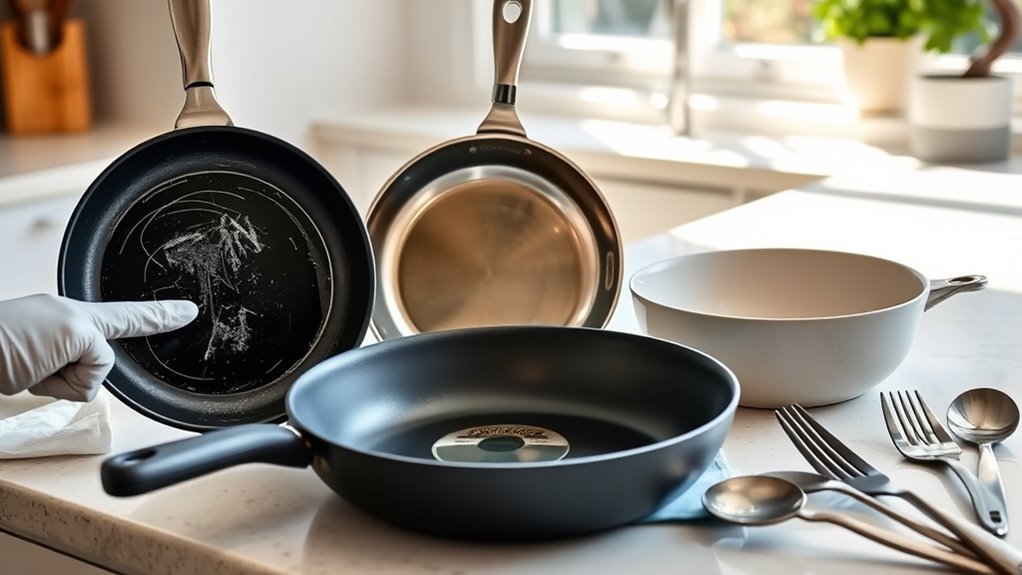
When evaluating the safety of your nonstick cookware, it’s essential to recognize that many pans manufactured before 2015 likely contain hazardous PFAS, which can pose serious health risks.
Major brands, like All-Clad and Calphalon, may still use PTFE, a type of PFAS, raising safety concerns even if labeled PFOA-free.
Major brands, such as All-Clad and Calphalon, may still use PTFE, raising safety concerns despite PFOA-free labels.
To identify unsafe nonstick cookware, regularly inspect your pans for scratches, peeling, or other signs of wear.
Remember, nonstick cookware typically has a limited lifespan of 2-3 years, especially when damaged, increasing the risk of chemical exposure.
Overheating these pans can release toxic fumes, further endangering your health and that of your pets.
To minimize risks, consider replacing any worn or damaged nonstick cookware promptly.
What Makes Nonstick Cookware Safe for Daily Use?
To guarantee nonstick cookware is safe for daily use, you need to pay attention to safe cooking temperatures and material safety standards.
Using these pans at low to medium heat minimizes risks, while selecting reputable brands helps assure quality.
Additionally, proper care techniques, like regular inspections for damage, can greatly enhance both safety and longevity.
Safe Cooking Temperatures
While nonstick cookware offers convenience and ease in daily cooking, its safety largely depends on maintaining appropriate cooking temperatures.
To keep your pans safe for everyday use, operate them at low to medium heat, ideally below 260°C (500°F). Exceeding this threshold can lead to the breakdown of the nonstick coating and release harmful fumes, particularly concerning for humans and pets.
Regularly inspect your cookware for scratches or peeling, as damaged surfaces increase the risk of releasing particles. To protect the coating, avoid using metal utensils.
Following manufacturer guidelines for care and maintenance not only enhances safety but also extends the lifespan of your nonstick cookware, ensuring a reliable cooking experience without compromising health.
Material Safety Standards
Nonstick cookware meets stringent material safety standards, ensuring it’s safe for daily use.
Modern nonstick pans often feature PTFE coatings that are PFOA-free, greatly reducing health risks linked to older models.
Safety guidelines recommend using these pans at low to medium heat to prevent breakdown and harmful fume release.
Quality non-stick coatings resist scratching and wear, offering a lifespan of up to five years with proper care.
Health agencies assert that when maintained correctly, nonstick pans present minimal health risks compared to scratched or overheated alternatives.
Regularly inspecting for wear and replacing visibly damaged cookware are essential practices, allowing you to enjoy the convenience of nonstick surfaces while prioritizing your health and safety in the kitchen.
Proper Care Techniques
When you prioritize proper care techniques for your nonstick cookware, you greatly enhance its safety and longevity.
Follow these guidelines to keep your nonstick pans in top shape:
- Use low to medium heat: Overheating can break down the coating and release harmful fumes.
- Inspect regularly: Check for scratches or wear; replace damaged pans to minimize health risks.
- Clean gently: Use warm, soapy water and a soft sponge. Avoid harsh abrasives to protect the coating.
- Stack wisely: Use felt pads or pot holders between stacked pans to prevent scratches and extend their lifespan.
Essential Tips for Nonstick Cookware Maintenance
To keep your nonstick cookware in top condition, follow these essential maintenance tips.
Regularly inspect your pans for scratches or wear; damaged surfaces can release harmful chemicals and should be replaced immediately. Always cook on low to medium heat to prevent overheating, which can break down the nonstick coating and emit toxic fumes.
Avoid using metal utensils; instead, choose silicone or wooden options to prevent scratches on the nonstick surface.
When cleaning, hand wash your nonstick cookware with warm, soapy water and a soft sponge to extend its lifespan and maintain its nonstick properties. Avoid placing these pans in the dishwasher, as harsh detergents and high temperatures can damage the coating.
Finally, store your nonstick pans carefully, stacking them with felt pads or pot holders to prevent scratching and damage during storage.
Signs It’s Time to Replace Your Nonstick Pans
If you notice visible scratches or peeling on your nonstick pans, it’s time to replace them to avoid harmful particles during cooking.
Discoloration or warping can also indicate diminished performance, signaling a need for a new pan.
Visible Scratches And Peeling
Visible scratches and peeling on your nonstick pans indicate it’s time for a replacement, as these flaws can jeopardize the integrity of the nonstick coating.
Regularly inspect your cookware to prevent health risks. Here are key signs to watch for:
- Flaking or Chipping: Any visible flakes mean it’s time to discard the pan.
- Deep Scratches: These can lead to chemical exposure, especially if overheated.
- Limited Lifespan: Most nonstick pans last 2-3 years, and scratches shorten this.
- Manufacturer Guidelines: Always adhere to care instructions and replace worn pans.
Discoloration Or Warping
Discoloration and warping are critical indicators that your nonstick pans may no longer be safe for use. If you notice dark spots or a burnt appearance, the nonstick coating is likely degrading, signaling it’s time to replace the pan.
Warping in the base can lead to uneven cooking, compromising the pan’s structural integrity and making it unfit for safe food preparation. Additionally, if food starts sticking despite following cooking guidelines, this loss of nonstick properties suggests you should discard the pan.
Regularly inspect your cookware for these signs; replacing nonstick pans every 2-3 years helps maintain ideal safety in your kitchen. Don’t compromise your cooking experience—stay vigilant about discoloration and warping.
Top Nonstick Cookware Alternatives You Should Consider
When choosing alternatives to traditional nonstick cookware, five standout options can greatly enhance your cooking experience. Each provides unique benefits without the concerns associated with conventional nonstick coatings:
- Stainless Steel: Durable and non-reactive, it’s perfect for frying and sautéing, eliminating the risk of chemical leaching.
- Cast Iron: Known for excellent heat retention, properly seasoned cast iron skillets become naturally non-stick, ideal for high-heat cooking.
- Carbon Steel: Lighter than cast iron, this option develops a non-stick surface over time and responds quickly to heat changes.
- Enameled Cast Iron: Combining cast iron’s benefits with a non-reactive enamel coating, it’s safe for acidic foods and easy to clean.
These materials not only promote healthier cooking but also empower you to make informed choices in your kitchen.
Navigating Public Concerns About Nonstick Cookware Safety
As concerns about nonstick cookware safety escalate, many consumers are re-evaluating their choices in the kitchen. The rise in awareness of PFAS exposure, especially from older pans containing hazardous chemicals like PFOA and PFOS, has prompted caution. Overheating nonstick pans can release harmful fumes, particularly above 260°C (500°F).
| Concern | Risk Level | Alternatives |
|---|---|---|
| PFAS Exposure | High | Stainless Steel |
| Overheating Fumes | Moderate | Cast Iron |
| Chemical Composition | Uncertain | Ceramic Cookware |
| Aging Cookware | High | Enameled Cast Iron |
| Social Media Influence | Increasing | Non-Teflon Options |
Modern nonstick pans labeled “PFOA-free” may still harbor other PFAS-type chemicals. As ongoing research highlights microplastics, your choices in cookware become increasingly critical for your health and safety.
How to Spot Unsafe Nonstick Cookware?
Identifying unsafe nonstick cookware isn’t just about brand names; it’s about understanding the materials and conditions that can compromise safety.
To guarantee you’re making a safe choice with your nonstick pans, keep these four points in mind:
- Check for PFOA: Nonstick pans made before 2015 likely contain hazardous PFAS like PFOA, linked to serious health risks.
- Look for Labels: Seek out products labeled “PFOA-free,” but remember that many still use PTFE, another type of PFAS.
- Inspect for Damage: Scratches or visible wear on the surface can release harmful chemicals; always inspect your cookware carefully.
- Monitor Cooking Temperature: Avoid heating nonstick pans above 500°F, as this can break down the coating and release toxic fumes.
Frequently Asked Questions
Which Non-Stick Is the Safest?
The safest nonstick options are ceramic-coated pans. They’re eco-friendly, free from PTFE and PFAS, and offer long-lasting durability.
When choosing, look for those that perform well at low to medium heat to avoid overheating, which can release harmful fumes.
Use silicone or wooden utensils to protect the coating and inspect your cookware regularly for scratches or peeling.
Replacing damaged pans guarantees you minimize health risks while enjoying your cooking experience.
What Do Chefs Use for Non-Stick Pans?
When it comes to non-stick pans, you’ll find that chefs often gravitate toward ceramic alternatives and advanced coatings. These options reflect professional preferences for their safety and durability.
While high-quality stainless steel and cast iron pans reign supreme for versatility, non-stick options shine when cooking delicate items like eggs.
To preserve your pans, use silicone or wooden utensils, keeping those coatings intact and your cooking experience liberating and efficient.
What Nonstick Coating to Avoid?
You should avoid nonstick coatings containing Teflon, especially those made before 2015, as they may include hazardous PFAS like PFOA.
Instead, consider Teflon alternatives such as ceramic coatings, which are generally safer and free from harmful chemicals.
Always check for visible wear or scratches on your pans, as damaged surfaces can release toxic particles.
Prioritize durable options to guarantee both your health and the longevity of your cookware.
Which Nonstick Pan Did America’s Test Kitchen Recommend as the Best?
America’s Test Kitchen recommends the T-fal Ultimate Hard Anodized Nonstick Cookware as the best nonstick pan.
This pan combines long-lasting durability with a PFOA-free PTFE coating, ensuring safe cooking without health concerns.
While ceramic options exist, T-fal’s hard-anodized aluminum construction excels in heat distribution and scratch resistance.
Plus, it’s dishwasher-safe and can handle oven temperatures up to 400°F, making it a versatile choice for your culinary needs.
Conclusion
Ultimately, choosing the safest nonstick pan is like finding a reliable friend—trustworthy and low-maintenance. By prioritizing PFOA-free PTFE options, maintaining your cookware properly, and staying vigilant for signs of wear, you can cook with confidence. Remember, alternatives like stainless steel can be just as effective while minimizing health risks. Stay informed and proactive to guarantee your cooking experience remains both safe and enjoyable. Your kitchen deserves the best care and attention you can provide.
