
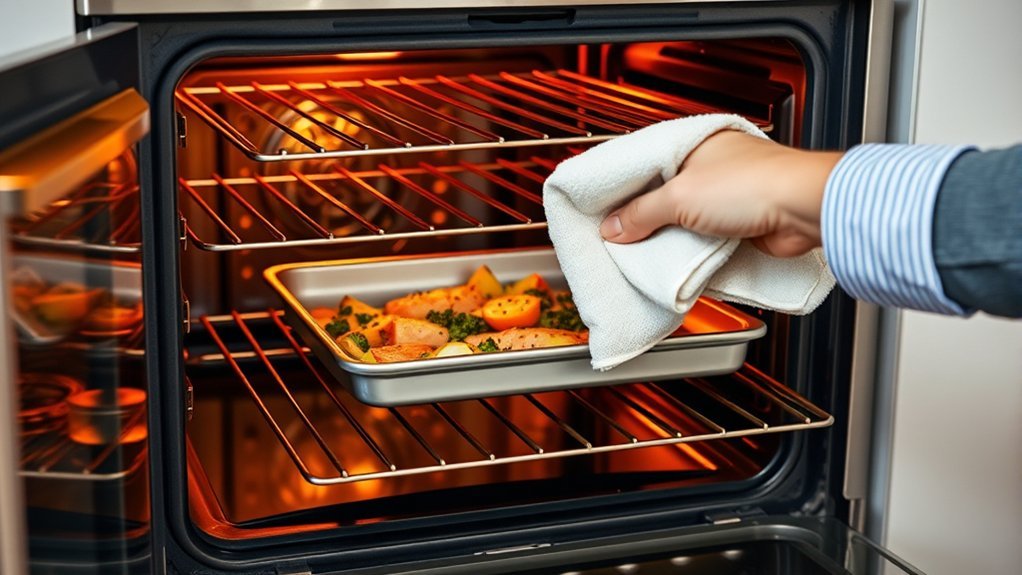
Broiling steak in an electric oven uses intense radiant heat from above to brown the surface quickly while the center cooks. For the best results, use a broiler pan or broiler-safe metal pan with a rack, follow your oven manual for the correct rack position and door position, and check the steak with a food thermometer instead of relying only on cooking time or color.
Quick Answer
To broil steak in an electric oven, select Broil, position the rack as your oven manual recommends, and preheat only if your model calls for it. Place the seasoned steak on a broiler pan or broiler-safe rack, watch it closely, turn as needed, and cook whole beef steak to at least 145°F followed by a 3-minute rest.
Key Takeaways
- Follow your electric oven’s manual for rack position, preheating, Broil High/Low settings, and whether the door stays open or closed.
- Use a broiler pan and grid or another broiler-safe metal pan with a rack so rendered fat can drain away from the steak.
- Do not depend on a fixed number of minutes because steak thickness, rack position, starting temperature, and broiler output all affect cooking time.
- Check the thickest part of the steak with a food thermometer. USDA guidance for whole beef steaks is 145°F (63°C) followed by at least a 3-minute rest.
- Stay close to the oven while broiling because browning can change quickly under intense direct heat.
At a Glance
| Time Required | Varies by steak thickness, oven, rack position, and broil setting; use internal temperature rather than a fixed cooking time. |
| Difficulty | Easy, but requires close attention because broiling uses intense direct heat. |
| Tools Needed | Electric oven with broiler, broiler pan and grid or broiler-safe metal pan with rack, tongs, oven mitts, and a food thermometer. |
| Cost | No special cooking equipment beyond standard broiling tools and the steak itself. |
Warning: Never assume an electric oven should broil with the door open. Many modern ovens require closed-door broiling, and some switch the broil element off when the door opens. Check the owner’s manual for your exact model before cooking.
Choose and Prepare the Steak
Tender steaks that can cook relatively quickly are good candidates for broiling. Strip steak, ribeye, sirloin, tenderloin, flank steak, and similar cuts can work, although thickness and shape affect how quickly the center heats.
Steaks of relatively even thickness are easier to broil consistently than cuts that taper dramatically from one end to the other. A very thick steak may brown heavily before its center reaches the desired temperature, in which case a lower broil setting, a lower rack position, or another cooking method may provide better control.
Before cooking, pat the surface dry with paper towels and season the steak as desired. Removing excess surface moisture helps the exterior brown rather than steam. Keep separate utensils and plates for raw and cooked meat unless they have been thoroughly washed.
Set Up Your Broiler for Steak
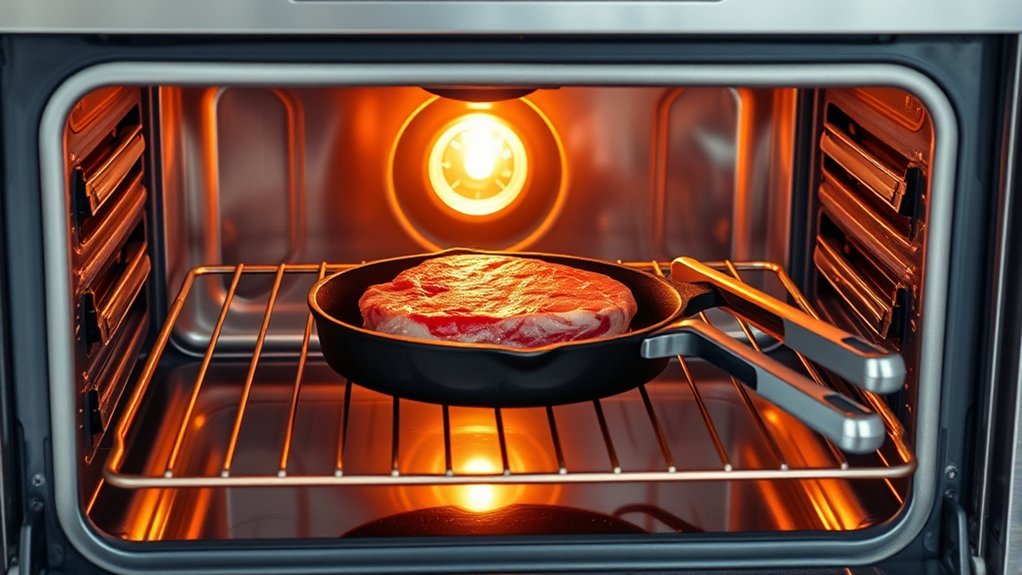
In many electric ovens, broiling uses intense radiant heat from an upper heating element. Select the Broil function and choose High or Low if your model provides those settings.
Do not assume that every electric broiler needs the same preheating time. Manufacturer instructions differ. Some current ovens call for a short preheat, while others provide nearly immediate broiler heat. GE also gives special preheating guidance for certain installations. Follow the owner’s manual for your model rather than automatically waiting 5 to 10 minutes.
Rack placement is also model-specific. Moving food closer to the broiler generally produces faster surface browning, while a lower position gives the center more time to heat. Use the rack position recommended for steak or broiling in your owner’s manual.
Note: GE says most currently produced electric ranges broil with the door closed, although some models support an open-door broil position. Whirlpool also has electric models whose broil element switches off when the door opens. Your appliance manual is the final authority.
Prep the Rack and Pan
Use a broiler pan and grid or another metal pan-and-rack combination specifically rated for broiling. Elevating the steak allows rendered fat to drain into the pan instead of collecting directly around the meat, which can reduce splattering and smoke.
Make sure the pan and rack are clean before they go under the broiler. Grease left from earlier cooking can smoke heavily under intense heat.
Aluminum-foil instructions vary by appliance and pan design. Whirlpool recommends leaving the broiler grid uncovered so juices can drain properly, while GE allows foil on some grids when matching openings are cut through it. If you use foil, follow your oven and broiler-pan instructions and never block the drainage openings.
Avoid using cookware that is not rated for direct broiler heat. Broiler temperatures can damage unsuitable pans and cookware.
Broil the Steaks Evenly
Place the steaks on the prepared rack with space between them. Set the pan in the rack position specified by your oven manual and begin broiling.
Stay near the oven. Broiling is much more intense than ordinary baking, so a steak can move from browned to scorched quickly. If your oven manual or recipe calls for turning the steak, use tongs rather than piercing it repeatedly with a fork.
There is no single cooking time that works for every steak. Thickness, cut, starting temperature, bone, broil level, rack position, pan type, and the power of the broiler all affect how quickly the meat cooks.
Use the clock as a reminder to check the steak, not as proof that the steak is finished. Internal temperature is the more reliable endpoint.
Flip and Check for Doneness
Turn the steak when required by your recipe or appliance instructions and when the exposed surface has developed the browning you want. A repeating 2-to-4-minute flipping schedule is not necessary for every broiler or every steak.
Check the internal temperature near the end of cooking with an instant-read food thermometer. According to the USDA Food Safety and Inspection Service, insert the thermometer into the thickest part of a steak and avoid bone, fat, and gristle. For a thin steak, inserting the thermometer from the side can help the sensing area reach the center.
For food safety, FoodSafety.gov recommends cooking whole beef steaks to a minimum internal temperature of 145°F (63°C) and then allowing at least a 3-minute rest.
Warning: Lower temperatures commonly associated with rare or medium-rare steak are below the USDA-recommended minimum safe temperature for whole beef steaks. Color, firmness, and browning alone cannot confirm food safety.
Pro Tip: Start checking the steak before you expect it to be finished. This gives you time to respond if the exterior is browning faster than the center is heating.
Troubleshoot Common Broiling Problems
Too Much Smoke
Check for accumulated grease on the pan, grid, or oven surfaces. Use a proper broiler pan or rack so fat can drain away, and trim excessive exterior fat when practical. If smoke becomes excessive or you see a flare-up, stop cooking according to your appliance’s safety instructions rather than leaving the broiler unattended.
The Outside Browns Before the Center Is Ready
Move the pan farther from the broiler or switch to a lower broil setting if your oven provides one. Thicker steaks generally benefit from less aggressive surface heat because the center needs more time to warm.
The Steak Is Not Browning Well
Confirm that the correct Broil setting is selected, the rack is in the recommended position, and any required preheat has finished. Also pat excess moisture from the steak before cooking. Do not move the rack closer than your appliance instructions permit.
Rest the Steaks Before Slicing
After the steak reaches the safe minimum temperature, remove it from the broiler and let it rest for at least 3 minutes before cutting or eating. This rest period is part of the USDA safety recommendation for whole beef steaks.
A longer rest of roughly 5 to 10 minutes is commonly used for thicker steaks when serving because it gives the meat time to settle before slicing. If you loosely tent the steak with foil to retain warmth, avoid sealing it tightly because trapped steam can soften the browned surface.
When serving flank steak or another cut with clearly visible muscle fibers, slice across the grain rather than parallel to it. Cutting across the fibers shortens them and generally makes each bite easier to chew.
Frequently Asked Questions
How Do I Broil in an Electric Oven?
Select Broil, choose High or Low if your model offers those settings, place the oven rack in the position recommended by the manufacturer, and preheat only if your manual calls for it. Put the food on a broiler pan or broiler-safe rack, monitor it closely, turn as needed, and use a food thermometer to verify a safe internal temperature.
How Do I Broil Steak in a GE Electric Oven?
On a GE electric oven, select the appropriate Broil setting, such as Hi or Lo on models equipped with both, and use the rack position recommended in the owner’s manual. GE recommends a broiler pan and grid and says door position varies by model, although most currently produced GE electric ranges use closed-door broiling. Follow the instructions for your exact model.
Do I Leave the Oven Door Open When Broiling?
Not unless the owner’s manual specifically tells you to. Many modern electric ranges and wall ovens are designed for closed-door broiling, and some models turn the broil element off when the door opens. Older ovens and certain specific models may use a broil-stop or partially open position, so check the manual before cooking.
How Do I Set My Oven to Broil?
Find the Broil setting on the oven control panel and select it. If the oven offers High and Low Broil, use the setting recommended for the food you are cooking. Position the rack according to the owner’s manual and follow that model’s instructions for preheating and oven-door position.
How Far Should Steak Be From the Broiler?
Use the rack position specified by your oven manufacturer rather than relying on one universal distance. A higher position produces faster browning, while moving the steak farther from the element slows surface browning and can give a thicker steak more time to heat through.
What Temperature Should Broiled Steak Reach?
For food safety, USDA guidance recommends that whole beef steaks reach at least 145°F (63°C), measured with a food thermometer, followed by a rest of at least 3 minutes. Insert the thermometer into the thickest part and avoid bone, fat, and gristle.
Conclusion
Broiling steak in an electric oven works best when the process is controlled by the appliance instructions and a food thermometer rather than a universal cooking time. Use the correct rack position, a clean broiler pan or broiler-safe rack, and the door position specified for your oven. Watch the steak closely as it browns, cook whole beef steak to the USDA-recommended minimum of 145°F, and allow at least a 3-minute rest before slicing.
Sources
- FoodSafety.gov — Safe Minimum Internal Temperature Chart — supports the 145°F minimum temperature and 3-minute rest for whole beef steaks.
- USDA FSIS — Food Thermometers — supports correct thermometer placement and food-safety temperature guidance.
- GE Appliances — Range & Wall Oven Broiling Tips — supports model-specific rack placement, broiler-pan use, foil guidance, and GE broiling practices.
- GE Appliances — Oven Door Position During Broil — supports the distinction between older open-door models and many current closed-door electric ranges.
- Whirlpool — Helpful Tips for Broiling — supports broiler-pan use, smoke reduction, turning with tongs, and rack-position effects.
- Sub-Zero, Wolf, and Cove — Electric Oven Broiler Use — demonstrates why preheating and door procedures must follow the specific appliance rather than a universal rule.