
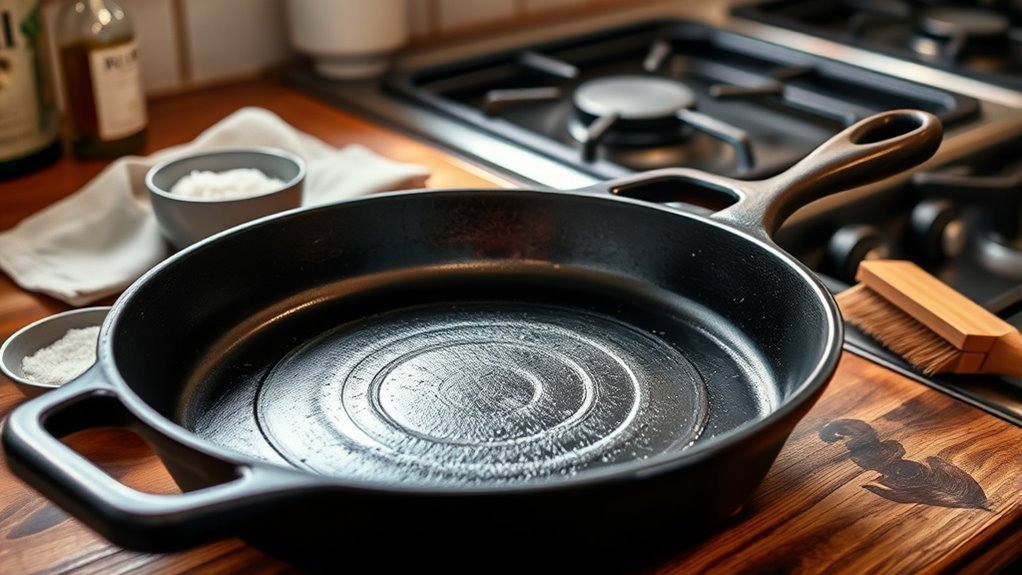
When it comes to your cast iron cookware, knowing how often to season it can make all the difference in performance and longevity. Signs of rust, fading, or food sticking are clear indicators that it’s time to refresh the seasoning. But what if you could enhance its durability with just a few simple steps? Understanding when and how to maintain your cast iron is vital for keeping it in top shape. Let’s explore the essential tips you need.
Why Regular Seasoning Is Essential for Cast Iron
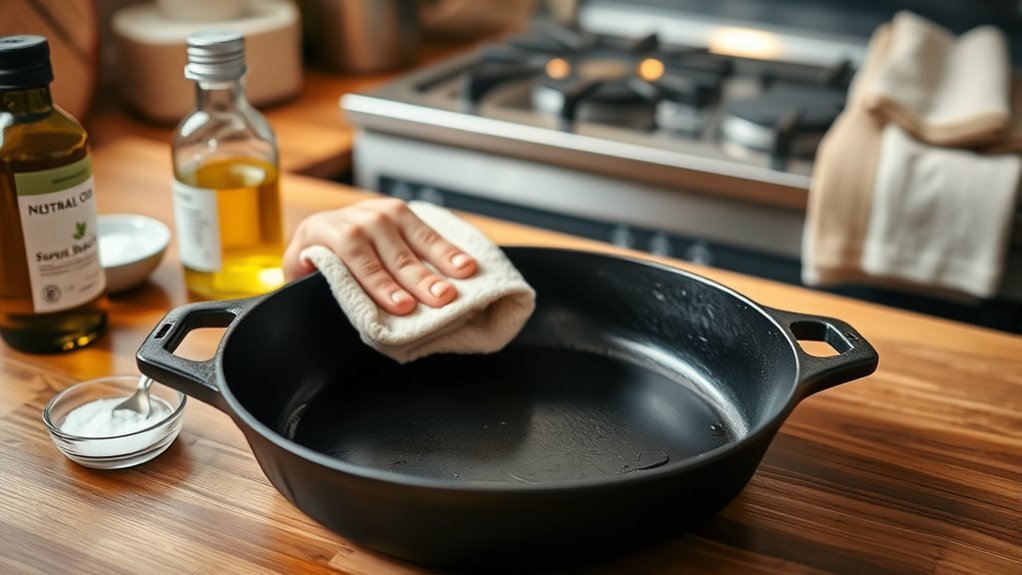
When you cook with cast iron, you mightn’t realize that regular seasoning is the secret to keeping your cookware in top shape. This essential practice builds layers of oil that create a nonstick surface, enhancing your cooking experience over time. The more you use your cast iron, the better its seasoning becomes, making food release a breeze.
Regular seasoning transforms your cast iron, creating a nonstick surface that enhances cooking and ensures effortless food release.
If you notice signs of wear, like rust or faded seasoning from acidic ingredients, it’s time to refresh that layer. Regular seasoning not only restores performance but also prevents moisture and rust, vital for longevity.
After each cleaning, applying a light layer of oil acts as a safeguard. Properly seasoned cast iron can handle high temperatures and improve with each meal, turning every dish into a culinary triumph.
Embrace regular seasoning, and reveal the full potential of your beloved cookware!
How Often Should You Season Your Cast Iron Cookware?
To keep your cast iron cookware in prime condition, seasoning it regularly is key. You should season your skillet whenever you notice signs of rust, fading seasoning, or after scrubbing off burnt-on messes.
Thankfully, regular use actually enhances the seasoning, often reducing the need for frequent re-seasoning. A light application of oil after each cleaning is essential; it maintains the seasoning and prevents rust without the hassle of a full re-seasoning.
If you cook with acidic ingredients like tomatoes or vinegar, be prepared to re-season more often, as these can break down the seasoning layer.
Ultimately, it’s all about monitoring your cookware’s condition. Instead of sticking to a strict schedule, let your skillet guide you on when it needs that loving touch of seasoning.
Keep it in check, and you’ll enjoy delicious meals with a beautifully seasoned surface for years to come.
Recognizing Signs That Your Cast Iron Needs Reseasoning
When you notice rust forming on your cast iron skillet, it’s a clear sign it needs reseasoning.
A dull appearance or increased food sticking during cooking also indicates that the protective layer has worn down.
If you’ve scrubbed away burnt-on food, don’t forget to check if it’s time to reapply seasoning to keep your skillet in top shape.
Rust Formation Indicators
Recognizing the signs that your cast iron cookware needs reseasoning is crucial for maintaining its longevity and performance. One of the most obvious rust formation indicators is, of course, actual rust. If you spot any rust spots or discoloration, it’s a clear signal your skillet requires immediate attention.
A quick wash revealing bare metal also indicates the need for reseasoning, as this exposes your cookware to moisture and potential rust. Additionally, if you notice dullness or fading, especially after cooking with acidic ingredients, it’s time to refresh its protective layer.
Scrubbing off stuck-on food can strip away the seasoning, too, making regular inspections essential to keep your cast iron in top shape. Don’t wait—act before rust takes hold!
Faded Seasoning Appearance
As you cook with your cast iron, you might notice the once-vibrant seasoning losing its luster, showing dull patches or discoloration on the surface.
This faded seasoning indicates that the protective layer is wearing thin, and it can compromise your skillet’s nonstick properties. Cooking with acidic ingredients like tomatoes or citrus can speed up this fading, so it’s best to avoid them until the seasoning is well-established.
If you see significant fading, it’s a clear sign that your cast iron needs reseasoning.
To restore its glory, clean the skillet thoroughly, apply a thin layer of oil, and bake it at high temperatures. This process revitalizes your trusted kitchen companion, ensuring it remains a liberating tool for your culinary adventures.
Scrubbed Surface Damage
You mightn’t realize it, but aggressive scrubbing can leave your cast iron vulnerable to damage.
If you spot rust appearing, that’s a sure sign it’s time to reseason; your protective layer has been compromised. Faded or dull spots on the cooking surface also indicate that the seasoning is wearing off and needs reapplication.
Cooking with acidic ingredients too soon after seasoning can erode that essential layer, so be cautious. If you’ve scrubbed off burnt messes too aggressively, you might’ve inflicted scrubbed surface damage that warrants immediate attention.
Finally, a rough or sticky surface after cooking suggests your seasoning is in trouble. Don’t hesitate—give your cast iron the care it deserves with a timely reseasoning!
How to Reseason Your Cast Iron Skillet: A Simple Step-by-Step Guide
Revitalize your cast iron skillet with a simple reseasoning process that restores its non-stick surface and enhances its durability.
Start by washing your skillet with warm, soapy water to eliminate any residue. Next, dry it thoroughly with a lint-free cloth—moisture can ruin your seasoning efforts.
Then, apply a very thin layer of cooking oil both inside and out, ensuring even coverage to prevent drips during the baking process.
Preheat your oven to at least 450°F, preferably 500°F, to effectively bond the oil to your skillet.
Place the skillet upside down in the oven and bake it for one hour. This step is essential for creating a strong seasoning layer.
After baking, let it cool in the oven. Your cast iron cookware will now be primed for delicious meals, ready to serve you for years to come!
Best Oils for Seasoning Cast Iron: What to Use and Why
Choosing the right oil for seasoning your cast iron skillet can make a big difference in its performance and longevity.
Oils like flaxseed, grapeseed, and canola stand out due to their high smoke points and ability to create a tough, nonstick layer.
Understanding these options helps you cook better and maintain your skillet with ease.
Types of Cooking Oils
When it comes to seasoning cast iron, selecting the right cooking oil is essential for achieving a durable, non-stick surface. Here are some top choices for you:
| Type of Oil | Benefits |
|---|---|
| Vegetable Oil | Affordable, readily available |
| Canola Oil | High smoke point, neutral flavor |
| Flaxseed Oil | Creates a hard seasoning layer |
| Avoid: Olive Oil | Low smoke point, can get sticky |
Using oils with high smoke points, like vegetable or canola oil, guarantees effective seasoning. Flaxseed oil is great but can be pricier. Remember to apply a thin layer to prevent drips and guarantee even coverage. Regular cooking helps maintain that beautiful seasoning, so enjoy liberating your cast iron!
Smoke Points Matter
The right oil can make all the difference in how well your cast iron is seasoned, and understanding smoke points is key to that success.
Oils like flaxseed (around 225°C/437°F) or grapeseed (about 216°C/421°F) are ideal for creating a durable, nonstick surface.
Canola and sunflower oils, with smoke points around 204°C/400°F, can also work but may not offer the same protection as their higher counterparts.
Stay away from olive oil; its lower smoke point (190-220°C/375-428°F) can leave you with a sticky finish instead of a smooth layer.
When re-seasoning, remember to apply a very thin layer of oil to guarantee even bonding and prevent dripping, keeping your cast iron in top shape for years to come.
Benefits of Oil Choices
Selecting the right oil for seasoning your cast iron can greatly enhance its performance and longevity. Flaxseed oil is a top choice, boasting a high smoke point and polymerizing effectively to create a durable coating on your cookware.
Grapeseed and canola oils are also excellent options, offering high smoke points and neutral flavors that won’t interfere with your dishes. Avoid olive oil and butter for initial seasoning, as their lower smoke points can leave a sticky residue.
When applying oil to the cookware, remember that less is more; a thin layer guarantees even seasoning. Regular cooking with oil naturally improves the seasoning, so the more you use your cast iron, the better it performs over time.
Top 5 Mistakes to Avoid When Reseasoning Your Cast Iron
Reseasoning your cast iron skillet can be a rewarding experience, but it’s easy to make mistakes that hinder your results. First, don’t slather on thick layers of oil; this can create a sticky surface instead of the smooth, nonstick finish you desire.
Reseasoning your cast iron skillet is fulfilling, but avoid thick oil layers for a smooth, nonstick finish.
Second, never skip the initial wash with soap and water; this essential step removes food residue, prepping the surface for effective seasoning.
Make sure to thoroughly dry your skillet afterward. Any moisture can lead to rust and interfere with the bonding of the seasoning.
Also, resist the temptation to cook with acidic ingredients like tomatoes or lemons until your seasoning is well established, as they can degrade your hard work.
Finally, always preheat your oven to at least 450 degrees Fahrenheit; lower temperatures may not effectively polymerize the oil, resulting in a weak seasoning that won’t last.
How to Maintain Your Cast Iron Between Seasoning
Maintaining your cast iron between seasons is essential for preserving its nonstick surface and preventing rust. After each use, apply a light layer of oil to your cookware to protect the seasoning. Regular cooking with oil will enhance that nonstick surface over time. When cleaning, hand wash your skillet with warm, soapy water, and always remember to thoroughly dry your cookware to avoid moisture-related issues.
| Action | Purpose |
|---|---|
| Apply oil after each use | Maintains seasoning and prevents rust |
| Hand wash with soap | Cleans effectively without damaging the surface |
| Simmer water for tough messes | Eases cleaning without harming the seasoning |
Avoid using acidic ingredients like tomatoes or lemons until your seasoning is well-established; they can erode it. With these simple practices, you’ll keep your cast iron in top shape, ready for delicious meals!
Frequently Asked Questions
Are You Supposed to Season Cast Iron After Every Use?
No, you don’t need to season cast iron after every use. Instead, focus on maintaining your skillet with light oil application post-cleaning. This keeps the seasoning fresh and prevents rust.
Regular cooking with fats naturally enhances the seasoning layer, making it more resilient. If you notice any rust or fading, that’s when you should consider re-seasoning.
Embrace these seasoning techniques, and you’ll enjoy a well-loved, nonstick pan for years to come!
Can You Season Cast Iron Too Much?
Yes, you can definitely season cast iron too much. Over seasoning concerns arise when you build up thick layers of oil, leading to a sticky surface that’s less effective.
Instead of enhancing nonstick properties, it might flake or peel. Focus on light applications of oil after cleaning to maintain your cookware.
Only deeply season when you notice rust or faded areas. Trust your instincts—your cast iron will thrive with just the right care!
How Do I Know When My Cast Iron Is Seasoned Enough?
You’ll know your cast iron’s seasoned enough when it gleams like a knight’s armor, ready for battle!
Look for smoothness and a shiny surface that feels slightly oily; that’s a good sign.
If food starts sticking, or you spot dullness or rust, it’s time for a little TLC.
Regular cooking with oil helps build that glorious seasoning, so embrace it and let your skillet shine like the culinary champion it is!
Should I Season Cast Iron at 350 or 450?
You should definitely season cast iron at 450 degrees Fahrenheit, not 350. This seasoning temperature guarantees the oil bonds properly, creating a durable, nonstick surface.
At 350, you’re risking an insufficient layer that won’t hold up to cooking. A thin layer of oil works best; too much can lead to problems.
After seasoning, let your skillet cool in the oven to solidify that perfect layer. Your cast iron deserves the best care!
Conclusion
Your cast iron skillet is like a loyal friend, growing stronger with each use. By seasoning it regularly, you nurture that bond, ensuring it serves you well for years to come. When you recognize the signs of wear, don’t hesitate to give it the care it deserves. Treat it with the right oils and avoid common pitfalls, and you’ll find that your cookware not only cooks beautifully but also becomes a cherished part of your culinary journey.
