
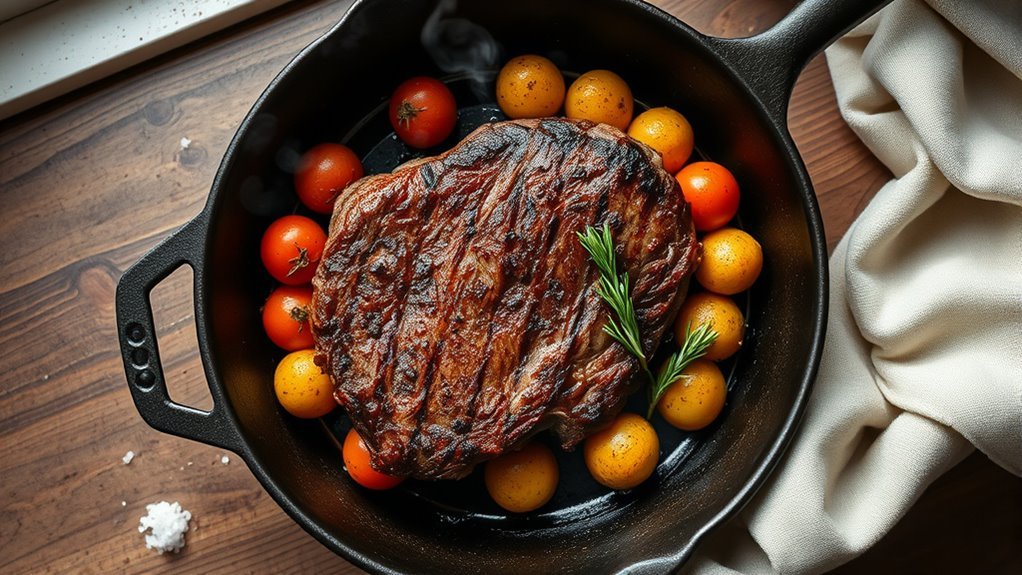
If you’ve got a cast iron pan, you’re holding a versatile kitchen powerhouse. It’s perfect for frying, searing, and even baking. But to truly release its potential, you need to know the right techniques and tips. From seasoning to maintenance, each step plays a vital role in ensuring your skillet lasts for years. Ready to transform your cooking experience? Let’s explore the essential uses and best practices for your cast iron companion.
Why Cast Iron Pans Are Essential for Every Kitchen
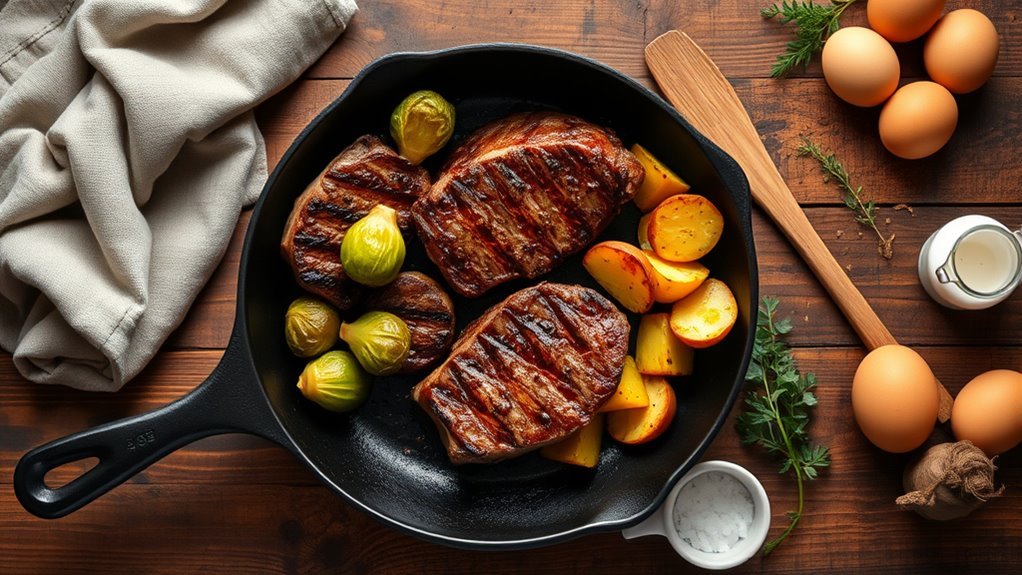
When you think about essential kitchen tools, cast iron pans should top your list. These versatile cast iron skillets shine in searing meats, thanks to their exceptional heat retention and even heat distribution. Imagine achieving that perfect browning you crave!
With proper seasoning, your skillet develops a natural non-stick surface that only gets better with time, enhancing the flavor of every dish.
Properly seasoned, your skillet becomes a naturally non-stick surface that improves with each use, enriching every meal.
Cast iron cookware isn’t just for frying; you can bake, sauté, or slow cook with ease, whether indoors or outdoors. Plus, these pans are built to last—often becoming family heirlooms that hold sentimental value.
Regular use and a little TLC, like avoiding soap and drying them right after washing, guarantee your cast iron skillets remain in excellent condition for generations. Embrace the freedom and culinary creativity that comes with owning these timeless tools!
Popular Recipes to Try in Your Cast Iron Skillet
While you’re exploring the culinary world, your cast iron skillet opens up a treasure trove of delicious possibilities. One of the most popular recipes to try is pan-seared steak, where the skillet’s excellent heat retention gives you a perfect crust and enhances the meat’s flavor.
Chicken Marsala becomes a symphony of rich tastes, thanks to even cooking in cast iron pans. Don’t overlook cornbread; the skillet’s heat distribution results in a crispy crust and moist interior that’s hard to beat.
For a classic comfort food, fried chicken achieves that golden-brown, crispy exterior while staying juicy inside, all thanks to cast-iron cookware.
And when it’s time for dessert, baking an apple pie in your skillet not only offers beautiful presentation but also guarantees even baking.
Immerse yourself in these popular recipes and let your cast iron skillet transform your meals into extraordinary experiences!
How to Season Your Cast Iron Pan for Optimal Performance
To get the most out of your cast iron pan, proper seasoning is key.
Start by thoroughly cleaning it before the first use, then choose the right oils for that perfect non-stick finish.
Regular re-seasoning will keep your skillet in top shape, ensuring delicious meals for years to come.
Essential Seasoning Oils
Seasoning your cast iron pan is essential for achieving a durable, non-stick surface that enhances your cooking experience.
To get the best results, choose essential seasoning oils with high smoke points, like canola oil, grapeseed oil, or peanut oil. These oils create a robust layer that prevents food from sticking and guarantees easy cooking.
Black seed oil is another excellent choice, boosting your pan’s seasoning properties over time.
Steer clear of olive oil or extra virgin olive oil for initial seasoning; their lower smoke points can lead to a sticky mess.
Remember to regularly re-season your cast-iron pan with a light coat of oil after cleaning to maintain that coveted non-stick surface and protect against rust.
Cleaning Before Seasoning
Cleaning your cast iron pan is the essential first step to achieving peak performance. Start by scrubbing it with a stiff brush or steel wool, removing any old seasoning, rust, or food residue. This guarantees a smooth surface, primed for ideal seasoning.
Rinse the pan with hot water to wash away debris, then dry it immediately to prevent rust. Once it’s clean, apply a light coat of vegetable oil or solid shortening evenly across the surface.
Place the pan upside down in a preheated oven at 350°F for about an hour. This process establishes a durable nonstick surface.
Avoid acidic foods initially, as they can strip the new seasoning. Embrace this ritual for a beloved kitchen companion!
Regular Re-Seasoning Techniques
Maintaining the non-stick surface of your cast iron pan requires regular re-seasoning, especially after heavy use.
Start by cleaning your skillet with a stiff brush or steel wool to remove any residue. Once it’s clean, apply a light coat of vegetable oil or shortening.
Place the pan upside down in a 350-degree oven for about an hour to restore that coveted non-stick surface. If you notice food sticking or a dull appearance, it’s time to re-season.
For routine upkeep, wash with hot water and salt, dry it immediately, and apply a thin layer of oil.
Best Cooking Techniques for Your Cast Iron Cookware
When you want to elevate your cooking game, cast iron cookware offers unmatched versatility that can transform your culinary creations. You can fry, sear, bake, or roast with ease, making it perfect for everything from crispy cornbread to succulent meats.
The excellent heat retention of cast iron guarantees even cooking, so you can avoid those annoying hot spots that ruin your dishes.
To make the most of your cast iron skillet, start by seasoning it regularly, which creates a natural nonstick surface while enhancing flavor over time.
You’ll love how it shifts seamlessly from stovetop to oven, allowing you to begin a dish with a sizzle and finish it with a perfect bake.
With proper care, this durable cookware will serve you for generations, proving that investing in cast iron is a wise choice for any culinary enthusiast.
Cleaning and Maintaining Your Cast Iron Skillet
To keep your cast iron skillet in top shape, regular care is key. Start by cleaning your skillet with hot water and a stiff brush, skipping the soap to preserve its seasoning. For stubborn residues, mix salt with hot water or boil water in the skillet to loosen debris. After washing, dry it thoroughly to prevent rust, then apply a light coat of vegetable oil to maintain that protective layer.
Here’s a quick reference for cleaning and maintaining:
| Task | Tip |
|---|---|
| Cleaning | Use hot water and a stiff brush |
| Drying | Wipe it down completely |
| Seasoning | Bake with oil at 350°F for an hour |
Store your skillet in a dry place, perhaps with a paper towel inside to absorb moisture. Follow these steps, and you’ll enjoy your skillet’s non-stick surface for years to come!
How to Fix Common Cast Iron Skillet Cooking Problems?
When you’re cooking with a cast iron skillet, you might run into a few common issues like sticking or uneven heat.
Don’t worry, though—there are simple fixes to keep your cooking smooth and enjoyable.
Common Sticking Issues
Cast iron skillets can be a cook’s best friend, but common sticking issues can turn a delightful meal into a frustrating experience.
To prevent this, verify your skillet is well-seasoned; a proper seasoning creates a natural non-stick surface over time. Avoid cooking acidic foods, like tomatoes, in newly seasoned pans, as they can strip away the seasoning and lead to sticking issues.
If food does stick, try boiling water in the skillet to loosen any residue before cleaning. For tougher remnants, scrub with a mixture of hot water and coarse salt—soap can harm the skillet’s seasoning.
Regularly re-season your skillet using oils like canola or vegetable oil to maintain its non-stick properties and longevity.
Uneven Heat Distribution
While cooking with a cast iron skillet can be rewarding, uneven heat distribution often leads to frustrating results. To achieve those perfect sears and golden edges, follow these tips:
- Preheat your skillet slowly over low to medium heat to warm it evenly.
- Avoid high heat; it creates hot spots that ruin your dish.
- Use a thick-bottomed skillet for better heat retention and distribution.
If you notice cooler areas during cooking, adjust the pan’s position on the burner or rotate it occasionally.
Regularly re-seasoning your skillet not only enhances its non-stick qualities but also helps maintain even heat distribution.
With these techniques, you’ll reveal the full potential of your cast iron skillet and elevate your cooking game!
Rust Prevention Techniques
To keep your cast iron skillet in top shape and free from rust, it’s essential to adopt a few simple yet effective rust prevention techniques. Regularly applying a light coat of vegetable oil after cleaning creates a protective barrier against moisture. Avoid soaking your skillet; prolonged exposure to water leads to rust formation. Clean with hot water and a stiff brush, steering clear of soap to preserve the seasoning that protects against rust. Store your skillet in a dry place, preferably with a paper towel inside to soak up moisture. If rust does appear, scrub it off with steel wool or a stiff brush, then re-season the skillet to restore its protective coating.
| Technique | Description | Frequency |
|---|---|---|
| Apply Oil | Light coat of vegetable oil | After cleaning |
| Avoid Soaking | Don’t soak in water | Always |
| Store Properly | Keep in a dry place with paper towel | Every time after use |
Frequently Asked Questions
What Should You Not Use a Cast Iron Pan For?
You shouldn’t use a cast iron pan for highly acidic foods, as they can strip the seasoning and leave a metallic taste.
Avoid soap or harsh detergents when cleaning; instead, stick to hot water and a gentle scrub.
Don’t soak your pan or expose it to sudden temperature changes, as both lead to rust and warping.
Also, steer clear of cooking delicate foods in poorly seasoned pans, since they’ll stick and tear easily.
What Food Cannot Be Cooked in Cast Iron?
You might want to steer clear of certain culinary adventures with your cast iron. Non-acidic foods can thrive, but delicate proteins like sole can easily fall apart, leaving you frustrated.
Sticky ingredients, such as eggs or pancakes, may cling stubbornly, testing your patience. High-sugar delights can scorch if not watched closely, turning your sweet dreams into crispy misadventures.
Embrace the possibilities, but tread cautiously with these culinary companions in your trusty cast iron.
Are Old Cast Iron Pans Worth Anything?
Yes, old cast iron pans can be worth quite a bit! Vintage cookware value skyrockets, especially for well-maintained pieces from brands like Lodge or Griswold.
If you’re into collectible kitchenware trends, you might find pans priced from $20 to over $200, depending on their condition and rarity.
With some cast iron restoration, you can transform these heirlooms into functional art, making them not just valuable but also cherished family treasures.
What Food Is Best Cooked in Cast Iron?
You’ll love cooking steak in a cast iron skillet—did you know it can retain heat up to 25% better than other pans?
For perfect skillet recipes, sear your meat for that mouthwatering crust. Don’t forget your seasoning tips; a well-seasoned pan enhances flavors beautifully.
Besides steak, you can fry chicken or bake cornbread, enjoying that crispy exterior and moist interior. Its heat retention makes it your go-to for delicious, evenly cooked meals.
Conclusion
So, while you might think your fancy non-stick pan is the star of your kitchen, it’s your cast iron skillet that quietly steals the show. With its unmatched versatility and ability to improve with age—kind of like a fine wine—it’s the underdog you never knew you needed. Embrace the quirks and imperfections; they’re part of its charm. Soon enough, you’ll find yourself reaching for that heavyweight champion more than you ever imagined!