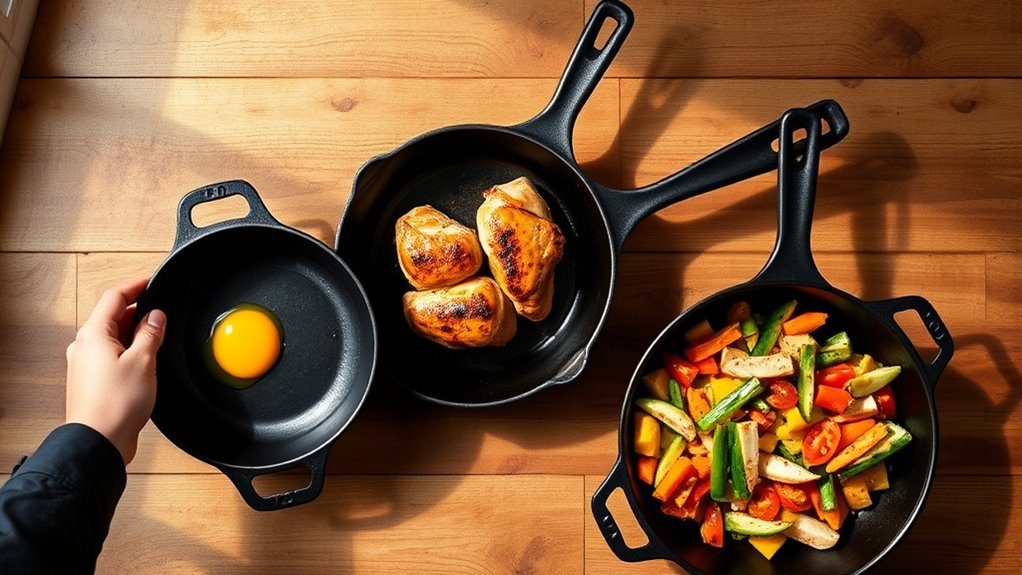
You’re picking a cast iron skillet because you want reliable heat and lasting value, but size matters more than you think. Choose too small and meals crowd; choose too large and heat, storage, and handling become problems. I’ll help you match skillet diameters, capacities, and practical use—so you get the right fit for your stovetop, oven, and usual meal sizes—before you commit to one.
Which Skillet Size to Buy : Servings Guide (1–6+)
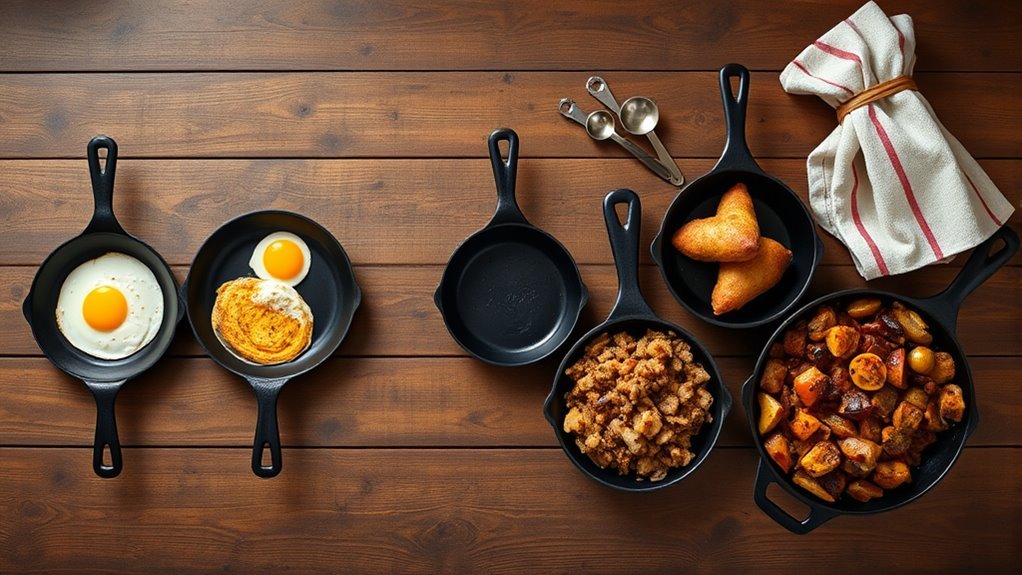
Pick a size that matches how many people you usually cook for: a 6-inch skillet handles 1–2 servings, an 8-inch works for 2–3, a 10-inch covers 3–4, an 11–12-inch fits 4–6, and a 14-inch is best for 6+ or large batches.
Match skillet size to servings: 6″ for 1–2, 8″ for 2–3, 10″ for 3–4, 11–12″ for 4–6, 14″ for 6+.
You’ll choose cast iron skillets to gain durable, even heat that scales with portion size. If you live solo or want quick single meals, the 6-inch saves space and energy.
For couples or modest breakfasts, the 8-inch reliably handles eggs, pancakes, or a simple sauté. A 10-inch is the most versatile — you’ll use it for stir-fries, pan-roasts, and sides for a few people.
Move up to 11–12 inches when you want to feed a family or prep one-pan dinners. Reserve the 14-inch for gatherings, batch-cooking, or when you refuse to be limited by cookware.
Use this servings guide to pick one skillet that matches your freedom to cook boldly and efficiently.
Skillet Sizes: No. 6, No. 8, No. 10, No. 12 – Dimensions & Weight
Knowing the No. 6, No. 8, No. 10, and No. 12 labels helps you match skillet dimensions and weight to your cooking needs. You’ll choose by diameter, heft, and capacity—factors that affect handling and the cast iron skillet’s heat retention. Below are clear specs so you can decide confidently.
| Size | Specs |
|---|---|
| No. 6 | ~8″ dia, ~3 lb |
| No. 8 | ~10.5″ dia, ~4.3 lb |
| No. 10 | ~11.625″ dia, >6 lb |
| No. 12 | ~13.375″ dia, ~7.5 lb |
Each size scales capacity: No. 8 holds about 3 quarts; No. 12 about 5–6 quarts. Smaller pans are nimble; larger pans offer volume for batch cooking. You’ll value the No. 6 for quick tasks and the No. 12 when you need scale. All retain heat well, so pick the size that frees you to cook boldly and efficiently.
What Each Size Cooks: Servings and Real-Dish Examples
Start with the size that matches the meal: a 6–8″ skillet handles single servings like fried eggs or a sautéed veggie side. A 10″ covers 2–4 people for stir-fries or a small skillet lasagna. A 12″ feeds 4–6 with frittatas or family-style pasta. A 14″ turns out paella or stacks of pancakes for 6–8, and a 16″ gives you room for roasts or large stews for up to 10.
Choose a 6–8″ when you want swift, focused cooking for one — eggs, a single steak, or a side. Use a 10″ to confidently plate 2–4 servings: stir-fries, skillet casseroles, or crispy chicken thighs.
Choose a 6–8″ for quick single servings; grab a 10″ to easily feed 2–4 with stir-fries or skillet casseroles.
A 12″ is your liberation tool for 4–6 portions: frittatas, baked pasta, or a sheet-pan substitution. Reach for a 14″ when you need batch cooking — paella, multiple pancakes, or a big hash for 6–8.
Reserve a 16″ for full-on feeding: roasts, large stews, or skillet feasts that serve up to 10. Match dish scale to skillet capacity and you’ll cook efficiently and confidently.
Match Size to Kitchen & Cooking Style (Stovetop, Oven, Storage)
After you match dish scale to skillet capacity, think about how your kitchen and cooking style shape the size you actually reach for. You’ll want a skillet that fits your burners, your oven tasks, and your storage constraints so cooking feels freeing, not fiddly.
Small burners suit 8″ pans for single servings; 10″ hits a sweet spot for everyday stir-fries and versatility. If you bake casseroles or feed guests, a 12″ (or 14″ for big crowds) gives oven room and volume. Weight matters too: lighter 4–5 lb pieces make daily use easier; heavier pans hold heat for searing.
- Stovetop: match burner diameter to pan base to avoid hot spots and wasted energy.
- Oven: choose 12″+ for casseroles or family-style baking; smaller pans limit portion size.
- Storage: measure cabinet space—if storage is tight, prioritize a versatile 10″–12″ to free up room without sacrificing capability.
Buying & Care by Size: Pros, Cons, and What to Prioritize
While size shapes what you can cook, prioritize weight, handleability, and cooktop fit when you buy a cast iron skillet: a 10″ serves 2–4 and balances versatility with storage, a 12″ handles 4–6 and oven baking, and 14″ works for large crowds but can be awkward to lift and store. Choose by practical freedom: smaller 6–8″ pans give single-serving liberty and save space; 10″ is the everyday workhorse; 12″ expands baking and batch options; 14″ liberates you to feed crowds if you can handle the heft. Prioritize weight: 4–5 lb models are maneuverable, 6+ lb models hold heat and last. Match skillet diameter to burner size to avoid hot spots. Care varies by size—clean promptly, dry, and oil; larger pans need more attention to prevent rust in hidden spots. Invest in a size that fits your body and kitchen; that choice frees you to cook confidently and sustainably.
| Size | Best use |
|---|---|
| 6–8″ | Single servings |
| 10″ | Everyday meals |
| 12″ | Baking, family meals |
| 14″ | Entertaining, large batches |
Frequently Asked Questions
Should I Get a 10 or 12 Inch Cast Iron Skillet?
Get the 12-inch if you want versatility and to feed more people; choose the 10-inch if you value lighter handling and smaller batches.
You’ll use different cooking techniques—searing or stir-frying needs the 12-inch’s surface, while pan-frying for two suits the 10-inch.
Both demand skillet maintenance: season regularly, avoid soap abuse, and dry promptly.
Pick the size that frees your cooking, matches your strength, and serves your goals.
What Is the Best Size Cast Iron Skillet for Everyday Use?
The best size for everyday cooking is a 10–12 inch cast iron skillet; it’s the ideal skillet size for most home cooks.
You’ll get versatile capacity without unwieldy weight, serving 3–6 people depending on whether you pick 10.5 or 12 inches.
You’ll confidently sear, sauté, and bake in one pan, freeing you from clutter and routine.
Choose the size that matches your meals and reclaim time in the kitchen.
What Ruins a Cast Iron Skillet?
Like a neglected friendship, rust and stripped seasoning ruin a cast iron skillet. If you leave it damp, scrub with harsh pads or use lots of soap, cook acidic dishes often, or shock it with cold water, you’ll degrade the surface and risk warping.
Use seasoning tips and gentle cleaning methods: dry thoroughly, oil lightly after use, avoid heavy acids, and re-season regularly so your skillet stays reliable and free.
What Can You Not Cook in Cast Iron?
You shouldn’t cook highly acidic sauces, delicate fish, long boils, or smelly cheeses in cast iron.
You’ll avoid stripping seasoning, metallic tastes, and lingering odors by respecting cast iron limitations and adapting cooking techniques—use stainless or enameled pans for tomato sauces, vinegar-based dishes, or prolonged simmering.
For fragile proteins, choose nonstick or well-seasoned alternatives.
This practical approach frees you to use cast iron where it excels without compromising flavor or pan integrity.
Conclusion
Choose the skillet size that fits how you cook: a 6-inch for single servings, 8-inch for 2–3, 10-inch for 3–4, and 12-inch for 4–6 or family dishes; 14-inch suits batch cooking. One useful stat: 10-inch skillets cover roughly 78% of everyday pan tasks, so they’re a dependable default. Prioritize capacity for your typical meals, usable stovetop/oven footprint, and storage. With the right size, you’ll cook more efficiently and clean up faster.