
Choosing the right washing machine drain pan in 2027 can make the difference between a dry laundry room and costly water damage. The Camco, Eastman, and Buzzlett options each bring different strengths, from low-profile fits to heavy-duty build quality and stackable designs. Some are made for tight spaces, while others focus on durability and leak control. A closer look reveals which models stand out for specific setups and why one may be the better fit.
Camco Washing Machine Drain Pan (20750)
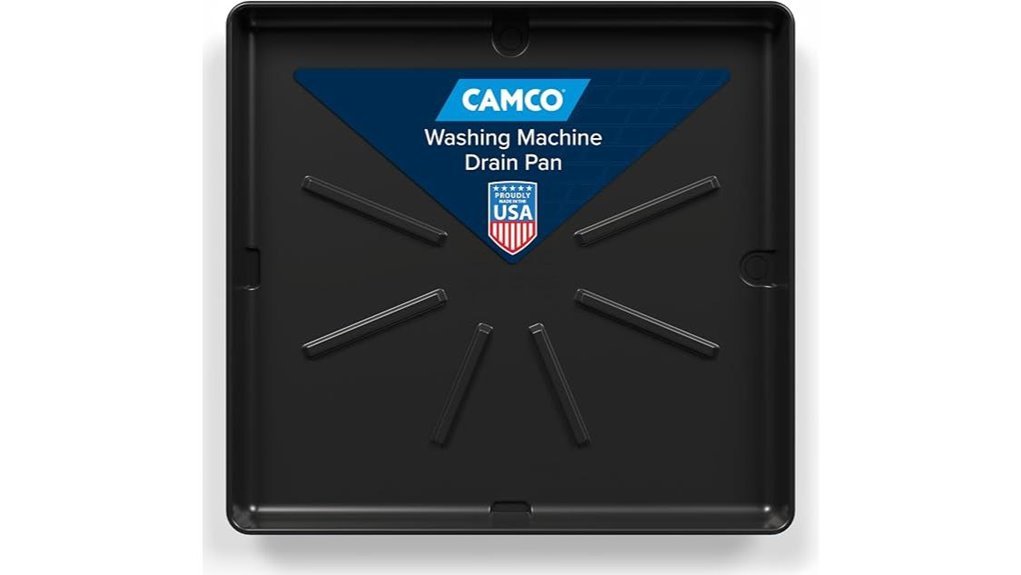
The Camco Washing Machine Drain Pan (20750) is a strong choice for homeowners who want dependable leak protection in a clean, modern package. Its injection-molded plastic construction measures 30 by 32 by 2.5 inches externally, with an interior sized to fit most washers. The graphite finish gives laundry rooms a more polished look, while the 1-inch/1.5-inch PVC drain fitting, locknut, and washer support secure installation. Pre-formed cut lines simplify setup. Built in the USA, it is designed for durability, though top-load models with exposed drive belts should be checked for fit.
Best For: Homeowners looking for a durable, modern-looking washing machine drain pan that helps protect floors from leaks and fits most standard washers.
Pros:
- Durable injection-molded plastic construction for reliable everyday use
- Includes PVC drain fitting, locknut, and washer for easier installation
- Graphite finish offers a cleaner, more polished laundry room appearance
Cons:
- Top-load washers with exposed drive belts may need extra fit checking
- Requires proper installation to ensure effective leak protection
- May not be compatible with every washer size or configuration
Camco Low Profile Washing Machine Drain Pan w/PVC Fitting – Made in USA
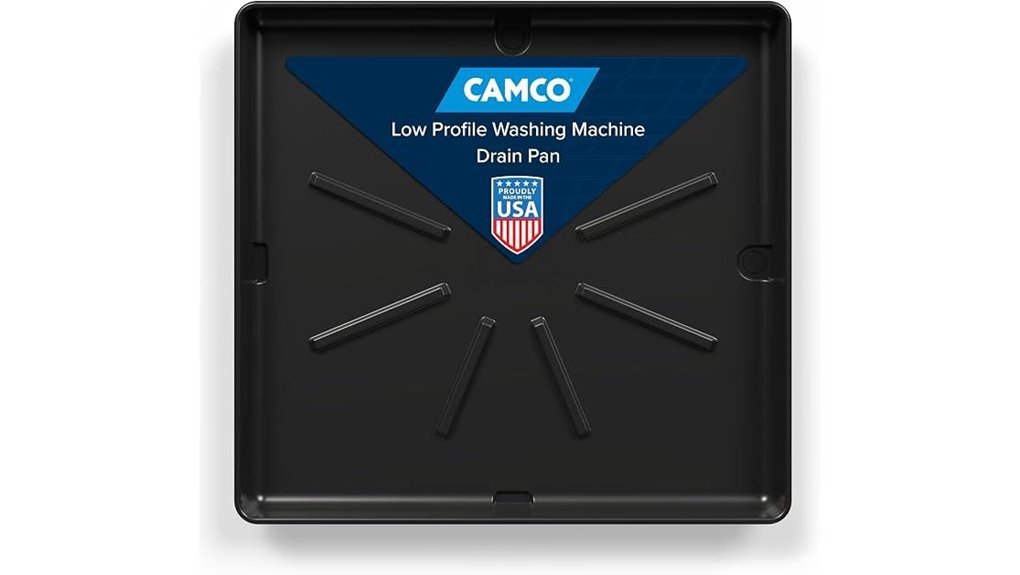
Made in the USA, Camco’s low-profile pan suits front-load owners needing pedestal clearance. The graphite tray measures 30.5 by 34.5 inches outside, with a 29 by 33 inch interior, and its low lip helps drawers open without obstruction. Injection-molded plastic gives it a resilient, no-break construction for long service. The included 1-inch or 1½-inch PVC fitting, locknut, and washer simplify drainage setup. Pre-formed cut lines ease installation. Placed beneath the washer, it helps catch leaks and should be checked regularly for standing water.
Best For: Front-loading washing machine owners who need a durable, low-profile drain pan with pedestal drawer clearance and easy PVC drainage setup.
Pros:
- Low-profile design helps pedestal drawers open without obstruction.
- Durable injection-molded, no-break plastic construction for long-lasting use.
- Includes PVC fitting, locknut, and washer for easier installation.
Cons:
- Designed specifically for front-loading washers, so it is not universal.
- Requires regular checking for standing water to ensure proper leak protection.
- Large size may not fit all laundry spaces or machine setups.
Camco Stackable Washing Machine Drain Pan -for Stackable Units- Made in USA
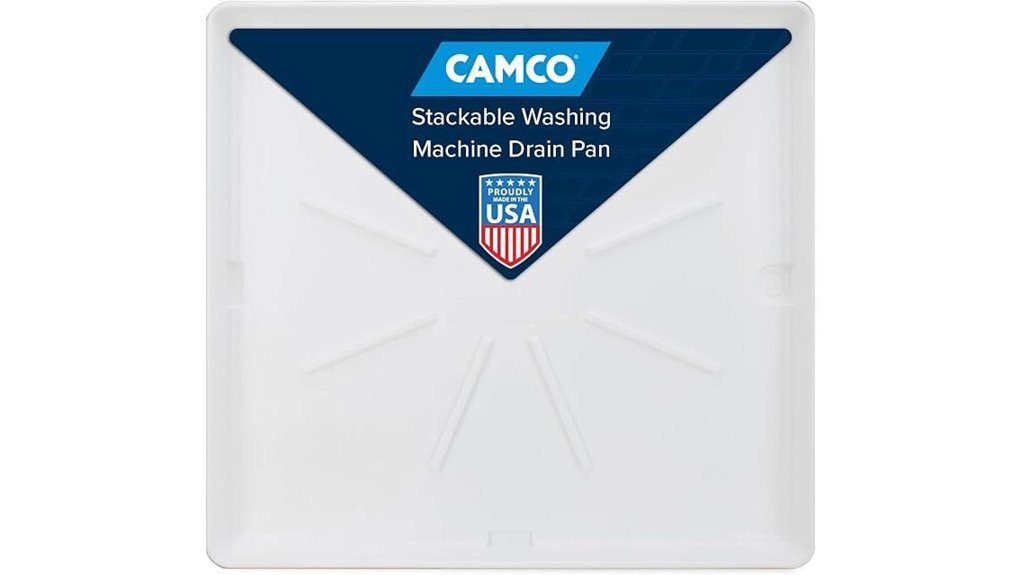
Camco’s stackable drain pan suits compact laundry setups needing dependable leak protection. Made in the USA, it uses tough injection-molded plastic for long service life and helps safeguard floors from washer leaks. Its 28-inch by 30-inch outer size, with a 25-inch by 27-inch inner area, fits many stackable units. The pan includes a 1 x 1½ PVC drain fitting, locknut, and gasket for secure drainage. Scored drain holes allow flexible placement. The white finish keeps the laundry area neat, while the 5.41-pound build supports practical handling and installation.
Best For: Homeowners with stackable washing machines who want reliable floor protection from leaks in compact laundry spaces.
Pros:
- Made in the USA with tough injection-molded plastic for durability.
- Includes a 1 x 1½ PVC drain fitting, locknut, and gasket for secure drainage.
- Scored drain holes offer flexibility for different drain locations.
Cons:
- Designed specifically for stackable units, so it may not suit all washer setups.
- Larger dimensions may be tight for very small laundry areas.
- The plastic construction is durable, but may not appeal to those wanting a more premium-looking material.
Eastman 30 x 32 Inch Washing Machine Drain Pan
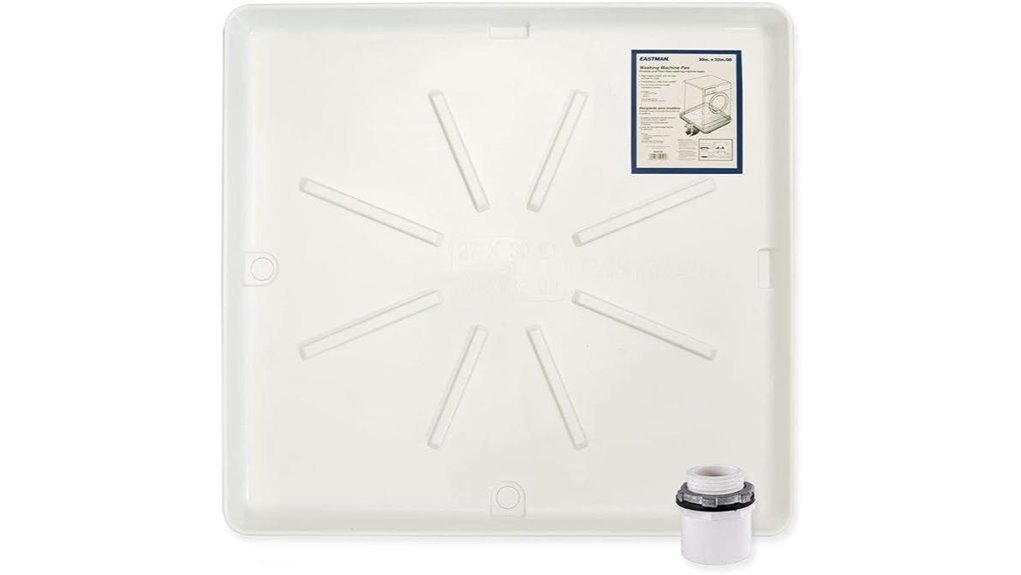
Eastman’s 30 x 32-inch drain pan suits homeowners wanting broader leak protection under larger washers. Made from heavy-duty, injection-molded plastic, the white pan measures 30 by 32 inches with a 2-1/8-inch depth, giving it ample capacity for runoff. Pre-formed cut lines allow drain adapters for bottom or side outlets, simplifying installation. Its crack-, rust-, and corrosion-resistant build supports long-term use. The pan helps shield floors, cabinets, and walls from costly water damage. At one pound, it remains easy to position under the appliance. Routine cleaning after use helps control odors and preserve performance.
Best For: Homeowners with larger washers who want a durable, easy-to-install drain pan that offers broader protection against leaks and overflow.
Pros:
- Heavy-duty, injection-molded plastic construction resists cracking, rusting, and corrosion.
- 30 x 32-inch size with a 2-1/8-inch depth provides ample runoff capacity.
- Pre-formed cut lines make it easier to add drain adapters for bottom or side outlets.
Cons:
- Plastic construction may feel less premium than metal alternatives.
- Requires regular cleaning to help prevent odors and maintain performance.
- Only protects the floor area directly beneath the washer, not surrounding spaces.
28″ x 30″ x 2.5″ Washing Machine Pan, Leak Protection for Laundry Room
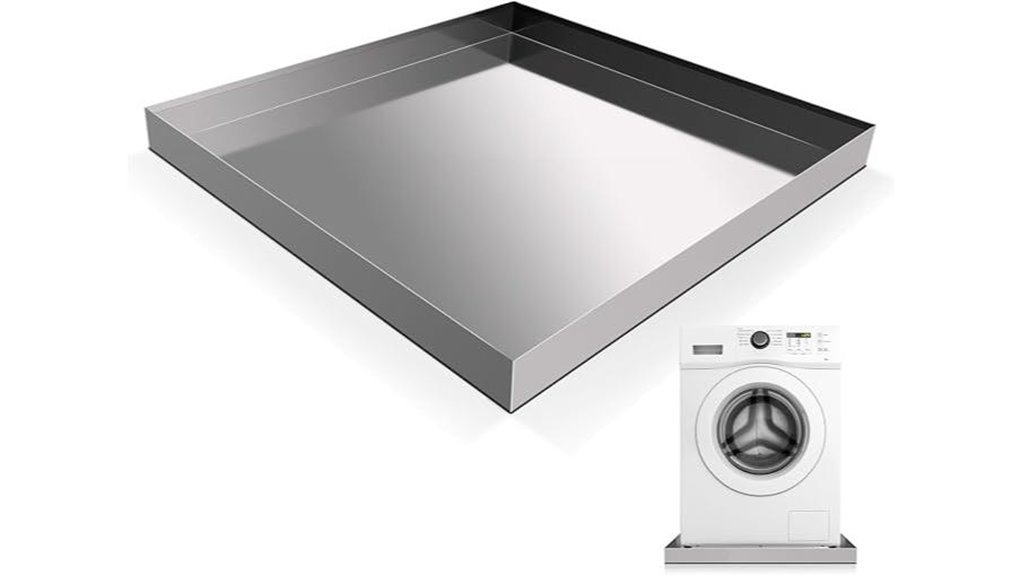
Buzzlett’s 28″ x 30″ x 2.5″ washing machine pan suits buyers needing compact, durable leak protection. Built from heavy-duty 304 stainless steel, it resists rust, corrosion, and dents better than plastic or 201-grade steel. Its 2.5-inch raised edges help contain leaks without drilled drains, while the anti-slip sponge mat reduces vibration, skidding, noise, and floor scratches. Measuring 28 inches by 30 inches, it fits laundry and utility rooms neatly. Placement under a washer is straightforward, and the smooth surface makes cleaning easy. It also works for dryers, water heaters, and refrigerators.
Best For: Homeowners or renters who want a compact, durable stainless steel pan for protecting laundry or utility room floors from washer leaks and spills.
Pros:
- Heavy-duty 304 stainless steel resists rust, corrosion, and dents better than plastic or 201 stainless steel.
- 2.5-inch raised edges help contain leaks without needing drilled drains.
- Anti-slip sponge mat helps reduce vibration, noise, skidding, and floor scratches.
Cons:
- Limited size may not fit larger washers or appliances.
- Stainless steel construction can be heavier and more difficult to handle than plastic pans.
- No built-in drain hole for direct water removal.
Factors to Consider When Choosing Washing Machine Drain Pans in 2026
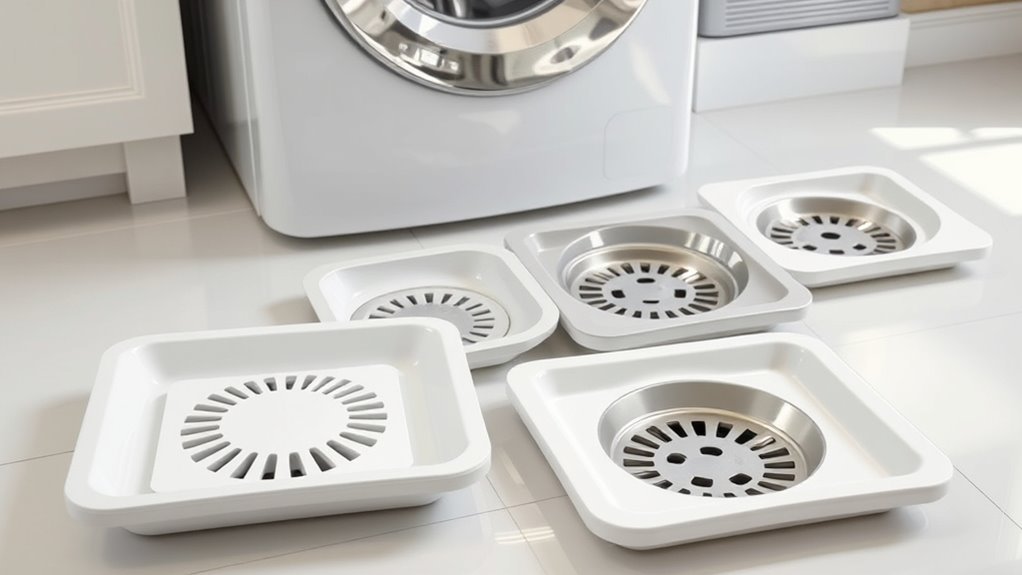
In 2026, selecting a washing machine drain pan requires close attention to size, material durability, and compatibility with the machine model. Drain fitting options also matter, since they affect how effectively leaks are directed away from the laundry area. Installation ease remains a practical factor for ensuring the pan can be set up with minimal effort and disruption.
Drain Pan Size
Drain pan size should match the washer’s footprint, with most models falling between 28 and 34.5 inches in length and width for a proper fit. This range helps the appliance sit fully within the pan without crowding the edges or leaving exposed areas. Depth also matters, and many pans measure about 2 to 2.5 inches deep to hold leaks before they spread. Outer dimensions should be checked carefully because they determine how much floor space the pan occupies in the laundry area. Some pans are made for front-load or stackable washers, so their inner dimensions may differ to allow needed clearance. Compatibility between the pan’s interior and the washer’s base should always be verified to avoid obstruction and ineffective leak containment.
Material Durability
Material durability plays a major role in how well a washing machine drain pan performs over time. Heavy-duty plastic and stainless steel are the most common choices, each offering distinct benefits. Stainless steel provides excellent resistance to rust, corrosion, and dents, making it especially resilient in demanding laundry spaces. Injection-molded plastic pans also deliver strong impact resistance and dependable service in humid conditions. Thickness matters as well, since thicker materials generally offer better defense against leaks, flexing, and gradual wear. Stainless steel additionally presents a clean, modern appearance and is easy to wipe down, which supports long-term hygiene. Regardless of material, routine cleaning and inspection help preserve performance and extend service life.
Machine Compatibility
A proper fit is essential when choosing a washing machine drain pan, since the pan’s dimensions must match the appliance’s footprint to provide full coverage and reliable leak protection. Pans are made in multiple sizes and shapes, so compatibility begins with measuring the machine accurately and comparing those measurements with the pan’s interior area. Front-loading washers often need low-profile pans that can sit beneath pedestals without creating clearance issues. Top-load models may require pans shaped to avoid interference from exposed drive belts and other lower components. Manufacturer guidance remains important because each washer model may have specific compatibility needs. Careful matching helps the pan support the appliance correctly while reducing the risk of leaks, shifting, or inadequate containment during normal use.
Drain Fitting Options
Fitting a washing machine drain pan involves more than matching the appliance footprint, since the drain connection must also align with the home’s plumbing layout. Most pans use 1-inch or 1.5-inch PVC drain fittings, and that size choice determines how securely the pan ties into existing drainage lines. Compatibility should be checked carefully before purchase because an undersized or mismatched fitting can create leaks or overflow, undermining the pan’s purpose. Some models include pre-formed cut lines for adding adapters, supporting both bottom and side outlet setups. That flexibility helps accommodate different drain locations without forcing a poor connection. In practice, adaptable fitting options matter as much as pan dimensions, because proper drainage is what keeps surrounding floors protected.
Installation Ease
Installation ease can make a drain pan far more practical, especially when pre-formed cut lines simplify drain fitting setup and reduce installation time. Models that include drain fittings, locknuts, and washers can further streamline the process by removing extra shopping and guesswork. Compatibility with the washer type also matters, since a well-matched pan fits more naturally and reduces adjustment during setup. For pedestal washers, a low-profile design can improve access and limit clearance problems beneath the appliance. Weight and material should also be reviewed carefully; lighter pans are easier to position, while durable construction supports long-term use. A straightforward installation often depends on these practical details, making them important considerations when comparing drain pans for home laundry spaces.
Leak Protection Depth
Leak protection depth is one of the most important features to evaluate in a washing machine drain pan, since deeper designs generally hold more water and lower the chance of overflow. Typical pans measure between 2 and 2.5 inches deep, and that extra capacity can make a meaningful difference when a hose leaks or a machine releases excess water. Models with at least 2-1/8 inches of depth are better suited for unexpected spills in busy laundry rooms. Raised edges of 2 inches or more help keep water contained and reduce the risk of damage to floors and nearby cabinetry. Deeper pans may also include pre-formed cut lines, which support easier drainage customization without sacrificing protection.
Finish And Style
Finish and style can matter almost as much as function when selecting a washing machine drain pan in 2026, especially in laundry rooms where visible details shape the overall look. A pan in graphite or stainless steel can elevate the space, adding a cleaner, more finished appearance. Smooth, contemporary finishes often do double duty, supporting visual appeal while resisting rust and corrosion over time. Color also affects how tidy the pan seems: lighter tones may reveal dirt and grime sooner, while darker hues can hide minor marks more effectively. When matched with appliances, flooring, and fixtures, a modern drain pan helps create a cohesive laundry area. In that setting, the pan becomes more than a utility item; it becomes part of the room’s design language, quietly supporting style.
Warranty Coverage
Warranty coverage is an important consideration when selecting a washing machine drain pan in 2026, since it offers insight into how much protection a buyer has against defects or manufacturing issues. Coverage typically ranges from 30 days to one year, giving buyers different levels of security. A longer warranty often signals stronger manufacturer confidence in the pan’s durability and reliability. Many products include a limited warranty, which may address specific defects while excluding wear, misuse, or poor maintenance. Careful review of the terms helps determine what is actually protected over time. It is also important to note claim requirements, such as proof of purchase or other documentation, because these can affect how easily service is obtained if a problem arises.
Frequently Asked Questions
How Often Should a Washing Machine Drain Pan Be Replaced?
A washing machine drain pan should be replaced whenever it shows cracks, warping, rust, or persistent leaks, typically every 5 to 10 years depending on material and use. Plastic pans may wear out sooner, while stainless steel versions can last longer. Regular inspection is important, especially after moving the appliance or noticing water damage. If the pan no longer holds water securely, replacement should be done promptly to prevent floor damage and mold.
Can Drain Pans Be Installed on Uneven Laundry Room Floors?
Yes, drain pans can be installed on uneven laundry room floors, but proper leveling is important. A pan that sits poorly may not drain correctly or protect against leaks as intended. Shims, a leveling compound, or professional floor adjustment can help create a stable base. The washer should rest evenly inside the pan, with enough clearance for drainage and vibration control. Careful installation reduces movement, stress, and water damage risk.
Do Washing Machine Drain Pans Work With Front-Loaders?
About 80% of front-load washer leaks are minor hose or seal issues, and drain pans help catch them. Yes, washing machine drain pans work with front-loaders, provided the pan is sized correctly and the appliance sits level. Because front-loaders often leak from the door seal or detergent drawer, a pan can offer useful protection. A proper drain line is still recommended for safe overflow management and easier cleanup.
Are Drain Pans Required by Building Codes in Every State?
Drain pans are not required by building codes in every state. Requirements vary by state, city, and local plumbing or mechanical codes, and some jurisdictions only mandate them in certain installations, such as apartments or upper floors. A detached reviewer would note that code compliance depends on the local authority having jurisdiction. Homeowners should check applicable regulations before installation, because manufacturer guidance and insurance expectations may differ from legal requirements.
Can a Drain Pan Prevent Mold Under the Washer?
A drain pan can reduce the chance of mold under a washer by catching leaks, drips, and condensation before they soak the floor. It does not eliminate mold risk if moisture remains trapped, because spilled water can still sit in the pan or around hoses. Regular inspection, prompt cleanup, and proper ventilation remain important. A pan is helpful as a barrier, but not a complete mold-prevention solution.
Conclusion
Choosing the right washing machine drain pan can feel like selecting a quiet guardian for the laundry room. The Camco, Eastman, and Buzzlett options each offer their own polite strengths, from dependable leak protection to sturdier construction and easier fit. For households seeking a more graceful safety measure, these pans provide a reassuring extra layer of care. A well-chosen pan may not be noticed often, which is precisely what makes it so useful.