
Choosing the right washing machine inlet hose in 2027 may seem routine, but the wrong pick can lead to leaks, poor fit, or premature wear. Some options stand out for reach, durability, and certification, while others are better suited for cramped laundry spaces. The five models ahead highlight where performance really differs, and a few details may matter more than expected.
2-Pack Stainless Steel Washing Machine Hoses, 6 FT
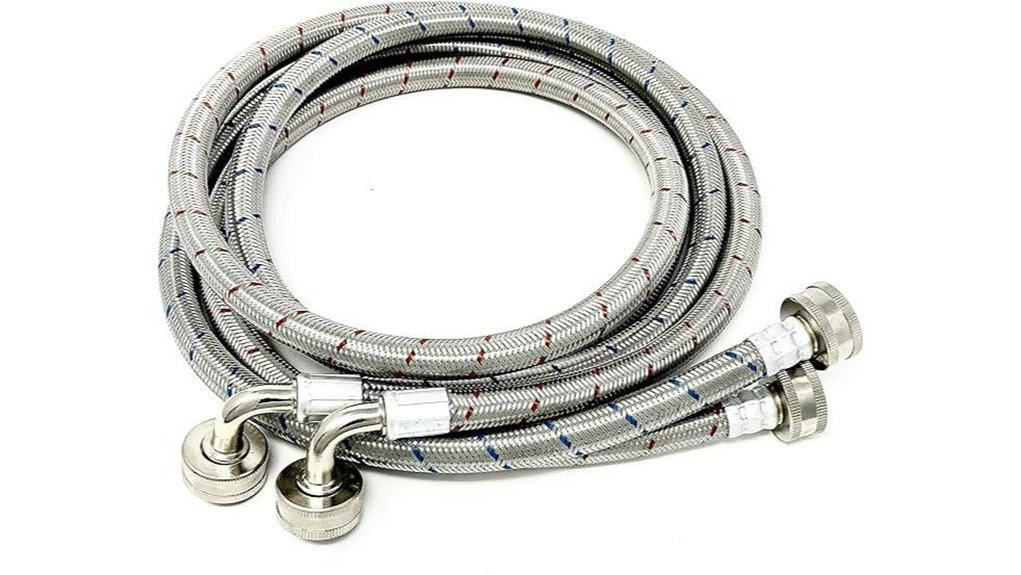
The 2-Pack Premium Stainless Steel Washing Machine Hoses, 6 FT, is a strong choice for buyers who want a durable, high-pressure inlet line with added peace of mind, thanks to its 1500 psi rating, no-lead construction, and 10-year warranty. Each 6-foot hose uses stainless steel, PVC, steel, and nylon for a robust build. Red and blue lines help distinguish hot and cold connections, while the universal 90-degree elbow supports easier installation. Sold as a two-pack by Shark Industrial, it has earned 4.8 stars from 2,067 reviews and carries a notable Tools & Home Improvement ranking.
Best For: Homeowners or renters who want a durable, high-pressure 6-foot washing machine hose set with easy hot/cold identification and a long warranty.
Pros:
- 1500 psi maximum pressure rating for strong, reliable performance
- Universal 90-degree elbow and color-coded red/blue lines make installation easier
- 10-year warranty plus strong customer ratings add peace of mind
Cons:
- Only sold as a 2-pack, which may be unnecessary for some buyers
- Stainless steel braided hoses may be more rigid than flexible alternatives
- Best suited for standard washing machine setups, not specialized plumbing needs
Washing Machine Hoses 10FT Braided Stainless Steel (2 Pack)
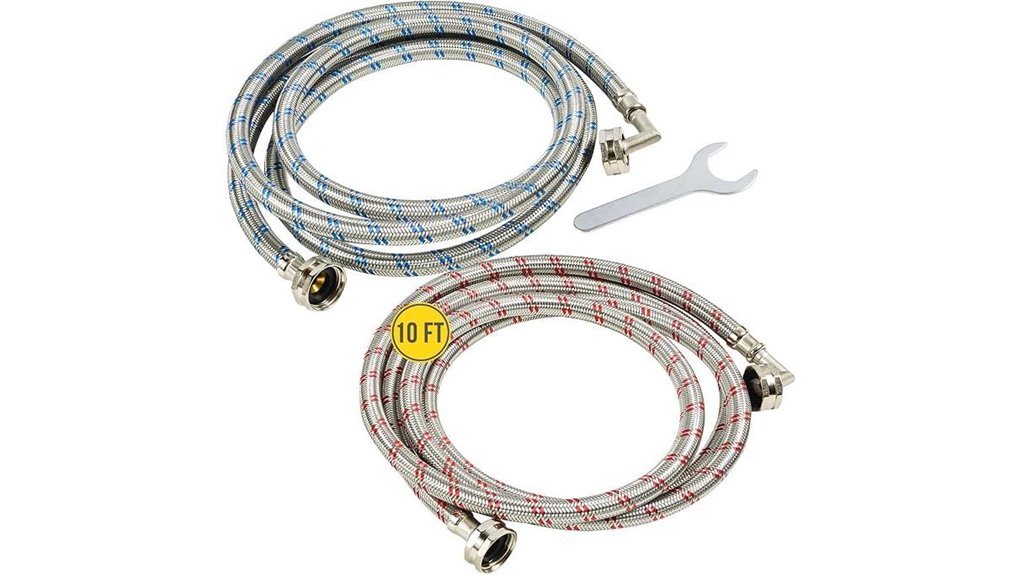
Built for heavy-duty laundry setups, these 10-foot braided stainless steel hoses suit users needing extra reach and durability. The 2-pack includes color-coded red and blue lines for hot and cold water, each fitted with 90-degree elbow and octagon connections. Constructed from 304 stainless steel, they are rated to 1500 psi and certified lead-free under UPC and AB 1953 standards. Their universal fit supports standard washer brands, while included inserts, a bonus wrench, and corrosion-resistant brass components simplify installation. A five-year written warranty and 30-day return option add practical assurance.
Best For: Households or laundry setups that need long, durable, leak-resistant washing machine hoses with easy installation and universal compatibility.
Pros:
- 10-foot braided stainless steel design provides extra reach and strong durability
- Lead-free, UPC certified, and rated to 1500 psi for safer, high-pressure use
- Includes helpful installation extras like washer inserts, a bonus wrench, and corrosion-resistant brass components
Cons:
- 10-foot length may be more than needed for compact laundry spaces
- Metal braided hoses can be less flexible than standard rubber options
- Universal fit still requires confirming connection type and space clearance before purchase
Certified Appliance Accessories Washing Machine Hose, 8 FT
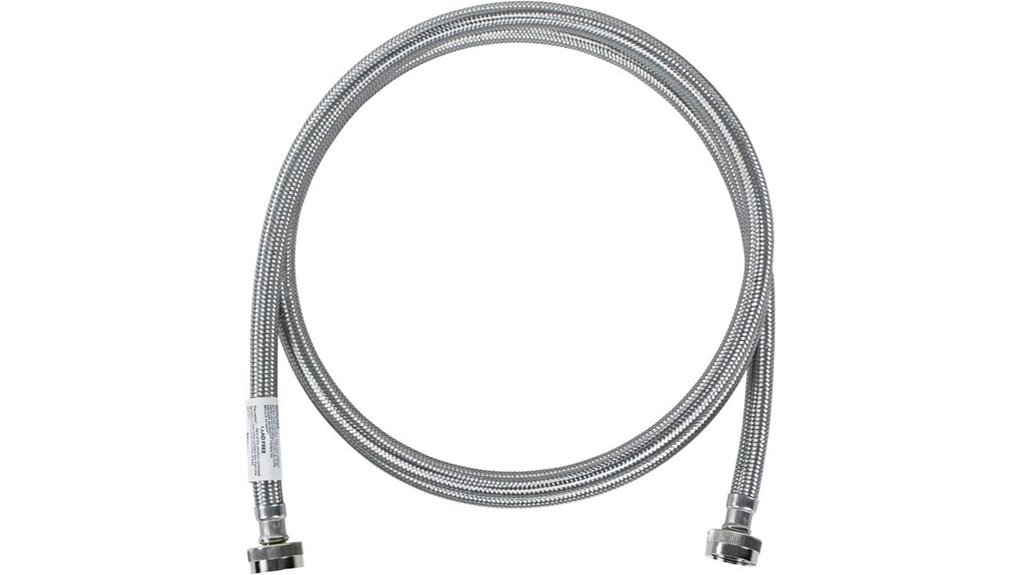
Certified Appliance Accessories’ 8-foot hose suits buyers needing a durable, code-compliant replacement line. Built for hot or cold water supply, it uses a PVC core wrapped in premium braided stainless steel, with clear vinyl and polyester reinforcement inside. Stainless steel couplings and brass stems provide 3/4 FGH connections, while the braid helps resist punctures, kinking, and crimping. It is UPC, NSF 61, and CSA B125 certified, meeting appliance requirements. Rated to 1200 psi, it fits all washing machines. Replacement every five years remains the recommended maintenance interval.
Best For: Homeowners or renters looking for a durable, code-compliant 8-foot washing machine supply hose for either hot or cold water connections.
Pros:
- Braided stainless steel exterior helps resist punctures, kinking, crimping, and bursting.
- UPC, NSF 61, and CSA B125 certified for added safety and compliance.
- Fits all washing machines and is rated for high pressure up to 1200 psi.
Cons:
- Recommended replacement every five years, even if there is no visible wear.
- Only available in one length, which may not suit all installation setups.
- Heavier and less flexible than some basic rubber hoses due to its reinforced construction.
Eastman 90-Degree Washing Machine Hoses (2 Pack)
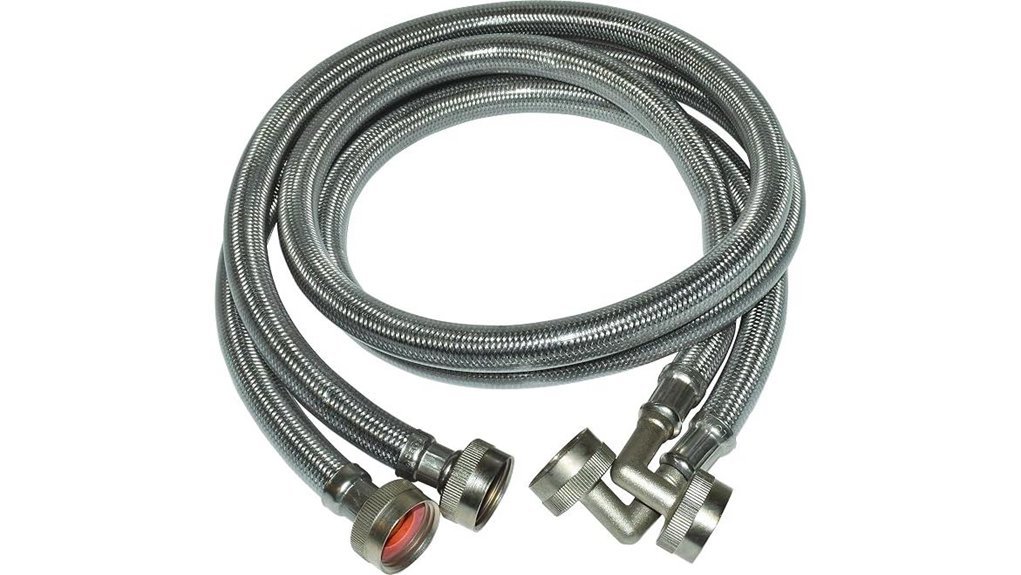
Eastman’s 90-degree fittings suit tight laundry spaces needing a flexible, kink-resistant hookup. This two-pack washing machine connector uses 3/4-inch FHT connections and 4-foot lengths to simplify residential installations. A PVC core, multi-filament braided nylon reinforcement, and clear vinyl outer shell help maintain flexibility, while 304 stainless steel braiding adds corrosion resistance and reduces crimping. Nickel-plated brass nuts and stainless steel ferrules support secure attachment. Blue and red color coding identifies cold and hot lines. CSA certification and UPC approval reinforce compliance. The hoses operate between 15°F and 158°F and weigh 16 ounces.
Best For: Homeowners or renters with tight laundry spaces who need flexible, kink-resistant 90-degree washing machine hoses for a residential setup.
Pros:
- 90-degree fittings make installation easier in cramped laundry areas.
- 304 stainless steel braiding helps resist corrosion, crimping, and kinking.
- Color-coded hot and cold lines plus CSA/UPC compliance add convenience and confidence.
Cons:
- Designed for residential use only, so it’s not suitable for commercial applications.
- 4-foot length may be too short for some laundry configurations.
- Only works within a limited temperature range of 15°F to 158°F.
Beaquicy 6 Ft Braided Washer Water Supply Hoses
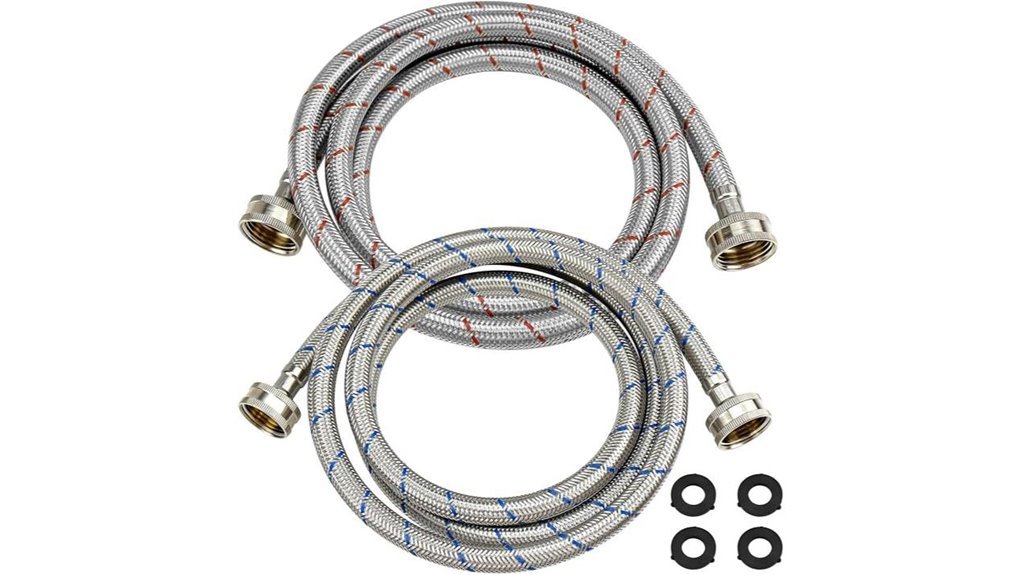
Beaquicy’s 6-foot braided hoses suit buyers who want a durable, universal replacement set. The two-pack includes one blue cold-water hose and one red hot-water hose, each built with 304-grade stainless steel, a lead-free PVC core, and nickel-plated brass fittings. Their anti-rust, explosion-proof construction and thick internal gasket help reduce leaks. Rated for 15°F to 158°F, they fit standard U.S. washers from brands such as Samsung, Whirlpool, GE, and Kenmore. Installation is straightforward, and the set comes with a 10-year guarantee plus a 30-day Amazon return option.
Best For: Homeowners or installers looking for a durable, universal 6-foot washer hose replacement set for standard U.S. machines.
Pros:
- 304-grade stainless steel with a lead-free PVC core for added durability
- Includes both hot and cold hoses with easy-to-identify red and blue fittings
- 10-year guarantee plus a 30-day Amazon return option
Cons:
- Only compatible with standard U.S. washer connections, so not ideal for nonstandard setups
- 6-foot length may be too short for some laundry room layouts
- Temperature range is limited to 15°F to 158°F
Factors to Consider When Choosing Washing Machine Inlet Hoses in 2026
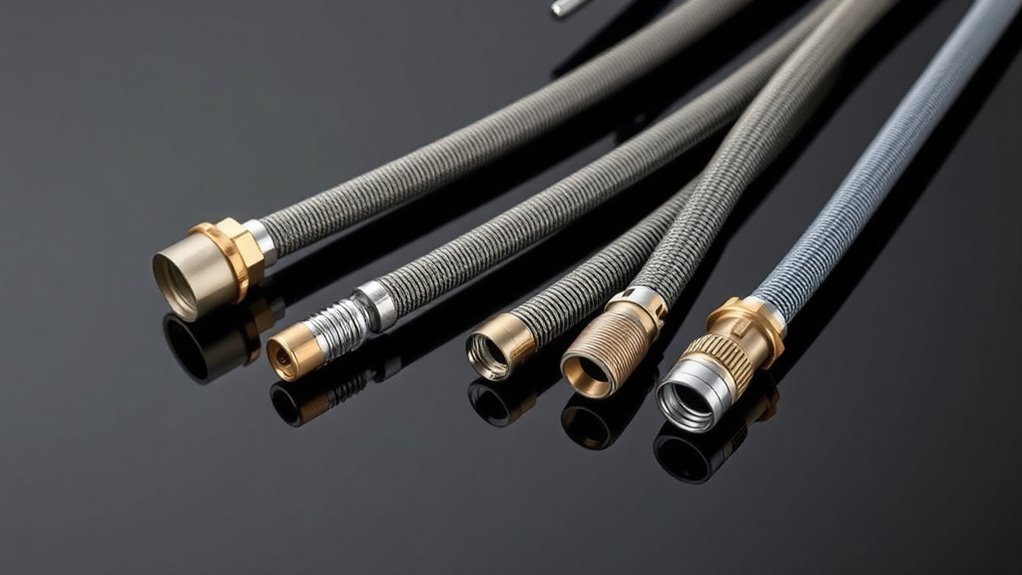
In 2026, choosing a washing machine inlet hose requires attention to hose length, burst pressure, connection type, material quality, and certification standards. The right length reduces strain during installation, while strong burst pressure and durable materials help support long-term reliability. Matching the correct fittings and verified certifications further helps guarantee a safe and dependable connection.
Hose Length
Hose length is a practical starting point when choosing washing machine inlet hoses, since most options range from 4 to 10 feet. Shorter hoses, around 4 feet, suit compact laundry areas where the washer sits close to the water supply. Longer hoses, reaching 10 feet, help in larger spaces or layouts with greater distance between connections. A 6-foot hose is often considered a balanced choice because it usually allows easier installation while reducing the chance of kinks or tension. The washer’s position and the plumbing layout should be checked carefully before buying. Excess slack should be avoided, since overly long hoses can strain connections and create a less secure fit. Choosing the right length supports a neat, efficient installation and helps maintain a dependable water connection.
Burst Pressure
After the right hose length is chosen, burst pressure becomes the next safety factor to check. Burst pressure is the maximum psi a washing machine inlet hose can withstand before failure. Quality hoses usually carry ratings of 1200 to 1500 psi, which is sufficient for typical household water supply levels. Higher ratings offer extra protection in homes where pressure fluctuates, reducing the chance of rupture and extending service life. Inspection also matters. Hoses showing cracks, bulges, or wear should be replaced every few years to lower the risk of leaks and water damage. Certifications such as UPC and CSA can provide added confidence, since they indicate testing for burst pressure performance and overall reliability in normal use.
Connection Type
Connection type is one of the most important compatibility checks when choosing a washing machine inlet hose, and the standard 3/4 inch FGH fitting remains the most common option for most machines. This female garden hose connection matches typical washer inlets and helps avoid unnecessary adapters. A universal fit adds flexibility, allowing the hose to work with different brands and supply lines while keeping installation straightforward. Many models also use a 90-degree elbow, which can simplify hookups in cramped laundry areas and lessen strain at the connection point. Compatibility should be verified at both ends before purchase, since a proper fit reduces leaks and installation problems. Lead-free construction is also relevant, ensuring the connection meets safety requirements for household water systems.
Material Quality
Material quality is the next factor that shapes how well a washing machine inlet hose performs over time. Braided stainless steel typically offers stronger resistance to punctures, kinking, and general wear than PVC alone, making it a practical choice where long service life matters. Many durable hoses use a PVC core with a stainless steel braid, combining flexibility with strength while helping limit corrosion and bursting under pressure. Lead-free construction is also important because it supports safer household water use and aligns with health-focused standards. A hose’s pressure rating, often near 1500 psi, further reflects how well its materials can handle demanding conditions. High-quality materials also support dependable connections across different washer brands, reducing the chance of leaks and performance issues.
Certification Standards
Certification standards are a key factor when choosing washing machine inlet hoses in 2026, since approvals such as UPC, NSF 61, and CSA B125 help confirm safety, performance, and durability. These marks indicate that a hose meets recognized requirements for leak prevention, corrosion resistance, puncture resistance, and kink resistance. Lead-free certification is also important, with compliance labels such as AB 1953 showing that harmful substances are limited in water-contact components. Burst pressure ratings, often near 1500 psi, provide another measure of reliability under sudden pressure changes. Standardized testing helps identify hoses built for long-term use in residential laundry setups, where wear can be significant. Many experts also follow replacement guidance of about five years to reduce the risk of failure and water damage.
Warranty Coverage
Warranty coverage is another important factor when selecting washing machine inlet hoses in 2026, as a longer warranty, such as 10 years, can suggest greater confidence in durability than a shorter 5-year term. Such terms often cover defects in materials and workmanship, helping protect buyers from unexpected product failures. A clear warranty also signals how much responsibility the manufacturer accepts for long-term performance. Some brands add a voluntary return guarantee, commonly lasting 30 days, which gives purchasers a chance to return hoses that do not meet expectations. Certifications tied to warranty coverage can further support confidence by indicating compliance with industry safety and reliability standards. Careful review of exclusions, claim procedures, and coverage limits helps consumers compare hoses more accurately before purchase.
Frequently Asked Questions
How Often Should Washing Machine Inlet Hoses Be Replaced?
Washing machine inlet hoses should generally be replaced every five years, though inspection is important sooner. A detached observer would note that rubber hoses may need replacement more often, especially if cracks, bulges, or leaks appear. Stainless steel braided hoses can last longer, but they still require periodic checks. Any visible wear, rust on fittings, or water damage around the machine should prompt immediate replacement to reduce flood risk.
Can I Install Inlet Hoses Without Tools?
Yes, in many cases, inlet hoses can be installed without tools. Roughly 8 in 10 standard washing machine hookups use hand-tightened connections, giving the process a simple rhythm: thread, tighten, check, and test. A detached observer would note that rubber washers must seat properly to prevent leaks. If fittings are stubborn or corroded, pliers may help, but careful hand installation is often enough for a secure connection.
Do Inlet Hoses Affect Water Pressure?
Yes, inlet hoses can affect water pressure, though usually only slightly. A hose that is too long, kinked, narrow, or clogged may reduce flow to the washer. Older or damaged hoses can also restrict water delivery. In most cases, household supply pressure matters more than the hose itself, but a proper hose size and clean internal path help maintain consistent performance and prevent filling delays or weak water flow.
Are Washing Machine Hoses Compatible With All Brands?
About 80% of washing machines use standard 3/4-inch inlet connections, yet hoses are not universally compatible with every brand. Compatibility depends on thread size, connector type, valve design, and pressure rating. Many machines accept generic hoses, but some brands require proprietary fittings or specific lengths. A careful check of the user manual and hose specifications usually prevents leaks, poor fit, or installation problems. Universal fit is common, but never guaranteed.
What Causes Inlet Hose Leaks?
Inlet hose leaks usually come from worn rubber, cracked fittings, loose connections, or corrosion at the hose ends. High water pressure, repeated vibration, and bending can also stress the hose until it fails. Damage from age, heat, or improper installation may create small drips that worsen over time. A detached inspection of the washer area often reveals seepage near the faucet, coupling, or along weakened hose walls.
Conclusion
In 2027, the best washing machine inlet hose is the one that matches the space, reach, and reliability a laundry setup demands. Stainless steel and braided options stand out for durability, while certified hoses add extra peace of mind. One striking detail is that many quality hoses are rated for burst pressures far above everyday use, a reassuring statistic that can make a routine appliance connection feel far safer and more secure.