
The best washing machines in 2026 depend on where you live and how much laundry you do: a front-load washer for large households and efficiency, a top-load washer for simple, fast loading, or a compact portable washer for apartments. This guide covers seven Amazon picks, from Kenmore top-loaders and a Kenmore front-loader to an LG smart washer and two portable units.
As an Amazon Associate, Casabux may earn from qualifying purchases. This does not change the price you pay.
This round-up is based on manufacturer listings, specifications and customer reviews on Amazon at the time of writing. It is not hands-on testing. Prices and availability change, so check the current listing before you buy.
Quick picks
| Washer | Type | Capacity (per listing) | Best for |
|---|---|---|---|
| Kenmore 4.4 cu. ft. Top Load (Triple Action Agitator) | Top load | 4.4 cu. ft. | Everyday family laundry |
| LG WM4200HWA | Front load, smart | 5.0 cu. ft. | Large households, bulky bedding |
| Kenmore 4.5 cu. ft. Top Load (Triple Action Impeller) | Top load | 4.5 cu. ft. | Busy homes that want fast cycles |
| Kenmore 4.5 cu. ft. Front Load | Front load | 4.5 cu. ft. | Efficiency and stain treatment |
| Kenmore 4.1 cu. ft. Top Load (Triple Action Agitator) | Top load | 4.1 cu. ft. | Mid-size households |
| COMFEE’ 2.4 cu. ft. Portable | Portable | 2.4 cu. ft. | Small apartments |
| BLACK+DECKER BPW30MW Portable | Portable | 3.0 cu. ft. | Small households, RVs, dorms |
Top-load, front-load or portable: which washing machine type fits you?
Pick the type first, then the model. Each type trades price, efficiency and convenience differently.
- Front-load: typically the most water- and energy-efficient and gentle on fabrics. It can be stacked with a matching dryer. It needs the door gasket kept dry to avoid odors.
- Top-load (agitator or impeller): easy to load and unload, usually lower priced, and no door gasket. Agitator models can be harder on clothes; impeller models are generally more efficient.
- Portable: small, light, runs on a standard outlet and a faucet adapter. Best where a full-size hookup is not possible.
If you want a washer and dryer bought together, see our washer and dryer sets guide. If you mainly need volume, the large-capacity washing machines guide goes deeper.
Kenmore 4.4 cu. ft. Top Load Washer with Triple Action Agitator
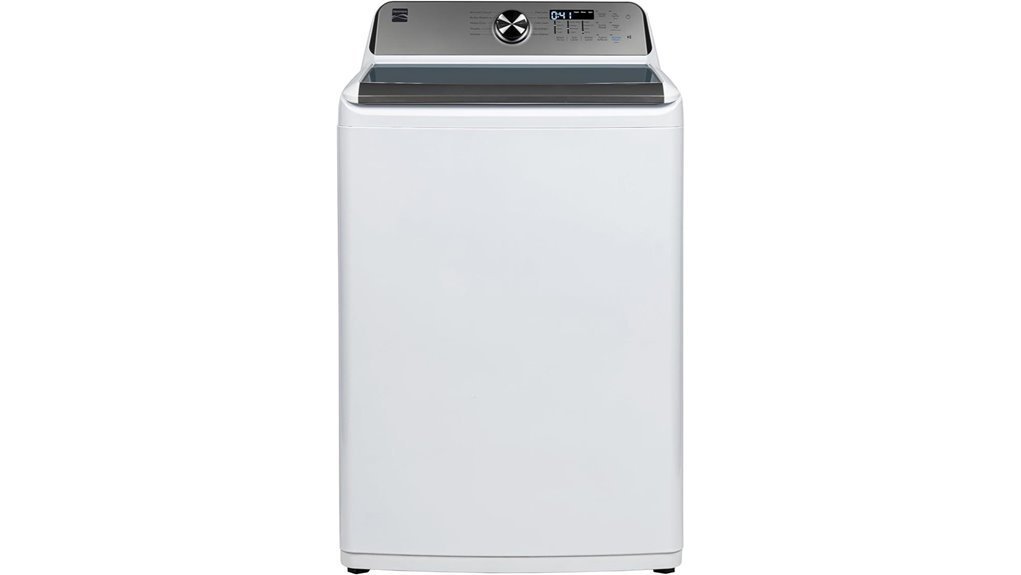
This freestanding Kenmore top-loader has a 4.4 cu. ft. stainless steel drum and runs on a standard household outlet. The listing describes a Triple Action Agitator that combines spray, basket movement and circular circulation, ten wash cycles, four temperature settings, Express Wash and Accela Wash, light-touch controls, an LED display and a soft-close tempered glass lid.
Best for: households that want a mid-size, easy-to-use top-loader with flexible cycles.
- Pros: ten cycles plus quick-wash options; simple controls; soft-close lid.
- Cons: top-load design may use more water than efficient front-loaders; 4.4 cu. ft. can be tight for very large loads; the listing mentions a one-year warranty, which is basic.
Check the current price on Amazon
LG WM4200HWA Front-Load Washer with Steam and Wi-Fi
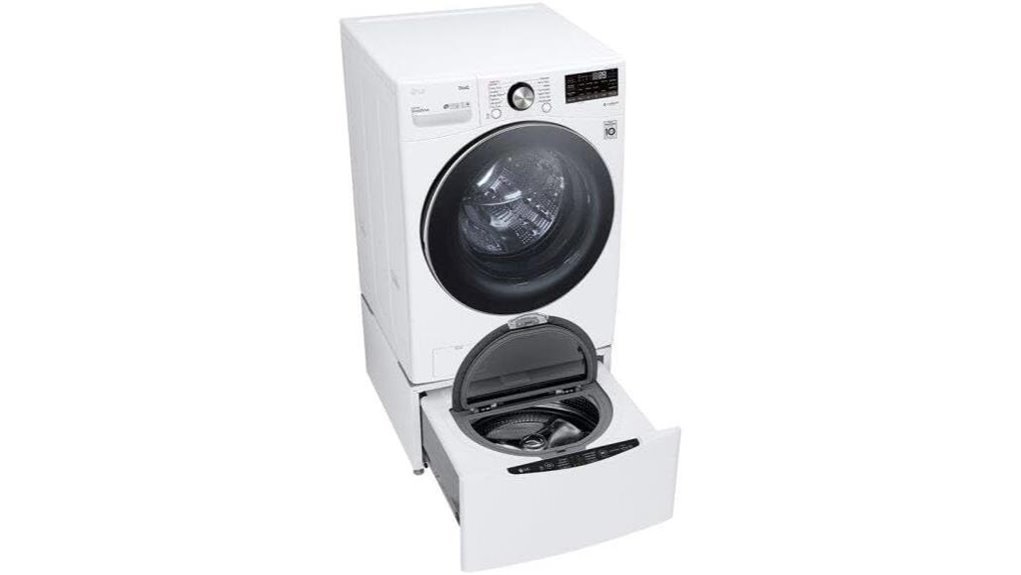
The LG WM4200HWA is a 5.0 cu. ft. front-load washer. The listing highlights ENERGY STAR certification, Steam, an allergen-focused cycle, TurboWash 360 for shorter cycles, and SmartThinQ Wi-Fi control with Google Assistant and Alexa compatibility. The large drum is aimed at comforters and bulky towels.
Best for: large households and anyone who wants app control and a big drum.
- Pros: large capacity; ENERGY STAR; steam and smart features.
- Cons: front-loaders need gasket care to prevent odor; smart features add cost you may not need; check the dimensions against your doorway and laundry space.
Check the current price on Amazon
Kenmore 4.5 cu. ft. Top Load Washer with Triple Action Impeller
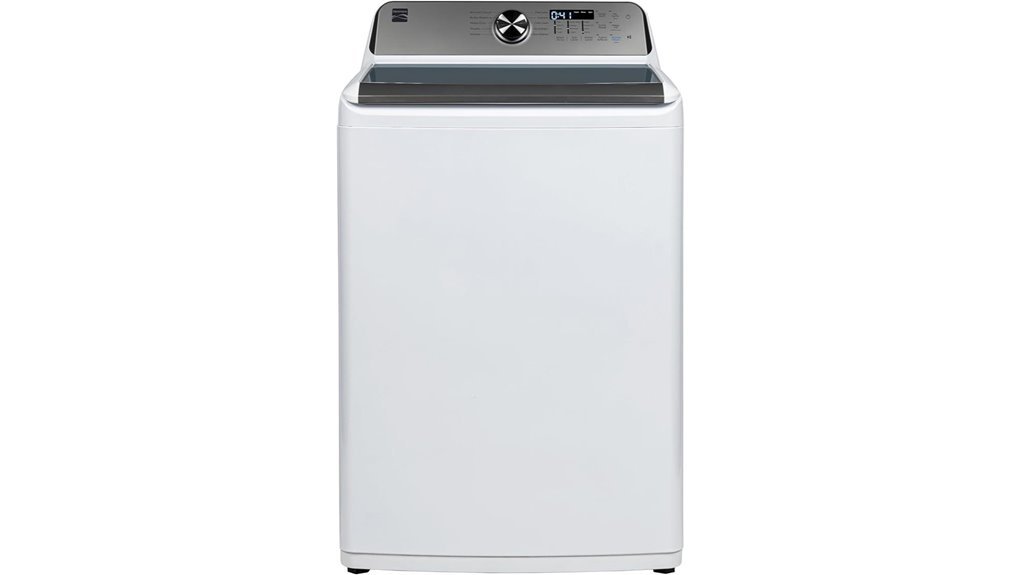
This Kenmore top-loader swaps the agitator for an impeller. The listing describes spray, basket motion and impeller movement, ten wash cycles, four temperatures, an Extra Rinse option, an LED display, and Express Wash for small loads in about 30 minutes. It also lists Accela Wash to shorten full-size cycles and Cold Clean Technology, which the manufacturer says can cut energy use. Treat those percentages as manufacturer claims that depend on the cycle.
Best for: busy households that want a simple top-loader with faster cycle options.
- Pros: impeller design; quick-wash options; Extra Rinse for sensitive skin.
- Cons: few smart features; basic finish; the listing mentions a one-year warranty.
Check the current price on Amazon
Kenmore 4.5 cu. ft. Front Load Washer
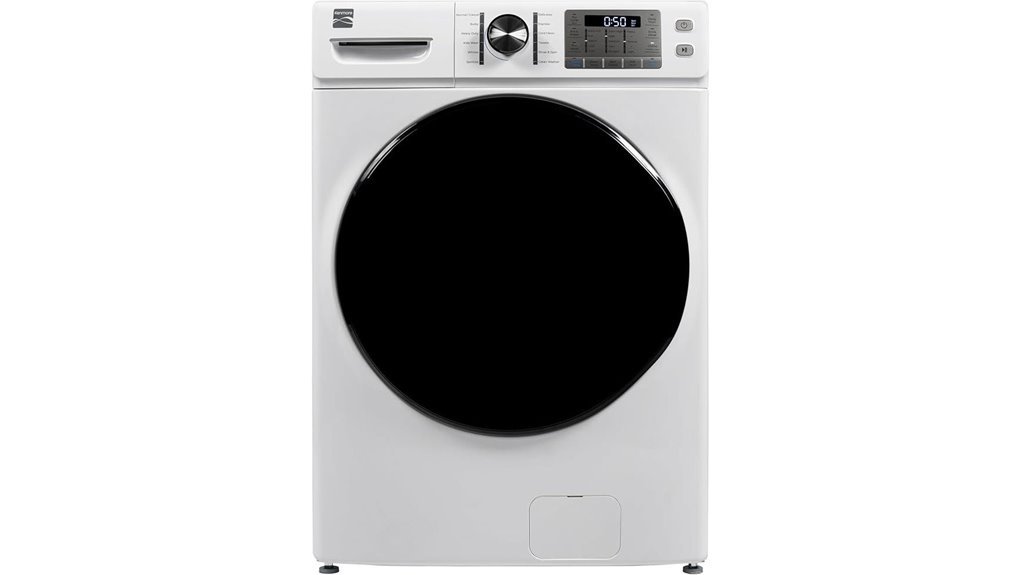
Kenmore’s 4.5 cu. ft. front-loader is the efficiency-minded Kenmore pick here. The listing describes Express Wash for small loads in 25 minutes, Accela Wash for faster full-size cycles, Steam Treat for everyday stains, twelve cycles including Kids Wear and Delicates, five temperature settings, Extra Rinse and Cold Clean. It also lists ENERGY STAR certification.
Best for: busy homes that want a front-loader that can later be paired or stacked with a compatible dryer.
- Pros: ENERGY STAR; twelve cycles; steam stain treatment.
- Cons: 4.5 cu. ft. may be limiting for very large loads; front-loaders take more upkeep; many cycle options can feel complex.
Check the current price on Amazon
Kenmore 4.1 cu. ft. Top Load Washer with Triple Action Agitator
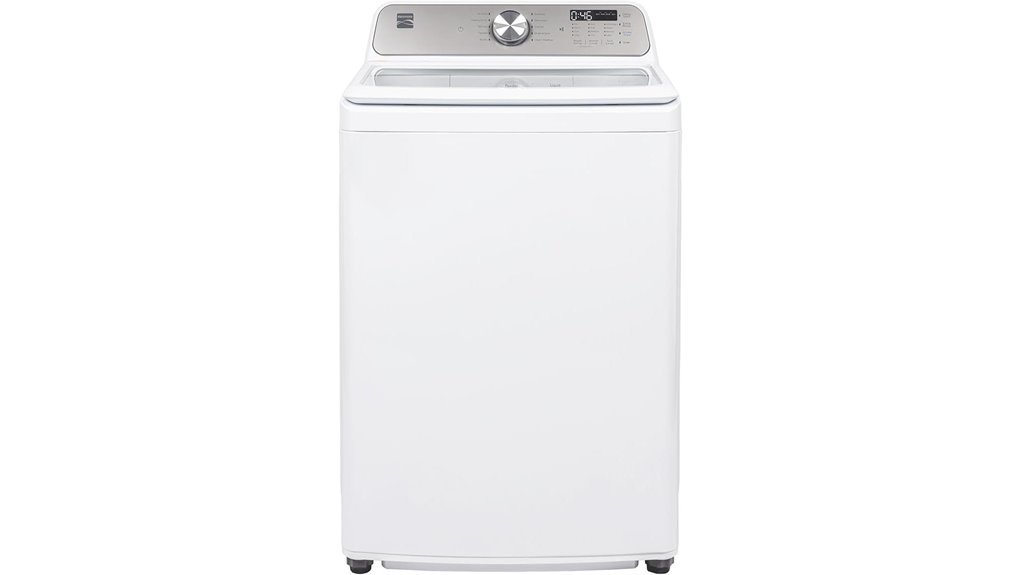
The smallest Kenmore full-size washer in this list has a 4.1 cu. ft. drum. The listing says it holds about 20 bath towels with a maximum load of 18.7 lb, and describes ten cycles, four temperatures, Express Wash for small loads in 28 minutes, Accela Wash, LED indicators and a tempered-glass soft-close lid.
Best for: mid-size households that want a straightforward agitator top-loader.
- Pros: practical size; fast small-load cycle; easy controls.
- Cons: may use more water than efficient front-loaders; only four temperature settings; not ideal for bulky family loads.
Check the current price on Amazon
COMFEE’ 2.4 cu. ft. Portable Washing Machine
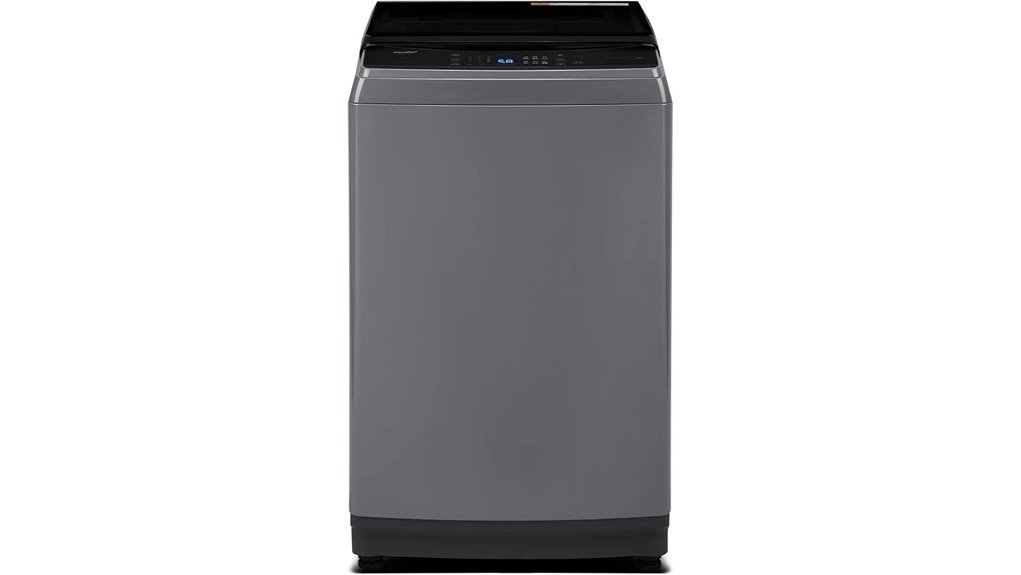
This compact portable washer has a 2.4 cu. ft. capacity per the listing. It highlights an auto-clean function, a Hygiene+ extra-rinse option, a turbo wash mode, larger impellers and a soft-close glass lid. It is designed for apartments and other small spaces.
Best for: small apartments and one- or two-person households.
- Pros: compact; no permanent plumbing hookup is typical for portable washers; self-cleaning option.
- Cons: small loads; still needs a water source and drain, so check the setup in the listing; not built to match a full-size washer’s capacity.
Check the current price on Amazon
BLACK+DECKER 3.0 cu. ft. Portable Washer (BPW30MW)
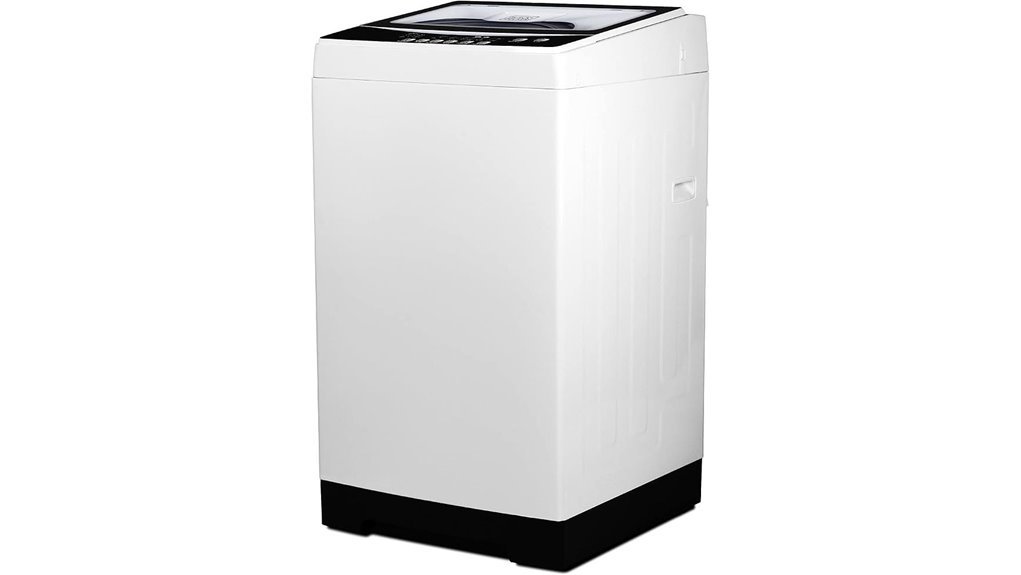
The BPW30MW is a 3.0 cu. ft. portable washer with a listed 26.5 lb capacity. It offers six cycles (Normal, Heavy, Delicate, Quick, Bulky and Spin Only), three water levels, cold, warm or hot settings, a stainless steel tub, a transparent lid and an LED display. A drain hose and quick-connect sink adapter are described, along with roller wheels and side handles for moving it.
Best for: small households, RVs, dorms and anyone who needs a washer that can be rolled away after use.
- Pros: mobile; stainless steel tub; auto shut-off and child lock listed.
- Cons: 3.0 cu. ft. is small for families; filling and draining are more hands-on than a full-size washer.
Check the current price on Amazon
How to choose a washing machine
Capacity and size
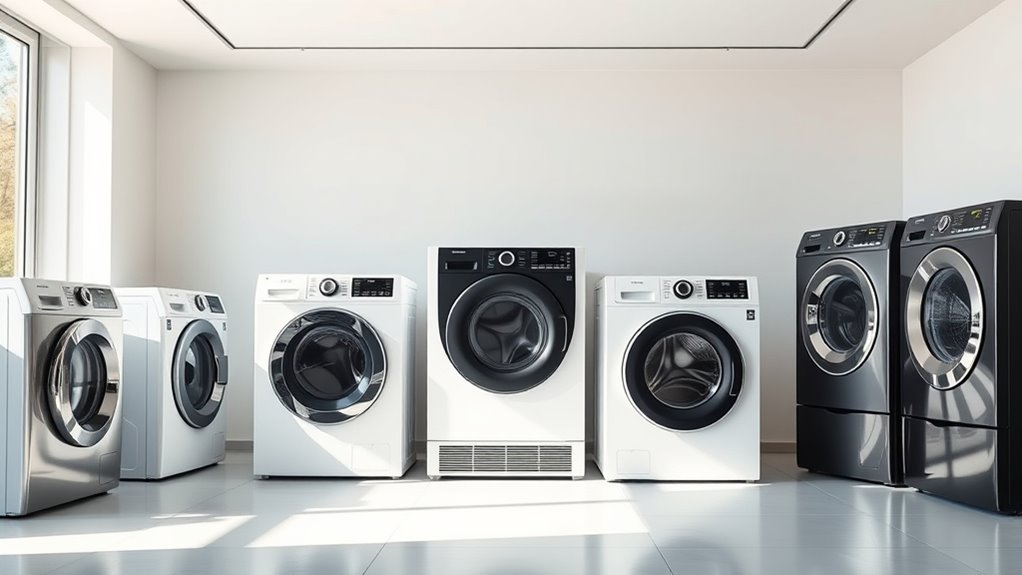
Washer capacity is stated in cubic feet by each brand, and testing methods differ, so compare it within a brand rather than across brands. As a general guide, 2.4 to 3.0 cu. ft. suits one or two people, 4.1 to 4.5 cu. ft. suits most families, and 5.0 cu. ft. or more suits bulky bedding. Measure your space, doorway and stairs, and leave room behind the washer for hoses and venting airflow.
Energy and water efficiency
The U.S. ENERGY STAR program says certified washers use about 20 percent less energy and about 30 percent less water than regular washers. It also notes that front-load models are typically more efficient than top-loaders. Compare each model’s IMEF and water factor and read the yellow EnergyGuide label.
Cycles, noise and smart features
Look for the cycles you will really use: heavy duty, delicates, a quick wash and an extra rinse. Wi-Fi and voice control are convenient but optional. Steam and allergen cycles can help with stains and sensitive households, but the benefit varies by model.
Installation basics
- Power: full-size washers use a standard grounded 120V outlet. The dryer is the appliance that often needs a 240V outlet.
- Water: hot and cold supply lines plus a standpipe or drain. Check hoses and consider a drain pan to catch leaks.
- Delivery: confirm whether delivery, haul-away and installation are offered, and check the warranty length in the listing.
Useful add-ons include inlet hoses, drain pans and pedestals.
Frequently asked questions
Is a front-load or top-load washer better?
Front-load washers generally use less water and energy and are gentler on clothes, and they can be stacked under a dryer. Top-load washers are faster to load, have no door gasket to dry out, and usually cost less. Impeller top-loaders sit between the two on efficiency.
How many cubic feet do I need in a washing machine?
Capacity is brand-stated and varies by testing method. As a rough guide, 2.4 to 3.0 cu. ft. suits one or two people in tight spaces, 4.1 to 4.5 cu. ft. suits most families, and 5.0 cu. ft. or more suits big households and bulky bedding.
Are portable washing machines worth it?
They suit apartments, RVs and dorms where a full-size washer will not fit or hook up. Most use a standard 120V outlet and a sink faucet adapter. Expect smaller loads, more hands-on filling and draining, and longer total laundry time than a full-size machine.
Does ENERGY STAR matter for a washing machine?
It is worth checking. ENERGY STAR says certified washers use about 20 percent less energy and about 30 percent less water than regular washers. Compare the IMEF and water factor numbers for each model, and the yellow EnergyGuide label, to estimate running costs.
How do I stop a washer from smelling musty?
Leave the door or lid open after each load so the drum can dry, wipe the door gasket on front-loaders, use the recommended amount of high-efficiency detergent, and run a washer-cleaning cycle regularly. Check your owner’s manual for the cleaning cycle your model recommends.
Conclusion
Choose a front-load washer if efficiency and capacity matter most, a top-load washer if you want simple and fast, and a portable washer if space is the limit. Browse the Kenmore and Samsung washer guides if you already have a brand in mind.
