
The best water dispensers for offices match the size of your team, the plumbing you have and who will maintain the unit. Bottleless filtered models suit offices with a water line and little storage, while bottom-loading bottled units work where plumbing is not available. A wall-mounted bottle filling station suits high-traffic areas.
As an Amazon Associate, Casabux may earn from qualifying purchases. This does not change the price you pay.
This guide is based on manufacturer listings and customer reviews on Amazon at the time of writing, not hands-on testing. For a broader look at home use, see our main guide to water dispensers for home and office. Specs below are as stated in each listing; check the current price and details before buying.
How to Choose the Best Water Dispensers for Offices
| Question | Why it matters |
|---|---|
| How many people will use it? | More users need faster refill and recovery, and may call for a floor-standing unit or filling station. |
| Is there a water line nearby? | Bottleless units need one; bottled units do not. |
| Who maintains it? | Assign one person to wipe, sanitize and change filters, and keep a dated log. |
| Is it a shared or public space? | Touchless dispensing and hot-tap child locks help. |
| Accessibility needs? | Consider reach, spout height and clearance; check the listing and local requirements. |
Bottled vs bottleless for an office
Bottled dispensers are simple to place and need only power, but a full 5-gallon bottle weighs roughly 40 pounds, so someone must lift, store and reorder. Bottleless units remove that task and filter tap water, but they need installation and scheduled filter changes.
Hygiene and upkeep
Shared surfaces spread germs, so wipe the spout and buttons regularly. A self-cleaning cycle or UV feature, where listed, can help with the inside of the unit, but it does not replace manual cleaning or filter changes.
Hot water safety
Choose a hot tap with a safety lock, and keep the unit away from walkways. Hot water near the top of a dispenser’s range can scald in seconds.
Water access at work
Workplaces generally must provide drinking water for staff, and rules vary by location, so check the requirements that apply to you. A dispenser or filling station helps meet that need but is not a compliance guarantee by itself.
iSpring DS4S Bottleless Water Dispenser with 4-Stage Filtration
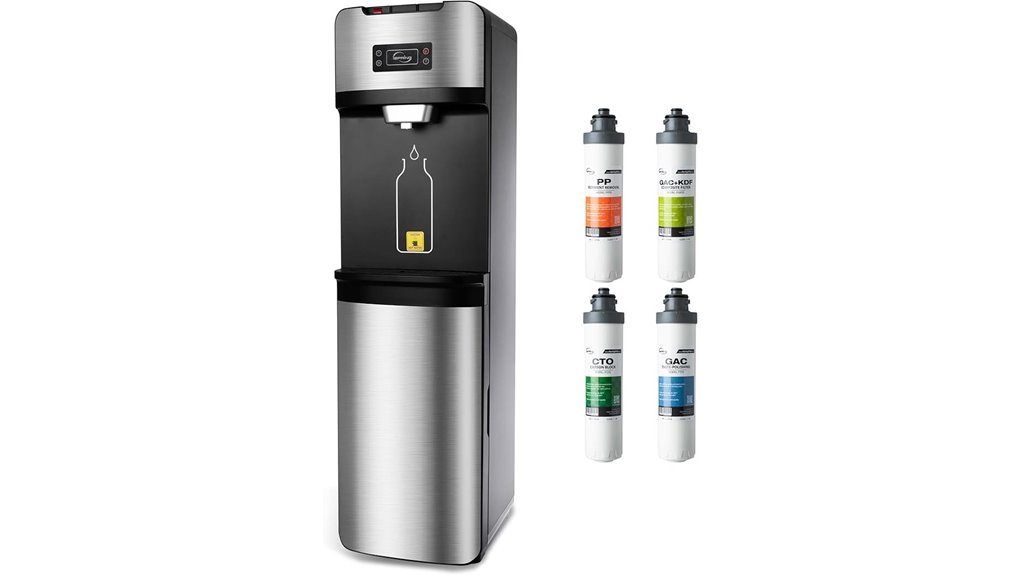
The iSpring DS4S connects to your water line and dispenses hot, room-temperature and chilled water. The listing describes four filtration stages, a child safety lock, included tubing and adapters, and a self-cleaning function. The listing names contaminants such as lead and PFAS, so read the certifications shown to see which standards apply.
Best for: small offices and home workspaces with a water line that want compact, bottle-free water.
Pros
- No bottles to store or reorder
- Hot tap has a child safety lock
- Install kit included, per the listing
Cons
- Needs installation and a nearby water line
- A single unit may struggle in a very busy break room
Check the iSpring DS4S on Amazon
Brio 800 Bottleless Countertop Water Cooler with Filtration
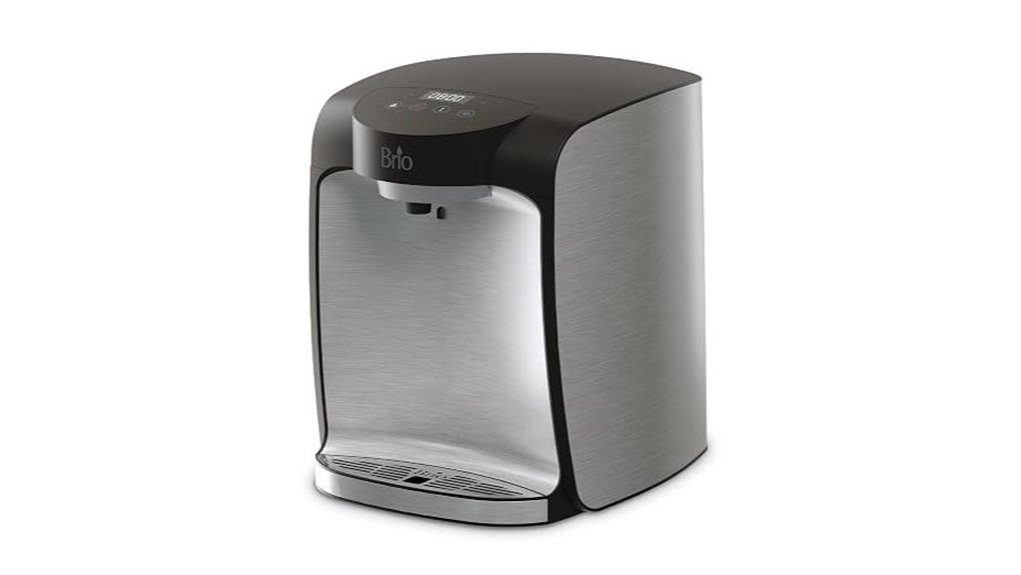
The Brio 800 is a countertop bottleless cooler with hot, cold and room-temperature water. The listing describes a two-stage filter, a self-cleaning cycle and a tall dispense area for larger bottles and pitchers. The listing gives its size as about 17.5 x 12.5 x 17.4 inches and weight as 35 pounds. Confirm filter certifications on the listing before relying on contaminant claims.
Best for: break rooms with counter space that want filtered hot and cold water.
Pros
- Countertop size saves floor space
- Self-cleaning cycle reduces manual upkeep
- Room for tall containers
Cons
- Needs power and a water connection
- About 35 pounds, so moving it takes planning
Brio 400 Series Self-Cleaning Bottleless Water Cooler Dispenser
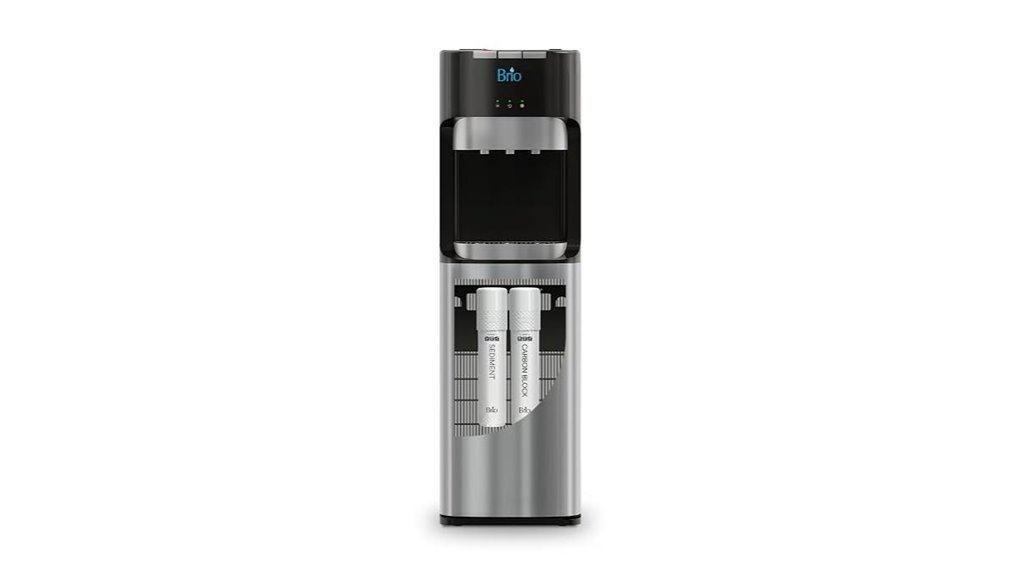
The Brio 400 Series is a bottleless cooler that connects to a water line. The listing describes hot, room-temperature and cold water, a UV self-cleaning system, two-stage filtration, a two-step hot water lock and an installation kit with filters. The listing states the hot tap reaches near-boiling temperatures, so keep it away from walkways and use the lock.
Best for: busy offices that want a plumbed bottleless unit with a UV self-cleaning feature.
Pros
- Plumbed, so no bottle changes
- Two-step hot-tap lock
- UV self-cleaning feature, as described in the listing
Cons
- Installation is more involved than a countertop pitcher
- Filters and upkeep add running cost
Check the Brio 400 Series on Amazon
Primo Bottom Loading Hot and Cold Water Dispenser
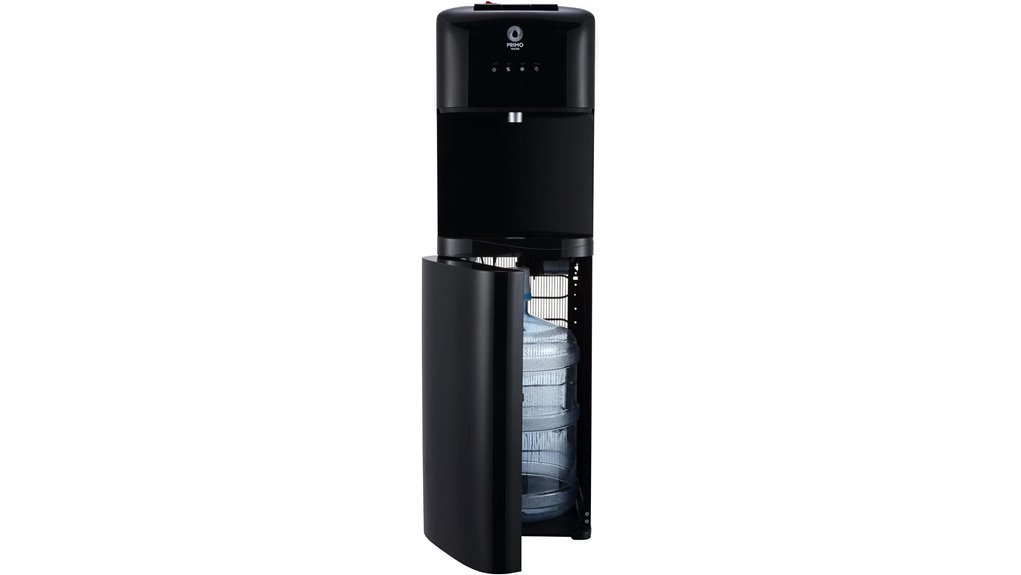
This Primo is a bottled hot and cold dispenser with a bottom-loading compartment for 5-gallon bottles. The listing describes push-button controls, a two-step hot water lock, stainless steel reservoirs, a removable drip tray described as dishwasher-safe and an LED night light. It needs power but no plumbing.
Best for: offices without plumbing that want easier bottle changes.
Pros
- Bottom loading is easier on staff who change bottles
- Hot-tap lock and night light
- No plumbing required
Cons
- Needs 5-gallon bottle supply and storage
- Floor-standing footprint
Check the Primo Hot and Cold Dispenser on Amazon
Avalon A4BLWTRCLR Bottom Loading Water Cooler Dispenser
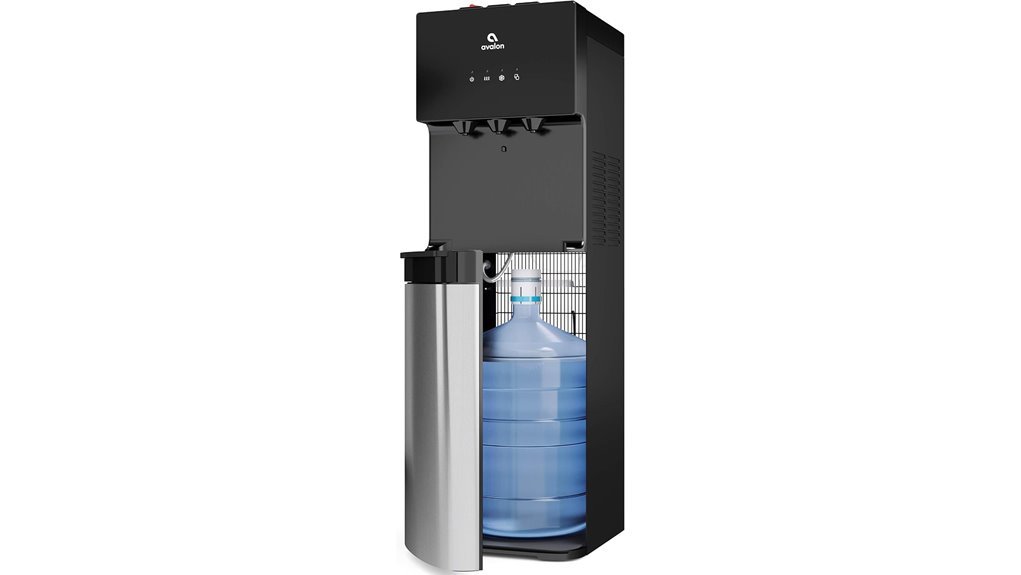
The Avalon A4BLWTRCLR is a stainless steel bottom-loading cooler for 3- to 5-gallon bottles. The listing describes hot, cold and room-temperature water, a nightlight, an empty-bottle indicator, a BioGuard coating, a footprint of about 12 x 13 x 41 inches and a weight of 38.1 pounds.
Best for: break rooms that want hot, cold and room-temperature water in one bottom-loading unit.
Pros
- Three temperature options
- Empty-bottle indicator helps staff plan refills
Cons
- Needs bottle supply and storage
- About 38 pounds without a bottle
Check the Avalon A4BLWTRCLR on Amazon
Clover B7A Hot and Cold Water Dispenser
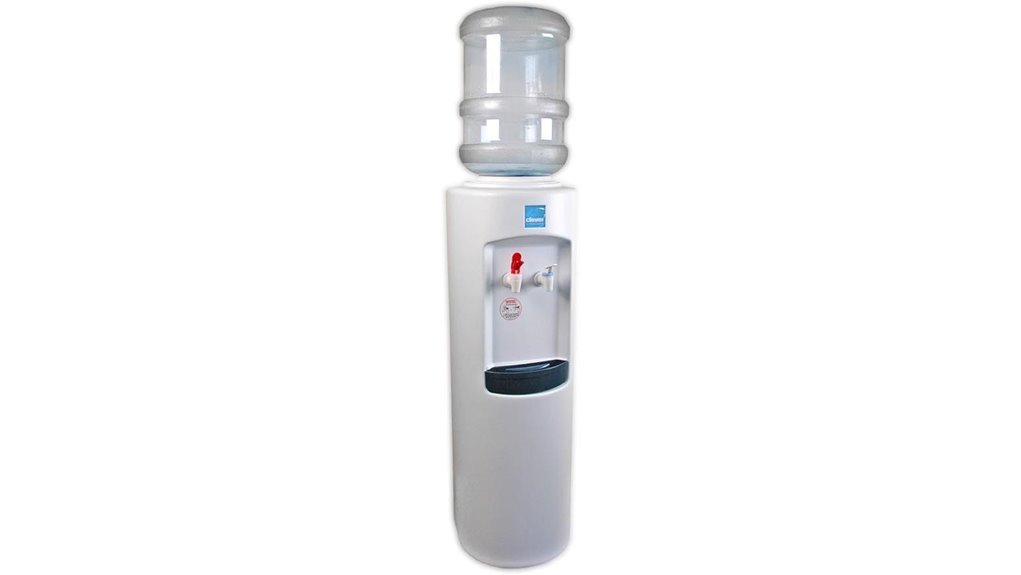
The Clover B7A is a bottled hot and cold dispenser. The listing describes stainless steel tanks, an adjustable cold thermostat, hot water kept near 185 degrees F, a convection-cooled condenser and quiet operation. The listing says it meets ENERGY STAR criteria; confirm on the official ENERGY STAR product list. See our ENERGY STAR water dispenser guide for how the label works.
Best for: staff kitchens that want a quiet hot and cold unit with adjustable cold temperature.
Pros
- Adjustable cold thermostat
- Stainless steel hot and cold tanks, per the listing
Cons
- Hot temperature is not adjustable
- Uses bottles, so you need storage
Check the Clover B7A on Amazon
Avalon Touchless Bottleless Water Cooler (A7BOTTLELESSBLK)
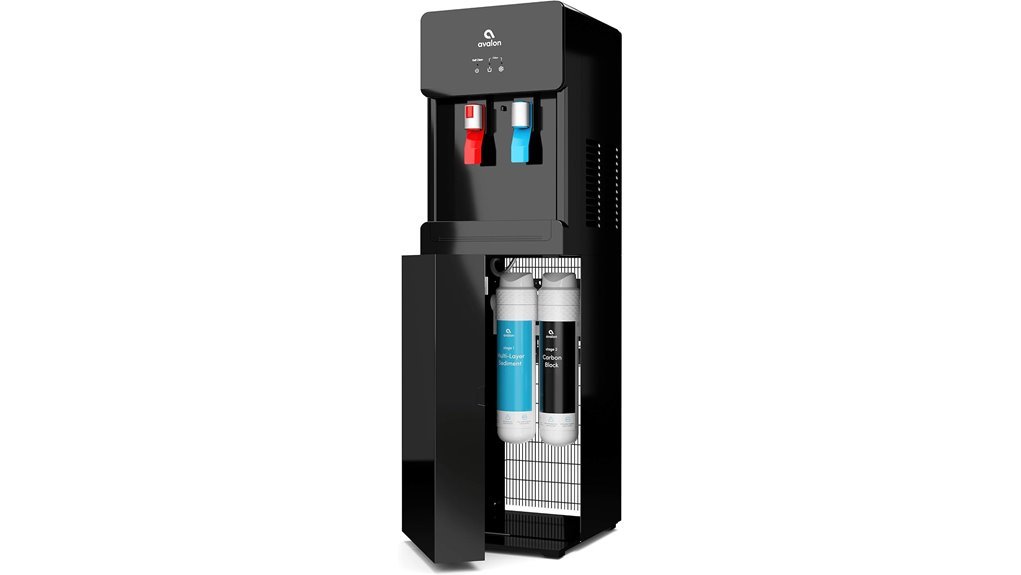
The Avalon A7BOTTLELESSBLK is a freestanding bottleless cooler with touchless dispensing. The listing describes hot and cold water, a child safety lock on the hot spout, a nightlight, dual sediment and carbon block filters, a self-cleaning function, an install kit and a size of about 13 x 12 x 41 inches.
Best for: offices that want touchless dispensing and a slim floor-standing footprint.
Pros
- Touchless operation for shared use
- Slim footprint
- Dual filters, per the listing
Cons
- Needs installation and a water connection
- Filters need replacing on the manufacturer schedule
Check the Avalon A7BOTTLELESSBLK on Amazon
Elkay ezH2O Bottle Filling Station with ADA Cooler
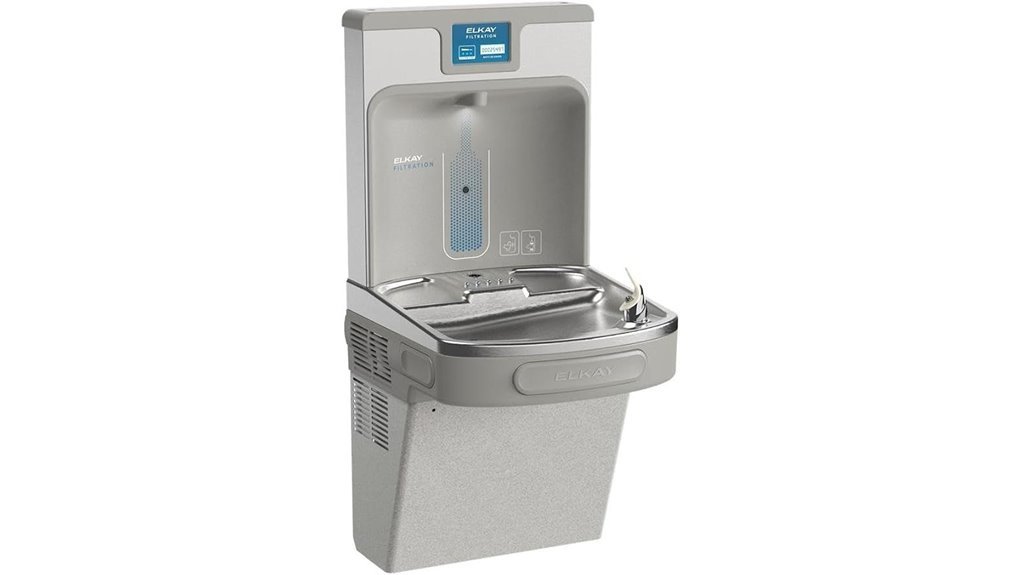
The Elkay LZS8WSLK is a wall-mounted refrigerated bottle filling station with a separate bubbler. The listing describes sensor-activated bottle filling, a filter status light and a replaceable filter listed for NSF/ANSI 42 and 53. It is described as ADA-accessible, but accessibility also depends on mounting height and clearances, so confirm details with the manufacturer and your installer. It needs plumbing, a drain and electrical power.
Best for: offices, schools and public areas with plumbing that want filtered, chilled bottle filling.
Pros
- Touchless bottle filling plus a bubbler
- Filter status indicator
Cons
- Needs wall mounting, plumbing, drain and power
- Higher upfront cost than a basic cooler
Check the Elkay ezH2O Bottle Filling Station on Amazon
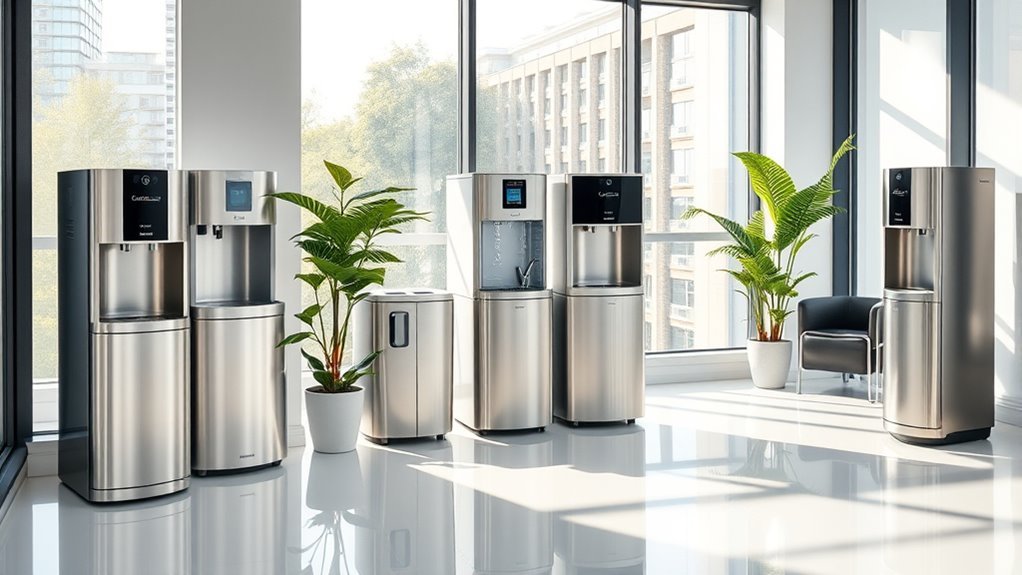
Office Dispenser Placement and Maintenance Plan
- Place it near an outlet and, for bottleless models, a cold water line, and keep it clear of walkways.
- Leave clearance for filling tall bottles and for bottle changes.
- Name one person to wipe, sanitize and replace filters, and log the dates.
- Replace filters on the interval printed in the manual, not only when the water tastes off.
Related Guides
- Bottle filling stations for offices, schools and gyms
- Water dispenser stands
- ENERGY STAR water dispensers
Frequently Asked Questions
How many people can one office water dispenser serve?
There is no universal number, because it depends on how often people refill bottles and use hot water. A countertop unit suits a small team, while a busy break room may need a floor-standing model or a bottle filling station. Check the dispenser’s stated hot and cold output per hour in the manual.
Is a bottled or bottleless dispenser better for an office?
Bottleless units avoid bottle storage and deliveries but need a nearby water line and filter changes. Bottled units are simpler to place but need space for spare 5-gallon jugs and someone to change them. Choose by plumbing access and who will handle upkeep.
How often should an office water dispenser be cleaned?
Follow the manufacturer’s manual. In shared offices, wipe the spout, buttons and drip tray frequently, assign someone to log a deeper sanitizing of the reservoir and lines every few months or as the manual states, and replace filters on schedule. Keep a simple dated checklist near the unit.
Are touchless dispensers more hygienic?
Touchless dispensing reduces how many hands touch the spout and buttons, which can help in a shared space. It does not replace cleaning, because the spout, drip tray and internal lines still need regular care.
Do offices need hot water safety locks?
If children, visitors or inexperienced users may be present, a child safety lock on the hot tap is a sensible feature. Dispensers that deliver near-boiling water can scald quickly, so place the unit away from busy walkways and do not leave it unattended in public areas.
Conclusion
For offices with plumbing, a bottleless unit saves bottle handling, and for high-traffic spots a filling station may work better. Without plumbing, choose a bottom-loading bottled model. Confirm certifications and cleaning needs before you buy.
