
Two outdoor drinking fountains stand out for 2027: the Global Industrial model with a bottle filling station and the eco-friendly solar-powered option. One emphasizes durability, ADA compliance, and heavy use, while the other focuses on sustainability and low-energy operation. Each serves a different setting, yet both solve the same basic need in practical ways. The better choice may depend on more than appearance, and the deciding factors are not all obvious.
Global Industrial Outdoor Drinking Fountain with Bottle Filler
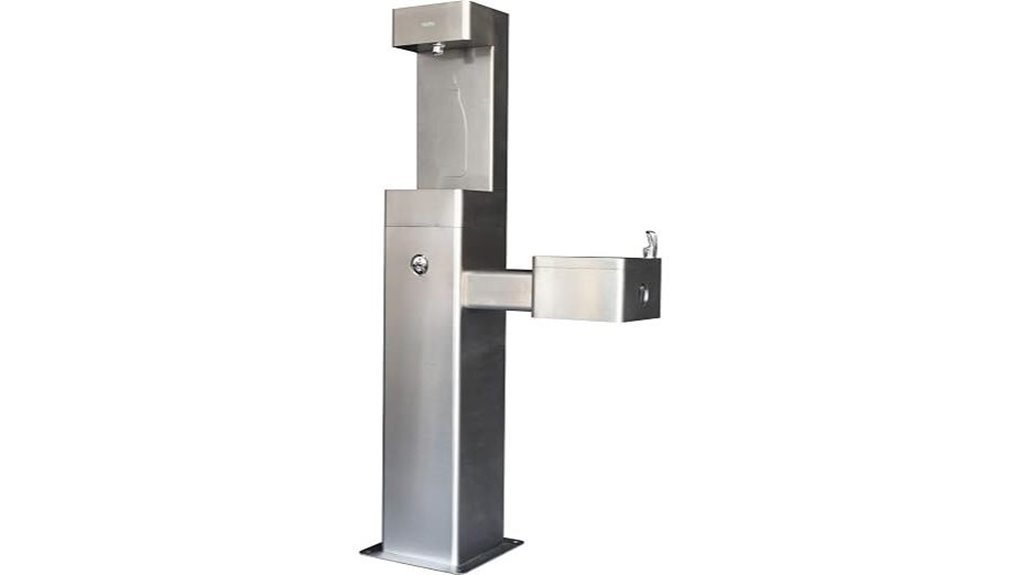
The Global Industrial Outdoor Drinking Fountain with Bottle Filling Station is a practical choice for high-traffic outdoor spaces that need both a traditional bubbler and a convenient refill point. It combines one push-button drinking station with a separate bottle filler, supporting quick, accessible use without electrical power. Built from 316 stainless steel with a silver finish, it measures 30-7/8 inches wide, 10-1/4 inches deep, and 60-1/4 inches high. Its 112-pound freestanding design suits recess grounds, summer camps, office complexes, golf courses, and similar outdoor settings. ADA compliance and manual operation add functional value.
Best For: Organizations and outdoor facilities that need a durable, ADA-compliant drinking fountain with a separate bottle filler for frequent public use.
Pros:
- Durable 316 stainless steel construction with a silver finish for outdoor environments
- Includes both a traditional bubbler and a bottle filling station for added convenience
- Freestanding, manual, and non-electric design makes installation and operation simpler
Cons:
- Heavy 112-pound unit may be difficult to move or install
- Freestanding design may require a suitable outdoor location and secure placement
- Industrial look may not suit settings that want a more decorative style
Global Industrial Outdoor Drinking Fountain with Bottle Filling Station
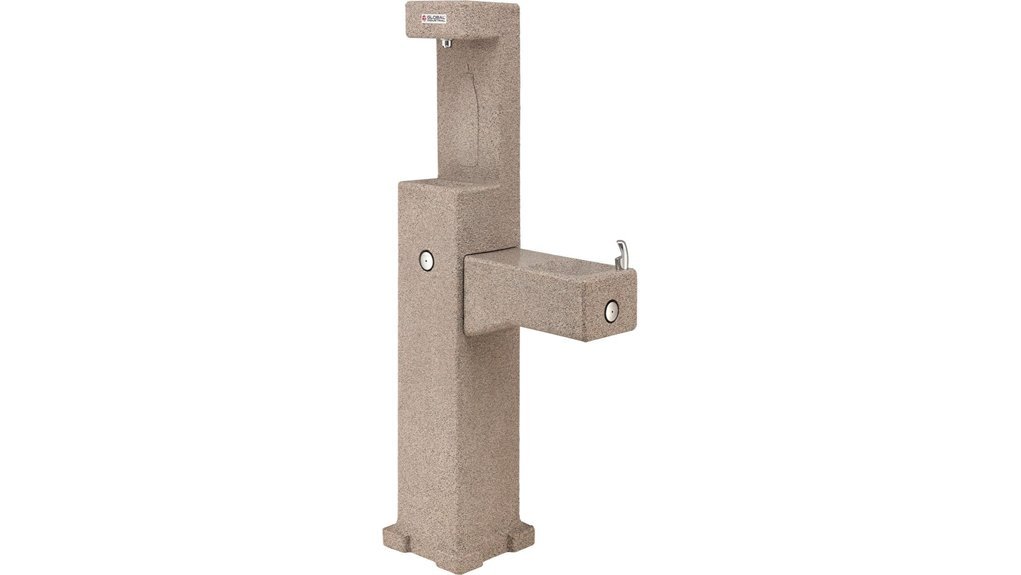
Built for busy public spaces, the Global Industrial Outdoor Drinking Fountain with Bottle Filling Station suits campuses, parks, and offices. Measuring 28 inches wide, 10 inches deep, and 60-1/4 inches high, it uses high-density polyethylene with a rotocast granite finish. The construction balances durability with lighter handling than stone while maintaining a refined look. A vandal-resistant bubbler and bottle filling station support convenient hydration and help reduce plastic bottle use. No electrical power is required, keeping upkeep simple. At 114.6 pounds, it includes an anchor kit and fits recreational areas, schools, and golf courses.
Best For: Schools, parks, campuses, offices, and other high-traffic public spaces that need a durable, low-maintenance outdoor drinking fountain with a bottle filler.
Pros:
- Durable high-density polyethylene construction with a rotocast granite finish
- Includes both a vandal-resistant bubbler and a bottle filling station
- No electrical power required, which simplifies installation and maintenance
Cons:
- Heavy at 114.6 pounds, so installation may require extra effort
- Outdoor public-use design may not suit private or decorative settings
- Limited functionality compared with models that include features like refrigeration or filtration
Factors to Consider When Choosing Outdoor Drinking Fountains in 2026
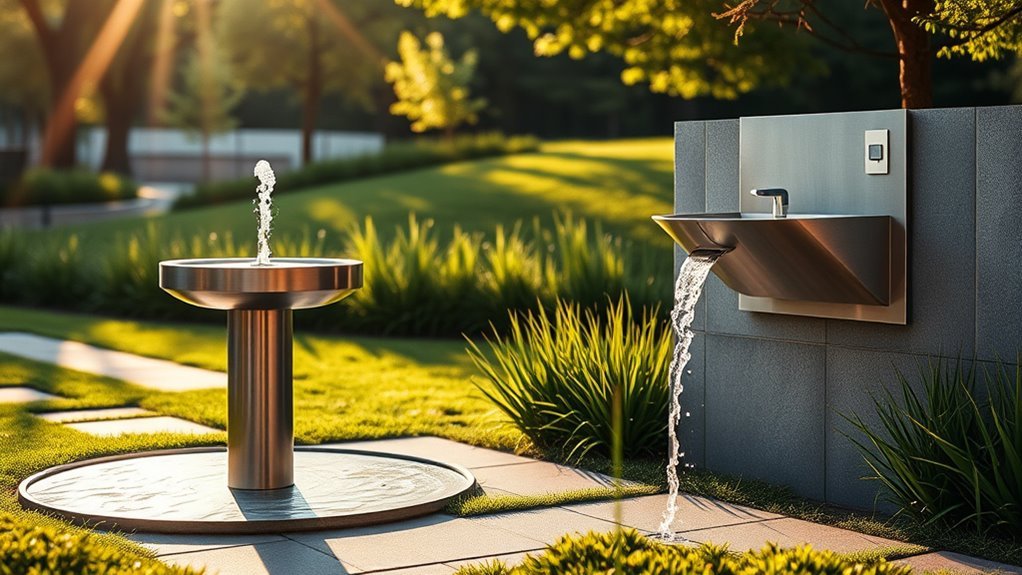
When choosing outdoor drinking fountains in 2026, material durability and site conditions are central to long-term performance. Installation requirements, ADA compliance, and available fountain features also shape how well the unit serves the public. Careful attention to site suitability helps guarantee the fountain fits both the environment and user needs.
Material And Durability
Material choices can make or break an outdoor drinking fountain’s long-term performance. In outdoor settings, 316 stainless steel is often favored because it resists corrosion and vandalism, helping the fixture endure harsh weather and heavy use. High-density polyethylene with rotocast construction offers another durable option, combining low weight with impact resistance and a reduced chance of visible damage. Finish also matters: a granite finish can improve appearance, yet it may need closer attention as surfaces wear over time. Weight should be considered as well, since heavier units can provide added stability, while lighter models are easier to handle and maintain. Selecting the right material consequently balances longevity, resilience, appearance, and practical upkeep.
Installation Requirements
Installation requirements can strongly influence how well an outdoor drinking fountain fits a site and how easily it can be maintained over time. Freestanding models often provide the most flexible placement because they do not need a foundation, making them useful where site conditions are limited. Weight also matters; heavier units may need stronger anchoring and a more substantial base to stay stable and safe. Bottom access can make servicing simpler while preserving a clean appearance. Units with included anchor kits may reduce installation effort and improve security outdoors. Electrical needs should also be checked, since non-electric fountains avoid wiring and can lower maintenance demands. Choosing a model with straightforward setup helps reduce delays and supports reliable long-term use in varied outdoor settings.
ADA Compliance
ADA compliance is a key consideration when selecting outdoor drinking fountains in 2026, since accessibility affects how well the unit serves all users in public spaces. It guarantees that people with disabilities can use the fountain through practical details such as suitable mounting height and push button activation. Under the Americans with Disabilities Act, at least 50% of public drinking fountains should be wheelchair accessible. To meet this standard, each accessible unit needs a clear floor space of at least 30 inches by 48 inches. Spout height also matters, with a maximum of 36 inches for standard models and 48 inches for units intended for children. Regular inspection and maintenance help preserve compliance and dependable operation over time.
Fountain Features
Key features often determine how well an outdoor drinking fountain serves a site in 2026. A model with both a traditional bubbler and a bottle filling station offers flexible hydration while helping reduce single-use plastic waste. ADA-compliant designs remain essential, and push button activation supports straightforward operation for users of different ages and abilities. Construction material also matters: stainless steel and rotocast polyethylene can improve durability, resist vandalism, and keep units relatively lightweight for simpler installation. Fountain selection should also favor systems that operate without electrical power, since non-powered units reduce installation complexity and lower long-term maintenance costs. Together, these features create a practical, efficient, and resilient drinking solution that can meet everyday demands without unnecessary operational burden.
Site Suitability
A well-suited fountain begins with the site itself. Foot traffic should be measured first, since high-use areas need reliable access and enough capacity to serve visitors without crowding. Exposure to rain, sun, freezing temperatures, and debris also shapes material selection and structural durability. Local codes and accessibility standards, including ADA requirements, must be checked so the fountain serves all users properly. The site’s purpose matters as well: parks, playgrounds, and schools may benefit from bottle filling stations or other tailored features. Maintenance demands should not be overlooked, because remote or harsh locations can increase cleaning and repair needs. A fountain that matches its surroundings will perform better, last longer, and remain hygienic with less effort over time for the community.
Frequently Asked Questions
How Often Should Outdoor Drinking Fountains Be Sanitized?
Outdoor drinking fountains should be sanitized daily, with higher-use units cleaned more often and immediately after contamination, spills, or illness reports. A routine disinfection schedule helps control germs, algae, and mineral buildup, while regular inspections catch damage or low water pressure. Local health codes may require specific intervals, so operators should follow those standards and document each cleaning. Consistent maintenance keeps fountains safer and more reliable for public use.
Are Outdoor Drinking Fountains Safe in Freezing Temperatures?
Outdoor drinking fountains are not fully safe in freezing temperatures unless they are designed for winter use or properly drained and insulated. Water inside pipes and valves can freeze, causing cracks, leaks, or shutdowns. Some models include heated components or automatic freeze protection. Regular inspection helps confirm operation after cold spells. In severe weather, shutting the fountain off and winterizing it is usually the safest choice.
Can Outdoor Fountains Operate Without Electrical Power?
Yes, some outdoor fountains can operate without electrical power. Gravity-fed, manually pumped, or pressurized water systems may function independently, especially in parks, rural sites, or emergency setups. However, many modern fountains rely on electricity for pumps, lighting, filtration, or heating. In a detached assessment, their operation depends on design, water source, and intended features. Without power, functionality is usually reduced, but not necessarily eliminated.
What Vandal-Resistant Features Do Outdoor Fountains Need?
Vandal-resistant outdoor fountains need robust materials such as stainless steel or reinforced concrete, tamper-proof fasteners, recessed controls, and protected plumbing. They also benefit from impact-resistant bowls, shatter-resistant push buttons, and concealed drains to limit damage and clogging. Anti-graffiti coatings and smooth surfaces make cleaning easier. Secure mounting and access panels with lockable hardware further reduce misuse. Proper design helps these fountains stay functional in public environments.
How Do You Winterize an Outdoor Drinking Fountain?
An outdoor drinking fountain is winterized by shutting off its water supply, draining all lines, and opening the valve to release trapped water. The unit is then blown out with compressed air, if possible, to clear remaining moisture. Exposed pipes and backflow devices are insulated or removed, and the drain system is checked for blockage. Finally, the fountain is covered or locked down until spring, reducing freeze damage and maintenance issues.
Conclusion
Choosing the right outdoor drinking fountain in 2027 is like selecting the backbone of a busy public space. The Global Industrial Outdoor Drinking Fountain with Bottle Filling Station stands out for its stainless steel durability, ADA compliance, and dual-use design, while the Eco-Friendly Solar-Powered Fountain adds sustainability and off-grid convenience. Both options serve different needs, but each delivers reliable hydration, making them smart investments for schools, parks, and high-traffic areas alike.