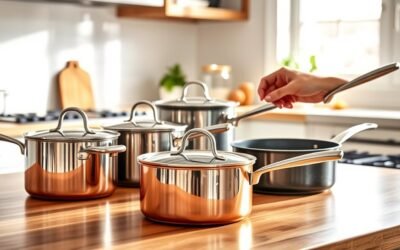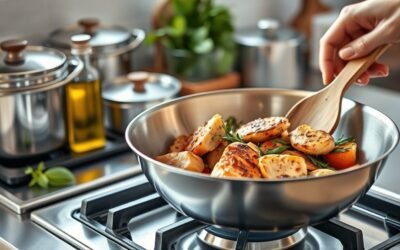
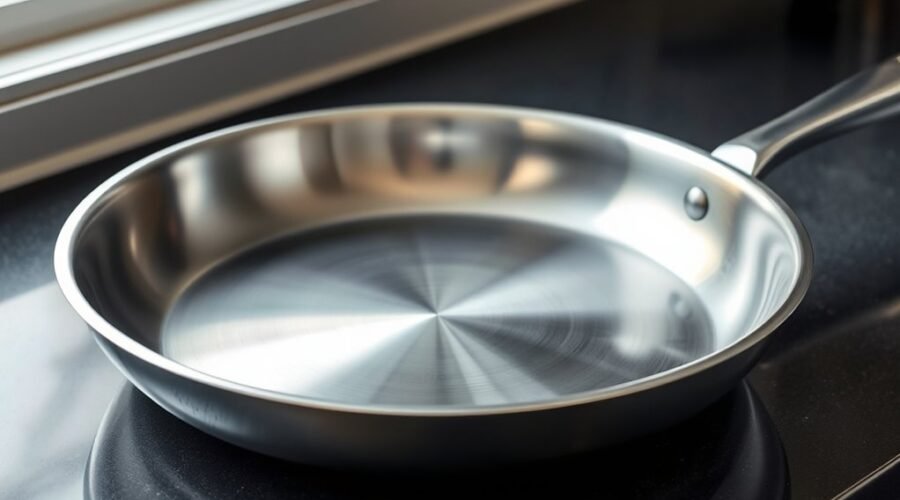
When you think about a pan, picture its essential features that define quality. Notice the smooth surface, free from scratches, indicating durability. A non-stick finish gleams invitingly, while cast iron offers a rustic, seasoned texture. The handle should fit comfortably in your hand, showcasing thoughtful design. Understanding these elements can greatly impact your cooking experience. So, what specific features should you prioritize to guarantee you choose the perfect pan for your needs?
Key Features to Look For in a Cooking Pan
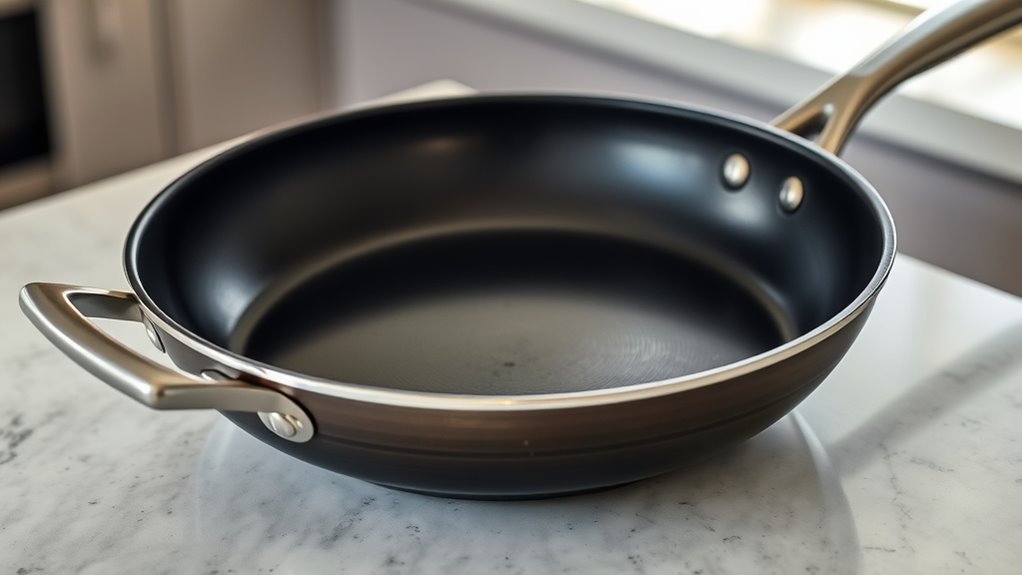
When you’re choosing a cooking pan, it’s essential to evaluate several key features that can enhance your culinary experience.
First, consider the pan types available—each offers unique benefits. For instance, a cast iron skillet excels in heat retention, while non-stick surfaces make delicate cooking, like pancakes, a breeze.
Material matters too; stainless steel and aluminum provide different heat conduction properties, impacting your cooking efficiency.
Pay attention to thickness and weight; heavy, thick-bottomed pans guarantee even heat distribution, minimizing hot spots.
Also, examine the handle design—sturdy, heat-resistant handles enhance safety and comfort, especially with heavier pans.
If you love versatility, look for pans labeled oven-safe, allowing seamless shifts from stovetop to oven.
Materials That Enhance Performance
Choosing the right pan isn’t just about style; the materials used can dramatically influence your cooking performance.
For instance, cast iron offers exceptional heat retention and cooks food evenly, but it requires seasoning to maintain its nonstick qualities. If you prefer quick heating, aluminum pans are lightweight and conduct heat efficiently, though they often need a non-stick coating to prevent food from sticking.
Stainless steel is another fantastic option, known for its durability and resistance to corrosion. It excels at browning and searing at high temperatures, but proper greasing is essential to keep food from sticking.
Finally, if you’re after precision, copper cookware provides superior heat conductivity, ensuring your dishes are cooked to perfection—but be prepared for some upkeep to keep it looking great.
Each material has unique benefits, so choose wisely to elevate your culinary adventures!
Popular Types of Cooking Pans and Their Features
When you’re cooking, the type of pan you choose can make all the difference.
Each popular cooking pan—like frying pans, skillets, and woks—has unique features that cater to specific methods and ingredients.
Understanding these options helps you select the right pan for your culinary creations.
Essential Features Overview
Cooking pans are essential tools in every kitchen, each designed with unique features that cater to different culinary techniques.
For quick cooking, frying pans with sloped sides and a long handle are perfect for sautéing, while sauté pans boast straight sides and a wide bottom, ideal for simmering sauces.
If you’re into high-heat cooking, woks let you stir-fry efficiently thanks to their rounded shapes.
Dutch ovens, with their heavy bottom and thick walls, excel at slow-cooking and braising, while stock pots with tall sides are essential for boiling and making soups.
Each pan shape serves a specific purpose, empowering you to explore your culinary creativity and elevate your cooking game.
Choose wisely and enjoy the liberation of delicious meals!
Selecting The Right Pan
How do you navigate the array of cooking pans available to find the perfect one for your kitchen?
Start with the frying pan, your go-to for quick frying and sautéing, typically ranging from 8 to 12 inches.
If you’re making saucy dishes, a sauté pan with straight sides and a lid offers versatility.
For high-heat stir-frying, don’t overlook the deep, rounded wok.
When it’s time for slow-cooking or braising, a Dutch oven shines, retaining heat beautifully.
Need to prepare big batches? Stock pots with tall sides are perfect for boiling pasta or making hearty soups.
Evaluating Pan Durability: Key Features to Consider
A durable pan can be your culinary best friend, altering your cooking experience with its reliability and performance. When evaluating pan durability, start by considering material quality. Stainless steel pans, cast iron, or heavy-gauge aluminum offer long-lasting strength and resistance to warping.
Next, look at thickness; a thicker bottom guarantees even heat distribution, minimizing hot spots that can burn your food.
Coating resilience is also essential. High-quality non-stick or enamel coatings should withstand frequent use without scratching or peeling. Don’t overlook handle stability—opt for sturdy, ergonomically designed handles that provide a secure grip, ensuring they won’t loosen over time.
Finally, check oven compatibility; a pan that’s oven-safe up to 500°F allows you to explore diverse cooking methods, like shifting from stovetop to oven. With these features, you’ll elevate your culinary adventures and enjoy the freedom of cooking with confidence.
Choosing the Right Size Pan for Your Cooking Needs
Choosing the right size pan can make all the difference in your cooking experience.
Whether you’re whipping up a quick breakfast or preparing a family feast, understanding the relationship between pan size, cooking techniques, and meal quantities is essential.
Let’s explore how to select the perfect pan for your culinary needs.
Pan Size Matters
Selecting the right pan size can greatly impact your cooking experience. A versatile frying pan, 10-12 inches, is perfect for everyday tasks like frying eggs or pancakes.
If you’re cooking for a crowd, consider larger pans that can handle family meals and one-pot dishes effortlessly. For sauces and small batches, a saucepan with a volume capacity of 2-3 quarts guarantees even heating.
When it comes to soups, an 8-quart stockpot size is ideal for boiling pasta or making hearty meals.
Don’t forget specialty pans like woks or sauté pans; they should only fill your kitchen if you’ll use them. Always keep storage space in mind, as larger pans can be cumbersome and take up valuable room.
2. Cooking Techniques Considerations
When you’re preparing a meal, the size of your pan can greatly influence your cooking technique and overall success.
For instance, a 10-12 inch frying pan is perfect for whipping up eggs or pancakes for 1-2 people, while a 12-inch skillet shines when cooking for the family.
If you’re tackling a one-pot dish, a sauté pan with higher sides can handle saucy meals, ensuring everything cooks evenly.
For high-heat stir-fries, choose a wok with a wide base and deep sides to accommodate larger ingredient quantities.
Versatile sizes matter, too; a 3-quart saucepan is ideal for sauces or reheating.
Understanding these options helps you master your stovetop cooking and elevate your meals to new heights.
3. Meal Quantity Needs
Understanding the right pan size can make all the difference, especially when it comes to meal quantity needs. A 10-12 inch frying pan is perfect for whipping up eggs or quick meals for 1-2 people.
If you’re cooking for a larger group, an 8-quart stockpot is ideal for soups and pastas. Sauté pans hold more liquid than frying pans, making them versatile for one-pot dishes that serve 3-4 guests.
For family-style meals, consider a 12-inch frying pan or a 5-quart Dutch oven, ensuring even cooking and easy serving.
Regularly assess your cooking habits; investing in the right pan size can elevate your culinary experience and meet your needs effectively.
Visualizing Pan Versatility in the Kitchen
A versatile pan transforms your cooking experience, allowing you to tackle a variety of dishes with ease. Imagine sautéing fresh vegetables on the stovetop to cook a vibrant stir-fry, then seamlessly shifting to the oven for a cheesy casserole.
With its heavy, thick-bottomed design, this pan guarantees even heat distribution, preventing those pesky hotspots. You’ll appreciate the long handle, which gives you the control needed for maneuvering heavier meals, and perhaps even an extra handle for added stability.
With its sturdy, thick base, this pan ensures even heat distribution and easy handling for your culinary creations.
Cleanup is a breeze with a non-stick surface or enamel coating, making it easy to release food and maintain your pan’s longevity.
Whether you’re frying, simmering, or baking, a good all-purpose pan accommodates multiple cooking methods, liberating you to explore diverse recipes. With an oven-proof pan, your culinary creativity knows no bounds—freedom to cook, experiment, and enjoy!
Common Mistakes to Avoid When Choosing Cooking Pans
Choosing the right cooking pan can make or break your culinary experience, yet many overlook essential factors in the selection process. One common mistake is choosing non-stick pans without checking for durability; scratches and peeling can ruin your meals and safety.
Ignoring pan sizes may lead to inadequate cooking space, making it tough to serve your guests. Additionally, opting for unsuitable materials—like aluminum for high-heat searing—can compromise flavor and performance.
Don’t forget to evaluate stovetop compatibility; a flat-bottomed pan won’t work efficiently on an induction cooktop.
Finally, pay attention to the weight and handle design. Heavy pans might require more stability, so a comfortable handle is important for control.
Frequently Asked Questions
How Does a Pan Look Like?
A pan typically features a smooth, flat surface with sloped or straight sides, crafted from materials like stainless steel or cast iron.
It usually measures 10-12 inches in diameter, providing versatility. You’ll notice various finishes, from non-stick coatings to polished surfaces.
The handles are designed for comfort and heat resistance, while the weight varies based on the material.
Popular brands prioritize durability and ease of maintenance, ensuring you enjoy cooking with it for years.
What Should I Look for in a Pan?
When choosing a pan, consider that 70% of cooks prioritize cooking performance.
Look for a non-stick surface for easy food release, and verify it has a heavy design for ideal heat distribution.
A sturdy handle design enhances weight balance, making it safer to maneuver.
Explore various material types for durability, and choose size options that fit your favorite meals.
For longevity, follow maintenance tips to keep your pan in top shape.
What Are the Different Shapes of Pans?
When exploring different shapes of pans, you’ll find a variety tailored for specific cooking needs.
A frying pan has sloped sides for easy flipping, while a sauté pan features straight sides, perfect for saucy dishes.
Woks, with their deep, rounded sides, excel in high-heat stir-frying.
Don’t forget the grill pan for that charred flavor, or the crepe pan for delicate treats.
Stock pots are ideal for hearty soups, and baking pans handle your sweet creations beautifully.
What Does a Skillet Pan Look Like?
Ever wondered what makes a skillet so versatile? A skillet typically features a flat bottom with gently sloped sides, crafted from materials like stainless steel or cast iron.
You’ll find size variations ranging from 8 to 12 inches, perfect for all your cooking needs. Handles vary, too—long for easy maneuvering or with a helper handle for stability.
With proper maintenance and usage techniques, your skillet can guarantee excellent heat distribution and enhance your culinary adventures!
Conclusion
When you picture the perfect pan, imagine a gleaming surface that reflects your culinary dreams, ready to sizzle and sauté. Choosing the right pan isn’t just about looks; it’s about performance, durability, and comfort. With the right features and a sturdy grip, your cooking adventures can transform into a delightful dance of flavors. So, as you select your next pan, remember: it’s more than just a tool; it’s the heart of your kitchen.