

If you want utensils that won’t leach chemicals or scratch cookware, choose materials with proven safety and durability. Stainless steel, food‑grade silicone, and hardwood are generally non‑reactive and long‑lasting, while PTFE/PFOA coatings and cheap plastics can pose risks when heated or damaged. Learn how to verify labels, match utensils to your cookware, and spot wear so you avoid hidden hazards—and then pick the right tool for each job.
Quick Answer: Safest Utensil Materials (Stainless Steel, Silicone, Hardwood)
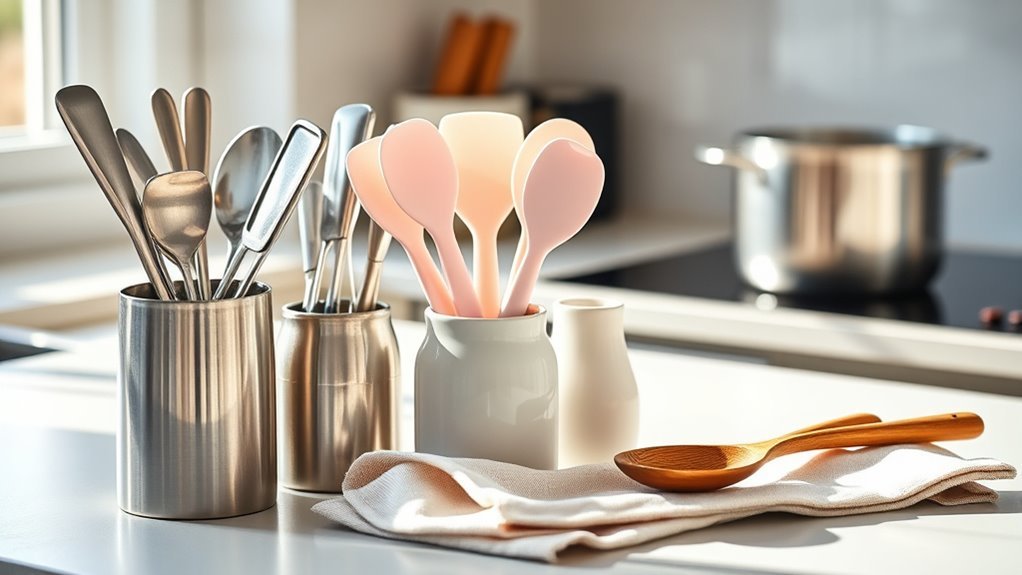
When choosing utensils, pick stainless steel, food‑grade silicone, or hardwood for the safest everyday use: you get distinct, evidence-based benefits.
Stainless steel is non-toxic, non-reactive, rust-resistant, and safe for use with acidic foods without tendencies to leach harmful chemicals.
Food-grade silicone is FDA-approved, BPA-free, heat-resistant (up to about 425°F), and won’t break down under normal cooking temperatures, making it a reliable option for high-heat tasks.
Hardwood utensils, like teak or beech, are gentle on cookware, durable, and often sourced sustainably, offering an eco-friendly alternative that minimizes environmental impact.
Avoid utensils containing PTFE or PFOA coatings, which can release toxic fumes if overheated or damaged.
Choosing these materials reduces chemical exposure in your kitchen and supports a healthier cooking environment.
You’ll gain practical, non-toxic cooking utensils that perform well, last longer, and align with a liberated approach to mindful, safe food preparation.
How to Verify a Utensil Is Non‑Toxic (Labels, Tests, Red Flags)
Start by checking material certifications—like FDA approval for food contact, FSC for wood, or certified BPA‑free markings—to confirm the utensil meets recognized safety standards.
Look for clear safety labels and disclosures about PFAS/PFOS, PTFE/PFOA, or other chemicals, and prefer manufacturers who publish test results or third‑party certifications.
Watch for red flags such as vague “non‑toxic” claims without proof, missing safety info, or consistently poor product reviews that mention chemical smells or staining.
Check Material Certifications
Because labels and certifications are your quickest way to spot safe utensils, learn which marks matter and what they actually mean before you buy.
Check for BPA-free on plastics; BPA can leach into food, so prefer alternatives like food-grade silicone or stainless steel.
For wooden tools, FSC certification signals responsibly sourced wood and fewer harmful treatments—good for an eco-friendly kitchen.
Confirm silicone is 100% food-grade silicone and FDA-approved to avoid fillers that might leach at cooking temperatures.
Look for PFOA-free and PTFE-free on nonstick items to minimize toxic emissions when heated.
With ceramics, insist on lead-free labels to prevent heavy-metal contamination.
These certifications don’t guarantee perfection, but they’re evidence-based markers to help you choose non-toxic materials.
Look For Safety Labels
How can you be sure a utensil won’t leach harmful chemicals into your food? Look for clear, verifiable marks: FDA-approved labels signal compliance with safety standards and absence of known contaminants like PFOA.
Confirm BPA-free certifications so plastics won’t release endocrine disruptors when heated. For flexible tools, choose FDA-compliant silicone that’s heat-resistant and free from fillers; that reduces risk of breakdown at cooking temperatures.
If you prefer wood, verify FSC-certified wood to support sustainable forestry practices and reduce exposure to treated timber.
Be wary of vague “non-toxic options” without documentation—those claims can mask harmful chemicals. Rely on documented certifications and manufacturer test reports to assert safety, protect your body, and claim food-preparation freedom.
Spot Red Flag Signs
When you’re checking a utensil for safety, focus on verifiable marks and material codes rather than marketing buzzwords: look for BPA-free and FDA-approved labels, insist on 100% food‑grade silicone (not vague “silicone blend”) for flexible tools, and avoid plastics with recycling codes 3 (PVC) and 6 (PS) that can leach toxins when heated.
Beyond labels, inspect seams and finishes: low-quality silicone or plastics often smell chemical, feel tacky, or show fillers at cuts.
Prefer natural materials—FSC-certified wood or stainless steel—that resist wear and won’t release harmful chemicals.
Verify claims via manufacturer specs or third-party testing, and reject vague statements like “food safe” without documentation.
Trust concrete certification over branding to liberate your kitchen from hidden risks in cooking utensils.
Best Materials for Everyday Utensils: Stainless Steel, Food‑Grade Silicone, Hardwood
When choosing everyday utensils, you’ll find stainless steel offers durability, non‑reactivity, and easy dishwasher care for long service life.
Food‑grade silicone provides heat resistance up to about 425°F, is BPA‑free, and protects nonstick surfaces.
For wooden tools like teak or beech, you’ll need occasional oiling to prevent warping while benefiting from a sustainable, gentle option for cookware.
Stainless Steel Advantages
Because it won’t react with acidic foods and withstands high heat, stainless steel is a reliable choice for everyday cooking utensils you’ll use for sauces, frying, and sautéing.
You’ll benefit from its non-reactive surface, which prevents leaching with tomatoes or citrus, and from proven heat resistance that handles high temperatures without warping.
Choose 18/10 stainless steel for superior durability and corrosion resistance; it lasts through heavy use and cleaning.
Maintenance is straightforward—dishwasher-safe and easy maintenance reduces bacteria risk and saves time.
Stainless steel’s versatility lets you work across cookware types, including nonstick cookware, cast iron, and carbon steel, so you can cook freely without swapping tools.
Food-Grade Silicone Benefits
Stainless steel works great for high-heat and acidic cooking, but if you need utensils that protect nonstick surfaces and offer more flexibility, food-grade silicone is a strong alternative. You’ll find food-grade silicone is FDA-approved, BPA-free, and non-toxic silicone, so it’s safe to use without harmful leaching. It’s heat-resistant up to 425°F, flexible and non-scratch, preserving nonstick coatings. Because it doesn’t absorb odors or stains and is often dishwasher-safe, it’s easy to clean and enhances kitchen efficiency.
| Feature | Value | Benefit |
|---|---|---|
| Safety | BPA-free, FDA-approved | Reduces chemical risk |
| Heat tolerance | 425°F | Suitable for most cooking |
| Care | Dishwasher-safe, non-absorbent | Maintains hygiene and flavor |
Hardwood Care Tips
Hardwood utensils like teak or beech offer a safe, non-scratch option for everyday cooking and serving, but they need simple care to stay functional and attractive: wash them by hand with warm, soapy water and dry promptly to avoid warping, don’t soak them, and oil them periodically with food-safe mineral oil to prevent drying and cracking.
You’ll maintain their appearance and longevity while avoiding plastics that can leach chemicals. Choose FSC-certified hardwood to support sustainable sourcing and reduce ecological harm.
Follow these concise care actions to keep your tools reliable and free of harmful residues.
- Hand-wash and dry immediately to prevent warping
- Avoid soaking or dishwasher exposure
- Oil regularly with food-safe mineral oil
- Inspect for cracks and sand rough spots
- Prefer FSC hardwood for sustainable, safe cooking
Material‑to‑Cookware Compatibility: Which Utensil for Nonstick, Cast Iron, Enamel
When you match utensils to cookware, choose materials that protect the surface and withstand the cooking conditions. For nonstick cookware and ceramic-coated cookware, use silicone or wooden utensils to avoid scratching coatings that prevent sticking; metal can damage the finish and reduce longevity, potentially exposing underlying layers.
With cast iron, you can use metal utensils because they tolerate high heat and won’t harm the pan’s durability, but avoid tools that gouge or strip the seasoned layer. Enameled cast iron benefits from silicone or wooden utensils to prevent chipping the enamel surface.
For stainless steel cookware, metal utensils are appropriate since they won’t scratch the metal, though you should be mindful that prolonged contact with acidic foods can increase minor leaching.
Across all types, prioritize utensils that minimize wear and the risk of releasing harmful chemicals from compromised coatings, empowering you to cook safely and sustain your cookware’s performance.
Top Picks by Task: Spatulas, Tongs, Spoons, Baking Tools
Pick utensils that match the task and your cookware to reduce wear and keep food safe: silicone spatulas like the Misen Fish Spatula glide under eggs and fish without scratching nonstick surfaces. Silicone-lined tongs such as Gorilla Grip give a secure, high‑heat grip on meats up to ~484°F. One‑piece silicone spoons (e.g., Get It Right) avoid crevices that trap bacteria and tolerate typical stovetop temperatures.
Choose food-grade silicone, stainless steel, or FSC wood depending on surface and heat needs. For baking tools, Le Creuset silicone sets offer removable, heat-resistant tops suited to oven use. Match material to task to free yourself from unnecessary replacements and exposures.
Choose food-safe silicone, stainless steel, or FSC wood by use and heat; opt for oven-ready, removable silicone baking tops.
- Use silicone spatulas for delicate flips on nonstick surfaces.
- Prefer silicone-lined tongs when handling hot meats.
- Select one-piece silicone spoons to minimize bacterial traps.
- Keep stainless steel for high-heat searing and durability.
- Choose heat-resistant baking tools (food-grade silicone) for ovens and batter work.
Care and Maintenance to Keep Utensils Safe and Long‑Lasting
Because routine care prevents early failure and food-safety risks, wash wooden, silicone, and nonstick utensils by hand with warm, soapy water, dry them thoroughly, and oil wooden pieces periodically with food‑safe mineral oil to stop warping or cracking.
You’ll protect finishes and extend service life by avoiding abrasive scrubbers and high heat that degrades materials. Don’t use metal on nonstick surfaces; scratches accelerate coating breakdown and can lead to harmful chemicals leaching.
Store utensils so edges don’t rub—use liners or hang them—to prevent nicks and contamination. Inspect tools regularly: hairline cracks in wood, peeling or flaking on nonstick, or stretched silicone signal replacement.
When you replace, choose durable options and rotate use so no single item suffers constant stress. These straightforward care and maintenance steps keep utensils safe, long-lasting, and ready for daily liberation in the kitchen without introducing unnecessary risk or waste.
What to Avoid: Toxic Coatings, Low‑Quality Plastics, and Misleading Claims
Although a shiny label can be reassuring, don’t assume all kitchen tools are safe: some nonstick coatings (PTFE/PFOA), low‑quality plastics, and deceptively marketed products can leach toxic chemicals or release hazardous fumes when heated.
You should reject items with known toxic coatings and scrutinize labels claiming “non‑toxic” without certification. Low‑quality plastics often contain BPA and other harmful chemicals that migrate into food, especially with heat.
- Avoid cookware with PTFE/PFOA nonstick layers that can emit fumes at high temperatures.
- Skip cheap plastic utensils that lack BPA‑free certification and show melting or warping.
- Demand transparency about chemical treatments on bamboo or composites; formaldehyde adhesives are a red flag.
- Prefer 100% food‑grade silicone over silicone products with plastic fillers or unknown additives.
- Be wary of misleading claims; verify FDA approval, third‑party testing, or clear material disclosures.
Choosing intentionally frees you from hidden exposures and supports safer manufacturing.
Frequently Asked Questions
Which Is Safer, Silicone or Stainless Steel?
Silicone’s generally safer for non stick safety and flexible use, while stainless steel wins for heat resistance comparison and heavy-duty cooking performance.
You’ll weigh silicone durability, chemical leaching risks (both low for food-grade silicone and stainless steel), stainless steel maintenance, eco friendly options, price differences, and your user preferences.
Choose silicone if you value gentleness and lower cost; choose stainless steel if you want longevity, high-heat reliability, and easier recycling.
What Should I Replace My Plastic Utensils With?
Swap plastic with durable bamboo utensils or wooden spoons — they’re practically indestructible for everyday use.
Choose silicone spatulas for heat resistance and non-stick alternatives, and metal whisks or glass cooking tools for stovetop tasks.
Try ceramic knives for precise cuts and reusable straws to ditch disposables.
These eco-friendly options free you from plastic risks while staying practical, evidence-based, and aligned with sustainable, liberated choices in your kitchen.
Which Is Safer, Nylon or Silicone Cooking Utensils?
Silicone is generally safer than nylon for cooking utensils. You’ll value Silicone heat resistance and Silicone BPA free properties, plus Silicone non stick and Silicone stain resistance for durability and clean use.
Nylon offers Nylon durability, Nylon flexibility and Nylon cost effectiveness, but Nylon melting point and Nylon safety concerns arise at high heat.
You’ll weigh trade-offs: choose high-quality silicone to protect your food, cookware and personal freedom in the kitchen.
What Cookware Is 100% Non-Toxic?
Picture a clear glass pot steaming on the stove: yes, glass cookware options, stainless steel advantages, cast iron benefits, ceramic cookware safety and food grade silicone count as 100% non-toxic choices when used correctly.
You’ll prefer non stick alternatives like ceramic or silicone over PTFE-coated pans. Beware copper cookware risks unless lined.
Choose eco friendly materials and follow bamboo utensil care to keep tools safe, durable, and liberating.
Conclusion
Think of your kitchen as a small garden: choose tools like stainless steel, food‑grade silicone, and hardwood—the sturdy seeds that won’t leach, react, or fail—and tend them with care. Inspect, clean, and replace worn pieces so contaminants don’t take root. Avoid cheap coated or uncertified plastics that bloom problems under heat. By selecting durable, tested materials and maintaining them, you’ll harvest safer meals and fewer risks for years to come.

