
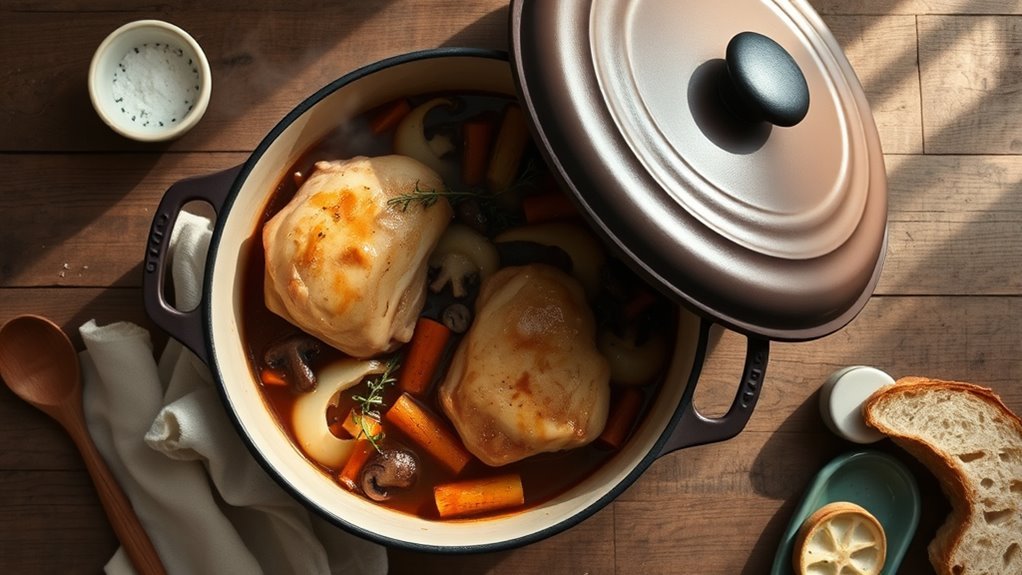
A braiser is more than just a cooking vessel; it’s a gateway to mouthwatering, tender dishes. Whether you’re browning meats or simmering a hearty stew, this versatile tool shines in various cooking methods. Understanding the unique qualities of a braiser can elevate your culinary skills. Want to discover how to make the most of this essential kitchen tool? Let’s explore the ins and outs of braising and the tips to master your braiser.
Braisers vs. Dutch Ovens: What’s the Difference and Why It Matters?
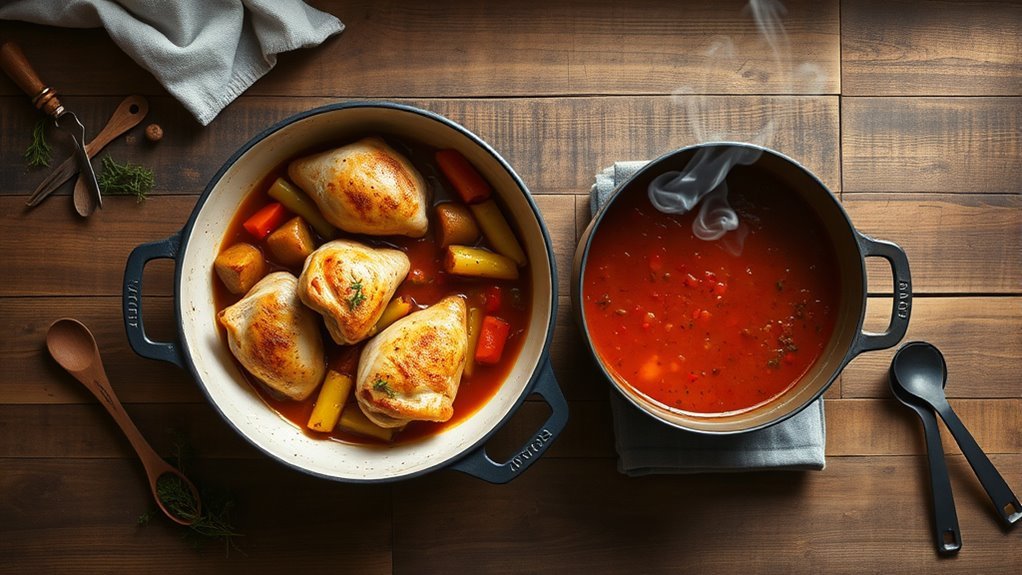
When choosing between a braiser and a Dutch oven, do you really know what sets them apart? A braising pan is shallower and wider, making it perfect for browning and sautéing. Its design promotes better heat distribution and evaporation, leading to richer flavors.
On the other hand, Dutch ovens are deeper, ideal for slow-cooking and stewing tougher cuts of meat while retaining moisture.
If you love one-pot meals that require that beautiful caramelization before transferring to the oven, a braiser fits the bill. But if you often find yourself making hearty stews or dishes needing long cooking times, Dutch ovens are essential.
Both can be used on the stovetop and in the oven, but understanding their unique shapes and depths can elevate your cooking game. Knowing the difference not only enhances your culinary skills but also empowers your kitchen creativity.
Delicious Recipes to Try in Your Braiser
Your braiser is a game-changer for creating flavorful one-pot meals that warm the soul.
Imagine hearty braised dishes, like tender short ribs, simmering in a rich sauce that enhances every bite.
Let’s explore some delicious recipes that showcase the versatility and depth your braiser can bring to the table.
Flavorful One-Pot Meals
Braising transforms simple ingredients into rich, comforting meals that warm the soul. Your braising pan is perfect for creating flavorful one-pot meals like hearty stews, where the wide, shallow design guarantees even browning and easy access to all ingredients.
Imagine roasting tender meats alongside caramelized vegetables, enhancing every bite. One-pot pasta dishes shine here too; just toss in your pasta, sauce, and seasonings for a beautifully cohesive flavor.
Layering ingredients for casseroles becomes a breeze, delivering that deliciously crisp top you crave. The braiser’s versatility accommodates everything from curries to risottos, making it an essential kitchen companion.
Embrace the joy of effortless cooking and savor the delightful dishes you can create in your braiser!
Hearty Braised Dishes
Indulging in hearty braised dishes transforms a simple meal into a culinary adventure. Your braising pan or cast iron Dutch oven is perfect for creating satisfying flavors and tender textures.
Imagine the rich aromas of coq au vin wafting through your kitchen or the deep flavors of beef bourguignon as it simmers. With its shallow design, the braiser enhances browning and moisture retention, making every bite a delight.
Here are some delicious dishes to try:
- Coq au vin
- Beef bourguignon
- Braised short ribs
- Braised cabbage
- Ratatouille
These recipes not only showcase the versatility of your braiser but also promise effortless cleanup, allowing you to savor each moment. Immerse yourself in these culinary creations and elevate your dining experience!
Essential Braising Techniques for Your Braiser
Here’s a handy table to keep your techniques in mind:
| Technique | Purpose | Tips |
|---|---|---|
| Browning First | Adds depth of flavor | Use high heat |
| Deglazing | Enhances sauce richness | Use wine or broth |
| Layering Ingredients | Guarantees even cooking | Tough veggies first |
| Low and Slow Cooking | Tenderizes tough cuts | Maintain low temperature |
How to Care for Your Braiser for Longevity
To guarantee your braiser stands the test of time, proper care is essential. Your trusty braising pan deserves some TLC to keep it in peak condition. Here are some key tips to facilitate longevity:
Proper care is crucial for your braiser’s longevity, ensuring it remains a reliable kitchen companion for years to come.
- Always let your braiser cool down before washing to avoid thermal shock.
- Clean with mild dish soap and a soft sponge; steer clear of abrasive pads.
- For stubborn, stuck-on food, soak in warm, soapy water before gently scrubbing.
- If it’s cast iron, season the base with a thin layer of oil after each use to maintain its non-stick properties and prevent rust.
- Store your braiser with a paper towel or cloth between the lid and pot to absorb moisture and eliminate odors.
Avoid These Common Mistakes When Using Your Braiser
While braising can elevate your culinary creations, common mistakes can hinder the process and diminish flavor. Start by always preheating your braising pan, like a Le Creuset dutch oven, to guarantee even cooking and perfect browning.
Avoid overcrowding the pan; too much food traps steam, leading to sogginess instead of the beautiful caramelization you crave.
Pay close attention to liquid levels, as too little can dry out your ingredients, while too much dilutes flavors. Remember, low and slow is the name of the game—using high heat can cause sticking and burning.
Finally, never skip the deglazing step; those browned bits are flavor gold! By sidestepping these pitfalls, you’ll reveal the full potential of your braiser, creating dishes that are rich, complex, and utterly satisfying.
When to Choose a Braiser vs. Other Cookware?
When you’re deciding between a braiser and other cookware, think about the cooking techniques you’ll be using.
A braiser shines with shallow cooking methods, while Dutch ovens excel at deep stews.
Plus, if you’re short on space, the braiser’s wide surface area makes it perfect for one-pot meals and easy serving.
Ideal Cooking Techniques
Choosing the right cookware can elevate your culinary experience, especially when it comes to braising. A braising pan is often the better choice for various cooking techniques. Its wide and shallow design allows for browning meats and sautéing vegetables effortlessly.
Plus, it’s perfect for one-pot meals, making serving a breeze.
Consider these techniques for your braiser:
- Browning: Achieve a rich, flavorful crust on meats.
- Deglazing: Easily scrape up fond for delicious sauces.
- Sautéing: Perfect for mixing ingredients before slow cooking.
- Roasting: Create caramelized veggies and meats at higher temps.
- Precise cooking: Ideal for risottos and creamy pasta dishes.
With a braiser, you’re set for flavorful, vibrant meals!
Space and Storage Needs
A braiser isn’t just a versatile cooking tool; it’s also a savvy choice for those mindful of space and storage in their kitchens. Its wide and shallow design makes it perfect for tasks like braising, browning, and sautéing—challenges often faced with deeper cookware like Dutch ovens.
When you consider your space and storage needs, a braiser can replace multiple pans, serving as both a pot for stews and a stylish serving dish. With capacities from 2.75 to 7 quarts, it’s ideal for small to medium gatherings without hogging cupboard space.
Plus, its stovetop and oven versatility means you can minimize your cookware collection while enjoying even heat distribution and easy access to your delicious creations.
Frequently Asked Questions
What Can You Cook in a Braiser?
You can cook a variety of delicious dishes in a braiser! Think hearty stews, flavorful casseroles, and tender braised meats.
It’s perfect for slow cooking, letting those rich flavors meld beautifully. You’ll love preparing one-pot meals like paella or risotto, too.
Plus, you can roast veggies and meats to achieve that perfect caramelization.
For a sweet twist, try baking bread pudding or pasta dishes. The possibilities are endless!
What Is the Purpose of a Braiser?
Ever wondered why a braiser is a kitchen essential? A braiser’s purpose centers on its versatility, allowing you to explore various cooking techniques like browning and braising.
You’ll enjoy braiser benefits like even heat distribution and moisture retention, perfect for creating rich stews or savory casseroles.
With its sturdy design, you can seamlessly shift from stovetop to oven, liberating your culinary creativity and making every meal a delightful experience.
Do You Really Need a Braiser?
You don’t necessarily need a braiser, but its benefits can elevate your cooking game.
If you love experimenting with cooking versatility, a braiser’s shallow design offers better heat distribution and easier access to your dishes. It’s perfect for braising or roasting, especially when serving multiple diners.
If you find yourself craving a shallower pan for one-pot meals, consider adding a braiser to your kitchen—it just might become your new favorite tool!
What Is the Difference Between a Pan and a Braiser?
A braiser differs from a pan in its design and functionality.
While pans excel at high-heat frying and sautéing, braisers, often made of cast iron, shine in slow-cooking techniques like braising and stewing.
Their wider, shallower shape promotes even heat distribution and moisture retention, perfect for tenderizing meats.
Conclusion
Whether you’re crafting a cozy stew or a vibrant pasta dish, a braiser transforms simple ingredients into heartwarming meals. It stands in stark contrast to other cookware, offering both versatility and depth that elevate your cooking. Imagine the rich aromas wafting through your kitchen, inviting loved ones to gather around the table. Choosing a braiser means embracing warmth and flavor, turning everyday cooking into a cherished experience. So, immerse yourself and let your braiser work its magic!