
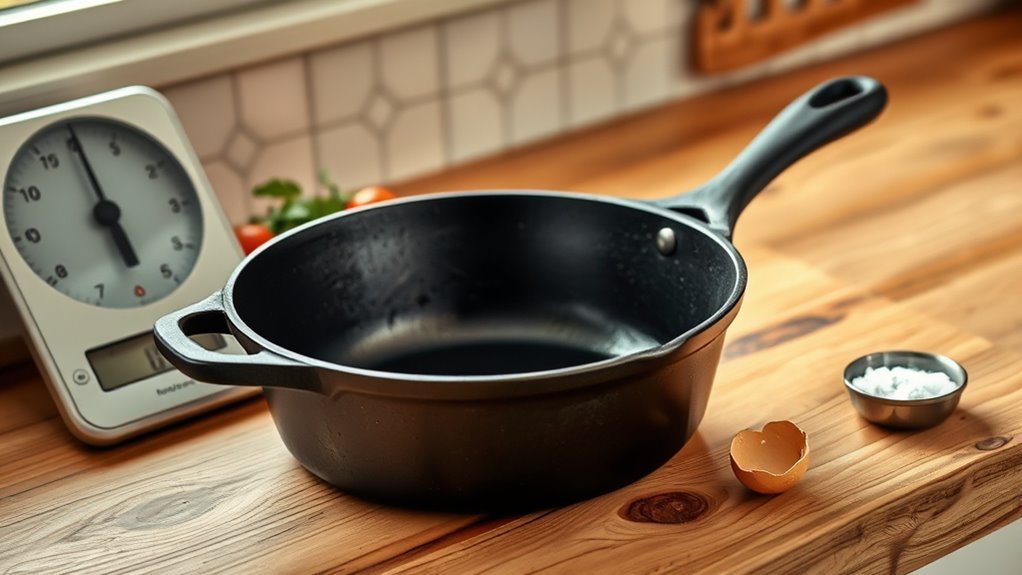
If you cook with cast iron, you’ll notice the weight—most skillets run 2–10 pounds and Dutch ovens can top 12 pounds—because that mass drives heat retention, stability, and even searing. You’ll also pick up a bit of dietary iron from food, which can be helpful or important to monitor. I’ll outline the typical weights by size, how weight affects performance and safety, and practical tips for handling and care.
Typical Cast‑Iron Pan Weights : Quick Answer and Examples?
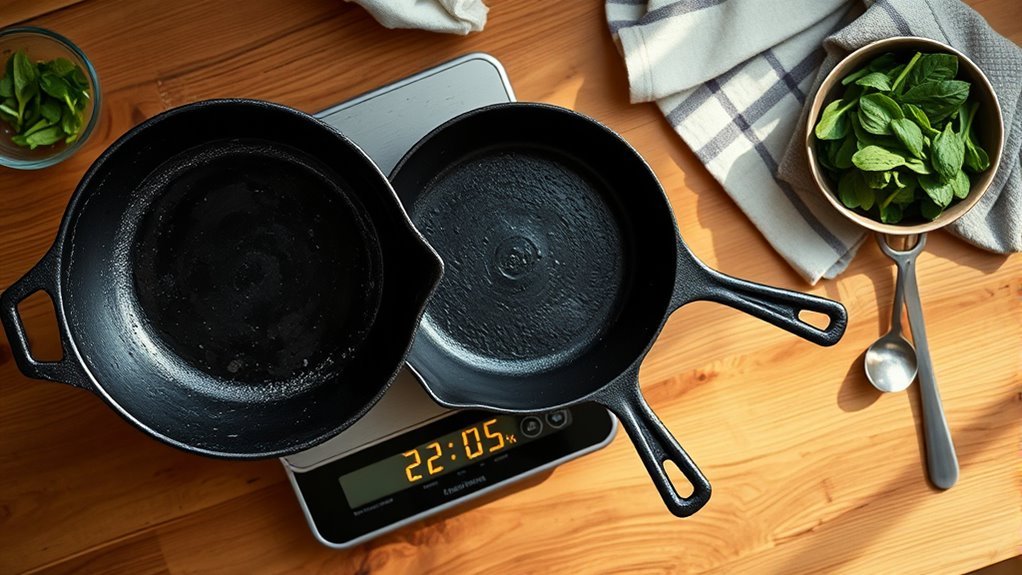
Most cast-iron pans fall in the 2–10 pound range, so you can expect a typical 10.25-inch skillet to weigh about 4–5 pounds and a 12-inch skillet about 6–8 pounds.
Most cast-iron skillets weigh 2–10 pounds; expect ~4–5 lbs for 10.25″ and ~6–8 lbs for 12″.
You’ll find smaller, lighter options around 2–4 pounds if you want easier handling; some makers like Mt. Penn Stove Works aim for that market with 3–4 pound pieces.
Larger cookware jumps the scale: heavy-duty 8‑quart Dutch ovens can weigh 12 pounds or more, so plan for heft when you lift or store them.
That extra weight isn’t just bulk — it delivers superior heat retention and even browning, which frees you from constant temperature fiddling.
When choosing cast iron, balance mobility and cooking performance: pick lighter pans if you value maneuverability, heavier pans if you want stable heat.
Weigh the trade-offs, and choose pieces that fit your strength, storage, and cooking goals so you cook with confidence and freedom.
Cast‑Iron Weight by Size and Style (Skillets, Griddles, Dutch Ovens)
You’ve seen general weight ranges; now let’s look at how size and style change what you’ll actually lift and use. Your choice of skillet, griddle, or Dutch oven determines cast iron weight and how freely you cook. A 10.25″ skillet runs about 4.5–5.5 lbs — light enough for daily use. Reversible griddles around 16.75″ often sit between 5–7 lbs, giving surface area without excessive heft. Small Dutch ovens (Lodge 4‑quart) weigh ≈8 lbs; larger deep camp 8‑quart pieces can be ~12 lbs, built for feeding many.
| Cookware Type | Typical Weight |
|---|---|
| 10.25″ skillet | 4.5–5.5 lbs |
| 16.75″ griddle | 5–7 lbs |
| Dutch oven (4–8 qt) | 8–12 lbs |
These numbers are practical benchmarks. Use them to match your strength, storage, and mobility needs while embracing the freedom that durable, predictable cast iron weight gives you in the kitchen.
Why Weight Matters: Heat Retention, Stability, and Results
When you pick up a cast iron pan, its weight directly affects how steadily it sits on the burner and how long it holds heat.
Heavier pans store and distribute heat more evenly, which helps with consistent searing and slow-cooking results.
Lighter options are easier to handle but may require more active temperature management to avoid hot spots and uneven cooking.
Heat Retention And Evenness
Because cast iron packs significant thermal mass, its weight directly improves heat retention and surface stability, so you’ll get more even cooking and fewer hot spots than with lighter pans. You’ll notice consistent searing and reliable oven performance because a 3–8 lb pan holds temperature through high heat and ingredient cooling. Seasoning boosts nonstick behavior and helps distribute that retained heat. Use heavier pans when you want predictable results and freedom from constant adjustment.
| Pan Weight | Typical Use | Effect on Cooking |
|---|---|---|
| 3–4 lb | Small tasks | Good heat retention |
| 4–6 lb | Everyday | Balanced evenness |
| 6–8 lb | Searing/baking | Superior stability |
| 8+ lb | Professional | Maximum retention |
Choose weight for control and liberation in the kitchen.
Stability During Cooking
The same mass that gives cast iron its heat-holding power also keeps it steady under your hands: a 5–12 lb pan resists tipping, slides less on the burner, and stays firmly seated when you stir, flip, or transfer to the oven.
That stability during cooking frees you to work confidently: heavy pans distribute heat evenly, cut hot spots, and build sears that deepen flavor. As seasoning builds, performance and steadiness improve, so your tool becomes more reliable.
- Even heat distribution reduces guessing and wasted effort.
- Weight lowers tipping risk when you agitate or flip food.
- Friction and mass minimize sliding on smooth stovetops.
- Consistent searing and baking enhance predictable results.
Choose weight for control and liberation in the kitchen.
What Weight Is Best for Searing, Baking, or Camping?
Wondering which cast iron weight fits your cooking style? For searing, aim for a pan around 5 to 7.99 lbs — that weight gives excellent heat retention and even contact for a reliable crust.
If you bake bread, pies, or roast regularly, choose heavier cookware in the 8 to 11.99 lbs range to stabilize oven temperatures and produce consistent textures.
If you hike or travel, pick lightweight pieces under 5 lbs to keep your pack manageable while still enjoying cast iron’s benefits. A 3 to 4.99 lbs pan is the most versatile weight: it sears well, performs adequately in the oven, and is easier to carry than full-size skillets.
Match weight to purpose rather than impulse. Heavier pans excel at holding heat; lighter pans improve maneuverability. By selecting the appropriate weight for searing, baking, or camping, you free yourself to cook confidently in any setting without compromising results.
How Weight Affects Handling, Ergonomics, and Kitchen Safety
Although heavier cast iron holds heat better and steadies pans on the stovetop, it also increases the effort required to lift, tilt, and transfer food—so you should match pan weight to your strength and tasks. You’ll find 1.5–8 lb ranges change how long you can cook without fatigue and how confidently you maneuver pans. Choose a pan whose weight empowers you rather than limits you.
- Balance: a well-balanced pan feels lighter and reduces wrist strain.
- Handle ergonomics: contoured or extended handles cut leverage effort and improve control.
- Two-handed technique: use a second hand or heatproof holder for heavy pans to prevent slips.
- Stability vs mobility: heavier pans resist tipping but can be risky when lifting; pick weight by task.
Adopt practical habits—lift with knees, use mitts, and store at waist height—to keep cooking liberating and safe while respecting the tradeoffs of weight.
Iron Transfer & Safety: Does Cooking Add Dietary Iron?
When you cook in cast iron, measurable iron transfers into food—often about 1–6 mg per serving depending on acidity and cooking time—so it can meaningfully boost dietary iron.
That’s generally helpful if you’re low on iron, but if you have a condition like hemochromatosis you should monitor intake and consult your clinician.
Pairing iron-rich foods cooked in cast iron with vitamin C can improve the iron your body actually absorbs.
Dietary Iron Contribution
Cooking in a cast iron pan can add measurable iron to your food, especially with acidic ingredients like tomatoes and longer cooking times. Newer pans tend to leach more iron than well‑seasoned or older ones.
You’ll gain dietary iron contribution that can be meaningful: studies show up to ~20% of an adult’s daily need from a single meal in some cases. That makes cast iron a practical tool for liberation from deficiency, while seasoning keeps cooking smooth without blocking iron transfer.
Be mindful of what you cook and how long.
- Acidic foods (tomato, vinegar) increase iron transfer.
- Longer simmering raises iron absorption into food.
- Newer pans leach more than well‑used ones.
- Seasoning doesn’t stop iron contribution.
Safety For Iron-Sensitive
Having noted how acidic, long-cooked meals and newer pans boost iron transfer, you should consider whether that extra iron matters for your health.
If you’re iron-sensitive or have hemochromatosis, even modest iron transfer can raise intake—studies show cast iron cooking can supply up to about 20% of daily needs in some meals.
You’ll want to monitor total dietary iron, avoid frequently cooking highly acidic dishes in new or poorly seasoned pans, and prefer well-seasoned, older cast iron to reduce leaching.
Regular maintenance—proper seasoning, drying, and occasional re-seasoning—limits iron transfer.
Consult your clinician for personalized guidance and consider alternative cookware (stainless steel, enameled cast iron) if you need strict control.
Take these steps to protect your wellbeing and autonomy.
Cast Iron vs. Steel and Other Cookware : Weight Comparison
Pick the pan that suits your cooking: cast iron pieces usually weigh between about 3 and 8 pounds, making them noticeably heavier than most steel pans, which often come in under 3 pounds.
When you compare cast iron vs. steel, weight influences heat behavior and how you move in the kitchen. Heavier cast iron holds heat and steadies searing; lighter steel gives agility and less strain. Choose with intent to free your cooking, not limit it.
- Heat retention: cast iron’s mass stores heat for steady temperatures and slow cooking.
- Maneuverability: steel’s lower weight lets you flip, tilt, and serve with ease.
- Maintenance: cast iron needs seasoning and mindful care; many steels resist rust more readily.
- Personal fit: pick weight based on strength, stove type, and cooking goals.
Weigh practical trade-offs: durability and thermal performance versus mobility and lower upkeep, then claim the cookware that liberates your style.
Choose the Right Weight: Recommendations by Cooking Style
Decide what you cook most and match the pan’s mass to those tasks: choose lightweight cast iron (about 1.5–2.99 lbs for very nimble work or 3–4.99 lbs for quick stovetop meals) if you flip, sauté, or want less strain, and go with mid-to-heavy pans (5–7.99 lbs or up to ~12 lbs for specialty skillets) when you need steady heat for searing, slow braises, or baking.
If you crave freedom to move and experiment, prioritize a lightweight option: 1.5–2.99 lbs gives agility without sacrificing basic performance, while 3–4.99 lbs suits everyday rapid stovetop tasks.
Choose heavier pans when you want predictable heat and deep flavor development; 5–7.99 lbs retains heat for consistent sears and braises, and larger specialty skillets approaching 12 lbs excel for oven work.
Match weight to technique, not aesthetics: pick what enables you to cook confidently, without strain, and know that each range serves a distinct purpose in a liberated, capable kitchen.
Lifting, Storing, and Transporting Heavy Cast‑Iron Safely
You matched your pan’s weight to how you cook, but heavier cast-iron brings practical handling needs you should plan for.
When lifting, use both hands and engage your legs to protect your back; pans can weigh 5–10+ pounds and imbalance increases injury risk.
Lift heavy pans with both hands and bend your knees—use your legs, not your back, to avoid injury.
Don’t set heavy pans on weak shelves — choose a dedicated shelf or rack rated for the load and keep retrieval clear of clutter.
When transporting hot or raw pans, wrap them in a towel or use a pot holder to prevent burns and scratches to other items.
Secure the pan in transit so it can’t topple.
- Use two hands and bend your knees — lift with legs, not back.
- Store on a sturdy, dedicated shelf or wall rack that supports the weight.
- Wrap hot pans in towels or pot holders before moving or packing.
- Avoid unstable surfaces; stow where it won’t be knocked over.
These steps free you to cook boldly while minimizing risk.
Seasoning & Care Tips That Keep Any Cast‑Iron Performing
Because a proper seasoning is a thin, baked-on layer of polymerized oil, keep your routine simple and consistent: after cooking, clean with hot water and a stiff brush (skip soap unless you’ll reseason), dry thoroughly, then rub a light coat of a high‑smoke‑point oil and warm the pan briefly to lock in protection.
You’ll build a durable, natural nonstick surface that improves with use and resists rust. Use oils like flaxseed or grapeseed for best polymerization; they produce a harder, more reliable seasoning over time.
Avoid sudden temperature shocks — don’t plunge a red‑hot pan into cold water — to prevent stress and cracking. If food sticks or dulls, reseason by stripping loose residue, applying thin oil layers, and heating until the oil polymerizes.
Store in a dry place; a paper towel between stacked pans absorbs moisture and protects the finish. These straightforward, evidence‑based steps free you from costly replacements and keep your cast‑iron performing for decades.
Frequently Asked Questions
How Much Is a 10 Inch Cast Iron Pan Worth?
A 10-inch cast iron pan is worth about $30–$80, with many solid options near $35.
You’ll use Value Comparison: cheap cast iron gives basic performance; known brands like Lodge offer reliable quality and resale value.
You’ll consider weight, condition, and seasoning—well-maintained pans can gain worth over time.
If you want lasting freedom in the kitchen, invest in a mid-range or vintage piece and keep it cared for.
How Heavy Is a 10 Inch Lodge Cast Iron Skillet?
Sturdy, steady, satisfying — a 10-inch Lodge skillet weighs about 5 pounds, so you’ll feel its heft but still handle it. You’ll use that weight for reliable heat retention and even browning during various cooking techniques; you’ll master searing, frying, and baking with confidence.
It’s pre-seasoned, practical, and durable, so you’ll invest in lasting liberation from disposable cookware and enjoy dependable performance for generations.
Is Cast Iron Heavier Than Steel?
Yes — cast iron is generally heavier than steel.
Weight comparison shows cast iron’s density makes skillets (like a 10″ at ~4.5–6 lb) noticeably heavier than comparable steel pans (~2–4 lb).
You’ll get superior heat retention and stability, freeing you to cook evenly and confidently, though you’ll trade some agility.
Choose based on the liberation you want: steady, even results with cast iron or nimble handling with steel.
How Much Does a 20 Inch Cast Iron Skillet Weigh?
A 20-inch cast iron skillet typically weighs 10–15 pounds, so you’ll feel its mass instantly.
Picture holding a 12-pound pan—your wrists and weight distribution take the strain. You’ll appreciate its heat retention and durability, but you’ll also plan lifts and storage to avoid injury.
Use two hands, sturdy handles, and a stable surface. With care, that heft frees you from frequent replacements and delivers dependable cooking performance.
Conclusion
You’ll find cast iron ranges from a few pounds for small skillets to 10+ pounds for Dutch ovens, and that heft gives you reliable heat retention, searing power, and even baking—plus a small iron boost to your diet. Pick lighter pans for camping and heavier ones for steady stovetop work, and use proper lifting and storage to avoid injury. Keep them seasoned and dry, and you’ll have cookware that’ll outlast your smartphone.
