
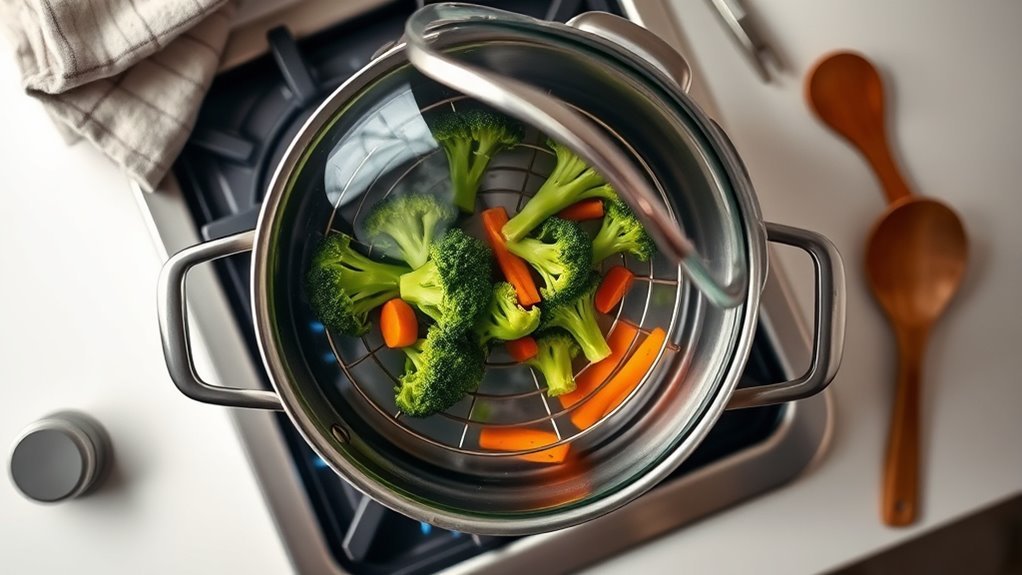
Have you ever wondered how to capture the vibrant colors and nutrients in your vegetables? Steaming in a pot is an easy, healthy way to elevate your cooking. With just a few simple steps, you can prepare delicious, tender veggies without losing their natural goodness. But before you get started, there are some essential tools and techniques you need to know. Let’s explore the basics that’ll transform your meals.
Steaming Basics: What You Need to Get Started
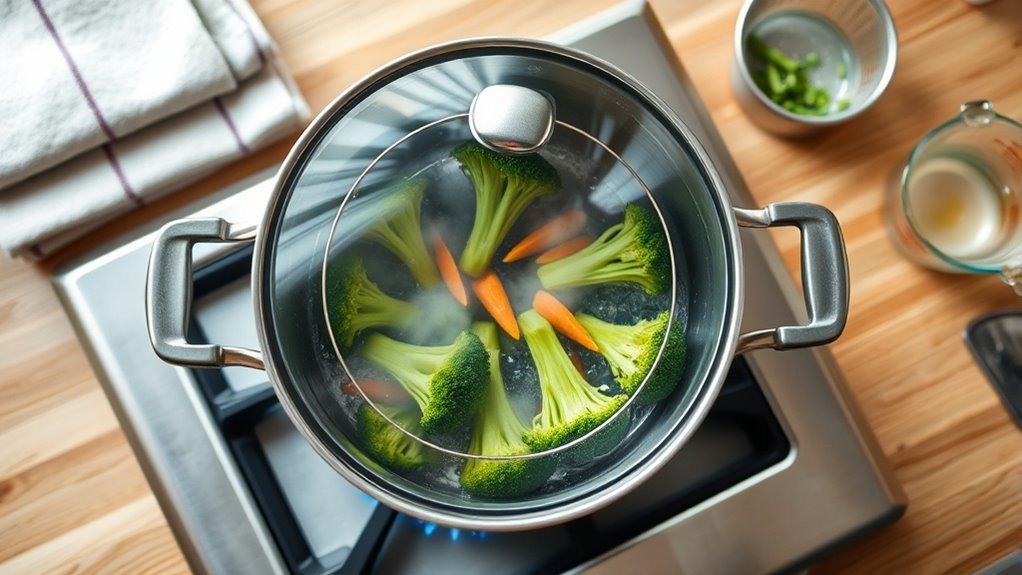
Steaming is a simple and healthy cooking method that preserves the vibrant colors and nutrients of your food.
Steaming is a healthy cooking technique that keeps your food’s colors bright and nutrients intact.
To get started, gather a pot that’s deep enough to hold a heat-proof plate or steamer basket without the food touching the water in the pot. Fill the pot with about 1-2 inches of water, ensuring you monitor the water level to avoid it running dry.
Choose vegetables cut into uniform sizes for even cooking, and arrange them in a single layer to allow steam to circulate freely. Place your heat-proof plate or steamer basket in the pot, cover it with a tight-fitting lid, and bring it to a simmer.
As the steam rises, it’ll gently cook your food, retaining flavor and nutrients. With this setup, you’re well on your way to enjoying delicious, perfectly steamed dishes that empower your culinary creativity.
Setting Up Your Pot for Steaming
To set up your pot for steaming, start by adding 1-2 inches of water, just enough to create steam without touching your food.
Next, place a steamer basket or heat-proof plate above the water, ensuring it stays elevated.
Bring the water to a gentle simmer before covering the pot with a tight lid to lock in that essential steam for even cooking.
Preparing Your Pot
Setting the stage for a successful steaming experience starts with the right pot.
Begin by filling your pot with 1-2 inches of clean water, guaranteeing it doesn’t touch the food resting above. Choose a pot that comfortably fits your steamer basket or heat-proof plate, leaving at least half an inch of space for steam circulation.
Once you’ve secured your steamer basket, place it above the water, making sure it’s stable and not submerged. Bring the water to a gentle boil before adding your food, as this guarantees effective steaming.
Finally, cover the pot with a tight-fitting lid to trap the steam, maintaining consistent cooking temperatures. With this setup, you’re ready to enjoy perfectly steamed delights!
Water Level Importance
While you might think any water level will do, the right amount is essential for effective steaming. Aim for about 1 to 2 inches of water in your pot—just enough to create steam without submerging your food.
If you’re using a steamer basket, make sure it sits snugly above the waterline, allowing steam to circulate freely. As the water heats and starts boiling, keep an eye on the water level. You don’t want it to evaporate completely, as that could lead to burning or overcooking.
Adjust the water based on your pot size and cooking time to maintain consistent steam. This attention to detail will elevate your steaming game, ensuring perfectly cooked meals every time.
Preparing Your Ingredients for Steaming
Before you start steaming, it’s essential to select fresh, vibrant vegetables that will hold their nutrients and texture.
Once you’ve got your produce, wash them thoroughly and cut larger pieces into uniform chunks for even cooking.
A light seasoning can enhance their natural flavors, so don’t hesitate to add a pinch of your favorite herbs!
Selecting Fresh Vegetables
Selecting fresh vegetables is essential for achieving the best flavor and nutritional value in your steamed dishes. Look for vibrant colors and firm textures, as these qualities signal peak freshness.
Don’t forget to wash your vegetables thoroughly under cool running water to remove any dirt or pesticides. For leafy greens, discard any wilted or yellowed leaves to guarantee you’re steaming only the freshest parts.
When it comes to larger vegetables like carrots and potatoes, cut them into uniform sizes to promote even cooking.
Embrace seasonal vegetables, as they’re often harvested at their peak, yielding the most robust flavors and nutrients.
Cutting for Even Cooking
Cutting your vegetables into uniform pieces is key for achieving perfectly steamed results. Aim for sizes around 1 to 2 inches to guarantee even cooking; this way, you won’t have some pieces overcooked while others remain crunchy.
For leafy greens like spinach or kale, remove those tough stems and cut the leaves into similar-sized pieces to keep cooking times consistent. Always wash your vegetables thoroughly to eliminate dirt and pesticides before you cut.
Remember, denser vegetables like carrots should be chopped smaller than softer ones like broccoli for ideal steaming.
Finally, don’t forget to season your ingredients beforehand; just be careful not to add too much moisture, or you could end up with soggy veggies. Enjoy your culinary freedom!
Prepping for Flavor Enhancement
Once your vegetables are cut and ready to go, it’s time to elevate their flavors. Prepping your ingredients properly guarantees you’ll enjoy a delicious, vibrant meal. Here’s how to enhance flavors before you steam a wide variety of foods:
- Wash your vegetables thoroughly to remove dirt and pesticides.
- Cut them into uniform pieces for even cooking.
- Season ingredients lightly with salt, pepper, or herbs to complement their natural tastes.
- For firmer veggies, like carrots or potatoes, slice them smaller for a tender outcome.
- If you’re using fish or meat, marinate them beforehand to infuse extra flavor while keeping them moist.
Remember to verify the water level is just right—enough to create steam but not too high to submerge your food!
Steam Your Food to Perfection
Steaming your food is an art that transforms simple ingredients into vibrant, flavorful dishes. Start by adding a small amount of water—about 1-2 inches—into your pot, then bring it to a gentle simmer.
Place your food in a steamer basket or on a heat-proof plate, ensuring you arrange vegetables in a single layer for even steam circulation. Cover the pot with a tight-fitting lid to trap the steam, and watch as your meals come to life.
Cooking times vary: leafy greens only need 2-3 minutes, while denser veggies like carrots may take 10-15 minutes. Remember to monitor the water level; running dry can disrupt the steaming process.
Keeping the lid closed as much as possible helps maintain steam temperature, ensuring your dishes turn out perfectly cooked. With this technique, you can steam a wide variety of foods that aren’t only healthy but bursting with flavor.
Don’t Make These Common Steaming Mistakes
While the idea of steaming your food might seem straightforward, it’s easy to fall into common pitfalls that can ruin your dish. Avoiding these mistakes will help you achieve that desired texture without losing flavor or nutrients.
- Don’t use too much water; excess can turn your steam into a boil.
- Keep an eye on your pot—if it runs dry, you risk damaging it.
- Avoid overcrowding the steamer; a single layer allows steam to circulate evenly.
- Lift the lid sparingly; each peek releases steam and prolongs cooking time.
- Use low to medium heat for gentle steaming; high heat can leave your food water-logged.
Flavor Tips for Steamed Dishes
To elevate the flavors of your steamed dishes, consider the simple yet effective enhancements that can transform ordinary vegetables into a culinary delight.
First, add a small amount of salt to the steaming water; this creates a subtle infusion that enhances taste.
Next, place ingredients like fresh herbs or spices directly onto the vegetables before steaming—think dill, thyme, or garlic—to boost aroma and flavor.
For a richer profile, steam without plain water; instead, infuse the water with broth or add a slice of lemon or a splash of vinegar to brighten the natural taste.
Finally, drizzle a dash of soy sauce or sesame oil over your veggies after steaming for an umami boost.
With these flavor tips, you can enjoy a wide variety of foods that sing with deliciousness, transforming each meal into a vibrant experience.
Frequently Asked Questions
How Do You Steam in a Pot?
To steam in a pot, fill it with 1-2 inches of water and use a steamer basket to elevate your vegetables.
Bring the water to a gentle simmer and cover with a lid.
For perfect steaming times, aim for 5-6 minutes for broccoli or 10-15 for carrots.
Enhance flavors with herbs or spices, but avoid common mistakes like letting the pot run dry.
Enjoy vibrant, crisp-tender veggies bursting with taste!
How Much Water Do You Put in a Pot When Steaming?
When steaming vegetables, you’ll want to fill your pot with about 1 to 2 inches of water, depending on pot size.
Keep the water at a low temperature—just enough to create steam without boiling. Ideally, use a lid that fits snugly to trap the steam.
Monitor steaming times closely; most veggies need only a few minutes.
This method guarantees you liberate their vibrant flavors while preserving nutrients beautifully.
Enjoy your healthy creations!
What Are Two Rules for Steaming?
When it comes to steaming, you’ll want to follow two key rules. First, choose a pot that fits your steaming techniques—size matters!
Next, prepare your vegetables in a single layer for even cooking. Remember, timing adjustments are essential; keep an eye on your food to avoid mushiness.
With the right pot selection and thoughtful vegetable preparation, you’ll enhance flavors and achieve that perfect tender crunch. You’ll be cooking with ease before you know it!
Do You Leave the Vent Open When Steaming in an Instant Pot?
No, you shouldn’t leave the vent open when steaming in an Instant Pot.
Keeping the vent closed guarantees proper pressure settings, trapping steam for effective cooking. If the vent’s open, you risk longer cooking times and uneven food preparation.
Always check your recipe for specific cooking times.
After steaming, you can choose steam release methods—natural or quick—depending on how you want your food’s texture.
Enjoy the liberation of perfectly steamed meals!
Conclusion
Steaming is not just a cooking method; it’s a way to preserve the vibrant nutrients in your food. Did you know that steamed vegetables can retain up to 90% of their vitamins, compared to boiling, which can leach out 50%? By mastering this technique, you’re not only enhancing flavors but also boosting your meals’ health benefits. So, grab your pot and steamer basket—delicious, nutritious dishes are just a steam away! Enjoy the vibrant colors and flavors!
