
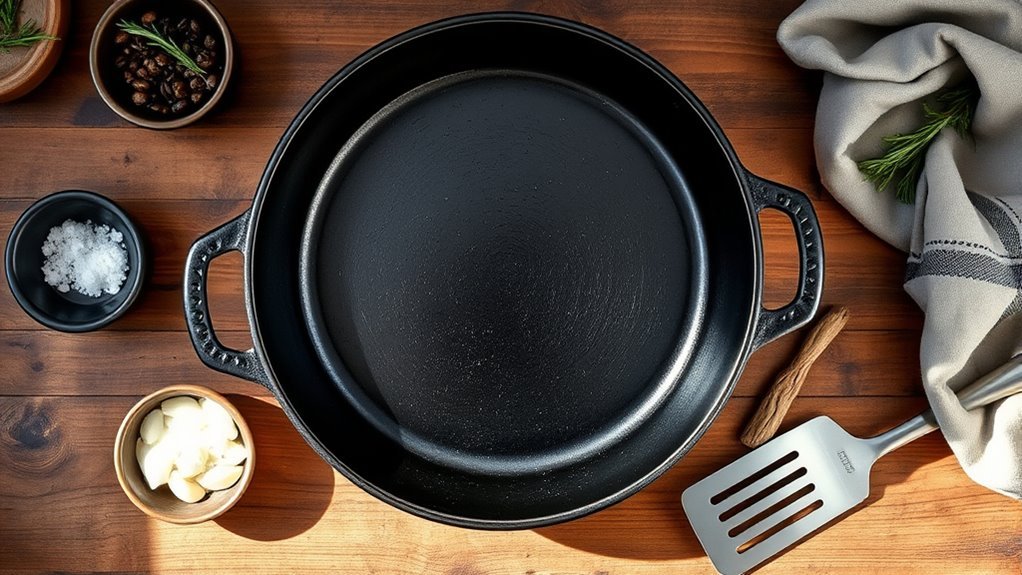
A cast iron pan is one of the most useful tools you can keep in your kitchen. Its sturdy build makes it great for cooking everything from crispy potatoes to golden cornbread. But getting good results takes more than putting it over a hot burner. Understanding how cast iron works, when to use it, and how to care for it will help you make the most of this classic cookware.
Quick Answer
A cast iron pan is a heavy skillet made by pouring molten iron into a mold. It holds heat well, making it useful for searing, frying, and baking. A thin layer of baked-on oil, called seasoning, helps food release and prevents rust. Wash it by hand, dry it promptly, and oil lightly.
What Is a Cast Iron Pan and Why Use It?
A cast iron pan is a thick, durable piece of cookware made primarily from iron. Unlike pans built from several bonded layers of metal, a traditional cast iron skillet is formed by pouring molten iron into a mold and allowing it to cool.
This manufacturing method, known as sand casting, produces a strong cooking vessel with thick walls and a solid base.
The pan’s most useful feature is its ability to retain heat. Once properly heated, it stays hot when you add food. This helps create a browned crust on steaks, burgers, and vegetables.
You can also move most traditional cast iron skillets from the stovetop directly into the oven. That makes them useful for dishes that need both surface browning and oven cooking.
Another benefit is durability. With proper care, a cast iron skillet can last for generations. Minor rust and worn seasoning can often be repaired without replacing the pan.
However, cast iron is heavy, takes time to heat, and needs attention after washing. These tradeoffs are worth considering if you prefer lightweight, low-maintenance cookware.
Benefits of Cooking With a Cast Iron Skillet
Cooking with a cast iron skillet offers several practical advantages. Its combination of heat retention, durability, and versatility makes it useful for everyday meals and occasional baking projects.
Here are the main benefits:
- Excellent heat retention: The thick iron holds heat during cooking, helping meat and vegetables develop a browned surface.
- Natural easy-release finish: Regular cooking and proper seasoning create a protective surface that helps reduce sticking.
- Long service life: A well-maintained skillet can serve your kitchen for decades and may be passed down through generations.
- Versatile cooking: You can fry, sauté, roast, sear, and bake using the same pan.
- Multiple heat sources: Traditional cast iron works on gas, electric, and induction cooktops, as well as in ovens and over suitable outdoor cooking fires.
- Repairable cooking surface: Unlike damaged synthetic nonstick coatings, worn cast iron seasoning can usually be rebuilt.
Does Cooking With Cast Iron Add Iron to Food?
Yes. Cooking in bare cast iron can increase the amount of iron in your food. However, the amount varies with the ingredients, cooking time, moisture, acidity, and condition of the pan.
A systematic review of iron-containing cookware found that cooking with iron pots can increase iron content in food. However, the effect on blood hemoglobin levels was inconsistent across studies.
Cast iron cookware can contribute some dietary iron, but it should not replace a balanced diet or prescribed treatment for iron deficiency.
Note: If you have iron deficiency, hemochromatosis, or another condition affecting iron levels, ask your healthcare professional about your dietary iron needs. Do not rely on cast iron cookware as a medical treatment.
What Makes Cast Iron Pans Unique?
Cast iron pans stand apart from other cookware because of their weight, heat retention, and renewable seasoning layer. These features make them particularly useful for cooking that benefits from steady heat.
Heat Retention and Browning
Cast iron holds heat well because of its thick, heavy construction. This helps the cooking surface recover when you add a cold steak or several pieces of food.
However, heat retention is not the same as even heat distribution. Cast iron conducts heat less effectively than aluminum, so it can develop hot spots when heated too quickly or over a small burner.
Gradual preheating helps the temperature spread across the cooking surface before you add food.
How Cast Iron Seasoning Works
A traditional cast iron skillet has a textured metal surface. Seasoning forms when a very thin layer of oil is heated until it bonds to the iron through a process called polymerization.
This creates a protective coating that helps prevent rust and allows food to release more easily.
Seasoning is not the same as a synthetic nonstick coating. You may still need cooking oil and proper heat control, especially when preparing eggs or delicate fish.
The seasoned surface can improve with regular use, although occasional maintenance may still be necessary.
Stovetop, Oven, and Outdoor Compatibility
A traditional cast iron skillet can handle many cooking environments. It works for stovetop frying, oven baking, grilling, and cooking over an open flame.
Cast iron is also magnetic, which makes it compatible with induction cooking. According to the manufacturer’s induction cooking guidance, gradual heating and a correctly sized cooking zone help improve performance.
On glass cooktops, lift the skillet instead of sliding it to reduce the risk of scratches.
How to Cook With a Cast Iron Pan
To cook successfully with cast iron, start with a properly seasoned skillet and heat it gradually. Once the pan reaches the right temperature, add cooking fat and begin cooking.
These simple steps work for many everyday recipes.
- Check the cooking surface. Make sure the skillet is clean, dry, and free from rust or loose food residue.
- Preheat gradually. Place the pan on a burner close to the size of its base. Start with low to medium heat and allow the skillet to warm.
- Add cooking oil. Spread a small amount of oil or fat across the cooking surface. Choose an oil suitable for the temperature your recipe requires.
- Add the food. Place your ingredients in the skillet without overcrowding them. Leave enough space for moisture to escape and browning to develop.
- Adjust the heat. Reduce the burner setting if food browns too quickly. Cast iron responds slowly to temperature changes, so make adjustments early.
- Finish cooking. Turn or stir the food as needed. Move the pan into the oven if your recipe calls for oven cooking and the cookware is oven-safe.
These steps follow the same basic approach described in the manufacturer’s cast iron cooking guide.
Warning: Cast iron handles become extremely hot during cooking and remain hot afterward. Use a dry oven mitt or suitable handle holder. Avoid placing a very hot skillet under cold running water, as sudden temperature changes can damage the cookware.
How to Care for Your Cast Iron Pan for Longevity
Proper cast iron care is simple once you develop a routine. The main goals are to remove food residue, prevent moisture buildup, and maintain the protective seasoning layer.
How to Clean a Cast Iron Skillet After Cooking
Clean your skillet by hand after it has cooled enough to handle safely. You can use warm water, a brush, a scraper, and a small amount of mild dish soap.
- Remove food residue. Use a scraper, brush, or nonabrasive scrubbing pad to loosen stuck-on food.
- Wash the skillet. Rinse with warm water and use mild dish soap when needed.
- Dry it completely. Wipe the pan with a clean towel. Briefly warming it over low heat can help remove remaining moisture.
- Apply a thin layer of oil. Rub a small amount of cooking oil over the dry iron surface, then wipe away the excess.
- Store it dry. Keep the skillet in a dry cabinet or on a suitable rack. A paper towel can help manage moisture during storage.
You do not need to avoid soap completely. The manufacturer’s official cleaning instructions confirm that mild dish soap is acceptable for seasoned cast iron.
For stubborn residue, you can also use coarse salt and a cut potato as a gentle scrub. This traditional method is optional rather than necessary for routine cleaning.
Never leave bare cast iron soaking in water or put it in the dishwasher. Prolonged moisture exposure can cause rust.
How to Reseason a Cast Iron Pan
Routine washing and light oiling help maintain a skillet, but they are not the same as full oven seasoning. Reseasoning becomes useful when the protective layer is worn, patchy, or damaged.
For traditional bare cast iron, follow these steps:
- Wash the skillet and remove any loose residue or rust.
- Dry the pan completely.
- Apply an extremely thin coating of vegetable or canola oil to the entire surface.
- Wipe off excess oil so the pan does not appear wet or greasy.
- Place the skillet upside down in an oven preheated to 450–500°F, with foil on a lower rack to catch any drips.
- Bake for one hour, then turn off the oven and allow the skillet to cool inside.
These temperatures and steps come from the manufacturer’s oven seasoning instructions.
A properly seasoned pan should develop a dry, bonded coating rather than a sticky surface. If it feels gummy, too much oil may have been applied.
What if Your Cast Iron Pan Starts Rusting?
Small rust spots do not usually mean the skillet is ruined. Scrub away the rust, wash the pan, dry it thoroughly, and restore the seasoning where needed.
For heavier rust, steel wool can help remove corrosion before reseasoning. Avoid aggressive scrubbing during normal cleaning because it can wear away the seasoning.
Common Cast Iron Cooking Mistakes to Avoid
Most problems with cast iron come from excessive heat, poor cleaning habits, or weak seasoning. Avoiding a few common mistakes can improve both cooking results and the pan’s lifespan.
- Heating too quickly: Sudden high heat can cause uneven cooking and may damage the pan. Warm it gradually instead.
- Using too much seasoning oil: Thick oil layers can leave a sticky finish rather than a firm protective coating.
- Cooking long acidic recipes: Extended cooking with tomatoes, citrus, or vinegar can weaken seasoning and sometimes leave a metallic taste.
- Storing the skillet wet: Moisture encourages rust, particularly around worn areas of seasoning.
- Expecting instant nonstick performance: Even well-seasoned cast iron needs appropriate preheating, cooking fat, and temperature control.
You can cook acidic ingredients in a well-seasoned skillet, especially for shorter recipes. However, the manufacturer’s guidance for acidic foods recommends using a pan with an established seasoning layer.
For long-simmered tomato sauces, stainless steel or enameled cast iron is often a more convenient choice.
Top Recipes for Your Cast Iron Pan
A cast iron pan is suitable for far more than frying eggs. Its ability to move between the stovetop and oven makes it useful for breakfast, dinner, side dishes, and desserts.
Here are five practical recipes that make good use of cast iron.
1. Pan-Seared Steak
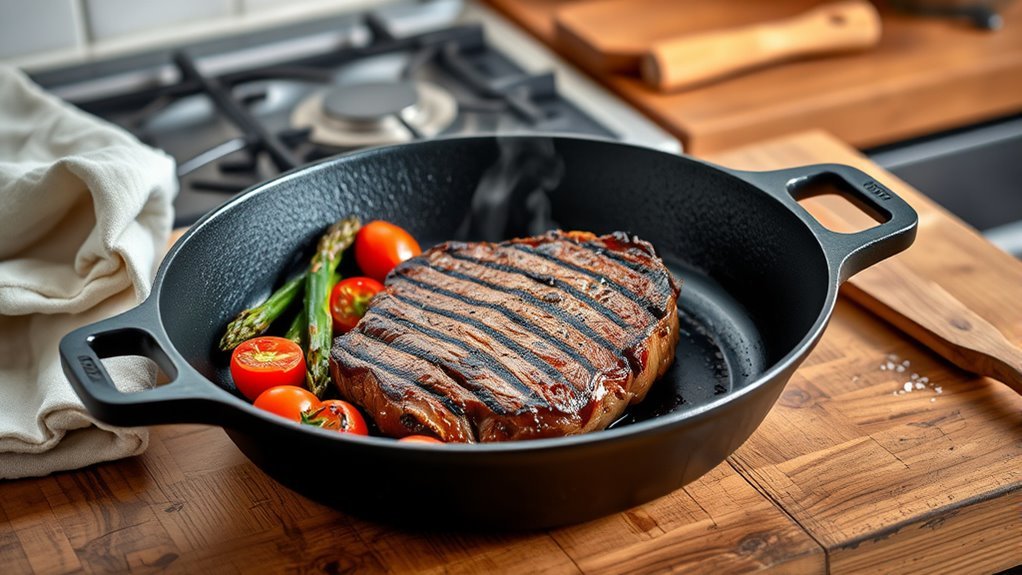
A steak is an excellent choice for showing how cast iron retains heat. Preheat the skillet gradually, add a suitable cooking oil, and sear the steak until a browned crust develops.
Turn the steak as needed and check its internal temperature with a food thermometer. Let it rest briefly before serving.
2. Crispy Skillet Cornbread
Cast iron is especially good for baking cornbread with a crisp bottom and tender center.
Preheat an oven-safe skillet according to your recipe, add the batter to the prepared pan, and bake until the top is golden and the center is cooked through.
The hot iron helps the bottom crust form as the batter begins cooking.
3. Dutch Baby Pancakes
A Dutch baby is a puffy oven-baked pancake made from a simple batter of eggs, milk, flour, and salt.
Preheating the skillet helps the batter rise and brown around the edges. You can serve it with fruit and syrup or use savory toppings.
For a specific example, the manufacturer’s basic Dutch baby recipe uses a 9-inch skillet, a 450°F oven, and a baking time of 12–14 minutes.
4. One-Pan Chicken and Vegetables
A cast iron skillet makes it easy to prepare a complete meal with fewer dishes.
Brown chicken pieces on the stovetop, add vegetables and seasonings, and finish cooking in the oven if needed. Check that the chicken reaches a safe internal temperature before serving.
This method works well for roasted potatoes, carrots, onions, and similar vegetables.
5. Warm Skillet Cookie
A cast iron skillet can also double as a baking dish for a large cookie.
Spread prepared cookie dough evenly into a lightly greased, oven-safe skillet. Bake according to your recipe until the edges are golden and the center reaches your preferred texture.
Serve it warm with a scoop of ice cream for a simple dessert.
Frequently Asked Questions
Are Cast Iron Pans Healthy?
Yes, cast iron pans are generally safe for everyday cooking. They can add some iron to food, but the amount varies with the recipe and cooking time. They are not a reliable substitute for treatment if you have iron deficiency.
What’s the Difference Between a Cast Iron and a Regular Skillet?
A cast iron skillet is usually heavier, heats more slowly, and holds heat longer than many aluminum or stainless steel pans. It also needs drying and occasional seasoning. A regular skillet may be easier to lift and maintain, depending on its material.
Is Cast Iron Better Than Stainless Steel?
Neither is better for every meal. Cast iron works well for searing, frying, and oven baking because it stays hot. Stainless steel is usually easier for acidic sauces, boiling, and quick temperature changes, especially when it has an aluminum or copper core.
Which Is Better, Nonstick or Cast Iron?
Choose cast iron for high-heat browning, long service life, and oven cooking. Choose coated nonstick for delicate foods and easy cleanup at moderate heat. A seasoned cast iron pan can release food well, but it is not as consistently slippery as a coated nonstick skillet.
Can You Wash Cast Iron With Soap?
Yes. A small amount of mild dish soap will not normally harm a properly seasoned cast iron skillet. Wash by hand, dry it right away, and wipe on a thin coat of oil. Do not leave it soaking or put it in the dishwasher.
Can You Cook Tomatoes in Cast Iron?
Yes, especially in a well-seasoned skillet for shorter cooking. Long simmers with acidic ingredients can weaken the seasoning and cause a metallic taste. For extended tomato sauces, choose stainless steel or enameled cast iron instead.
Can Cast Iron Pans Be Used on Induction?
Yes. Cast iron is magnetic, so it works on induction cooktops. Heat the skillet gradually, use a burner that fits its base, and lift it instead of sliding it across a glass surface. This helps prevent hot spots and scratches.
Conclusion
A cast iron pan offers excellent heat retention, versatile cooking options, and the potential to last for generations. Its greatest strengths appear when you give it enough time to preheat and maintain its seasoning.
Start with a simple dish like seared chicken, roasted vegetables, or skillet cornbread. Once you’re comfortable with the cooking process, experiment with more recipes. Clean, dry, and lightly oil your skillet after use, and it can remain a dependable part of your kitchen for years.
Sources
- Lodge Cast Iron: How It’s Made: Explains the casting process and cookware construction.
- PubMed: Systematic Review of Iron-Containing Cookware: Reviews how iron cookware affects the iron content of food and blood hemoglobin levels.
- Lodge Cast Iron: Quick Start Cooking Guide: Supports gradual preheating and basic cast iron cooking techniques.
- Lodge Cast Iron: Induction Cooking Guidance: Explains induction compatibility and precautions for glass cooktops.
- Lodge Cast Iron: How to Clean: Supports washing, drying, oiling, and rust prevention instructions.
- Lodge Cast Iron: How to Season: Provides the oven temperature and steps for restoring cast iron seasoning.
- Lodge Cast Iron: Cooking Acidic Foods: Explains precautions for cooking tomatoes and other acidic ingredients.
- Lodge Cast Iron: Basic Dutch Baby Recipe: Supports the skillet size, oven temperature, and baking time provided in the recipe section.
