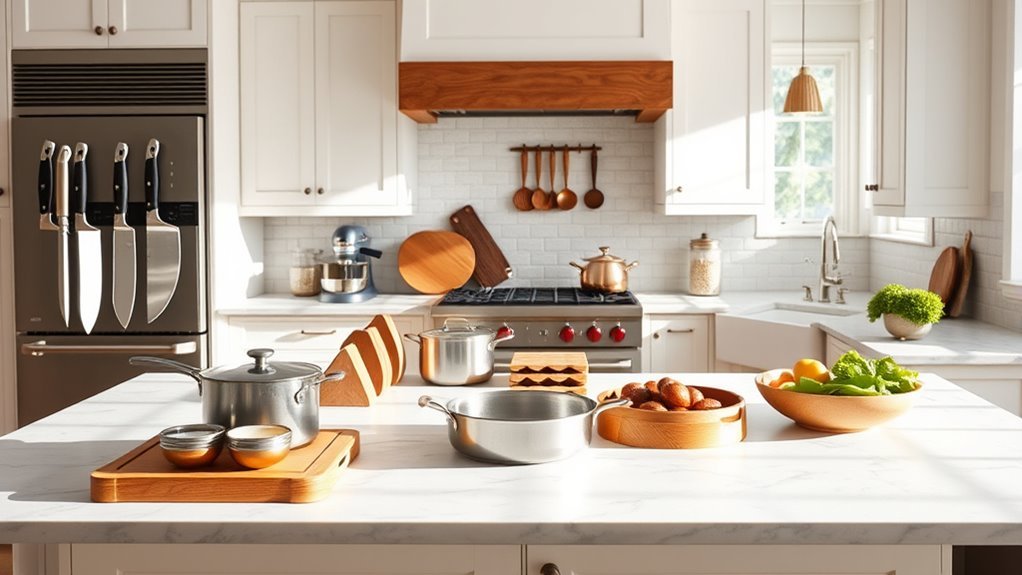
A well-equipped kitchen does not need dozens of expensive gadgets. The right kitchen essentials help you prepare ingredients, cook everyday meals, and clean up without wasting time or storage space. Start with versatile knives, cookware, and utensils, then add specialized equipment only when your cooking habits justify it.
Quick Answer
The most useful kitchen essentials include an 8-inch chef’s knife, a stable cutting board, a versatile frying pan, and a lidded saucepan. Add mixing bowls, measuring tools, a spatula, tongs, a peeler, and a baking sheet. A stockpot, food thermometer, and carefully chosen appliances make cooking safer and more convenient.
Key Takeaways
- Choose cookware materials based on your cooking methods, not appearance alone.
- A chef’s knife, paring knife, and serrated knife cover most everyday cutting tasks.
- Buy specialty bakeware and countertop appliances only when you will use them regularly.
- Easy cleaning, safe handling, and practical storage matter as much as cooking performance.
- Buy versatile, durable tools first and build your collection as your cooking needs change.
How This Guide Helps You Choose Kitchen Essentials
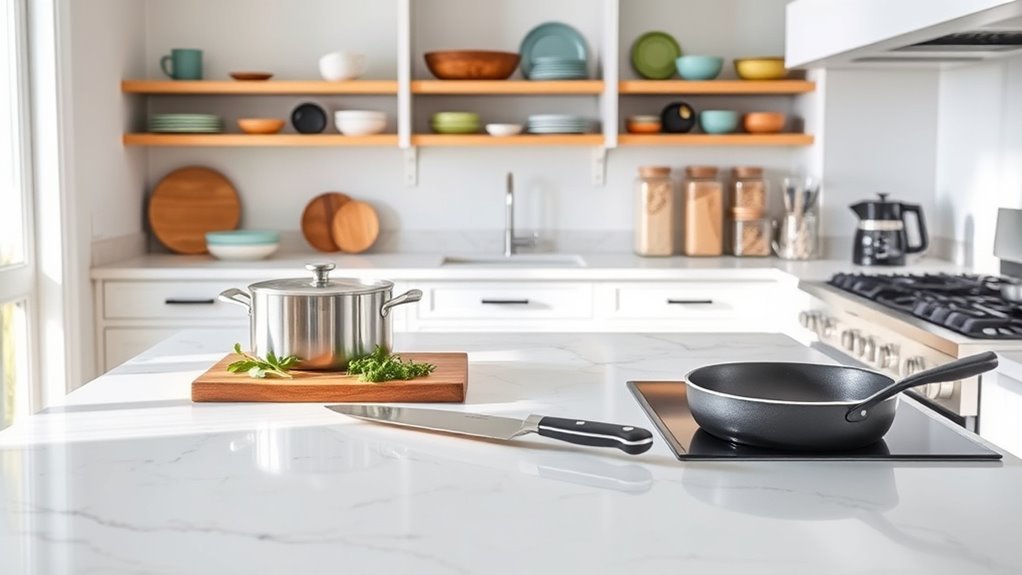
The easiest way to choose kitchen essentials is to organize them by purpose. Preparation tools help you handle ingredients, cookware provides the heat, and appliances take over repetitive tasks.
You can build a practical kitchen around three main groups:
- Preparation tools: Knives, cutting boards, peelers, mixing bowls, measuring cups, measuring spoons, colanders, and whisks.
- Cookware and bakeware: Frying pans, saucepans, stockpots, baking sheets, loaf pans, and baking dishes.
- Appliances and storage: Blenders, multi-cookers, food containers, drawer organizers, and other tools that match your routine.
Start by thinking about the meals you prepare most often. If you regularly cook rice, vegetables, eggs, and meat, your needs will differ from those of someone who bakes bread every weekend.
Budget-friendly tools are often enough for occasional tasks. However, a comfortable knife, sturdy frying pan, and dependable cutting board are worth prioritizing because you use them frequently.
Choose kitchen tools that solve everyday cooking problems. A smaller collection of reliable equipment is often more useful than a crowded cabinet of rarely used gadgets.
You also do not need a matching cookware set. The care requirements of different cookware materials show why choosing individual pieces for specific jobs can make maintenance easier.
Before buying anything, consider how often you will use it, where you will store it, and how much work cleaning it requires.
How to Choose Cookware: Materials, Size, Durability
Choose cookware by matching its material, size, and construction to the food you prepare. Stainless steel, cast iron, nonstick, aluminum, and copper each have different strengths.
Understanding those differences helps you avoid buying several pans that perform the same task.
Which Cookware Material Is Best?
- Stainless steel: A durable choice for browning meat, sautéing vegetables, simmering sauces, and everyday cooking. Many stainless pans contain an aluminum or copper core for better heat distribution.
- Cast iron: Holds heat well and works especially well for searing, frying, and oven cooking. Traditional cast iron needs proper drying and seasoning.
- Nonstick: Useful for eggs, pancakes, fish, and other delicate foods. It generally needs low to medium heat and utensils that will not scratch the coating.
- Aluminum: Conducts heat efficiently and is relatively lightweight. Anodized or coated versions provide different surface properties.
- Copper: Responds quickly to temperature changes, making it useful for controlled cooking. It usually costs more and may require additional maintenance.
- Enameled cast iron: Combines cast iron’s heat retention with a protective enamel surface. It works well for soups, stews, and slow braises.
What Cookware Sizes Do You Need?
Choose sizes according to your household and the portions you cook.
- 8-inch skillet: Useful for small meals, single servings, and eggs.
- 10- to 12-inch skillet: A versatile choice for everyday frying and sautéing.
- 2-quart saucepan: Suitable for sauces, oatmeal, reheating, and small portions.
- 4-quart saucepan: Useful for rice, pasta, vegetables, and moderate batches of soup.
- Large stockpot: Best for big batches of soup, pasta, stock, and stew.
A smaller saucepan can be easier to handle when cooking for one or two people. Larger households may benefit from a wider skillet and a more spacious stockpot.
What Makes Cookware Durable?
Look for stable construction, comfortable handles, secure handle attachments, and well-fitting lids. A thick, flat base helps distribute heat and reduces the risk of hot spots.
If you use an induction cooktop, confirm that the cookware has an induction-compatible magnetic base. Not every stainless steel or aluminum pan works on induction.
Also check oven compatibility. A metal pan may tolerate oven heat, while its plastic handles or glass lid may have a lower temperature limit.
Nonstick coatings need special care. Avoid overheating empty pans and using sharp metal utensils. Replace coated cookware when the surface becomes badly damaged or stops performing properly.
Traditional cast iron needs different maintenance. After washing, dry it completely and apply a thin coat of oil when needed. The manufacturer’s cast iron cleaning instructions explain how ordinary soap, thorough drying, and light oiling help maintain the cooking surface.
Kitchen Knives and Cutting Tools
A chef’s knife, paring knife, and serrated knife handle most home kitchen cutting tasks. You do not need a large knife block filled with specialized blades to prepare everyday meals.
Choose knives that feel secure in your hand and are easy to keep sharp.
Chef’s Knife for Everyday Chopping
An 8-inch chef’s knife is a useful starting point for chopping vegetables, slicing meat, mincing herbs, and preparing ingredients.
The Mercer Culinary Millennia is an affordable example with a high-carbon steel blade and textured handle. Its official 8-inch knife specifications confirm its blade size and ergonomic handle design.
A knife should feel balanced rather than excessively heavy. Test how comfortably you can hold its handle and control the blade.
Paring Knife for Small Tasks
A 3.25-inch paring knife works well for peeling fruit, trimming vegetables, removing small blemishes, and making detailed cuts.
Victorinox makes compact stainless steel paring knives suited to these jobs. They are especially useful when a full-size chef’s knife feels awkward.
Serrated Knife for Bread and Delicate Foods
A serrated knife cuts crusty bread, tomatoes, and other foods with delicate interiors without requiring as much downward pressure.
Choose a blade long enough to move through a loaf using smooth sawing motions.
Cutting Boards and Peelers
Use a stable cutting board that gives you enough room to prepare ingredients safely. OXO Good Grips boards are examples of non-slip, dishwasher-safe plastic cutting boards.
Keep a separate board for raw meat when possible, and clean boards thoroughly between different food types.
A sharp vegetable peeler is another useful addition. Kuhn Rikon’s Original Swiss Peeler has a sharp carbon steel blade for removing thin layers of skin from vegetables and fruit.
Keep knife edges sharp with suitable sharpening equipment, and store the blades securely in a rack, sheath, or protective drawer organizer.
Core Cookware That Covers 90% of Meals
A few versatile pots and pans can handle the great majority of everyday home cooking. The exact coverage depends on your recipes, but you rarely need a large matching set.
For a practical starter kitchen, prioritize these pieces:
1. Nonstick Frying Pan
A nonstick frying pan is useful for eggs, pancakes, fish, and quick vegetable dishes.
Its easy-release surface makes delicate foods easier to handle. Use suitable silicone, nylon, or wooden utensils to protect the coating.
For high-heat searing and stronger browning, an uncoated stainless steel or cast iron skillet is usually a better choice.
2. Versatile Saucepan
A 4-quart saucepan with a lid can prepare grains, sauces, vegetables, soups, and smaller portions of pasta.
If you usually cook small servings, a 2-quart saucepan may be more convenient.
Look for a stable base, comfortable handle, and lid that fits securely.
3. Large Stockpot
A stockpot provides space for boiling pasta, preparing broth, and cooking large quantities of soup or stew.
It becomes especially useful when you cook for several people or prepare meals in batches.
Choose a size you can safely lift when full. A pot that is too large for your normal portions can become awkward to use and store.
4. Sheet Pans
One or two sturdy baking sheets can handle roasted vegetables, potatoes, chicken, cookies, and simple oven dinners.
Rimmed sheet pans are especially useful because their raised edges help contain juices and cooking oils.
Choose pans that fit your oven and can sit flat on its racks.
5. A Second Skillet for High-Heat Cooking
If you regularly sear meat, fry vegetables, or prepare dishes that benefit from browning, consider adding an uncoated stainless steel or cast iron skillet.
This complements your nonstick pan instead of duplicating its purpose.
Your chef’s knife and preparation tools complete the system. Together, these pieces make it easier to move from chopping ingredients to cooking and serving a meal.
Bakeware You’ll Actually Use
The most useful bakeware depends on whether you regularly prepare bread, cakes, casseroles, or desserts. Start with a versatile baking pan and add specialty shapes only when you need them.
Five practical bakeware options cover many common recipes.
| Tool | Purpose |
|---|---|
| Muffin pan | Muffins, cupcakes, and individual portions; nonstick finishes can make release easier |
| 9×13-inch baking pans | Lasagna, casseroles, brownies, and sheet cakes |
| Springform pan | Cheesecakes and delicate tortes that need gentle unmolding |
| Loaf pans | Sandwich bread, banana bread, pound cake, and other loaf-shaped recipes |
| Silicone baking mats | Reusable nonstick surfaces for suitable baking tasks |
Which Baking Pan Should You Buy First?
A 9×13-inch baking pan is a practical starting point because it works for both sweet and savory recipes.
Choose metal for many baked goods or an oven-safe glass or ceramic dish for casseroles and similar dishes. Follow the recipe because different materials may heat differently.
If you bake muffins often, add a muffin pan. Bread makers may benefit more from loaf pans, while a springform pan is most useful for cheesecakes and delicate desserts.
Are Silicone Baking Mats Worth It?
Reusable silicone baking mats can reduce your use of disposable parchment paper for appropriate recipes. They also make cleanup easier when used correctly.
However, silicone mats are not suitable for every oven temperature or cooking method.
Always check the manufacturer’s temperature limit, avoid direct flames and broilers unless specifically permitted, and never cut directly on a silicone mat.
Choose durable bakeware that heats evenly and fits your oven, rather than buying complete collections you rarely use.
Prep Tools That Save Time
Good preparation tools make chopping, measuring, rinsing, and mixing easier. A few reliable pieces can improve both cooking speed and consistency without taking up much cabinet space.
These are the most useful additions to a basic preparation area.
- Chef’s knife: Handles chopping, slicing, and dicing for most everyday recipes.
- Stackable measuring cups: Help measure dry ingredients while taking up less storage space.
- Measuring spoons: Useful for spices, baking ingredients, and small quantities of liquid.
- Y-peeler: Removes fruit and vegetable skins quickly when its blade is sharp.
- 5-quart colander: Provides space to drain pasta, rinse greens, and wash larger batches of produce.
- 9-inch whisk: Works for eggs, dressings, sauces, and smaller bowls of batter.
- Mixing bowls: Help combine ingredients, marinate foods, and organize prepared items.
- Kitchen scale: Offers more consistent measurements for recipes that specify ingredients by weight.
Choose stainless steel measuring cups that nest together, and look for comfortable handles on peelers and colanders.
Dishwasher compatibility depends on the individual product. For example, the Kuhn Rikon Original Swiss Peeler care instructions recommend handwashing and thorough drying to prevent rust.
Which Prep Tools Improve Food Safety?
An instant-read food thermometer is one of the most useful additions to your kitchen. It helps you check whether meat, poultry, and other cooked foods have reached safe internal temperatures.
According to the FDA’s safe food handling guidance, poultry should reach 165°F, ground meat 160°F, and whole cuts of beef, pork, veal, and lamb 145°F with a three-minute rest.
Warning: Raw meat, poultry, and seafood can contaminate ready-to-eat foods through knives, cutting boards, and countertops. Use separate preparation surfaces when possible, and wash tools thoroughly with hot, soapy water between tasks.
Use a simple preparation routine to keep your workspace organized:
- Gather the ingredients and tools your recipe requires.
- Wash and prepare produce before handling raw meat.
- Measure ingredients into bowls before cooking.
- Keep prepared foods separated according to food safety needs.
- Clean tools and work surfaces as you finish using them.
These habits reduce unnecessary movement around the kitchen and make cooking easier to manage.
Cooking and Serving Utensils You Need
A compact group of cooking utensils can handle stirring, flipping, scraping, lifting, and serving food. You do not need several tools that perform nearly identical jobs.
Start with a heat-resistant spatula, locking tongs, a wooden spoon, and accurate measuring tools.
| Tool | Purpose |
|---|---|
| Chef’s knife | Primary chopping, slicing, and dicing during food preparation |
| Silicone spatula | Stirring, folding, scraping bowls, and handling suitable hot mixtures |
| Locking tongs | Flipping food, lifting ingredients, and serving safely |
| Measuring spoons | Measuring seasonings, liquids, and small baking ingredients |
Which Utensils Work Best With Nonstick Cookware?
Silicone, wood, and suitable nylon utensils are useful with nonstick surfaces because they are less likely to scratch the coating.
Choose a spatula with a temperature rating appropriate for your cooking. Not every plastic or silicone utensil can tolerate the same heat.
For everyday cooking, keep these additional tools nearby:
- Wooden spoon: Useful for stirring soups, sauces, and vegetables.
- Slotted spoon: Lifts solid ingredients from cooking liquid.
- Ladle: Makes serving soups, stews, and sauces easier.
- Kitchen shears: Help trim herbs, cut packaging, and prepare certain ingredients.
- Can opener: An essential tool for recipes that use canned ingredients.
Choose utensils with comfortable grips, simple shapes, and minimal places where food can become trapped.
Keep frequently used tools in an accessible drawer or utensil holder. Store sharp tools separately to protect their edges.
Countertop Appliances Worth the Space
Countertop appliances are worth buying when they perform tasks you do regularly and save meaningful effort. A blender and a multi-cooker are useful options, but neither is essential for every household.
Before buying an appliance, consider how often you will use it, how easy it is to clean, and where it will live.
A blender can prepare smoothies, purees, soups, and sauces. A multi-cooker can handle several cooking methods in one machine.
The best choice depends on your meals rather than the number of features advertised.
Compact High-Performance Blenders
A good blender can puree fruit, blend sauces, crush suitable frozen ingredients, and prepare smooth mixtures. Compact models save counter space, while larger high-performance blenders provide more capacity and power.
Choose a machine based on the ingredients you actually use.
What Should You Look for in a Blender?
- Motor performance: Choose enough power for your intended ingredients, especially frozen fruit, ice, or thick mixtures.
- Jar capacity: Small containers work well for individual portions, while larger jars are more practical for family recipes.
- Controls: Simple speed settings and useful programs can make operation easier.
- Cleaning: Removable parts and manufacturer-approved cleaning cycles help reduce maintenance.
- Storage: Check the complete appliance height, including its container and lid.
Examples of Blender Options
Oster Versa: A power-focused blender with a 1,400-watt motor. The manufacturer’s Oster Versa specifications also confirm its substantial countertop dimensions, so it should not be treated as a small personal blender.
Vitamix Professional Series 750: A premium, full-size blender with preset programs for smoothies, hot soups, frozen desserts, purees, and cleaning. Its manufacturer product listing identifies it as a retired model.
Ninja: The brand offers several blender styles with different capacities and features. Compare individual models instead of assuming every Ninja blender performs the same tasks.
A food processor may be a better choice if you mainly want to slice, shred, or chop large quantities of ingredients. An immersion blender can be more convenient for pureeing small amounts directly in a suitable container.
Warning: Do not blend hot soup in a sealed container unless the manufacturer explicitly permits it. Heat and steam can create pressure and cause hot contents to escape. Follow the appliance’s instructions for processing hot liquids.
Buy the smallest blender that comfortably handles your normal portions and intended ingredients.
Versatile Multi-Cookers
A versatile multi-cooker combines several cooking methods in one countertop appliance. Depending on the model, it may pressure-cook, slow-cook, sauté, steam, and prepare rice or grains.
This flexibility makes it useful for households that cook beans, soups, stews, and other dishes requiring extended cooking.
What Can a Multi-Cooker Replace?
A multi-cooker may reduce your need for separate appliances such as a slow cooker, rice cooker, or dedicated electric steamer.
However, available functions vary by model. Some devices provide pressure cooking, while others focus on slow cooking or additional programs.
Pressure cooking can shorten the cooking time of dried beans, tougher meat cuts, and certain grains. Exact cooking times depend on the food, quantity, and appliance settings.
What Features Matter Most?
- Suitable capacity: Choose a pot large enough for your normal portions without taking unnecessary counter space.
- Reliable temperature control: Useful for repeatable cooking results.
- Clear controls: Straightforward buttons and programs are easier to use than complicated menus.
- Removable inner pot: Makes washing and routine maintenance easier.
- Safety features: Proper lid locking, pressure control, and clear release instructions are essential for pressure-cooking models.
Some models use multiple sensors to control temperature and pressure. Check which features are actually included rather than assuming every multi-cooker has the same technology.
For pressure-cooking appliances, follow the manufacturer’s liquid requirements and fill limits. Instant Pot’s official safety instructions specify that compatible models should not be filled above the two-thirds pressure-cooking limit. Expanding foods such as rice and dried beans must stay below the half-fill line.
Never force open a pressurized lid. Follow the correct pressure-release procedure for your appliance and recipe.
Multi-cookers can save hands-on time, but they still require safe setup, suitable recipes, and regular cleaning.
Smart Storage, Cleaning, and Budget Tips
Good kitchen organization helps you find tools quickly, store food safely, and avoid unnecessary purchases. Start with stackable containers, practical drawer organizers, and a cleaning routine you can maintain.
You can improve your kitchen without buying expensive storage systems.
How Should You Organize Kitchen Essentials?
- Stackable containers: Help use refrigerator and cupboard space efficiently.
- Clear labels: Make stored ingredients and leftovers easier to identify.
- Drawer organizers: Separate utensils, measuring tools, and smaller accessories.
- Vertical storage: Makes it easier to store trays, cutting boards, and baking sheets.
- Reusable silicone bags: Can replace some disposable storage bags when used according to their care instructions.
Store frequently used knives, pans, and utensils close to your preparation area. Keep heavier pots on shelves where you can lift them comfortably.
How Do You Keep Kitchen Tools Clean?
Clean equipment according to its material and the manufacturer’s instructions.
- After each use: Wash cutting boards, knives, cooking utensils, and food-contact surfaces.
- Daily: Wipe countertops, remove spills, and clean cooking surfaces.
- Weekly: Review refrigerator contents and clean frequently touched storage areas.
- Periodically: Descale appliances that need it, inspect worn tools, and check that cookware handles remain secure.
For food storage, use shallow containers when cooling large portions of leftovers. Refrigerate perishable cooked food promptly and follow appropriate storage times.
Avoid overcrowding the refrigerator because chilled air needs room to circulate.
How Can You Save Money on Kitchen Equipment?
Buy the tools that solve your most common cooking problems first. A durable chef’s knife, good cutting board, reliable pan, and saucepan often offer better everyday value than specialty gadgets.
Consider these practical buying priorities:
- Replace damaged or unsafe essentials before buying new gadgets.
- Choose multifunctional cookware and utensils.
- Compare individual pieces with complete sets.
- Check cleaning and storage requirements before purchasing.
- Upgrade heavily used equipment when a better tool offers a clear benefit.
Pro Tip: Before purchasing a new kitchen gadget, identify three regular meals or tasks you would use it for. If you cannot name them, you may get more value from improving a tool you already own.
What Kitchen Safety Equipment Should You Keep?
Beyond cooking tools, keep oven mitts, a kitchen timer, and suitable fire safety equipment accessible.
Never leave cooking unattended. Keep towels and other flammable items away from burners, and turn pan handles inward to reduce accidental spills.
The U.S. Consumer Product Safety Commission’s kitchen fire safety recommendations also emphasize keeping a suitable fire extinguisher available and knowing how to use it.
These habits protect your equipment while helping you maintain a safer cooking space.
Frequently Asked Questions
What Does Every Kitchen Need?
Every kitchen needs a chef’s knife, cutting board, frying pan, lidded pot, mixing bowls, measuring tools, spatula, and can opener. Food storage containers and a thermometer are also useful. A blender, food processor, or slow cooker is optional and depends on the meals you prepare.
What Are 10 Essential Pieces of Kitchen Equipment?
Ten essential kitchen items are a chef’s knife, cutting board, measuring cups and spoons, nonstick frying pan, colander, mixing bowls, wooden spoon, spatula, baking sheet, and lidded pot. Count the measuring set as one item. Choose durable tools that suit your cooking habits and are easy to clean.
What Are 20 Essential Kitchen Tools?
Twenty useful kitchen tools are a chef’s knife, paring knife, cutting board, measuring cups, measuring spoons, mixing bowls, nonstick pan, stainless steel skillet, stockpot, baking sheet, spatula, tongs, whisk, peeler, can opener, colander, food thermometer, blender, immersion blender, and kitchen shears. Start with the basics and add optional tools gradually.
What Are 20 Things Commonly Found in a Kitchen?
Twenty common kitchen items include a chef’s knife, cutting board, measuring cups, measuring spoons, mixing bowls, colander, saucepan, skillet, spatula, tongs, peeler, can opener, whisk, baking sheet, blender, food storage containers, kitchen scale, trash bin, dish rack, and oven mitts. These cover food preparation, cooking, cleanup, and storage.
Conclusion
A functional kitchen begins with sharp knives, versatile cookware, dependable utensils, and practical storage. Choose tools that match the meals you cook, prioritize durable materials, and maintain your equipment properly.
Start with the essentials you will use every day. Add bakeware, appliances, and specialized gadgets only when they offer a clear benefit. A carefully chosen collection makes cooking easier without filling your kitchen with unnecessary equipment.
Sources
- All-Clad Cookware Care and Use: Nonstick cookware maintenance, safe heating, and recommended utensils.
- Mercer Culinary Millennia Chef’s Knife: Knife blade length, materials, and handle features.
- Kuhn Rikon Original Swiss Peeler: Peeler materials and cleaning requirements.
- U.S. Food and Drug Administration, Safe Food Handling: Food hygiene and minimum safe cooking temperatures.
- Lodge Cast Iron Cleaning Instructions: Washing, drying, and maintaining seasoned cast iron.
- Oster Versa Frequently Asked Questions: Blender motor specifications, dimensions, and maintenance.
- Vitamix Professional Series 750: Blender programs, product specifications, and model status.
- Instant Pot Frequently Asked Questions: Pressure-cooker operation, fill limits, and safety guidance.
- U.S. Consumer Product Safety Commission, Recipe for Safer Cooking: Cooking fire prevention and kitchen safety equipment.