
The best kelp fertilizers can support healthy roots, nutrient uptake, and plant resilience. But liquid seaweed extracts, dry kelp meal, and fish-and-kelp blends serve different gardening needs. Choosing the right formula matters more than buying the largest bottle.
GS Plant Foods Liquid Kelp Fertilizer is our best overall pick for its OMRI-listed formula and broad garden use. For indoor plants and flexible feeding, Bloom City CleanKelp is another strong choice.
These five products were compared using their ingredients, application methods, manufacturer information, and suitability for common gardening needs. No hands-on product testing is claimed.
Best Kelp Fertilizers Compared
The main difference between these kelp fertilizers is how you apply them. Liquid concentrates work well for watering and spraying. Kelp meal suits soil preparation, while fish-and-kelp blends combine seaweed compounds with additional nutrients.
| Product | Best for | Formula | Application |
|---|---|---|---|
| Overall garden use | Liquid Ascophyllum nodosum extract | Diluted soil or foliar application | |
| Houseplants and containers | Seven-species sea plant blend | Watering, foliar spray, root dip | |
| Garden beds and soil amendment | Dry kelp meal | Mix into soil or top-dress | |
| Flexible growing systems | Liquid Ascophyllum nodosum | Drench, foliar spray, reservoir | |
| Combined organic feeding | Fish hydrolysate and kelp | Diluted foliar spray or soil drench |
Best Kelp Fertilizers: Our Top Picks
1. GS Plant Foods Liquid Kelp Fertilizer
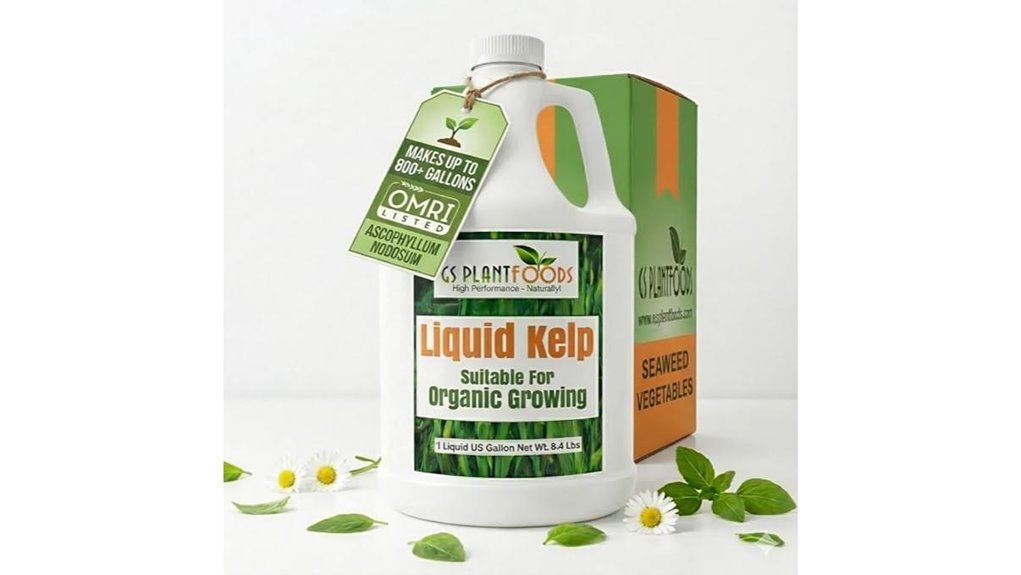
Bottom line: GS Plant Foods Liquid Kelp Fertilizer is a strong all-purpose choice for gardeners who want one seaweed concentrate for many plant types. Its OMRI-listed formula and gallon-sized container suit repeated garden and lawn applications.
- Format: Liquid concentrate, diluted before application.
- Size: 1 gallon, suited to frequent use.
- Ingredients: Ascophyllum nodosum seaweed extract.
- Application: Diluted spray or soil treatment.
The formula uses North Atlantic seaweed extract and is intended to support root development, nutrient uptake, chlorophyll production, and overall plant vigor. You can use it with vegetables, flowers, ornamentals, and lawns.
Its main advantage is flexibility. Gardeners maintaining several growing areas can use the same concentrate rather than buying separate seaweed products for each plant group.
The manufacturer advertises a high dilution yield, with up to 800 gallons of prepared solution from one gallon of concentrate under appropriate mixing conditions. Actual yield depends on the application rate. Follow the directions for your crop and application method instead of assuming that every treatment uses the most dilute mixture.
Why we picked it: Its OMRI listing, large container, and range of suitable uses make it a practical first choice for general gardening. It is especially appealing when you regularly treat several beds or a lawn.
- OMRI Listed for organic growing.
- Concentrated one-gallon formula.
- Suitable for lawns, vegetables, flowers, and ornamentals.
- Supports root growth and plant resilience.
- Requires measuring and dilution.
- A large container may be excessive for a few houseplants.
- Application rates differ by crop and method.
2. Bloom City CleanKelp Seaweed and Kelp Fertilizer
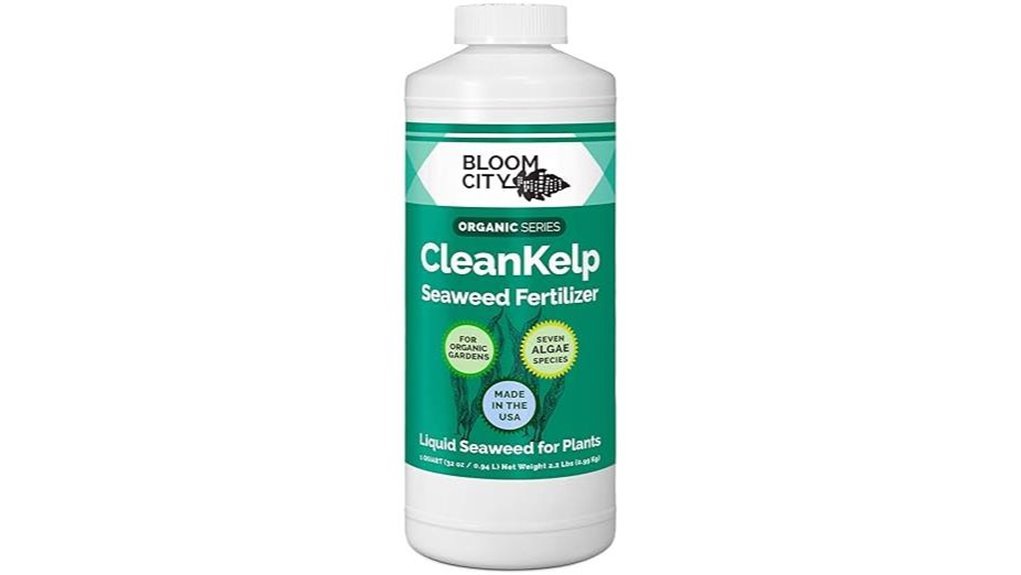
Bottom line: Bloom City CleanKelp is a versatile liquid seaweed supplement for indoor and outdoor growers. Its 32-ounce container and flexible application methods make it especially convenient for container gardens and houseplants.
- Format: Liquid concentrate, diluted before application.
- Size: 32 fluid ounces, convenient for smaller gardens.
- Ingredients: Extracts from seven sea plant species.
- Application: Watering, foliar spray, root dip, or compost tea.
Bloom City’s formula combines several sea plants, including Ascophyllum nodosum, Ecklonia maxima, and other marine species. The manufacturer uses an extraction process designed to retain beneficial components while reducing fibrous material.
The product is intended to support healthy root and stem growth, nutrient uptake, and plant resilience. It can also complement transplant care, although proper watering and suitable growing conditions remain essential.
For routine watering, the manufacturer’s instructions list 5 mL per gallon during vegetative growth and 5 to 10 mL per gallon during flowering. Foliar application uses a different rate, so do not treat these watering directions as universal mixing instructions.
Why we picked it: Bloom City offers several useful application methods without requiring a large container. It fits growers who move between houseplants, container vegetables, flowers, and occasional transplant work.
- Seven-species sea plant blend.
- Useful for soil watering, foliar sprays, and root dips.
- Suitable for indoor and outdoor gardens.
- Manufacturer provides separate growing-stage instructions.
- Requires careful measuring for small doses.
- Different application methods use different dilution rates.
- Not a complete replacement for balanced plant nutrition.
3. Plantonix Kelp Bliss Kelp Meal
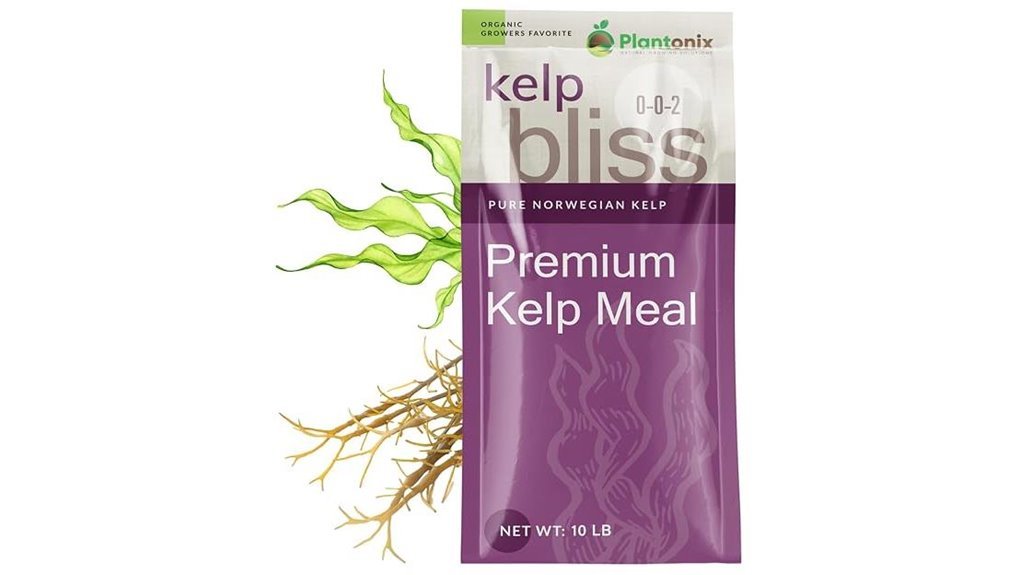
Bottom line: Plantonix Kelp Bliss is the best choice here for gardeners who prefer a dry soil amendment. Its 10-pound bag of kelp meal is designed for mixing into garden beds, soil preparation, and gradual nutrient release.
- Format: Dry kelp meal, mixed into soil.
- Size: 10 pounds, suitable for garden projects.
- Ingredients: Ascophyllum nodosum sea kelp.
- Application: Soil incorporation or top-dressing.
Kelp Bliss is made from sustainably harvested Norwegian sea kelp. It contributes organic matter, potassium, and trace elements that can support soil fertility and microbial activity.
Unlike liquid kelp, the meal breaks down gradually. This makes it useful when preparing soil before planting or maintaining garden beds over time. Its organic material may also contribute to soil structure and moisture retention.
For larger garden beds, Plantonix recommends mixing 1 to 2 pounds into the top 3 inches of soil per 100 square feet. For containers, the manufacturer provides separate instructions based on soil volume.
It works with vegetable gardens, flower beds, lawns, and suitable container mixes. However, you should not expect a small amount of kelp meal to replace all the nutrients required by heavy-feeding plants.
Why we picked it: This product fills an important gap in a list dominated by liquid concentrates. It gives gardeners a practical option for incorporating kelp directly into growing soil.
- Natural dry kelp soil amendment.
- Adds organic matter and trace elements.
- Useful for vegetable beds, flowers, and containers.
- Gradual breakdown suits soil preparation.
- Requires mixing into soil or top-dressing.
- Slower to become available than a diluted liquid extract.
- Not suited to foliar spraying or liquid reservoirs.
4. Blue Planet Nutrients Liquid Kelp Concentrate
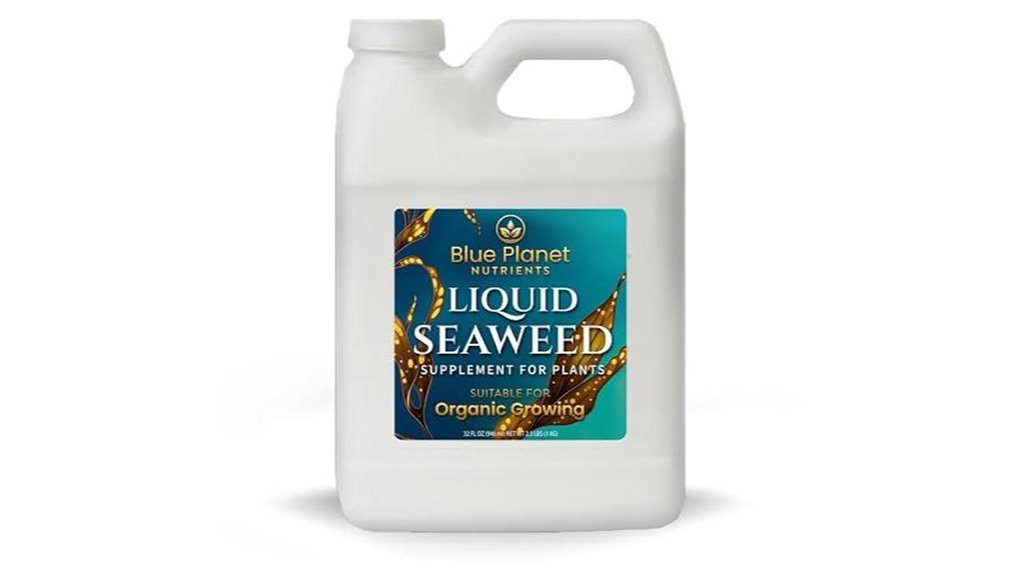
Bottom line: Blue Planet Nutrients Liquid Kelp Concentrate is well suited to growers who use several feeding methods. It can complement soil growing, container cultivation, and compatible nutrient-reservoir systems.
- Format: Liquid concentrate, diluted before application.
- Size: 32 fluid ounces, highly concentrated.
- Ingredients: Ascophyllum nodosum seaweed extract.
- Application: Soil drench, foliar spray, or reservoir additive.
This seaweed supplement contains naturally occurring plant compounds, trace minerals, and amino acids. The formula is designed to support root development, foliage, and resilience during challenging growing conditions.
Blue Planet describes the liquid as suitable for vegetables, flowers, herbs, fruit trees, seedlings, and houseplants. It can be incorporated into an existing plant-feeding program rather than used as a complete nutrient solution by itself.
The manufacturer provides different mixing ranges for plant size and application method. Root drenches and reservoir applications may require different concentrations from foliar sprays.
Its concentrated formula is a useful feature for growers who regularly prepare nutrient mixtures. The original product description also emphasizes full solubility, although filtration and equipment compatibility should still be checked before using any additive in a reservoir.
Why we picked it: Its flexible application options make it a useful choice for growers managing different plant types and growing systems.
- Concentrated Ascophyllum nodosum formula.
- Supports soil, foliar, and compatible reservoir applications.
- Suitable for a wide range of plant types.
- Can complement an existing fertilizer program.
- Requires precise measuring and dilution.
- Not a complete base nutrient formula.
- Reservoir compatibility depends on the growing system.
5. GS Plant Foods Liquid Fish & Kelp Fertilizer
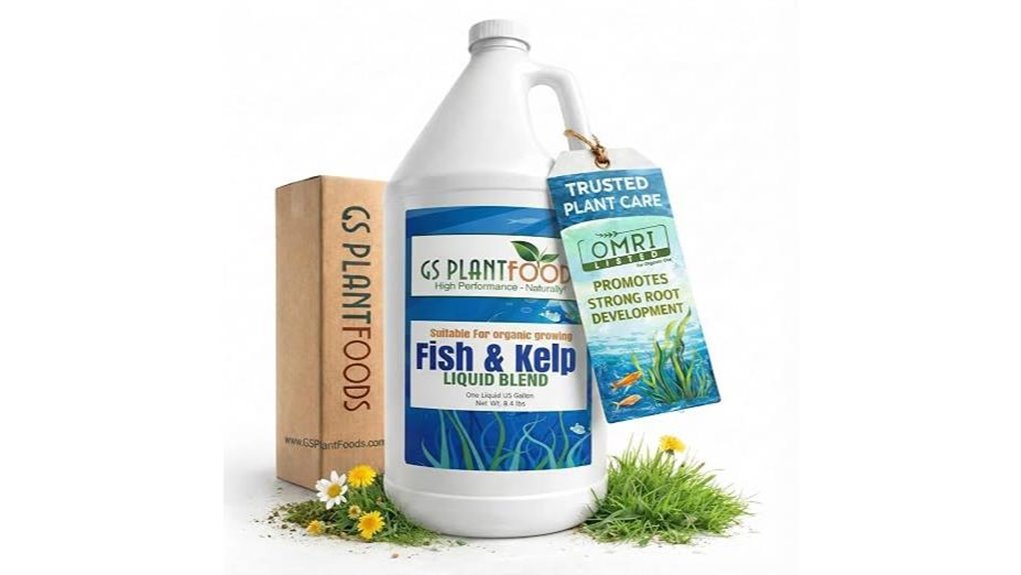
Bottom line: GS Plant Foods Liquid Fish & Kelp Fertilizer is a practical choice if you want both fish-derived nutrients and seaweed compounds in one product. It differs from the pure kelp concentrates by including fish hydrolysate.
- Format: Liquid concentrate, diluted before application.
- Size: 1 gallon for the listed variant.
- Ingredients: Fish hydrolysate and North Atlantic kelp.
- Application: Soil drench or diluted foliar treatment.
This OMRI-listed blend combines fish-based nutrients with compounds from seaweed. Fish hydrolysate contributes nitrogen and other nutrients, while the kelp component provides trace elements and naturally occurring organic compounds.
The combination suits vegetables, flowers, shrubs, fruits, turf, and suitable indoor plants. It can also support microbial activity in the soil when used as part of a broader gardening program.
For gardeners who already use fish fertilizer and seaweed separately, a combined formula may simplify storage and mixing. However, the product’s nutrient analysis still matters, especially for plants with high nitrogen, phosphorus, or potassium requirements.
The source article recommends applying the diluted mixture every two to four weeks. Actual frequency and dilution should follow the product label and your plants’ needs.
Why we picked it: It adds a distinct feeding option to the roundup. Gardeners seeking organic nutrients alongside kelp compounds may prefer this blend over a straight seaweed extract.
- Combines fish hydrolysate and seaweed extract.
- OMRI-listed formula for organic growing.
- Suitable for many garden plants.
- Offers additional nutrients compared with pure kelp extracts.
- Fish ingredients may produce a noticeable odor.
- Requires dilution and repeated application.
- Not suitable for gardeners avoiding animal-derived fertilizers.
GS Plant Foods Liquid Kelp vs Bloom City CleanKelp: Which Should You Get?
Choose GS Plant Foods Liquid Kelp if you maintain several garden beds or lawns. Choose Bloom City CleanKelp if you prefer a smaller container and want flexibility for houseplants, containers, and root treatments.
- Container size: GS Plant Foods comes in a gallon-sized concentrate, while the Bloom City option reviewed here contains 32 ounces.
- Seaweed formula: GS Plant Foods uses Ascophyllum nodosum. Bloom City combines seven sea plant species.
- Application flexibility: Both support diluted plant treatments, but Bloom City provides specific guidance for root dips and different growing stages.
- Organic growing: GS Plant Foods has an OMRI listing. Bloom City markets its formula as organic; verify the specific certification required by your growing program.
Which Kelp Fertilizer Should You Buy?
The right product depends on how you grow plants, what you already feed them, and whether you want a liquid or dry amendment.
- For general gardening: Get GS Plant Foods Liquid Kelp for its large container and broad plant compatibility.
- For indoor and container plants: Choose Bloom City CleanKelp for a compact concentrate with several application methods.
- For preparing garden soil: Use Plantonix Kelp Bliss when you want to incorporate dry kelp meal into beds or potting mixes.
- For compatible liquid feeding systems: Consider Blue Planet Nutrients Liquid Kelp as a supplement alongside a suitable nutrient program.
- For combined organic nutrients: Choose GS Plant Foods Fish & Kelp if you want fish-derived nutrients and seaweed in the same concentrate.
How We Chose These Kelp Fertilizers
The five products were selected and compared using product descriptions, manufacturer guidance, and their suitability for common gardening needs. This is a research-based comparison, not a report of hands-on performance testing.
- Product relevance: Each selection contains kelp or seaweed as a principal ingredient or part of a combined fertilizer formula.
- Application methods: The comparison covers liquid feeding, spraying, soil incorporation, and compatible reservoir use.
- Manufacturer information: Product details were cross-checked against GS Plant Foods, Bloom City, Plantonix, and Blue Planet Nutrients.
- Safety and suitability: Ingredient differences, dilution requirements, organic suitability, and product limitations were considered. No active recall was established from the available research.
- Buying trade-offs: Each product was evaluated for its useful features and practical drawbacks, rather than assuming that more concentrated or more expensive always means better.
Factors to Consider When Choosing Kelp Fertilizers for Healthier Plants and Gardens in 2026
Good kelp fertilizers differ in source material, processing, nutrient content, and application method. Start by deciding whether you need a plant supplement, a soil amendment, or a combined fertilizer. Then compare the label directions and suitability for your growing system.
Organic Certification
Organic suitability matters if you follow organic growing practices or maintain a certified operation. Look for recognized verification rather than relying only on words such as natural or organic.
An OMRI Listed product has been reviewed for use under applicable organic production standards. This is not the same thing as every product carrying a USDA Organic seal.
GS Plant Foods Liquid Kelp and its Fish & Kelp blend are listed as OMRI products. The right choice depends on whether the product meets the requirements of your specific growing program.
Kelp Source Quality
Kelp source and processing can affect the composition of the final fertilizer. Ascophyllum nodosum is a widely used brown seaweed in agricultural extracts because it contains minerals and naturally occurring organic compounds.
Some products use one kelp species, while others combine several marine plants. Neither approach automatically guarantees better results for every crop.
Look for clear ingredient information, traceable sourcing, and suitable processing methods. Sustainable harvesting is also worth considering when selecting products intended for regular use.
Nutrient Concentration
Kelp products can contain potassium, trace minerals, amino acids, and plant-active compounds. However, their nutrient concentrations differ considerably.
Many liquid seaweed extracts function mainly as plant biostimulants. They support natural plant processes but do not necessarily provide enough nitrogen, phosphorus, and potassium for complete feeding.
Check the guaranteed nutrient analysis before replacing a regular fertilizer. GS Plant Foods Fish & Kelp may provide additional nutrients because it includes fish hydrolysate, while pure seaweed extracts generally work best as supplements.
Application Versatility
Choose a kelp fertilizer that fits your normal gardening routine. Liquid products are generally convenient for watering, foliar feeding, and certain transplant treatments.
Bloom City CleanKelp provides several application options. Blue Planet Nutrients Liquid Kelp is designed for flexible use alongside compatible feeding systems.
Dry kelp meal is different. Plantonix Kelp Bliss is more suitable for incorporating into soil or top-dressing than spraying foliage.
Before mixing kelp with other fertilizers, check label compatibility. Some combinations may need separate dilution or testing to avoid precipitation and irrigation problems.
Soil Health Benefits
Kelp meal and seaweed extracts may support soil biology, but their effects differ. Dry kelp meal adds organic material that can gradually break down in the soil.
This material can contribute to nutrient cycling and soil structure. Beneficial microorganisms help decompose organic compounds and make nutrients available over time.
Liquid seaweed extracts may also influence microbial activity, although they usually add much less bulk organic matter than dry amendments.
Neither form replaces compost, proper drainage, or a suitable soil-management plan. If your soil has a nutrient deficiency or unsuitable pH, test it before choosing corrective amendments.
Stress Tolerance Support
Kelp extracts may help plants respond to environmental stress, including heat, drought, and transplant disturbance. Their natural compounds can influence root and shoot development and other plant responses.
However, results depend on plant species, application rate, soil conditions, and the type of stress involved. A seaweed treatment cannot compensate for persistent overwatering, severe nutrient deficiencies, or inadequate light.
For recently transplanted plants, a properly diluted liquid seaweed product can be a useful supplement alongside appropriate watering and root-zone care.
Mix Rate and Yield
Concentrated kelp fertilizers can produce many gallons of diluted solution. But comparing bottle size alone can be misleading because application rates vary widely.
A product used at a higher concentration may produce less finished solution than one mixed more lightly. Different uses, such as watering and foliar spraying, may also require different rates.
GS Plant Foods promotes a high dilution yield for its Liquid Kelp concentrate, while Bloom City and Blue Planet Nutrients provide application-specific directions. Compare the amount required for your intended use rather than relying only on the maximum advertised yield.
For dry products, calculate coverage using the manufacturer’s instructions. Plantonix Kelp Bliss, for example, provides soil-area and container-volume guidance.
Mistakes to Avoid When Buying Kelp Fertilizers
- Assuming kelp is a complete fertilizer: Check the nutrient analysis and provide balanced nutrition when your plants need it.
- Using one mixing rate for every method: Follow separate instructions for soil drenches, foliar sprays, and reservoir applications.
- Expecting immediate soil improvement from kelp meal: Dry kelp breaks down gradually and is better suited to longer-term soil management.
- Overapplying concentrates: More fertilizer does not always improve growth. Excessive application may waste product or stress plants.
- Ignoring growing conditions: Correct light, moisture, drainage, and major nutrient problems rather than relying on a seaweed supplement to solve them.
FAQs
How Often Should Kelp Fertilizer Be Applied to Vegetables?
Kelp fertilizer is commonly applied every two to four weeks during the growing season, but the correct schedule depends on the formulation and crop. Some products permit more frequent diluted applications. Follow the label, observe plant growth, and avoid increasing application frequency simply because the fertilizer is natural.
Can Kelp Fertilizer Help Stressed Indoor Houseplants Recover?
Yes, kelp fertilizer may support recovery in stressed houseplants by providing plant-active compounds and mild nutritional support. However, it cannot fix the underlying cause of poor growth. Correct overwatering, inadequate light, root damage, or unsuitable soil first. Then use an appropriately diluted product as a supplement.
Is Liquid Kelp Better Than Kelp Meal for Container Plants?
Liquid kelp is often more convenient for established container plants because you can dilute and apply it during watering. Kelp meal is useful when preparing potting mixes or adding a gradual soil amendment. Both can be suitable, but neither should be treated as a complete replacement for balanced container-plant nutrition.
Will Kelp Fertilizer Affect Soil pH Over Time?
Kelp fertilizer generally is not intended to correct soil pH. Its effect depends on the formulation, application amount, and existing soil chemistry. Most gardeners should not expect kelp treatments to produce a reliable long-term pH change. Use a soil test to identify whether separate pH amendments are needed.
Can Kelp Fertilizer Be Mixed With Other Organic Nutrients?
Yes, many kelp concentrates can be mixed with compatible organic fertilizers, including fish-based nutrients and some humic products. However, compatibility is not guaranteed for every combination. Check manufacturer instructions, mix concentrates separately into water, and test a small batch before preparing a larger fertilizer solution.
Can Kelp Fertilizer Replace Regular Plant Fertilizer?
No, most kelp fertilizers should not replace a balanced nutrient program. Seaweed extracts often provide relatively small amounts of primary nutrients while supplying other compounds that may support plant processes. If your soil or plants need nitrogen, phosphorus, or potassium, choose a fertilizer with an appropriate nutrient analysis.
Can You Use Kelp Fertilizer on Seedlings?
Yes, some liquid kelp products are suitable for seedlings when used at appropriate concentrations. Young plants can be sensitive to excessive fertilizer, so follow seedling-specific label directions where available. Avoid applying strong mixtures directly to delicate roots or leaves. Healthy seedling growth still depends on light, moisture, and suitable growing media.
How Do You Apply Kelp Meal to Garden Beds?
Apply kelp meal by spreading the recommended quantity over the growing area and mixing it into the upper soil layer. Plantonix recommends 1 to 2 pounds per 100 square feet for larger garden beds, incorporated into the top 3 inches. Water normally afterward and allow time for the organic material to break down.
Final Verdict
The best kelp fertilizer for your garden depends on whether you need a liquid supplement, a slow-release soil amendment, or a combined nutrient feed. For general garden use, GS Plant Foods Liquid Kelp offers a broad range of applications and an OMRI-listed seaweed concentrate.
Choose a formula that matches your plants, follow the recommended dilution or soil application rate, and use kelp alongside appropriate garden care.
For smaller indoor growing setups, consider Bloom City CleanKelp. If your priority is preparing and improving garden soil, Plantonix Kelp Bliss is the dry amendment to consider.
