
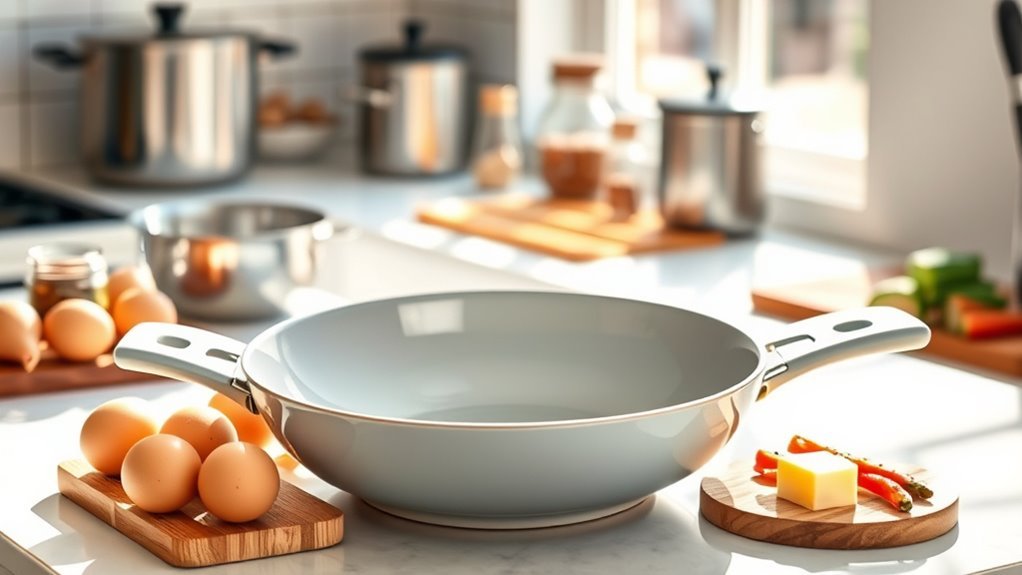
Like choosing a safe path in a dense forest, traversing the world of ceramic nonstick cookware requires discernment. While it promises a healthier alternative, questions linger about its safety and longevity. You might wonder if it truly lives up to the claims of being free from harmful chemicals. Understanding the materials involved and the potential risks can guide you in making an informed decision. So, what exactly should you know before using ceramic cookware?
Health Risks of Ceramic Cookware: What You Need to Know?
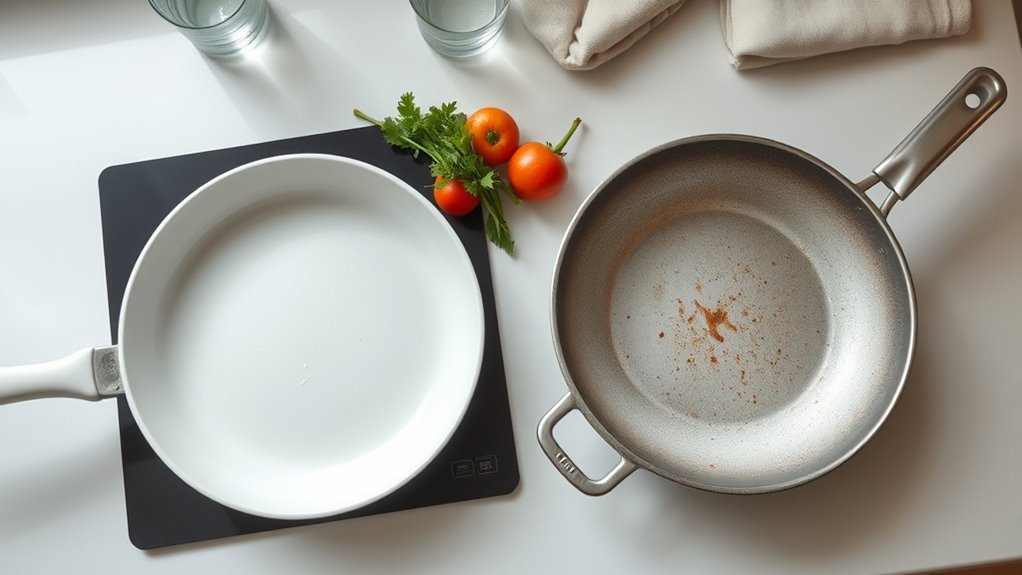
When considering the health risks of ceramic cookware, you might wonder just how safe it really is. While marketed as “nontoxic,” there’s limited scientific evidence supporting these claims. The nonstick properties of ceramic coatings often rely on silica and metal oxides, but proprietary formulations can raise concerns about harmful chemicals released when overheated.
Unlike traditional PTFE coatings that pose serious risks, such as cancer, the long-term effects of ceramic cookware remain largely unknown due to insufficient research.
Unlike PTFE coatings linked to serious health risks, the long-term safety of ceramic cookware is still largely uncertain.
Additionally, safety issues may arise from heavy metals. Vintage or imported ceramic options might still contain lead or cadmium, while modern varieties are typically free from these toxins.
It’s also essential to note that ceramic coatings have a short lifespan of 1-3 years. Once worn, they can expose underlying metal, potentially leading to leaching into your food. Staying informed empowers you to make safer choices in your kitchen.
What Is Ceramic Nonstick Cookware Made Of?
Ceramic nonstick cookware combines a metal base, usually aluminum, with a ceramic coating derived from silicon dioxide, offering an alternative to traditional nonstick surfaces. This ceramic coating provides nonstick properties without harmful chemicals like PTFE or PFOA, appealing to health-conscious consumers.
Applied through sol-gel technology, the coatings aim to create a safe cooking environment.
Reputable brands often conduct independent lab testing to verify their cookware is free from heavy metals such as lead and cadmium. However, the durability of ceramic coatings can vary; expect a lifespan of one to three years with normal use, influenced by your care and cooking techniques.
While ceramic surfaces are marketed as “nontoxic,” it’s important to scrutinize these claims due to the lack of regulatory standards in the industry. Understanding these materials helps you make informed choices about your cookware.
Ceramic vs. Traditional Nonstick Cookware: A Comparison
When comparing ceramic and traditional nonstick cookware, you’ll notice significant differences in performance and longevity.
While ceramic options are marketed as safer due to the absence of PTFE and PFOA, they often lose their nonstick properties within just a few years.
On the other hand, traditional nonstick cookware generally offers better durability and can withstand higher cooking temperatures, raising important health safety considerations.
Performance Longevity Comparison
While many consumers are drawn to ceramic nonstick cookware for its perceived safety and eco-friendliness, its performance longevity often falls short compared to traditional PFAS-coated options.
Ceramic nonstick cookware typically lasts just 1-3 years with regular use, while traditional non-stick pans can maintain their nonstick performance considerably longer when properly cared for.
Customer feedback frequently highlights dissatisfaction with ceramic pans, which may lose their nonstick qualities within months, even at higher price points.
Additionally, ceramic cookware struggles with delicate foods, showing sticking issues that diminish over time.
Both types become unusable when scratched, but ceramic options tend to lose longevity faster, raising questions about their overall value and effectiveness in the kitchen.
Health Safety Considerations
As you weigh your options between ceramic and traditional nonstick cookware, understanding the health safety considerations is vital.
Ceramic coatings are often marketed as “nontoxic,” but it’s important to approach these claims with caution due to a lack of regulatory standards. Unlike traditional nonstick pans, which may contain harmful PFAS, reputable ceramic cookware is typically PFOA and PTFE-free, enhancing its safety profile.
However, keep in mind that overheating ceramic can lead to decomposition, releasing harmful chemicals. Additionally, while ceramic pans may perform well initially, they generally lose their nonstick properties faster than PFAS-coated options.
Prioritizing brands that offer transparency and third-party testing can boost consumer awareness and promote a safer cooking experience.
How to Use Ceramic Cookware Safely?
To use ceramic cookware safely, you need to pay attention to heat settings, utensil choices, and cleaning practices.
Cooking on low to medium heat preserves the ceramic coating, while using appropriate utensils prevents scratches.
Additionally, proper maintenance guarantees your cookware remains safe and effective over time.
Proper Heat Settings
Using proper heat settings is essential for maximizing the performance and longevity of your ceramic cookware. High temperatures can damage ceramic nonstick coatings, leading to sticking issues and compromised nonstick layers.
Here’s how to guarantee safe and effective use:
- Stick to low to medium heat settings for ideal cooking.
- Always add oil or food before heating to prevent thermal shock.
- Use soft utensils, like wood or silicone, to protect the ceramic surface.
- Hand wash your cookware to avoid abrasive detergents that can wear down the coating.
Regularly inspect your ceramic cookware for visible wear. If food begins to stick or the coating shows damage, it’s time to replace it to maintain safe cooking practices.
Utensil Selection Guidelines
When selecting utensils for ceramic cookware, it’s essential to prioritize materials that protect the nonstick surface.
Opt for soft utensils made from wood, silicone, or nylon to preserve the nonstick properties of your ceramic pans. Avoid metal utensils, as they can scratch the ceramic coating, leading to diminished performance and potential leaching of harmful materials.
Always preheat your ceramic cookware with oil or food to prevent thermal shock, which can degrade the nonstick layer.
After cooking, remember to hand wash your ceramic cookware with mild soap and a soft sponge. Steer clear of abrasive cleaners and dishwashers that may wear down the coating.
Finally, store your ceramic cookware with padding to prevent chipping and maintain its integrity.
Cleaning and Maintenance Tips
Proper cleaning and maintenance play an essential role in ensuring the longevity and performance of your ceramic cookware.
To keep your nonstick coating in top shape, follow these tips:
- Always preheat with oil or food to avoid thermal shock.
- Use soft utensils like wood, silicone, or nylon to prevent scratching.
- Hand wash with warm, soapy water; avoid dishwashers and harsh cleaners.
- Store pans carefully with padding between them to prevent chipping.
For stubborn residue, try a paste of baking soda and vinegar to clean gently.
How Long Does Ceramic Cookware Last?
Ceramic cookware generally lasts between one to three years under regular usage, largely influenced by your care and maintenance practices. The durability of ceramic coatings decreases over time, leading to potential sticking issues, especially when scratched or overheated. Quality options, like Made In CeramiClad, feature a sturdy stainless steel core, ensuring longevity, with only the ceramic coating needing replacement eventually.
Here’s a quick overview of factors affecting ceramic cookware longevity:
| Factor | Impact on Longevity |
|---|---|
| Heat Settings | Low to medium extends life |
| Utensil Type | Non-metal avoids scratches |
| Quality of Cookware | Higher quality lasts longer |
| Frequency of Use | Regular use can wear down faster |
| Cleaning Method | Gentle methods preserve coating |
Choosing Safe Ceramic Cookware
How can you guarantee the ceramic cookware you choose is safe for your kitchen? Start by prioritizing brands that provide transparency through published third-party test results. This verification can affirm you of compliance with safety standards.
Look for cookware featuring a stainless steel core, which enhances both safety and durability compared to aluminum alternatives.
When selecting ceramic cookware, consider the following:
- Confirm it’s free from heavy metals like lead and cadmium.
- Opt for products that are PFOA-free, PTFE-free, and PFAS-free to minimize health risks.
- Check for reputable manufacturers who disclose their materials and testing processes.
- Consider cookware made in the USA, as it often adheres to stricter FDA safety standards.
Alternative Cookware Options You Should Consider
If you’re seeking alternatives to ceramic nonstick cookware, consider exploring options like cast iron and stainless steel. Both materials offer durability and enhanced cooking versatility without the health risks associated with nonstick coatings.
Cast iron can be seasoned to create a natural patina, improving its nonstick properties over time. This means you can enjoy effective food release while using high temperatures without worrying about toxic chemicals leaching into your food, a concern with some nonstick options.
Cast iron’s natural seasoning enhances its nonstick qualities, allowing for high-temperature cooking without harmful chemicals leaching into your meals.
Stainless steel, on the other hand, excels at techniques like searing and browning, which mightn’t yield the same results in nonstick pans.
Additionally, exploring secondhand or vintage uncoated cookware can lead to healthier cooking choices, as these pieces often lack harmful chemicals.
Frequently Asked Questions
What Is the Safest Type of Non-Stick Cookware?
The safest type of non-stick cookware is high-quality ceramic. It offers excellent heat retention and cooking performance while being eco-friendly.
To enhance ceramic durability, choose brands with stainless steel cores, which minimize the risk of leaching.
For ideal maintenance, avoid high heat and use non-metal utensils. Regularly check for wear, and replace when necessary to guarantee safety.
What Is Healthier, Ceramic or Nonstick?
When comparing ceramic and nonstick cookware, ceramic often shines due to its environmental impact and healthier materials.
It offers ceramic benefits like better heat retention and cooking efficiency. However, nonstick alternatives, particularly those made with high-quality coatings, can provide longer-lasting performance.
While ceramic may initially feel safer, its durability can wane quickly, leading to potential concerns over food release.
Ultimately, your choice depends on prioritizing health, efficiency, and sustainability in your kitchen.
Which Is the Safest Non-Stick Coating?
When it comes to the safest non-stick coating, high-quality ceramic options often shine.
Imagine sautéing vibrant vegetables in a pan that’s both eco-friendly and heat resistant.
For best ceramic durability, choose brands with stainless steel cores.
While enjoying impressive cooking performance, remember to follow maintenance tips—avoid metal utensils and high heat—to prolong the life of your cookware.
In the end, your choice can lead to both health and culinary liberation.
What Are the Disadvantages of Ceramic Coating Cookware?
Ceramic coating cookware has several disadvantages.
You’ll face durability concerns, as these coatings often lose their nonstick properties in just 1 to 3 years.
Heat resistance is limited, making them unsuitable for high-heat cooking.
Surface longevity can suffer from scratches, especially with metal utensils.
Cleaning challenges arise since food can stick easily, and you’ll want to guarantee food safety, as some brands lack thorough testing for harmful chemicals.
Conclusion
To sum up, while ceramic nonstick cookware offers a seemingly safer alternative, it’s essential to approach it with caution. Studies show that nonstick coatings can degrade at temperatures above 500°F, potentially releasing harmful chemicals. By selecting reputable brands and adhering to proper care guidelines, you can enhance both safety and longevity. Remember, investing in high-quality cookware not only safeguards your health but also improves your cooking experience, making it worth your while in the long run.
