
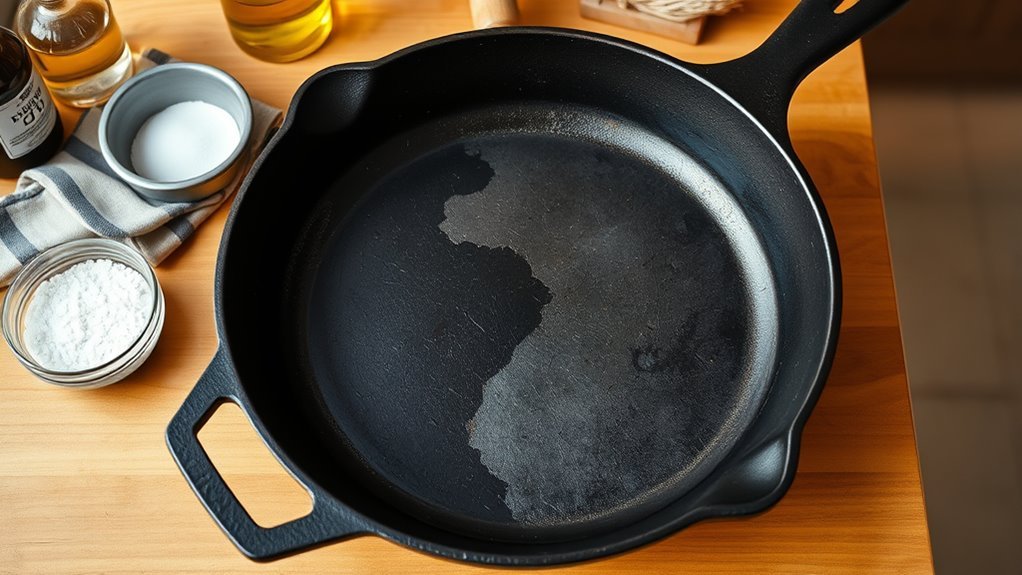
Why do cast iron skillets have that distinctive black hue? This color isn’t just for aesthetics; it stems from a combination of the seasoning process and the way you cook with them. Understanding the causes behind this characteristic can help you maintain your skillet’s integrity. However, neglecting proper care can lead to unsightly discoloration and flaking. So, what steps can you take to preserve your skillet’s appearance and functionality?
How to Clean and Restore Your Cast Iron Skillet?
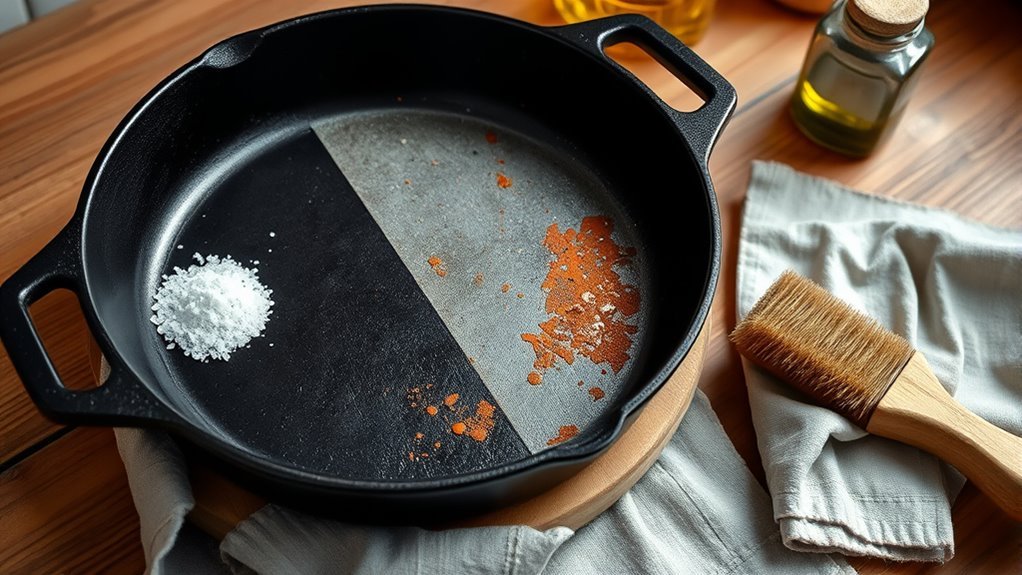
Cleaning and restoring your cast iron skillet is essential for maintaining its durability and cooking performance.
Start by scrubbing away any black gunk using a stainless steel brush or steel wool after soaking it in a vinegar solution for effective rust removal.
If you need a deep clean, consider using an oven cleaner spray; coat the skillet and seal it in a trash bag for a few days to let the cleaner work its magic.
For heavy rust or buildup, a lye bath can be employed, but handle it with care and guarantee proper disposal.
Once cleaned, always season your skillet by applying a thin layer of solid shortening or vegetable oil, then bake it upside down in an oven at 350°F for one hour.
Regular maintenance, like avoiding soap and soaking in water, will help preserve the skillet’s seasoning and prevent rust, ensuring your cast iron skillets remain in top shape.
Common Causes of Discoloration and Flaking in Cast Iron
Maintaining your cast iron skillet goes beyond just cleaning and restoring; understanding the factors that lead to discoloration and flaking is equally important.
Here are some common causes you should be aware of:
- Overheating: This can break down the seasoning, exposing bare metal.
- Improper seasoning: Applying oil too thickly or not baking it long enough can lead to flaking.
- Inadequate maintenance: Regular scrubbing is essential to manage black residue, often iron oxide.
- Acidic foods: Frequent exposure to items like tomatoes can deteriorate the seasoning, resulting in discoloration.
Easy Ways to Clean and Restore Your Skillet
Cleaning and restoring your cast iron skillet doesn’t have to be intimidating.
You can employ effective techniques, like using oven cleaner for tough residues or soaking in vinegar for rust removal.
Regular maintenance is key; by wiping out grease and reseasoning, you preserve that essential black patina.
Effective Cleaning Techniques
Effective care of your cast iron skillet guarantees its longevity and performance. Implementing proper cleaning and maintenance techniques is essential for preserving its seasoning and preventing rust.
Here are some effective methods:
- Use a paste of Kosher salt and water to scrub off stuck food.
- For deeper cleaning, seal the skillet in a trash bag with oven cleaner for several days.
- Soak in vinegar to tackle rust, but follow up with a brass wire brush to address any staining.
- Regularly wipe out grease with a paper towel and rinse with hot water—no soap.
Restoration With Oven Cleaner
Revitalize your cast iron skillet with oven cleaner, a powerful tool for breaking down stubborn grease and residue. Products like Heavy Duty Easy Off effectively restore your skillet when applied and sealed in a trash bag for several days.
Before application, it’s wise to clean off any black gunk to enhance the cleaner’s effectiveness. Always wear gloves and protective gear, as the chemicals can be harsh and require proper ventilation.
After the cleaning process, don’t forget to re-season your skillet; this step is essential for restoring its protective layer and maintaining cooking performance.
Regular maintenance, including periodic deep cleaning with oven cleaner, helps prevent residue buildup, ensuring your cast iron remains in peak condition for years to come.
Maintaining Seasoning Regularly
After restoring your cast iron skillet with oven cleaner, maintaining its seasoning becomes a key part of ensuring long-lasting performance.
Here are some easy ways to clean and restore your skillet:
- Wipe with a paper towel after each use to remove excess oil.
- Rinse under hot water without soap to preserve the seasoning.
- Use a paste of Kosher salt and water for stubborn bits, as it cleans without damaging the non-stick surface.
- Replenish seasoning by cooking fatty foods or applying a light oil coating.
Avoid soaking your skillet, as moisture can cause rust and harm the seasoning.
Seasoning Your Cast Iron for Longevity
While many overlook the importance of seasoning, it’s vital for maintaining the longevity of your cast iron skillet. Seasoning involves applying a thin layer of fat—like solid shortening or vegetable oil—to create a protective, non-stick coating.
To effectively season, preheat your oven to 350 degrees Fahrenheit and bake the skillet upside down for an hour. This method guarantees an even coating and prevents pooling. Over time, consistent seasoning builds layers that enhance the skillet’s non-stick properties and guard against rust.
Additionally, cooking fatty foods, such as bacon or sausages, can naturally improve your skillet’s seasoning while infusing flavors into your dishes.
Regular maintenance is essential; after each use, light reapplication of oil keeps the seasoning intact, making sure your skillet remains in peak condition. By prioritizing this process, you empower your cookware to serve you well for years, embodying the essence of liberation in your culinary adventures.
Tips for Preventing Future Issues With Your Skillet
Maintaining your cast iron skillet goes beyond just seasoning; it involves implementing proactive measures to prevent future issues. Here are some essential tips to keep your skillet in top shape:
- Regularly season your skillet with a thin layer of solid shortening or vegetable oil after each use to preserve its black patina and guard against rust.
- Clean your skillet promptly with hot water and a sponge to prevent food residue from hardening and compromising the seasoning layer.
- Avoid soaking your skillet or using soap, as these actions strip away the seasoning and expose the iron to moisture.
- Store your skillet in a dry place, placing a paper towel inside to absorb any moisture and combat rust.
Shared Tips From Cast Iron Enthusiasts
When it comes to maintaining your cast iron skillet, enthusiasts swear by specific cleaning techniques and seasoning methods.
For effective seasoning, using vegetable shortening can create a robust, non-stick surface, while regular cooking with fats helps preserve that essential black patina.
Additionally, gentle cleaning with hot water and a sponge prevents damaging the seasoning, ensuring your skillet remains in top shape for years.
Best Cleaning Techniques
Cleaning your cast iron skillet doesn’t have to be a chore; with the right techniques, it can be a straightforward process that preserves its longevity.
Here are some effective cleaning methods to maintain your skillet:
- Soak in vinegar for rust removal.
- Use a paste of kosher salt and water for stubborn residue.
- Clean with brass or stainless steel brushes to avoid damaging the surface.
- Apply a thin layer of shortening or vegetable oil and bake upside down at 350°F for an hour to develop a non-stick patina.
Seasoning Advice
After guaranteeing your cast iron skillet is clean and ready for use, the next step is seasoning—a vital process that enhances its cooking performance. Apply a thin layer of solid shortening or vegetable oil, then bake it upside down at 350°F for one hour. This method creates a durable, non-stick surface. Cooking fatty foods like bacon or fried chicken boosts the seasoning layer, improving the skillet’s non-stick properties. Regular maintenance, such as light seasoning after each use and avoiding soaking in water, preserves the skillet’s black patina and prevents rust.
| Step | Action | Purpose |
|---|---|---|
| Apply Oil | Thin layer of oil | Create a non-stick surface |
| Bake | 350°F for 1 hour | Guarantee even seasoning |
| Cook | Use fatty foods | Enhance seasoning layer |
Frequently Asked Questions
Are Cast Iron Skillets Supposed to Be Black?
Yes, cast iron skillets are supposed to be black. This color comes from effective cast iron seasoning, which enhances cooking performance and heat retention.
Proper skillet maintenance guarantees a durable, non-stick surface, promoting food safety by preventing rust. Over time, as you cook and re-season, the skillet develops a rich black hue, indicating its readiness for high-heat cooking.
If it loses this color, it likely needs re-seasoning to restore its ideal condition.
How Do You Cure a Black Cast Iron Skillet?
To cure a black cast iron skillet, start by applying a thin layer of solid shortening or oil.
Preheat your oven to 350°F (175°C) and place the skillet upside down on a baking sheet. Bake for an hour to allow the oil to polymerize, enhancing its seasoning.
After baking, cool it in the oven.
Regularly cooking fatty foods can improve your skillet’s black patina, offering benefits like a natural non-stick surface and easier maintenance.
When Should I Throw Away My Cast Iron Pan?
You should throw away your cast iron pan if it’s extensively rusty, warped, or has deep cracks affecting its safety.
Flaking seasoning that hampers cooking performance is also a red flag. If the skillet emits foul odors or stubborn residue persists despite your best cleaning efforts, it’s time to let it go.
Prioritizing cast iron maintenance guarantees skillet longevity, so don’t hesitate to replace it when necessary for ideal cooking results.
How Can You Tell if a Cast Iron Skillet Is Ruined?
You can tell if your cast iron skillet is ruined by checking for extensive rust, deep cracks, or warping.
If it has a persistent bad odor or a black residue that won’t budge, its cooking performance is compromised.
Additionally, if the seasoning is stripped away, you’re left with bare metal, making it prone to rust and sticking.
Regular cast iron maintenance, effective seasoning techniques, and care tips can help prolong its life.
Conclusion
To sum up, maintaining your cast iron skillet’s black sheen involves a delicate balance of proper cleaning, seasoning, and mindful cooking. Just as the skillet transforms over time, so too does your expertise in caring for it. Coincidentally, each meal prepared not only enhances its flavor but also deepens its character. By following these guidelines, you’ll not only preserve its functionality but also create a rich history of culinary experiences that intertwine with the skillet’s enduring legacy.
