
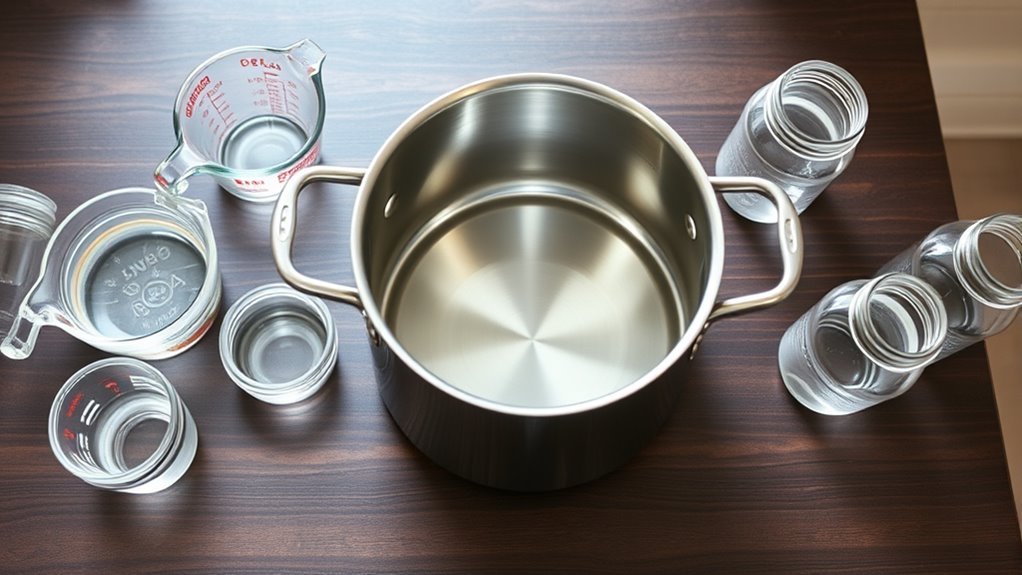
Stock pot sizes range from compact 4-quart models to large 20-quart pots designed for bulk cooking. But a bigger pot is not always better. The right choice depends on how much food you make, the space you have, and how much room you need for boiling or stirring.
Quick Answer
An 8-quart stock pot is a practical choice for most households. Choose 4–6 quarts for smaller meals, 10–12 quarts for family batches, and 16–20 quarts for large stocks or gatherings. Remember that rated capacity is not usable cooking capacity. Leave extra space for boiling, stirring, and ingredients.
Key Takeaways
- Stock pot capacity is measured in US liquid quarts, with 1 quart equal to approximately 0.946 liters.
- A pot’s diameter alone cannot tell you its capacity. Interior depth and shape matter too.
- For vigorous boiling, leaving roughly one-third of the pot empty helps prevent spills.
- Tall, narrow pots reduce evaporation, while wider bases give you more room for browning ingredients.
- A stock pot can work for certain boiling-water canning tasks, but it cannot replace a pressure canner.
Quick Guide: Which Stock Pot Size Should You Buy?
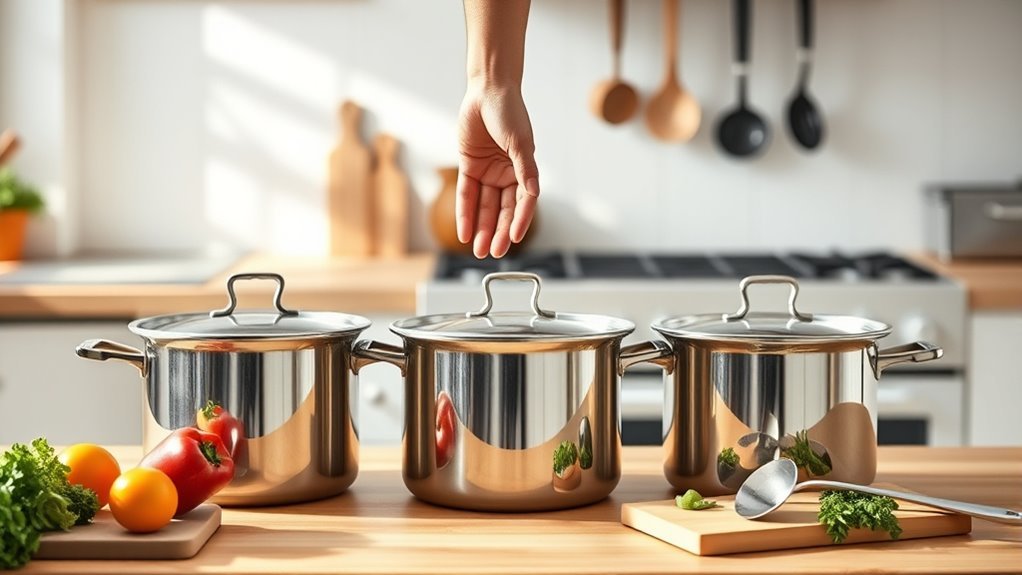
For everyday cooking, an 8-quart stock pot offers a useful balance of capacity, weight, and storage space. It can handle family-size soups, stews, pasta, and homemade stock without taking over your kitchen.
However, your usual recipes matter more than your household size alone. A couple who makes weekly bone broth may need a larger pot than a family that cooks small, fresh meals.
Start by thinking about your normal cooking routine:
- 4–6 quarts: Small households, side dishes, modest soups, and simple meals.
- 8 quarts: Everyday family cooking, pasta, chili, and moderate batches of stock.
- 10–12 quarts: Larger family meals, batch cooking, and stock with bulky ingredients.
- 16–20 quarts: Large gatherings, substantial bone broth batches, and seafood boils.
According to Made In’s stock pot size guide, 8 quarts is a versatile starting point, while smaller and larger models suit different cooking volumes.
Before choosing, consider three practical questions. Will the pot fit your burner? Can you lift it safely when full? And do you have enough cabinet space for its height, lid, and handles?
A larger pot offers flexibility, but it can also take longer to heat and be harder to wash or store. Choose the smallest size that comfortably handles your biggest regular recipe.
Common Stock Pot Sizes (4–20 QT) and What Each Handles
Common stock pot sizes include 4, 6, 8, 10, 12, 16, and 20 quarts. Each size serves a different purpose, from preparing a small batch of soup to cooking stock for a gathering.
The comparison below shows both total capacity and an approximate working volume at 75% full. This working volume is useful for gentle simmering, not a recommended maximum for vigorous boiling.
| Pot Size | Total Capacity | Approx. 75% Fill | Typical Uses |
|---|---|---|---|
| 4 QT | 3.8 L | 3 QT | Small soups, sauces, potatoes, vegetables |
| 6 QT | 5.7 L | 4.5 QT | Meals for two to four, small stock batches |
| 8 QT | 7.6 L | 6 QT | Family soups, pasta, stews, chili |
| 10 QT | 9.5 L | 7.5 QT | Larger family meals and meal prep |
| 12 QT | 11.4 L | 9 QT | Batch cooking, chicken stock, large stews |
| 16 QT | 15.1 L | 12 QT | Bulk stock, large poultry bones, seafood boils |
| 20 QT | 18.9 L | 15 QT | Party cooking, community meals, large stock batches |
These are approximate cooking recommendations. Actual working volume depends on the ingredients, cooking method, and amount of bubbling. Solid ingredients also take up space inside the pot.
A 4-quart pot works well for small batches, but it offers limited room for boiling large amounts of pasta. The 6-quart size provides more flexibility while remaining manageable for smaller kitchens.
An 8-quart pot is the everyday workhorse. Depending on portion size, it can produce approximately 8–12 generous servings of soup or stew when used for a substantial batch.
An 8-quart pot is the everyday workhorse—perfect for 8–12 servings of soup, pasta, or stew for most homes.
A 12-quart pot gives you extra room for homemade broth, meal prep, and larger family meals. It also accommodates bulky bones and vegetables better than smaller cookware.
For large gatherings, 16- and 20-quart stock pots reduce the need to cook several separate batches. However, you need a suitable burner, enough counter space, and a safe way to move the finished food.
Measuring a Stock Pot: Diameter, Depth, and Usable Fill
To determine a stock pot’s capacity, you need its internal diameter and usable depth. Diameter tells you how wide the pot is, while depth helps determine how much liquid it can hold.
Two pots with the same diameter can have very different capacities if one is taller. That is why choosing a pot based on width alone can be misleading.
Start with the manufacturer’s stated capacity. If the marking is missing or unclear, you can measure the interior or fill the pot with a measuring jug while it is cool.
How to Calculate Stock Pot Capacity
For a straight-sided, cylindrical pot, use this formula:
Capacity in US quarts = 3.1416 × radius² × interior depth ÷ 57.75
Measure radius and depth in inches. The radius is half the inside diameter, and 57.75 cubic inches equals one US liquid quart.
For example, consider a pot with an internal diameter of 8 inches:
- At 4 inches deep, its calculated volume is approximately 3.5 quarts.
- At 6 inches deep, its calculated volume is approximately 5.2 quarts.
- At 8 inches deep, its calculated volume is approximately 7 quarts.
These calculations assume straight sides and a flat interior bottom. Rounded corners, tapered walls, and other design features can reduce the actual volume.
For a real-world comparison, Le Creuset’s 6-quart stockpot specifications list an interior diameter of 8.1 inches and an interior height of 6.9 inches.
Rated Capacity vs. Usable Cooking Capacity
A stock pot’s rated capacity usually describes how much liquid it can hold when filled nearly to the rim. You should not treat that number as your normal cooking volume.
For example, an 8-quart pot filled to 75% contains 6 quarts. That leaves 2 quarts of headroom for stirring, bubbling, and ingredients.
The amount of headroom you need changes with your cooking method. A gentle simmer needs less room than a vigorous boil, especially when cooking pasta or starchy foods.
When choosing between two sizes, think about the amount of food you want to cook, not just how much plain water fits inside.
Which Stock Pot to Choose by Household, Dish, and Occasion
Choose your stock pot based on household size, recipe volume, and how often you cook for guests. A smaller household may prefer a 6-quart pot, while someone making weekly stock could benefit from 12 quarts or more.
There is no perfect pot size for every person. Serving sizes, leftovers, and the type of food all affect how much space you need.
Household Size Guide
For one or two people, a 6-quart stock pot is often enough for daily cooking. An 8-quart pot offers more flexibility for families, while 12 quarts or more suits regular batch cooking.
Use these guidelines as a starting point:
- 1–2 people: A 4–6 quart pot handles small meals, soups, and side dishes.
- 3–4 people: An 8-quart pot gives you space for family dinners and leftovers.
- 5–6 people: An 8–12 quart pot works well, depending on the recipe and desired batch size.
- 6–8 people or regular meal prep: A 12-quart pot provides useful extra capacity.
- Large groups: Consider 16 quarts or more for substantial batches.
A pot’s capacity does not translate directly into a fixed number of servings. A small bowl of soup uses much less volume than a large serving of hearty stew.
For a rough estimate, divide your expected finished cooking volume by the amount you plan to serve per person.
Dish-Based Capacity
Different foods need different amounts of space. Soup takes up relatively predictable volume, while pasta requires room for water and movement. Bone broth also needs space for bones, vegetables, and liquid.
For smaller soups and stews, a 4–6 quart pot is often sufficient. An 8-quart pot is more practical when you want to cook a full family meal with leftovers.
For pasta, choose a pot with enough water for the amount you are cooking. A roomy pot makes stirring easier and helps prevent the water from overflowing as it boils.
For bone broth or chicken stock, consider a 12–16 quart pot when working with large bones or multiple carcasses. The ingredients must fit below the rim with enough room for liquid and gentle simmering.
If you frequently brown meat before making stew, the width of the cooking surface matters too. A wide, heavy-bottomed stock pot lets you brown ingredients in batches before adding liquid.
A Dutch oven may be a better choice for smaller braises that need steady heat and covered oven cooking. Stock pots are generally more convenient for large volumes of liquid.
Occasion And Volume
For everyday meals, a 6–8 quart pot usually provides enough flexibility. For parties, holidays, and community events, 12–20 quarts or more can be useful.
Think about how many separate batches you want to make. One large pot can save effort, but it may be harder to heat, lift, and clean.
- Weeknight dinners: Choose 6–8 quarts for soups, pasta, vegetables, and sides.
- Weekend meal prep: Choose 8–12 quarts for larger batches and leftovers.
- Family gatherings: Consider 12–16 quarts for stock, stew, or a substantial seafood boil.
- Community meals and large events: Choose 20 quarts or larger when your cooking equipment supports it.
- Home canning: Select a suitable pot based on jar height, rack clearance, water depth, and the approved canning method.
For boiling-water canning, a large stock pot may work if it has a suitable rack, a fitted lid, and enough depth to keep jars covered by the required amount of water. The University of Minnesota Extension’s home-canning guidance explains that jars need 1–2 inches of water above their tops during processing.
Warning: A regular stock pot is not a substitute for a pressure canner. Low-acid foods, including most vegetables and meats, require proper pressure canning for safe shelf-stable preservation. Follow tested recipes and approved procedures. The USDA’s pressure-canning information explains why boiling-water processing is not sufficient for these foods.
If canning is your main goal, evaluate the pot as canning equipment rather than buying solely by its quart rating.
How Material, Shape, and Construction Affect Capacity Use
A stock pot’s material and shape affect how it heats, how quickly liquid evaporates, and how easy it is to use. Two pots with the same quart rating can perform differently because their bases and walls are built differently.
Stainless steel is popular because it is durable, easy to clean, and suitable for many types of cooking. However, stainless steel alone does not distribute heat as quickly as aluminum.
That is why many quality stainless steel pots use an aluminum core or bonded base. The aluminum spreads heat across the cooking surface, helping reduce hot spots and sticking.
For example, the All-Clad D3 8-quart stockpot uses bonded stainless steel and aluminum construction to support even heating.
Aluminum stock pots are generally lighter than comparable heavy stainless steel designs. They heat efficiently, making them useful for boiling large amounts of water. However, uncoated aluminum may react with acidic ingredients.
Enamel-coated steel is another option. It offers a nonreactive cooking surface, but you should avoid damaging the coating and follow the manufacturer’s care instructions.
Pot shape also changes how you cook:
- Tall, narrow pots: Reduce the exposed liquid surface and help limit evaporation during long simmers.
- Wide, shallow pots: Expose more liquid to the air, making them useful when you want broth or sauce to reduce faster.
- Wide cooking bases: Provide more room for browning meat and vegetables before adding liquid.
- Heavy, well-built bases: Improve heating consistency and help reduce the risk of scorching during long cooking sessions.
Deep, narrow pots preserve liquid for long simmers; wide, shallow pans speed evaporation and concentrate stocks faster.
Construction quality matters as well. Look for sturdy handles, secure rivets or welds, a stable base, and a lid that fits properly.
Remember that a large pot becomes much heavier when filled. Secure handles and a comfortable grip are especially important for 16- and 20-quart models.
Finally, confirm cooktop compatibility. Not every stainless steel or aluminum stock pot works on induction. Induction cookware needs a compatible magnetic base, so check the manufacturer’s specifications before buying.
Practical Tips: Fill Limits, Quart Conversions, and Buying Checklist
Before buying a stock pot, understand its working volume, measurement units, and physical dimensions. These details help you avoid boil-overs, crowded cooking, and a pot that does not fit your stove.
Start with capacity, but make your final decision based on how you plan to use the pot.
How Full Should You Fill a Stock Pot?
For vigorous boiling, filling a pot to around two-thirds of its capacity is a cautious starting point. This leaves room for bubbling, especially when cooking pasta or other starchy foods.
For gentle simmering, around 75% capacity is a practical planning estimate. Some recipes may allow 75–85% fill, but that depends on the pot’s shape, the ingredients, and how actively the liquid moves.
Do not treat any percentage as a universal safe limit. If the liquid rises toward the rim, reduce the heat or remove some of the contents.
When adding large ingredients, remember that bones, meat, potatoes, and vegetables displace water. A pot that looks half full before adding food may become crowded afterward.
Stock Pot Quart-to-Liter Conversions
US stock pot capacity is normally measured in liquid quarts. One US liquid quart equals approximately 0.946 liters, four US cups, or 32 US fluid ounces.
The National Institute of Standards and Technology’s cooking measurement table provides these standard kitchen conversions.
- 1 quart: Approximately 0.946 liters or 4 cups.
- 4 quarts: Approximately 3.8 liters or 1 US gallon.
- 8 quarts: Approximately 7.6 liters or 2 US gallons.
- 12 quarts: Approximately 11.4 liters or 3 US gallons.
- 16 quarts: Approximately 15.1 liters or 4 US gallons.
- 20 quarts: Approximately 18.9 liters or 5 US gallons.
For perspective, a 12-quart pot has a total capacity of 48 cups. At 75% full, it holds approximately 36 cups before accounting for ingredients.
This distinction matters when you calculate servings or scale up a recipe.
What to Check Before Buying
Choosing the right capacity is only part of buying a stock pot. The best size should also fit your stove, storage space, and cooking habits.
- Capacity: Choose a size that holds your normal recipes with enough room for stirring and boiling.
- Internal dimensions: Check the diameter and depth, especially for large ingredients.
- Cooktop fit: Make sure the base fits your burner and does not interfere with nearby controls.
- Material: Choose durable cookware with a base suited to your cooking style.
- Handles: Look for secure handles that provide a comfortable grip.
- Lid: Choose a fitted lid to help control heat and evaporation.
- Storage: Measure cabinet height and shelf space, including the lid and handles.
- Cleaning: Consider the pot’s weight and whether it fits comfortably in your sink.
Pro Tip: If you already own a stock pot, measure the volume of your most common recipe using a marked jug. Compare that amount with the pot’s rated capacity before upgrading. You may discover that extra headroom matters more than buying the largest available size.
A little planning helps you avoid buying cookware that is too bulky, too small, or difficult to handle during everyday cooking.
Frequently Asked Questions
How Big Is a 6 Qt Stock Pot?
A 6-quart stock pot holds approximately 5.7 liters or 24 US cups when filled to its rated capacity. Its dimensions vary by manufacturer. It works well for small soups, stews, chili, and pasta for smaller households. Leave enough space at the top for safe cooking.
What Size Is a Normal Stock Pot?
A normal household stock pot is commonly around 6–12 quarts, with 8 quarts being a versatile everyday choice. Smaller pots suit limited portions, while 12-quart models offer more room for stock and batch cooking. Your ideal size depends on your recipes, storage, and stovetop.
How Many Quarts Are in an 8 Inch Pot?
An 8-inch pot has no fixed quart capacity because its depth also matters. A straight-sided pot with an 8-inch internal diameter holds approximately 3.5 quarts at 4 inches deep or 5.2 quarts at 6 inches deep. Rounded bottoms and tapered walls can change these figures.
Is a 10 Qt Stock Pot Big Enough?
Yes, a 10-quart stock pot is big enough for many family meals, soups, pasta dishes, and moderate stock batches. It provides approximately 7.5 quarts at 75% fill. However, very large bone broth batches, seafood boils, or meals for big gatherings may require 12–20 quarts or more.
Conclusion
The right stock pot size depends on what you cook most often. For many kitchens, an 8-quart pot is a sensible starting point. Choose 6 quarts for smaller meals, 12 quarts for batch cooking, and 16–20 quarts when you regularly prepare food in large quantities.
Before buying, compare the pot’s actual dimensions, working capacity, construction, and storage needs. A well-chosen stock pot should make your everyday cooking easier without taking up more space than necessary.
Sources
- Made In: What Size Stock Pot Do You Need?: Common stock pot sizes and cooking applications.
- Le Creuset: 6-Quart Stockpot Specifications: Manufacturer-reported capacity and interior dimensions.
- All-Clad: D3 Stainless 8-Quart Stockpot: Cookware construction, materials, and dimensions.
- National Institute of Standards and Technology: Cooking Measurement Equivalencies: US quart, cup, and metric conversions.
- University of Minnesota Extension: Preserving Food at Home: Suitable equipment and water-depth requirements for boiling-water canning.
- USDA National Agricultural Library: Pressure Canning: Safe preservation requirements for low-acid foods.
