
The best waterproof gardening gloves for 2027 include COOLJOB Waterproof Gardening Work Gloves, KAYGO KG150, Waterproof Work Gloves Superior Grip, Schwer CR3306, and Thorn-Proof Latex Work Gloves. These options stand out for dry hands, strong grip, flexible fit, and durable coatings that handle mud, wet tools, and rough garden tasks well. Some also add breathable backs, cut resistance, or extra cuff protection. More details can help narrow the right pair for specific yard work needs.
COOLJOB Waterproof Gardening Work Gloves, 2 Pairs
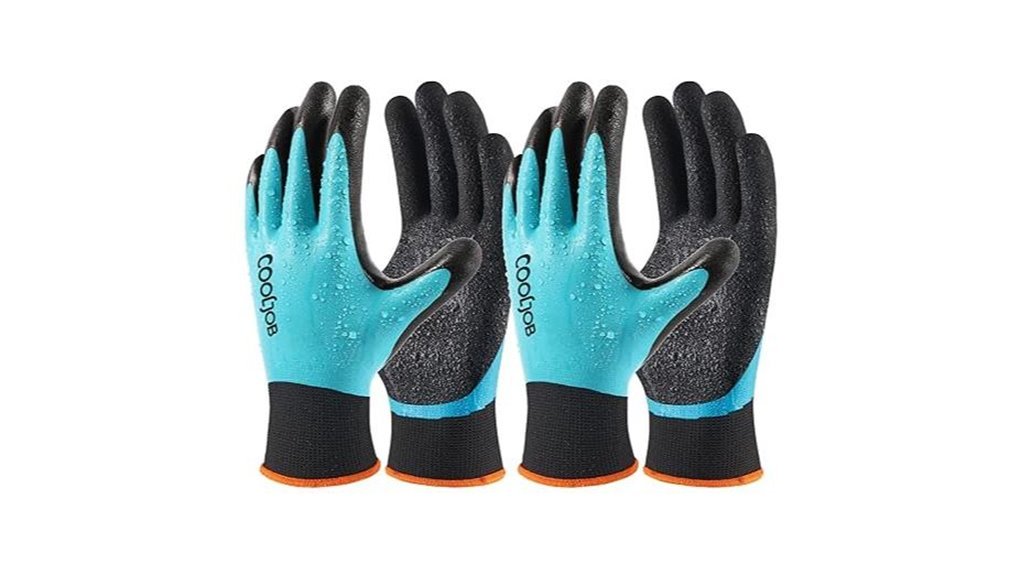
COOLJOB Waterproof Gardening Work Gloves are a strong pick for gardeners who want reliable hand protection without sacrificing grip or comfort. This medium-sized, double rubber-coated pair suits both women and men, with fully latex-coated palms and fingers that help keep hands dry and clean. Sandy latex improves traction, while the 15-gauge polyester base adds breathability. The snug fit and long elastic cuff help block dirt and mud. Bright blue styling boosts visibility, and the black coating hides wear. They handle gardening, farming, and DIY work well.
Best For: Gardeners, DIYers, and outdoor workers who want waterproof hand protection with a secure grip and breathable comfort in wet or dirty conditions.
Pros:
- Fully latex-coated palms and fingers help keep hands dry and clean.
- Sandy latex finish provides strong non-slip grip and better dexterity.
- Snug fit with a long elastic cuff helps keep dirt and mud out.
Cons:
- Medium size only, so fit may not suit everyone.
- Double latex coating may feel less flexible than lighter gloves.
- Best suited for light to moderate wet tasks rather than heavy-duty industrial use.
KAYGO Waterproof Work Gloves, Non-Slip Double Latex Coated, KG150
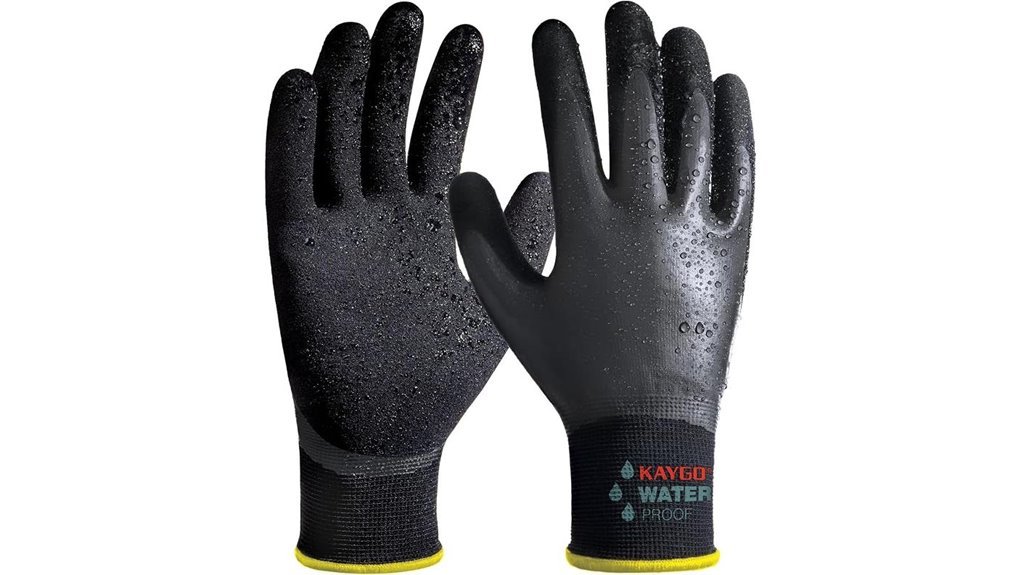
KAYGO’s KG150 suits gardeners who need reliable grip in wet conditions. The large, ambidextrous glove uses polyester, spandex, and latex with a double latex coating that keeps palms, backs, and fingers fully waterproof, while the elastic wrist remains open. Sandy latex improves traction on wet, oily, or dry surfaces, helping with tools, hoses, and heavier materials. It stays flexible enough for precise control during planting or repairs. At 0.07 kg, it is lightweight, reusable, and suited to gardening, cleaning, fishing, and other demanding tasks. Machine washing preserves performance, and a six-month warranty adds reassurance.
Best For: Gardeners and other hands-on users who need lightweight, waterproof gloves with strong grip and good dexterity for wet or messy tasks.
Pros:
- Fully waterproof on the palms, backs, and fingers for reliable use in wet conditions
- Sandy double latex coating provides excellent grip on wet, oily, or dry surfaces
- Lightweight, flexible, and reusable for comfortable all-day wear
Cons:
- The elastic wrist is not waterproof, so some water can still get in there
- Machine washing is required to maintain performance, which may be less convenient for some users
- Large size only may limit fit options for some buyers
Waterproof Work Gloves Superior Grip Gardening Gloves
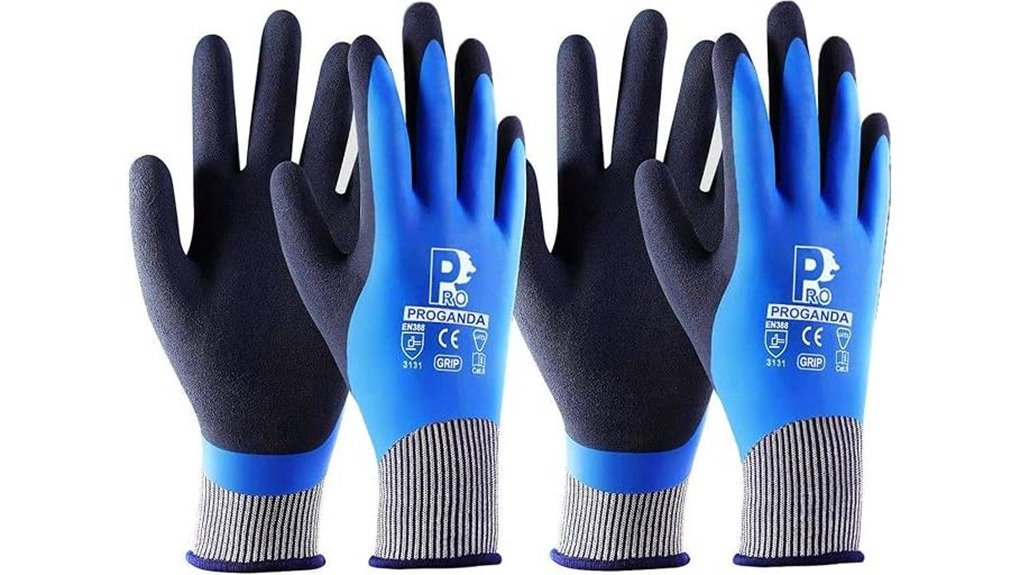
Waterproof work gloves suit gardeners who need dry hands and a dependable grip in messy conditions. They help block water, mud, and cold while supporting steady handling of tools and equipment. Reinforced palms and fingertips improve durability in high-wear areas, making them practical for repeated outdoor tasks. A snug, flexible fit preserves dexterity, so handling pruning shears, trowels, and buckets remains controlled. Adjustable wrist closures add comfort and help keep debris out. For professionals and weekend gardeners alike, these gloves offer reliable protection and consistent performance in wet, demanding gardens.
Best For: Gardeners, tradespeople, and weekend DIYers who need waterproof hand protection, strong grip, and comfort in wet or muddy conditions.
Pros:
- Keeps hands dry and protected in wet, muddy, and cold conditions
- Reinforced palms and fingertips improve durability for repeated use
- Snug, flexible fit supports grip and dexterity for tool handling
Cons:
- May feel warmer or less breathable during long periods of use
- Adjustable closures can take a little extra time to fasten properly
- Waterproof protection may reduce tactile sensitivity compared with lighter gloves
Schwer 2 Pairs Waterproof Work Gloves Double Latex Coated, CR3306, M
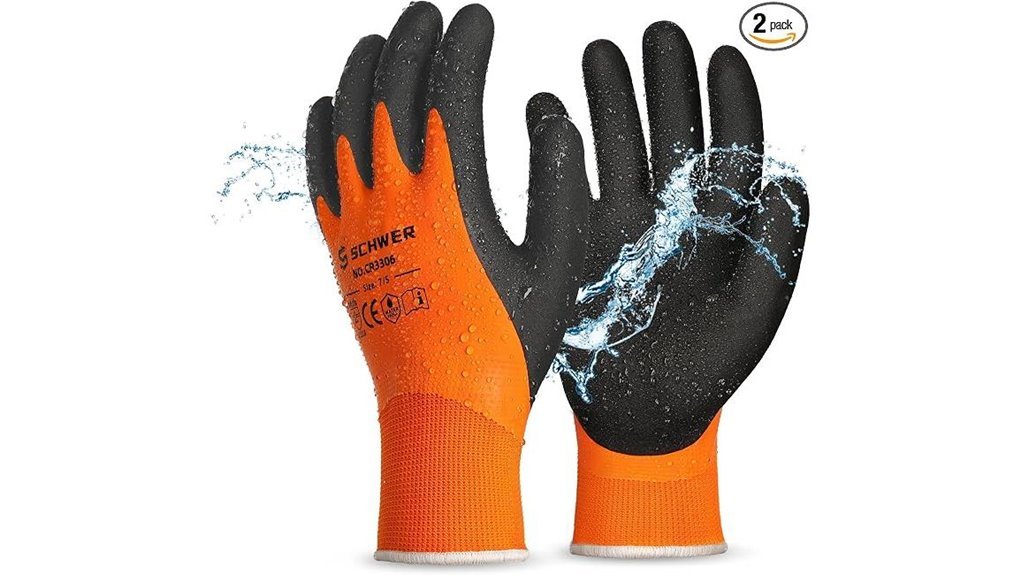
With double-layer latex coating and a high-visibility fit, Schwer’s CR3306 suits wet, rugged outdoor tasks. The medium-size set includes two pairs of imported nylon-and-latex gloves in high-viz orange. Foam latex palms improve grip in rain, mud, or dry conditions, while the elastic cuff helps keep debris out and the snug build supports dexterity. The design is waterproof, windproof, and rated for ANSI A2 cut resistance, with non-PFAS construction for reduced irritation. Suitable from 0°F to 100°F, it fits gardening, cleaning, fishing, painting, and light construction. Hand washing and air drying preserve performance.
Best For: People who need affordable, high-visibility, waterproof work gloves for outdoor chores, light construction, gardening, cleaning, fishing, or painting in wet or rugged conditions.
Pros:
- Double-layer latex coating makes them waterproof, windproof, and well-suited for wet work.
- Foam latex palms provide strong grip and help reduce slippage and hand fatigue.
- Non-PFAS, ANSI A2 cut resistance, and a comfortable snug fit add safety and usability.
Cons:
- Hand wash and air dry only, which is less convenient than machine-washable gloves.
- Limited cut resistance may not be enough for heavy-duty or high-risk jobs.
- Latex material may not be ideal for users with latex sensitivities.
Gardening Gloves, Waterproof Thorn-Proof Latex Work Gloves
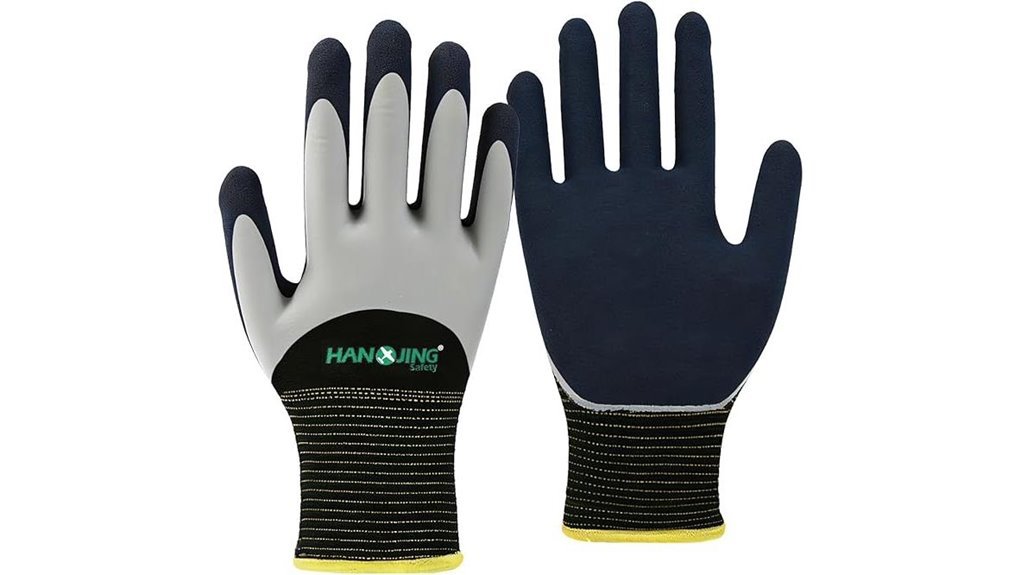
Ideal for rose pruning and weeding, these gloves suit gardeners who want thorn protection and water resistance. Gardening Gloves, Waterproof Thorn-Proof Latex Work Gloves use treated natural latex and breathable polyester for a soft, flexible, lightweight build. Reinforced padding on palms and fingertips helps resist rose thorns, twigs, and cactus spines, while the 3/4 latex coating blocks mud and moisture. The knit back improves airflow, and odor control helps limit sweat smells. They fit snugly, so sizing up is wise. Rinse after use and air-dry for repeated wear.
Best For: Gardeners, including men and women, who need flexible, thorn-resistant gloves for rose pruning, weeding, planting, and other yard work with added water resistance.
Pros:
- Reinforced palm and fingertip padding helps protect against rose thorns, sharp twigs, and cactus spines.
- 3/4 latex coating provides good resistance to mud and moisture while the knit back improves breathability.
- Lightweight, flexible, and snug-fitting design supports comfortable extended use.
Cons:
- The back of the glove is not fully waterproof.
- Fit runs snug, so some users may need to size up.
- Not fully impenetrable against extremely sharp thorns.
Factors to Consider When Choosing Waterproof Gardening Gloves in 2026
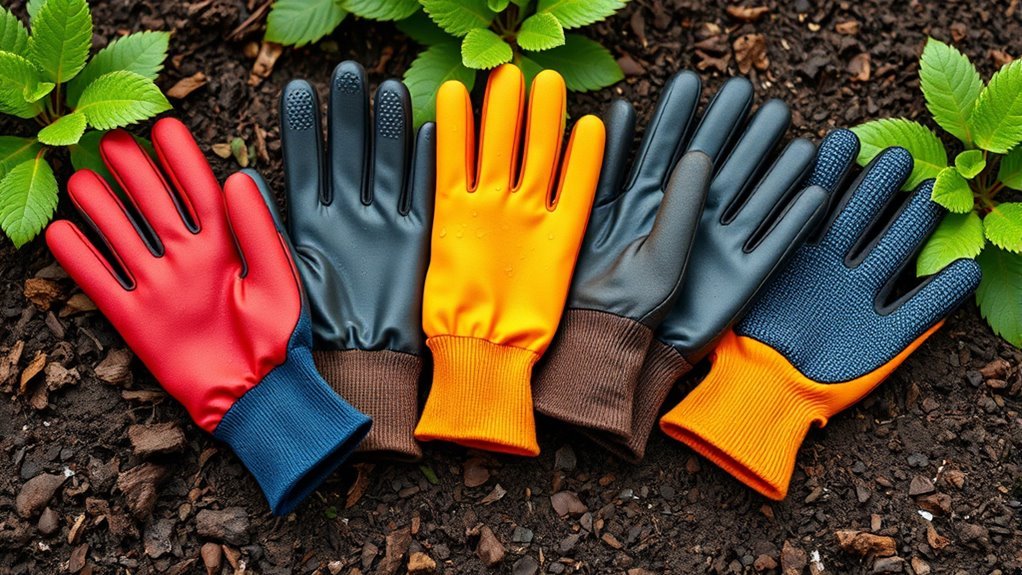
In 2026, selecting waterproof gardening gloves depends on how well they block moisture while still allowing a secure grip on tools. Material durability, breathability, and fit also shape how long the gloves last and how comfortably they support steady hand movement. A balanced pair should protect against wet conditions without sacrificing dexterity during detailed gardening tasks.
Waterproof Coverage
Complete waterproof coverage is essential when choosing gardening gloves, since the palms, backs, and fingers should all stay dry during wet tasks. A full-coverage design helps prevent moisture from seeping through during watering, weeding, or handling damp soil. Latex-coated gloves are often preferred because latex delivers reliable waterproof protection and strong durability. Elastic wrist cuffs are also useful, as they help block water, mud, and debris from entering the glove opening. Breathability should not be ignored; a waterproof glove that allows some airflow can reduce sweat buildup and odor during longer sessions. Thickness matters as well, since a more substantial waterproof layer can improve resistance to abrasions and minor punctures while still keeping hands protected in consistently wet conditions.
Grip Performance
Grip performance remains a key factor in waterproof gardening gloves, especially when wet or oily conditions make slipping more likely. A dependable non-slip surface helps maintain control of tools, pots, and garden materials during planting, pruning, and other routine tasks. Many models use sandy latex technology to improve traction while preserving dexterity, allowing precise hand movements without sacrificing security. Reinforced palm and fingertip areas can add extra grip in the zones that contact tools most often. Better traction also reduces hand fatigue, since less effort is needed to keep objects steady. By limiting accidental slippage, strong grip performance supports safer, more efficient gardening and makes waterproof gloves more effective in demanding conditions.
Material Durability
Material durability is an essential factor in waterproof gardening gloves, since high-quality pairs must withstand repeated exposure to moisture, soil, and heavy use. Gloves made from latex, polyester, or nylon typically offer a strong balance of water resistance and long service life. Reinforced palms and fingertips are especially important, as these areas face constant friction, cutting, and abrasion during planting, pruning, and digging. Tear-resistant construction further helps gloves endure demanding tasks without failing early. A well-designed glove also retains elasticity, supporting a snug fit that reduces slippage and limits unnecessary strain on seams. Easy care matters as well; gloves that can be rinsed or machine washed are often easier to maintain, helping preserve structural integrity and extending practical use across seasons.
Breathability Level
Beyond durability, breathability is another key factor in waterproof gardening gloves, especially for gardeners who spend long periods planting, weeding, or pruning. Without enough airflow, moisture can collect inside the glove, causing discomfort and skin irritation during extended use. Models made with high-elastic polyester or breathable back fabric help move air through the glove, keeping hands cooler and drier. A 15-gauge construction often provides a useful balance of ventilation, water resistance, and long-term durability. Knit backs and mesh panels are also worth noting, since both designs improve ventilation and reduce sweat buildup. Better breathability can further support control when handling tools and carrying out detailed garden work, making it an important feature in overall glove performance.
Fit And Dexterity
Fit and dexterity are central when selecting waterproof gardening gloves, since a snug fit gives better control over tools, seeds, and pruning tasks. A glove that fits closely supports precise movements and reduces slipping when handling wet soil or delicate plants. High-elastic materials such as polyester and spandex can improve flexibility, helping the hands move naturally during long sessions. Adjustable wrist closures also improve the overall fit by limiting water and debris intrusion, which can affect comfort and control. Reinforced palms and fingertips add durability in high-wear areas without making the glove stiff. The best design balances security and freedom, staying tight enough for accuracy while still allowing natural hand motion and breathability throughout gardening work.
Cuff Protection
Cuff protection plays a key role in waterproof gardening gloves because it helps block dirt, mud, and water from slipping inside during use. A well-designed cuff keeps hands cleaner and more comfortable, especially in wet or messy conditions. Long elastic cuffs can form a secure seal around the wrist, limiting debris from entering while gardening in demanding spaces. Some styles include adjustable closures, giving wearers a customized fit that suits different wrist sizes and preferences. A snug cuff also reduces the chance of snagging on tools or plants, which can improve safety during active tasks. When comparing gloves, cuff material and elasticity deserve close attention, since a durable, flexible cuff supports both protection and comfort during extended wear.
Maintenance Ease
Maintenance ease is another important factor when selecting waterproof gardening gloves in 2026, especially after cuffs have already helped keep out dirt and moisture during use. Gloves that can be machine washed or quickly rinsed under water simplify cleanup after routine gardening. Materials that resist staining and dry rapidly reduce waiting time and help prevent lingering grime. Durable waterproof coatings are also important, since repeated washing should not weaken protection or shorten service life. Odor-neutralizing treatments can keep gloves fresher between uses and lessen the need for frequent laundering. Air-drying should be straightforward, with the gloves retaining their shape and performance afterward. When upkeep is simple, the gloves are more convenient to keep in regular rotation.
Task Versatility
Task versatility matters because waterproof gardening gloves are often expected to do more than one job, shifting easily from wet gardening to landscaping, fishing, or home improvement. That flexibility depends on grip, dexterity, and protection. Gloves should let the wearer hold tools securely in muddy soil while still managing seeds, fasteners, or other delicate items. Reinforced palms and fingers help during pruning, digging, and other high-wear tasks, reducing cuts and abrasions. Adjustable wrist closures improve coverage by blocking water and debris, which is useful across outdoor chores. Breathable waterproof materials add another advantage, since they limit overheating during longer sessions. A versatile pair supports smooth shifts between damp and dry conditions without sacrificing comfort, durability, or control.
Frequently Asked Questions
How Do Waterproof Gloves Affect Dexterity for Delicate Gardening Tasks?
Waterproof gloves often reduce dexterity because added layers stiffen fingers and dull tactile feedback. Delicate tasks like seed sowing or pruning become harder, though thinner, well-fitted designs can preserve enough precision for careful gardening.
Can Waterproof Gardening Gloves Be Machine Washed Safely?
Yes, if care labels allow it, they can be machine washed safely; yet the gloves are like small shields, requiring gentle cycles, cold water, and air drying to preserve their protective seam-bright integrity.
Do Waterproof Gloves Protect Against Rose Thorns and Sharp Branches?
Waterproof gloves may protect against rose thorns and sharp branches if they include reinforced palms, thick material, or puncture-resistant liners. Simple waterproof coatings alone usually provide limited defense, so durability matters most.
Which Glove Materials Dry Fastest After Repeated Use?
Synthetic materials like nylon, polyester, and lightweight nitrile dry fastest after repeated use, since they shed water quickly and absorb little moisture. Leather and cotton retain dampness longer, making them slower to dry.
Are Waterproof Gardening Gloves Suitable for Cold-Weather Gardening?
Yes—quite by chance, waterproof gardening gloves often suit cold-weather gardening because they block moisture and retain some warmth. However, breathability, insulation, and dexterity still determine comfort, especially during prolonged work in freezing conditions.
Conclusion
In the end, the best waterproof gardening gloves feel like a reliable fence after a spring storm: they keep the mess out while letting the work go on. From COOLJOB’s everyday comfort to Schwer’s sturdy double-latex protection, each pair suits different hands and tasks. During one soggy weekend, a gardener might find that dry palms and steady grip turn frustration into progress. That’s the real reward—less slipping, more planting, and better results.
