
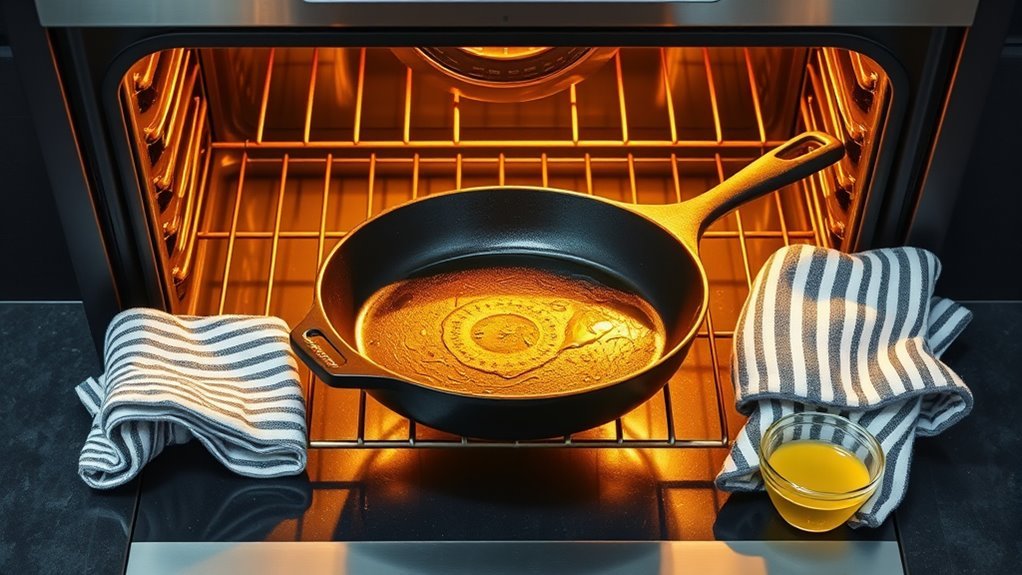
When you’re baking in a cast iron skillet, timing and temperature are key. Preheating the skillet properly and adjusting your bake time can make all the difference in achieving that perfect texture. It’s not just about throwing your batter in and hoping for the best; understanding how cast iron conducts heat can elevate your results. Want to know the best practices for ensuring your dish comes out just right? Let’s explore those essential tips.
Prepare Your Skillet for Baking Success
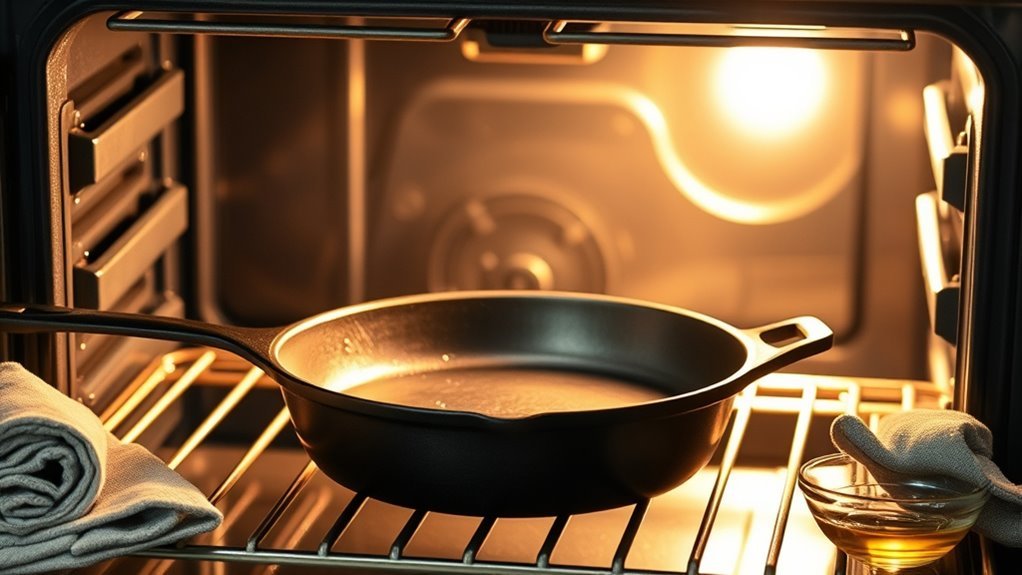
To achieve baking success with your cast iron skillet, you need to prepare it properly. Start by making sure your cast iron skillets are well-seasoned; this prevents sticking and enhances flavors.
Before baking, preheat the skillet in the oven at 400°F (200°C) for about 10 minutes. This guarantees even heat distribution, essential for a perfect bake. When ready, oil the skillet generously to promote that coveted golden crust, especially for treats like cornbread.
Preheating your skillet ensures even heat for baking perfection; oil it well for that irresistible golden crust.
After baking, resist the urge to douse your hot skillet in cold water. Instead, let the pan cool gradually to avoid cracking.
If it’s particularly dirty, use hot water and a non-abrasive scrubber, then dry completely to maintain its seasoning.
Find the Right Baking Temperature for Your Dish
What temperature should you choose for baking with your cast iron skillet? The right baking temperature is essential for achieving that perfect dish without any food stuck to the pan. Here’s a quick guide to help you out:
- Cornbread: 400°F (200°C) for a crispy crust and even cooking inside.
- Casseroles: 325°F to 375°F (160°C to 190°C) allows for thorough cooking without burning.
- High-sugar dishes: 425°F (220°C) guarantees caramelization and browning.
Always preheat your cast iron skillet for about 10 minutes before adding your batter or food. This step ensures even cooking and minimizes the risk of food sticking.
Timing Tips for Baked Goods in a Cast Iron Skillet
When baking with a cast iron skillet, timing is essential for perfect results.
You’ll want to adjust your baking times slightly, as cast iron holds heat exceptionally well and can speed up the cooking process.
Keeping an eye on your baked goods guarantees they come out beautifully browned and deliciously tender.
Baking Time Adjustments
While baking in a cast iron skillet offers a unique flavor and texture, adjusting your timing is essential for perfect results. Here are some tips to guarantee your baked goods shine:
- Preheat the skillet for about 10 minutes to form a beautiful crust.
- Reduce baking time by 10-15% compared to conventional bakeware.
- For delicate items, lower the oven temperature by 25°F to avoid over-browning.
Always remember to check for doneness a few minutes earlier, as cast iron can cook faster.
Let your treats cool slightly in the skillet to maintain their shape and prevent sticking.
With these baking time adjustments, you’ll reveal the full potential of your cast iron skillet, transforming simple recipes into delightful experiences.
Temperature Consistency Importance
Achieving the perfect bake in a cast iron skillet hinges on maintaining a steady temperature throughout the process. Temperature consistency is essential, as fluctuations can lead to uneven cooking and undesirable textures in your baked goods.
Preheating the skillet for at least 10 minutes at your desired oven temperature guarantees even heat distribution, enhancing your baking results. For items like cornbread, aim for 400°F (200°C) to achieve that golden crust while cooking the inside thoroughly.
Remember, cast iron retains heat exceptionally well, so consider reducing the oven temperature slightly compared to standard pans.
After baking, let your creations cool in the skillet for a few minutes; this helps set the texture and makes removal easier. Enjoy your liberating baking journey!
Recognize When Your Dish Is Done?
How can you tell if your dish is perfectly cooked? Knowing the signs of doneness can elevate your cooking game. Here are key indicators:
- Use a food thermometer: For meats, aim for an internal temperature of 165°F for poultry and 145°F for pork.
- Toothpick test: For baked goods, insert a toothpick into the center; it should come out clean or with a few moist crumbs.
- Visual cues: Monitor the color and texture; cornbread, for instance, should be golden brown and firm to the touch.
Don’t forget about cooking times! Recipes usually provide a range, but variations in thickness and oven performance can affect how long you’ll need to bake.
After baking, allow your dish to rest—this step lets juices redistribute for meats and helps baked goods set, ensuring you enjoy the ideal flavor and texture.
Best Practices for Cooling and Storing Baked Items
After pulling your baked creation from the oven, the way you cool and store it can make all the difference in flavor and texture. Allow your baked goods to cool in the skillet for about 10-15 minutes. This resting period helps preserve that perfect texture and prevents sogginess.
Use a silicone or wooden spatula to gently loosen the edges before transferring them to a wire rack. For items like cornbread, keeping them in the skillet a bit longer can develop a delightful crispy crust.
Once cooled, store your baked items in an airtight container at room temperature for up to two days, or refrigerate for extended freshness.
If you’re frequently baking, make sure your skillet is well-seasoned to prevent sticking and enhance the flavor. By following these simple practices, you’ll keep your baked goods tasting fresh and delicious!
Essential Baking Techniques for Cast Iron Skillets
Release the full potential of your cast iron skillet with essential baking techniques that elevate your culinary creations. Master these tips to enjoy delicious baked goods in your cast iron pan:
Unlock your cast iron skillet’s baking potential with essential techniques for delightful, perfectly cooked treats.
- Preheat for Perfection: Heat your skillet in the oven at 400°F (200°C) for at least 30 minutes to guarantee even cooking.
- Oil for Ease: Lightly coat the skillet with vegetable oil before pouring in your batter or dough. This enhances the non-stick surface and promotes a beautiful browning.
- Mind the Acidity: Avoid baking dishes with high acidity, like tomato sauces, to protect your skillet’s seasoning.
With these techniques, you’ll not only achieve mouthwatering results but also extend the life of your trusty cast iron pan.
Frequently Asked Questions
Should I Season Cast Iron at 350 or 450?
You should season your cast iron at 450°F for the best results. This ideal temperature allows the oil to bond effectively, enhancing your skillet’s non-stick surface.
Use a high-quality oil, like flaxseed or grapeseed, for superior seasoning techniques. Bake it upside down for an hour, catching drips on a sheet pan.
Maintaining seasoning over time boosts performance, and if you encounter issues, try repeating the process to troubleshoot effectively.
What Ruins a Cast Iron Skillet?
To keep your cast iron skillet in top shape, avoid using harsh cleaning methods and acidic foods that can strip its seasoning.
Always dry it thoroughly to prevent rust and maintain that beautiful cooking surface.
Be mindful of cooking temperatures; drastic changes can warp it.
Stick to proper maintenance tips, like re-seasoning regularly, to guarantee longevity.
With the right care, you’ll enjoy delicious meals without worry!
Can Cast Iron Go in a 400 Degree Oven?
Yes, cast iron can definitely go in a 400-degree oven! Its durability means it thrives at high temperatures, enhancing heat distribution for perfectly baked goods.
When you preheat your skillet, you’ll achieve that crispy crust you crave. Just remember to maintain your skillet by seasoning it regularly, and always check that the handle’s heat-resistant.
With these tips in mind, you’ll elevate your baking game while enjoying the benefits of cast iron!
Do You Grease a Cast Iron Skillet Before Baking?
Yes, you should definitely grease your cast iron skillet before baking. Use methods like a thin layer of oil or solid vegetable shortening for ideal results.
Different oil types can enhance flavor, while greasing guarantees your baked goods release easily and develop a beautiful golden crust.
For skillet maintenance, always preheat your greased skillet to create a non-stick surface. This simple step makes recipe adaptations effortless, letting you enjoy every bite without the hassle!
Conclusion
Baking in a cast iron skillet opens up a world of flavor and texture. Embrace the heat, savor the aroma, and celebrate the golden crust. Preheat your skillet, adjust your timing, and trust your senses to recognize that perfect moment of doneness. Allow your creations to cool gracefully, preserving their shape and taste. With these practices, you’ll master the art of baking in cast iron, transforming simple ingredients into delightful masterpieces every time.
