
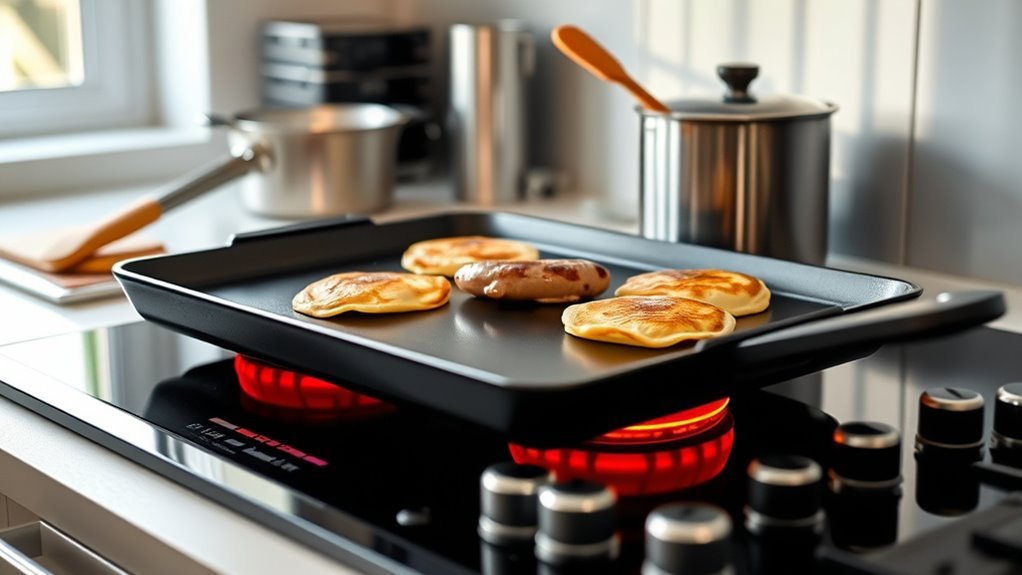
Yes — you can use a griddle on most electric stoves, but you’ll want to pick the right type and take basic precautions. Match the griddle size to your burners, preheat gradually on medium to avoid hot spots or warping, and lift rather than drag on smooth tops to prevent scratches. Follow these guidelines and safety tips to get even cooking and protect your cooktop — keep going to see which griddles work best and how to troubleshoot common issues.
Can You Use a Griddle on an Electric Stove? (Quick Yes/No + Caveats)
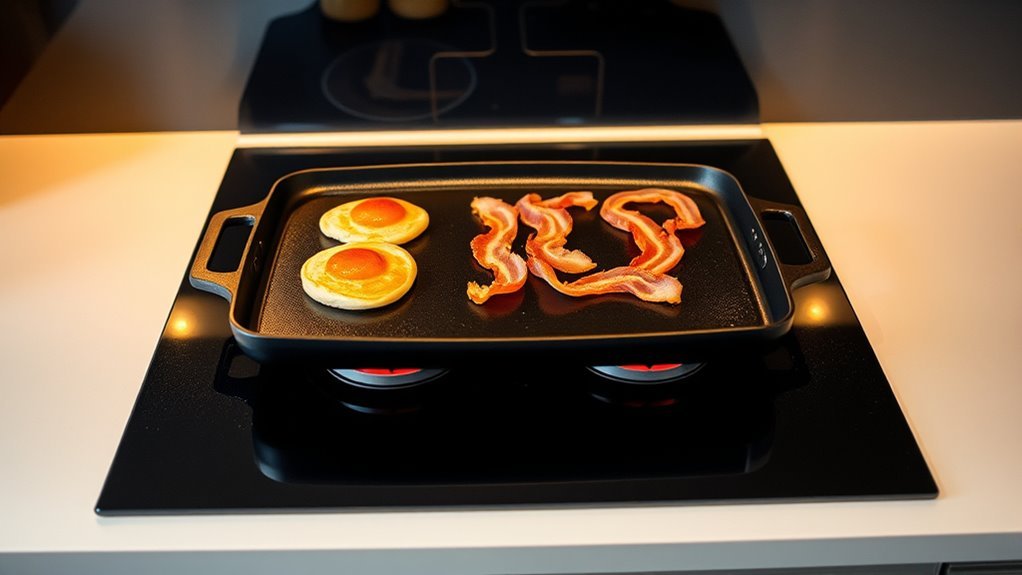
While electric stoves can heat griddles effectively, you should preheat on medium and adjust burners as needed to get even cooking. You can confidently use a griddle on an electric stove, but you’ll follow a few caveats to protect your cooktop and food.
Use cast iron for durability and heat retention, and treat a cast iron griddle gently—lift rather than slide it to avoid scratching the surface. Preheat gradually on medium to reduce warping and to promote even heat; many electric-compatible griddles spread heat uniformly, minimizing hot spots.
Monitor burner output and tweak temperatures, since stove models vary. Keep the griddle centered so weight and heat distribute evenly. Stay attentive while cooking pancakes, eggs, or seared vegetables, and cool the griddle before cleaning to preserve seasoning and surface integrity.
These practices free you to cook reliably and safely on an electric stove without sacrificing performance.
Which Electric Stoves Work With Griddles?
Which electric stove will work best with your griddle depends mostly on the cooktop type and how you use it. You can use most electric stove models—coil and smooth top—with a cast iron griddle if you respect heat and handling.
On coil ranges, set burners to medium and allow the griddle to preheat for even distribution; double-burner griddles work well across two elements.
With a glass top, you’ll still get good results, but never slide the cast iron; lift to avoid scratches and crack risks. Expect to tweak burner settings so the whole surface cooks uniformly.
Preheating on medium is essential for reliable pancakes, eggs, and searing. Be deliberate: protect the surface, stabilize the griddle, and balance heat across burners.
Doing this frees you to cook confidently and safely, using an electric stove to its full potential without compromising your kitchen or your freedom to cook how you want.
Best Griddle Materials and Shapes for Electric Stoves
Because electric cooktops heat differently than gas, you’ll want a griddle that maximizes contact and retains heat—cast iron with a flat, thick base is your best bet for even cooking and fewer hot spots.
You’ll get excellent heat retention and uniform searing from cast iron, and a flat bottom guarantees full surface contact on coil or smooth-top electric stove models.
Choose a heavy, thick-base design to minimize temperature variance; it smooths out hotspots so you can cook confidently and efficiently.
Match griddle size to burner layout to avoid uneven heating and reduce wasted energy.
Because cast iron is heavy, lift the griddle into place to protect the cooktop from scratches.
If you prefer lighter metals, opt for those with a reinforced flat bottom and thick base to approach cast iron’s stability.
Prioritize materials and shapes that give you control, durability, and safety—so you can cook boldly without risking your stove or your freedom.
How to Preheat, Place, and Control Temperature Safely
After choosing a heavy, flat griddle for even heat, you’ll want to preheat, place, and manage temperature carefully to get consistent results and avoid damage or burns.
Preheat over medium heat for a few minutes so the surface reaches ideal cooking temperature and evens out across the griddle. Use the water test—drop a few droplets; if they dance, you’re ready.
Preheat on medium until the surface evens—water droplets should dance when the griddle’s ready.
Center the griddle over the burners to promote uniform heating and reduce hot spots. Because thicker griddles retain heat, lower burner settings as needed to control cooking and prevent burning.
For safety, always lift the griddle when moving it; don’t slide it across the stovetop, which can scratch surfaces or destabilize the pan. Keep handles and surrounding areas clear, use proper mitts, and monitor temperature visually and by touch through timing—stable heat gives you freedom to cook confidently without constant adjustment.
These steps protect your stove, your griddle, and your peace of mind.
Common Problems and Quick Fixes (Hot Spots, Warping, Sticking)
When you see uneven browning, warping, or food sticking, quick, targeted fixes will get you back to safe, consistent cooking: you can regain control without sacrificing freedom in the kitchen.
First, match griddle size to the burner to reduce hot spots; a thicker cast iron plate helps even heat and holds temperature. Preheat gradually—don’t blast the element—to prevent warping and preserve flatness. For sticking, maintain seasoning and preheat with a thin layer of oil; use medium-high heat so the seasoned surface releases food.
- If one area cooks faster, move food and lower that burner; rotate the griddle for even exposure.
- If edges start to bow, cool slowly and avoid thermal shock; never run cold water on a hot griddle.
- Re-season bald or sticky areas: clean, dry, rub oil, and bake until polymerized.
- Replace severely warped or cracked griddles—safety and performance justify liberation from damaged gear.
Frequently Asked Questions
What Is the Best Griddle for an Electric Stove?
The best griddle for an electric stove is a cast iron or high-quality non stick surface double-burner model that offers even heat distribution.
You’ll want size options that match your burners so it sits flat and heats safely.
Preheat over medium, season cast iron regularly, and avoid warping by not overheating.
You’ll cook efficiently, reduce sticking, and keep your stove intact while staying liberated in the kitchen.
How Do I Turn My Stove Into a Griddle?
Sure — you’ll just pretend your stove’s a griddle and actually do it: place a double-burner cast iron griddle or heavy skillet across burners, match it to your stove type, and preheat over medium for even heat.
Use heat diffusers if needed, practice safe cooking techniques, and season regularly.
Explore griddle alternatives like plancha or electric griddles, stay mindful of ventilation, and embrace liberated, confident stove-side cooking.
How Can I Grill on My Electric Stove?
You can grill on your electric stove by preheating a heavy cast iron griddle over medium heat, using grilling techniques like searing and controlled indirect heat.
You’ll want electric stove tips: center the griddle, avoid sliding it, and adjust burners to prevent hot spots.
For griddle maintenance, clean while warm, season regularly, and inspect for damage.
Stay safety-focused, control ventilation, and enjoy the freedom of stovetop grilling.
Which Is Better, an Electric Griddle or a Stovetop Griddle?
Electric vs stovetop? It depends — you’ll choose based on freedom and function.
You’ll prefer electric for simple griddle cooking techniques, even heat distribution efficiency, and easy cleanup.
You’ll pick a stovetop griddle for control, durability, and adaptable heat zones when you want hands-on technique and portability.
You’ll weigh maintenance, storage, and safety: use stable placement, monitor temperatures, and follow manufacturer guidance so your liberated cooking stays efficient and safe.
Conclusion
Yes — you can use a griddle on an electric stove, but treat it like a live bridge: respect the heat, match the size, and don’t rush. Choose a griddle material and shape that sit flat on your coil or smooth top, preheat on medium for even cooking, and lift rather than slide to protect the surface. Watch for hot spots, avoid sudden temperature shocks that warp metal, and keep seasoning intact for safety and sticking-free results.

