
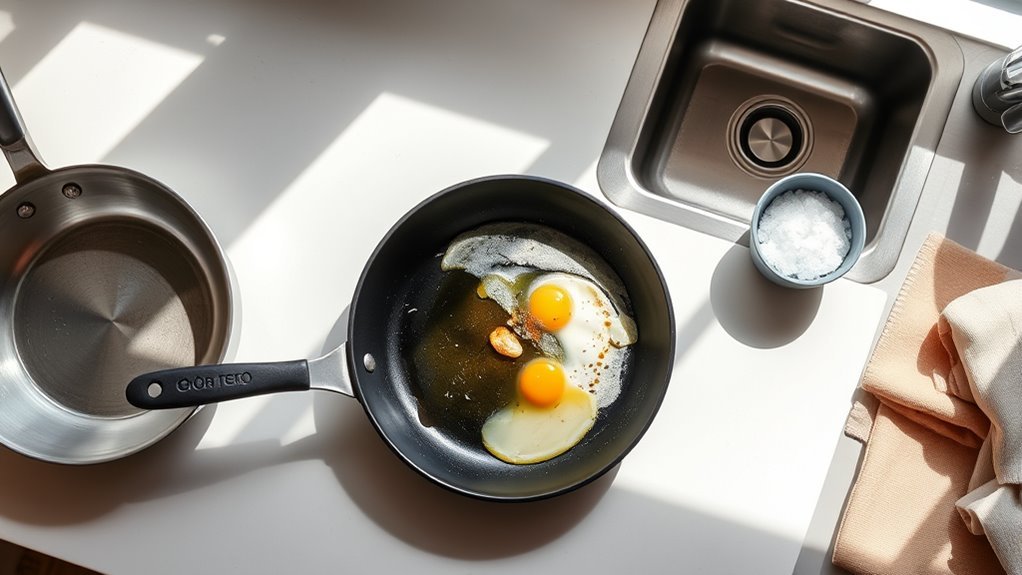
Is your nonstick cookware sticking even though the pan looks clean? Food can cling to the surface because of burned-on oil, excessive heat, scratches, or normal coating wear. Some sticking problems are easy to fix with gentle cleaning, while others mean the coating has reached the end of its useful life. Here’s how to tell the difference and get better cooking results.
Quick Answer
Nonstick cookware usually starts sticking because of oil residue, overheating, scratches, or a worn coating. First, clean the cooled pan with warm, soapy water and a soft sponge. For stubborn buildup, try a gentle baking soda paste. Use low to medium heat and a little cooking oil. Replace pans with damaged or peeling coatings.
What Is Nonstick Cookware and How Does It Work?
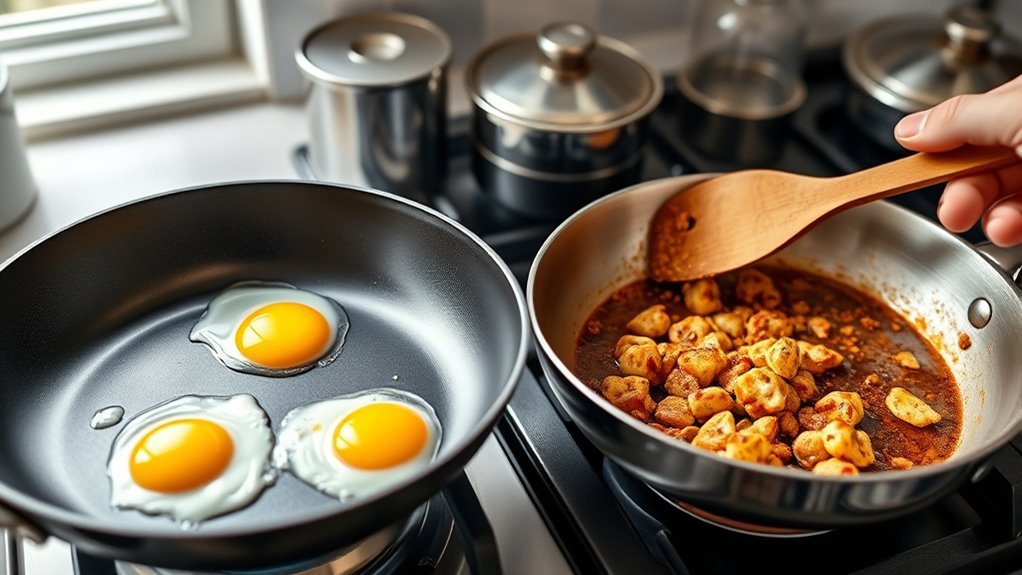
Nonstick cookware has a special cooking surface that helps food release with less oil and makes cleanup easier. Most nonstick frying pans use either a PTFE-based coating or a ceramic nonstick coating.
PTFE stands for polytetrafluoroethylene. It’s the material commonly associated with Teflon™, a well-known nonstick coating. Its smooth, low-friction surface makes it difficult for food to bond to the pan.
Ceramic nonstick cookware usually has a mineral-based coating applied over a metal body. It provides a smooth cooking surface without relying on traditional PTFE coatings.
Both types are useful for cooking delicate foods, including eggs, pancakes, and fish. However, neither coating is completely immune to sticking, especially after repeated exposure to high heat or cooking residue.
What Is the Difference Between PTFE and Ceramic Nonstick?
PTFE and ceramic coatings both reduce sticking, but they differ in composition, care requirements, and how their food-release performance changes over time.
- PTFE nonstick: Offers excellent food release and works best with low to medium cooking temperatures. It requires protection from overheating and scratching.
- Ceramic nonstick: Offers easy food release without PTFE. Its nonstick performance can gradually decrease, particularly when overheated oil forms deposits on the surface.
- Cookware construction: Many nonstick pans use aluminum for heat distribution, while some have stainless steel exteriors or bonded bases. The coating alone does not determine how evenly a pan heats.
Modern PTFE cookware is commonly marketed as PFOA-free. However, PFOA-free does not mean PFAS-free because PTFE itself belongs to the broader PFAS family.
The US Food and Drug Administration’s PFAS guidance explains that authorized polymerized nonstick coatings contain negligible amounts of PFAS capable of migrating into food.
With either coating, proper cooking temperatures and careful cleaning are more useful than relying on marketing claims alone.
Common Causes of Nonstick Cookware Sticking
Nonstick cookware usually starts sticking because something has changed on its cooking surface. Oil deposits can cover the coating, while scratches and overheating can permanently reduce its ability to release food.
Before replacing your pan, identify the most likely cause.
| Cause | Impact |
|---|---|
| High temperatures | Can damage the coating and burn oil onto its surface |
| Metal utensils | Can scratch or chip the coating, increasing sticking |
| Lack of cooking fat | Can make delicate foods such as eggs and fish stick |
1. Overheating the Pan
High heat is one of the most common causes of lost nonstick performance. It can damage the coating and cause cooking oils to burn onto the surface.
This is especially likely when you heat an empty pan for too long, leave it unattended, or use high heat for everyday frying.
The problem is not always obvious. A pan may look clean but still have a thin layer of burned oil that makes food stick.
2. Scratches and Surface Damage
Metal spatulas, forks, knives, and abrasive cleaning pads can scratch nonstick coatings. Repeated contact may create damaged areas where food starts to cling.
Deep scratches, peeling, blistering, or exposed metal suggest that the coating is no longer intact.
Unlike removable food residue, physical coating damage cannot be reversed through normal cleaning.
3. Burned Oil and Cooking Spray Residue
Cooking fats can leave a sticky layer when they become overheated. This buildup may appear as brown marks, dark patches, or a surface that feels slightly tacky.
Some aerosol cooking sprays can also leave stubborn deposits that reduce food release.
According to GreenPan’s nonstick troubleshooting guidance, overheated fats can form carbonized deposits that interfere with the coating.
Fortunately, this type of buildup may respond to thorough cleaning.
4. Incorrect Cooking Temperature or Too Little Oil
A nonstick pan does not always need much cooking fat, but using none can still cause delicate foods to stick.
Eggs and fish, for example, usually release more easily with a thin layer of butter or cooking oil.
Temperature also matters. Adding food before the pan and cooking fat are gently warmed can affect cooking results.
However, this does not mean you should leave an empty nonstick pan heating on the stove. Follow your manufacturer’s preheating instructions and avoid excessive heat.
5. Incomplete Cleaning and Normal Wear
Sometimes a pan looks clean but still has an invisible layer of cooking residue. Repeated dishwasher use or harsh cleaning can also shorten the useful life of some coatings.
Even with careful handling, nonstick performance eventually declines. If a pan continues sticking after proper cleaning and temperature adjustments, its coating may be worn out.
Effective Solutions for Fixing Stuck-On Food
The best way to fix a sticking nonstick pan is to remove residue without damaging the coating. Start with the gentlest cleaning method, then work toward more thorough cleaning if needed.
You will need warm water, mild dish soap, a soft sponge, and baking soda for stubborn deposits.
Step 1: Let the Pan Cool Completely
Turn off the heat and allow the cookware to cool before washing it.
Never plunge a hot nonstick pan into cold water. The sudden temperature change can warp the metal base or damage the cookware.
Step 2: Soak It in Warm, Soapy Water
Fill the cooled pan with warm water and add a little mild dish soap.
Let it soak for at least 15 minutes to loosen stuck-on food. For particularly stubborn deposits, a longer soak may help.
Wash the surface gently with a soft sponge, then rinse thoroughly.
Avoid steel wool, metal scrapers, and harsh scouring pads. These can remove residue but also damage the nonstick coating.
Step 3: Remove Stubborn Residue With Baking Soda
If ordinary washing does not work, try a gentle baking soda paste. It may help remove baked-on grease and cooking residue.
- Mix baking soda with a small amount of water to form a soft paste.
- Apply the paste to the affected area of the cooled pan.
- Leave it for about 15-20 minutes.
- Gently wipe the area with a soft, non-abrasive sponge.
- Rinse thoroughly with warm water and dry completely.
Do not scrub aggressively. If the manufacturer recommends a different cleaning method, follow that guidance instead.
Tefal’s official troubleshooting instructions recommend a baking soda and water paste for removing residue that interferes with nonstick performance.
Step 4: Simmer Water to Loosen Burned Food
For stubborn burned-on food, gentle simmering can help lift residue without scraping the surface.
- Add enough water to cover the affected area.
- Place the pan over low to medium heat.
- Let the water simmer gently for about 10 minutes, watching the pan throughout.
- Turn off the heat and allow the pan to cool.
- Wash with mild dish soap and a soft sponge.
Never allow the water to boil away completely. Use this method only if your cookware manufacturer’s instructions permit it.
Step 5: Use a Small Amount of Cooking Oil
After cleaning, some PTFE cookware manufacturers recommend wiping the cooking surface with a small amount of vegetable oil.
Apply a thin layer using a paper towel, then remove the excess before storing the pan.
This may help condition the surface and improve cooking performance when residue was the problem.
However, oil cannot repair a scratched, peeling, or permanently damaged coating.
Do not confuse this light oil treatment with seasoning cast iron. Ceramic nonstick cookware generally does not need seasoning, and some manufacturers specifically advise against it.
Step 6: Test the Pan With Gentle Cooking
After cleaning, try cooking a small amount of food with a little oil over low to medium heat.
If food releases more easily, residue was probably contributing to the problem.
If the same areas continue sticking despite careful cleaning, the coating may have lost its effectiveness.
Warning: Do not attempt to repair a damaged nonstick coating using abrasive sanding, homemade recoating mixtures, or repeated high-heat seasoning. These methods can make the surface worse. Replace cookware with peeling, flaking, blistering, or deeply damaged coatings.
When Should You Replace a Sticking Nonstick Pan?
Replace a nonstick pan when the coating is visibly damaged or no longer performs adequately after proper cleaning.
Look for these warning signs:
- Coating that is peeling, flaking, or blistering.
- Deep scratches that expose the underlying metal.
- Persistent sticking after a thorough cleaning.
- Severe overheating damage.
- A warped base that prevents stable, even cooking.
There is no universal replacement schedule for every nonstick pan. A pan’s useful life depends on its coating, construction, cooking frequency, and maintenance.
Condition matters more than age alone.
Caring for Your Nonstick Cookware: Tips and Tricks
Good daily habits can help prevent nonstick cookware from sticking again. The most useful steps are controlling heat, using suitable utensils, and cleaning the coating without abrasive tools.
Choose the Right Utensils
Use silicone, nylon, plastic, or wooden utensils when cooking with nonstick pans.
These materials are less likely to scratch the coating than sharp metal tools.
Protecting the nonstick surface from scratches and overheating is the simplest way to preserve its cooking performance.
Never cut food directly inside the pan, even if the coating is advertised as scratch-resistant.
Cook at Low to Medium Heat
Most nonstick cooking works well at low to medium temperatures.
Low heat is particularly useful for eggs, fish, and other delicate foods. Moderate heat works for many everyday meals.
For very high-heat searing, stainless steel or cast iron is generally a more suitable choice.
The All-Clad cookware care guide recommends low to medium heat and warns against overheating empty cookware or burning cooking fat.
Warning: Overheated PTFE cookware can release harmful fumes. Health Canada advises against heating empty nonstick pans or using them above 260°C (500°F). Follow any lower temperature limit specified by your cookware manufacturer.
Clean and Store Your Pan Carefully
Hand-wash your cookware with warm, soapy water after it cools, then dry it with a soft towel.
Although some nonstick pans are labeled dishwasher-safe, hand-washing is often better for preserving the coating.
Also, avoid stacking unprotected pans inside one another. If storage space is limited, place a soft cloth or pan protector between cooking surfaces.
Check the manufacturer’s instructions before using the pan in an oven. Heat limits can vary between cookware models, lids, and handles.
Can You Prevent Nonstick Coatings From Wearing Out?
You can slow coating wear, but you cannot prevent it forever.
Repeated heating, cooking, cleaning, and handling gradually affect the surface. Careful use helps extend its lifespan without making it permanent.
For the best results, reserve your nonstick pan for foods that benefit from easy release. Use other cookware for tasks requiring sustained high heat.
Key Factors in Selecting Nonstick Cookware
Choosing the right nonstick cookware depends on your cooking habits, coating preferences, and maintenance expectations. A good pan should provide reliable food release while being comfortable and practical to use.
1. Understand the Coating Material
Start by checking whether the pan uses PTFE or a ceramic nonstick coating.
PTFE is useful if effortless food release is your main priority. Ceramic is an alternative if you prefer to avoid PTFE-based coatings.
Do not rely only on a PFOA-free label when comparing materials. If avoiding PFAS is important to you, look for clear manufacturer information about the full coating composition.
2. Consider Durability and Construction
Look for a sturdy pan with a stable base and a coating suited to your cooking needs.
Some manufacturers offer titanium-reinforced coatings or hard-anodized aluminum cookware. However, the word “titanium” does not automatically mean that a nonstick pan can withstand unrestricted high-heat cooking.
Always use the stated temperature limit and care instructions for the specific model.
3. Check Heat Distribution and Cooktop Compatibility
A flat, well-constructed base helps distribute heat more evenly and reduces hot spots.
If you use an induction cooktop, check that the cookware is specifically compatible. Many aluminum pans require a magnetic base to work with induction.
Choose a pan size that fits your burner and the amount of food you typically prepare.
4. Look for Comfortable, Practical Features
A comfortable handle makes the pan easier to lift and control. Weight also matters, especially if you frequently move cookware between the stove and sink.
Consider whether the pan has a suitable lid, the right depth, and an oven-safe design if those features matter to your cooking.
5. Review Cleaning Requirements and Warranty Coverage
Before buying, compare the manufacturer’s cleaning instructions and warranty terms.
Some coatings require more careful handling than others. Warranty coverage may also exclude damage caused by overheating, scratching, or misuse.
A pan that fits your normal cooking routine is often a better choice than one with impressive marketing claims but demanding maintenance requirements.
Nonstick vs. Stainless Steel: Which Should You Choose?
Nonstick cookware is usually better for delicate foods and easier cleanup. Stainless steel is often the better choice for high-heat browning, searing, and long-term durability.
Both can be useful in the same kitchen.
- Choose nonstick for eggs, pancakes, delicate fish, and meals that benefit from easy food release.
- Choose stainless steel for browning meat, developing pan sauces, and cooking at higher temperatures.
- Choose ceramic nonstick if you want a PTFE-free cooking surface and are comfortable with its care requirements.
You do not need to use one type of cookware for every task. Matching your pan to the cooking method often gives better results.
Key Takeaways
- Sticky brown patches often indicate carbonized cooking fat rather than complete coating failure.
- Baking soda cleaning may remove residue, but household treatments cannot recreate a damaged factory-applied coating.
- A PFOA-free label alone does not establish that cookware is free from all PFAS.
- Silicone or wooden utensils and careful storage reduce avoidable surface damage.
- Stainless steel is a useful alternative when you need high-heat cooking performance.
Frequently Asked Questions
Is Nonstick Cookware Safe?
Yes, modern nonstick cookware is generally considered safe when used according to the manufacturer’s instructions. PTFE-coated pans should not be overheated, especially while empty. Germany’s Federal Institute for Risk Assessment reports that adverse health effects are not expected from PTFE cookware used as intended. Inspect your cookware regularly and replace it if the coating becomes damaged.
Which Non-Stick Coating Is Safe for Health?
Both properly used PTFE coatings and food-contact-compliant ceramic nonstick coatings can be reasonable choices. If you want to avoid PTFE, choose a ceramic product with clear manufacturer information about its materials. For example, Our Place states that its Thermakind® ceramic coating is made without PFAS, lead, or cadmium. No coating should be treated as safe for unlimited heating.
Is It Better to Get Stainless Steel or Nonstick?
Stainless steel is usually better for durability and high-heat cooking, while nonstick cookware is easier for delicate foods. Nonstick pans need careful temperature control and gentle utensils. Stainless steel is more resistant to ordinary utensil wear but requires proper heating and cooking technique to reduce sticking. Many home cooks benefit from having both.
What Is Healthier, Ceramic or Nonstick?
Ceramic is not automatically healthier than every traditional nonstick coating. Ceramic nonstick pans can offer a PTFE-free option, while properly used PTFE cookware is also considered suitable for food preparation. Both need sensible temperature control and regular inspection. Your choice should depend on verified coating materials, cooking habits, and manufacturer guidance.
Can You Restore a Nonstick Pan That Has Started Sticking?
You can sometimes restore better food release by removing burned oil and food residue. Gentle cleaning with warm, soapy water or a baking soda paste may help. However, a coating that is scratched, peeling, or permanently worn cannot be restored with household treatments. If cleaning does not improve performance, replacement may be necessary.
Why Do Eggs Stick to My Nonstick Pan?
Eggs may stick because the pan is too hot, lacks cooking fat, or has residue on its surface. Cook eggs over low heat with a small amount of butter or oil. If they continue sticking after thorough cleaning, inspect the coating for wear or damage. A worn surface may no longer release delicate foods reliably.
Conclusion
Nonstick cookware works best when its coating stays clean, undamaged, and protected from excessive heat. If food starts sticking, begin with gentle cleaning and check for burned oil or cooking residue.
If the coating is still intact, better cleaning and cooking habits may restore easier food release. But if you find peeling, deep scratches, or persistent performance problems, replacing the pan is usually the better solution.
Choose cookware that suits your cooking style, follow its care instructions, and use the right pan for the right job.
Sources
- US Food and Drug Administration: PFAS in food-contact materials and migration from approved nonstick coatings.
- GreenPan: Causes of reduced ceramic nonstick performance and methods for removing carbonized residue.
- Tefal: Nonstick coating maintenance, residue removal, oil conditioning, and cookware replacement considerations.
- All-Clad: Recommended cooking temperatures, cleaning methods, utensils, and care practices.
- Health Canada: Safe use of nonstick cookware and temperature precautions.
- German Federal Institute for Risk Assessment: PTFE safety evaluation, overheating, and intended cookware use.
- Our Place: Thermakind® ceramic coating composition and manufacturer care recommendations.
- Poison Control: Risks from overheated PTFE cookware and guidance on damaged coatings.
