
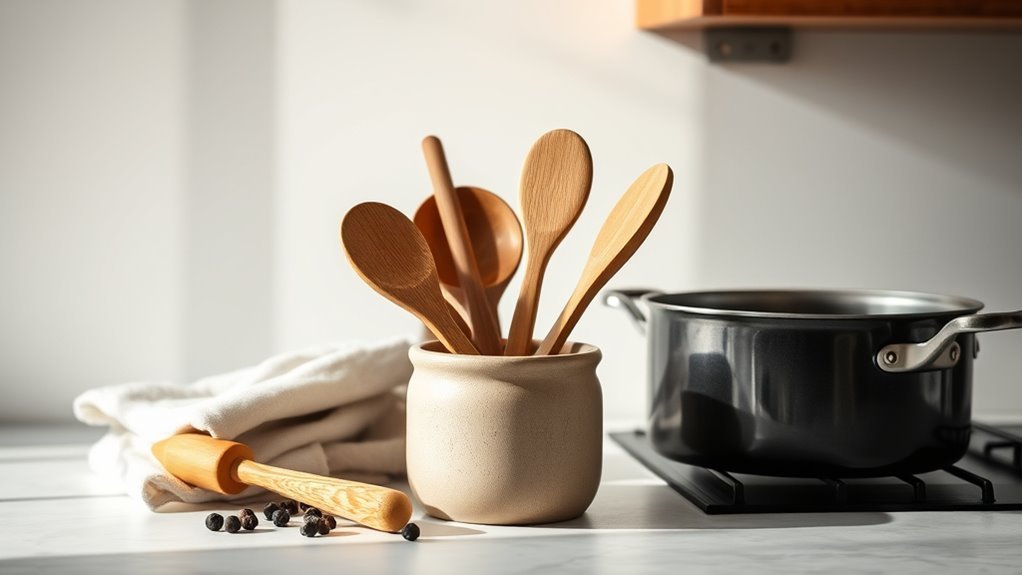
You can safely use wooden utensils, but only if you pick the right wood, finish, and care for them properly—studies show tight-grained hardwoods and regular seasoning reduce bacterial survival and chemical leaching. Avoid porous softwoods and toxic varnishes, wash and dry by hand, and inspect for cracks that trap moisture. There’s more to know about which species and oils to choose and when to refinish or replace—so let’s get into the specifics.
Are Wooden Utensils Safe? Microbiology and Chemical Evidence
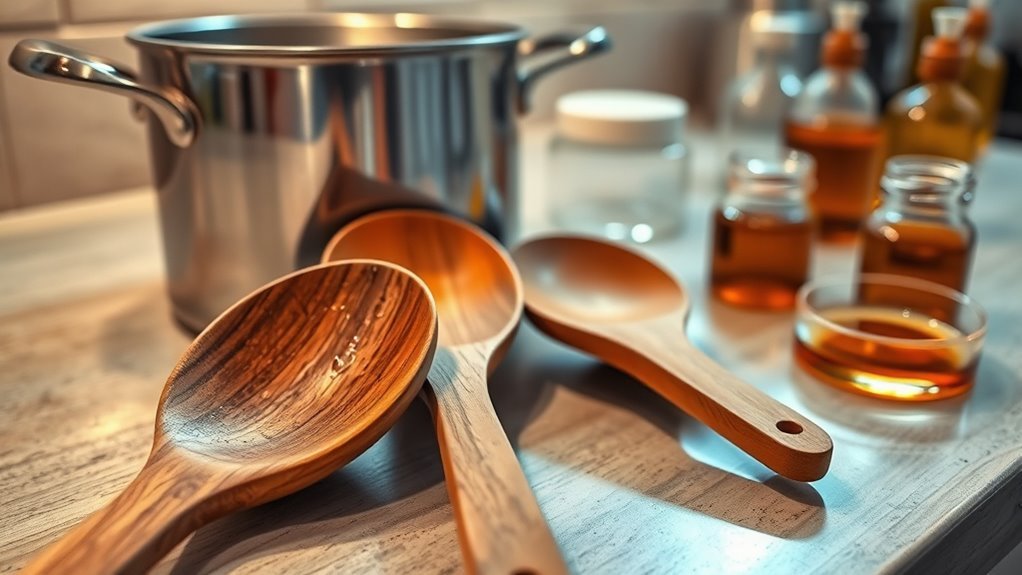
Although wooden utensils look porous, research shows they’re surprisingly safe: their cellular structure absorbs and traps moisture and microbes, and those microbes tend to die off rather than proliferate on the surface. You can rely on wooden utensils’ antimicrobial properties; studies report no documented foodborne illnesses linked to them, and their porous matrix often reduces surface bacterial counts compared with nonporous materials.
That doesn’t mean you ignore maintenance. With proper care—thorough drying, occasional oiling, and prompt replacement or repair when cracks appear—you preserve both safety and longevity. Apply practical inspection: check joins and grain for splits where moisture can hide, and air-dry utensils fully between uses.
Embrace wood as a liberating, low-toxicity choice that resists microbial growth without heavy sanitizers. Used and maintained correctly, wooden spoons and boards offer a scientifically supported, durable option that aligns with safety-conscious, freedom-seeking cooking practices.
Which Woods and Finishes Are Food‑Safe (And Which to Avoid)
When choosing wood and finishes for utensils, pick tight-grained hardwoods like maple, cherry, or walnut and finish them only with food-safe oils or waxes (food-grade mineral oil, fractionated coconut oil, or beeswax blends) to protect the surface without risking chemical leaching.
You’ll get durable, attractive wooden kitchen utensils that resist moisture and benefit from wood’s natural antimicrobial properties.
- Choose maple, cherry, or walnut for strength and low porosity.
- Finish with food-safe mineral oil, fractionated coconut oil, or beeswax blends; they seal without toxic leaching.
- Avoid treated woods, varnishes, polyurethane, or synthetic finishes that can contaminate food.
- Re-season regularly to maintain the protective layer and reduce absorption.
This guidance is evidence-based and practical: select tight-grained hardwoods, avoid chemically treated surfaces, and maintain finishes consciously.
That approach gives you safer tools and the autonomy to control what contacts your food.
Cleaning, Drying, and Seasoning Wooden Utensils Safely
To keep wooden utensils safe and long‑lived, wash them by hand with warm water and mild soap, dry them thoroughly in a well‑ventilated spot for at least 24 hours, and re‑season regularly with a food‑safe product like mineral oil or a beeswax blend. You’ll avoid the dishwasher’s heat and detergents that damage fibers. After cleaning, let utensils air in a dry, shaded place; 24 hours of drying supports the wood’s natural antimicrobial action and prevents warping.
| Step | Why it matters | Recommendation |
|---|---|---|
| Cleaning | Removes food and bacteria | Hand-wash, mild soap, no dishwasher |
| Drying | Prevents mold/warping | Air-dry ≥24 hrs, ventilated area |
| Seasoning | Hydrates and seals wood | Mineral oil or beeswax, avoid vegetable oils |
| Storage | Maintains condition | Dry, shaded, low humidity |
Season regularly: apply mineral oil, let soak, wipe excess. This practical routine protects health, preserves tools, and frees you from disposable culture.
Repair, Refinish, or Replace: Signs Your Utensils Need Action
If you spot splits, deep grooves, persistent roughness, or utensils that won’t fully dry, act: these conditions trap bacteria and weaken the wood, so decide whether to repair, refinish, or replace based on severity.
Inspect each wooden utensil after washing and drying; splits, cracks, and deep grooves harbor microbes and signal structural failure. If the piece dries slowly or stays damp, leaning toward replace is prudent to protect hygiene.
Minor wear and roughness you can sand and re-oil to restore function.
- Sand small rough patches with fine grit, then re-season with food-safe mineral oil to extend life.
- Reject utensils that warp, don’t regain shape, or have persistent moisture retention.
- Refinish handles or bowls showing surface wear; sanding and oiling preserves antimicrobial qualities.
- Replace items with deep splits, structural cracks, or long-term dampness that promotes mold.
Be decisive: maintain a clean, liberated kitchen by choosing repair, refinish, or replace based on clear, evidence-based signs.
Best Picks and Buying Checklist for Nontoxic Wooden Utensils
After you’ve decided whether to repair, refinish, or replace worn pieces, choose replacements that marry safety, durability, and comfort.
Look for Wooden Spoons and spatulas made from FSC-certified wood to guarantee sustainable sourcing and absence of plastic-related toxins.
Prioritize brands like Caraway, Our Place, and Vermont Spoon for budget-friendly, durable options that emphasize nontoxic wooden utensils and proven construction.
Inspect shapes: rounded handles and deep bowls improve grip and functionality for every cooking utensil task.
Expect to hand-wash and season regularly with food-safe mineral oil to preserve finish and antimicrobial properties.
Replace items immediately if you spot splits or deep grooves, since those trap bacteria and undermine safety.
Buy single-piece designs or well-joined joints to limit crevices.
If you want liberation from disposable or toxic options, choose tools that support long use, easy maintenance, and clear safety credentials—FSC certification, trusted brand reviews, and simple care instructions.
Frequently Asked Questions
What Is the Healthiest Material for Cooking Utensils?
The healthiest material for cooking utensils is often wood or bamboo because you’ll get Bamboo benefits like sustainability, natural antimicrobial action, and low leaching.
You’ll avoid many Silicone alternatives’ potential off-gassing at high heat, though silicone’s nonstick resilience is useful.
Metal properties give durability and no absorption, but can scratch nonstick surfaces.
Choose sustainably sourced wood or bamboo, clean and dry them well, and you’ll cook with safer, liberating tools.
Why Do Chefs Not Use Wooden Spoons?
You’ll skip wooden spoons because chefs’ preferences favor durability, heat resistance and hygiene; they’ll reach for metal or silicone as alternative utensils.
You’re choosing practicality over tradition, knowing wood can trap flavors, crack or wear.
Follow maintenance tips: dry thoroughly, oil periodically and discard damaged pieces to limit bacteria.
That way you free yourself from false nostalgia and cook with tools that serve your goals reliably.
Is It Healthy to Cook With Wooden Utensils?
Yes — it’s healthy to cook with wooden utensils. You’ll gain wooden utensil benefits like bacteria resistance and no chemical leaching, backed by studies showing no linked illnesses.
You’ll need simple maintenance tips: wash promptly, dry fully, and season occasionally with food-safe oil. That upkeep preserves their antimicrobial surface and longevity, letting you confidently choose a sustainable, practical tool that supports freedom from disposable and chemical-laden alternatives.
What Are the Downsides of Using Wooden Kitchen Utensils?
Like a trusted but fallible companion, wooden utensils have downsides: reduced wood durability, risk of bacterial growth in cracks, and sensitivity to heat and moisture.
You’ll need strict maintenance tips—handwash, dry immediately, oil regularly, and discard split pieces.
Lower-quality finishes can leach chemicals and strong foods may stain or scent the wood.
If you want freedom from worry, choose food-safe, well-made utensils and care for them diligently.
Conclusion
Wooden utensils are a safe, practical choice when you pick tight‑grained hardwoods and food‑safe finishes, and when you clean, dry, and season them regularly. They resist microbes better than you’d think—almost like a tiny bacterial bouncer—yet they’re not indestructible. Inspect for cracks, avoid soft or treated woods, refinish with mineral oil as needed, and replace worn pieces. Follow these evidence‑based steps and you’ll keep your kitchen hygienic and functional.
