

When considering whether a ceramic pan is safe, it’s essential to examine the materials and construction involved. Ceramic cookware typically avoids harmful substances like PFAS and PFOA, but safety isn’t just about what’s absent. Proper care and usage play significant roles in ensuring longevity and performance. Are you aware of how to maintain your ceramic pans? Understanding these aspects can help you make informed decisions about your kitchenware.
Understanding Ceramic Cookware Materials
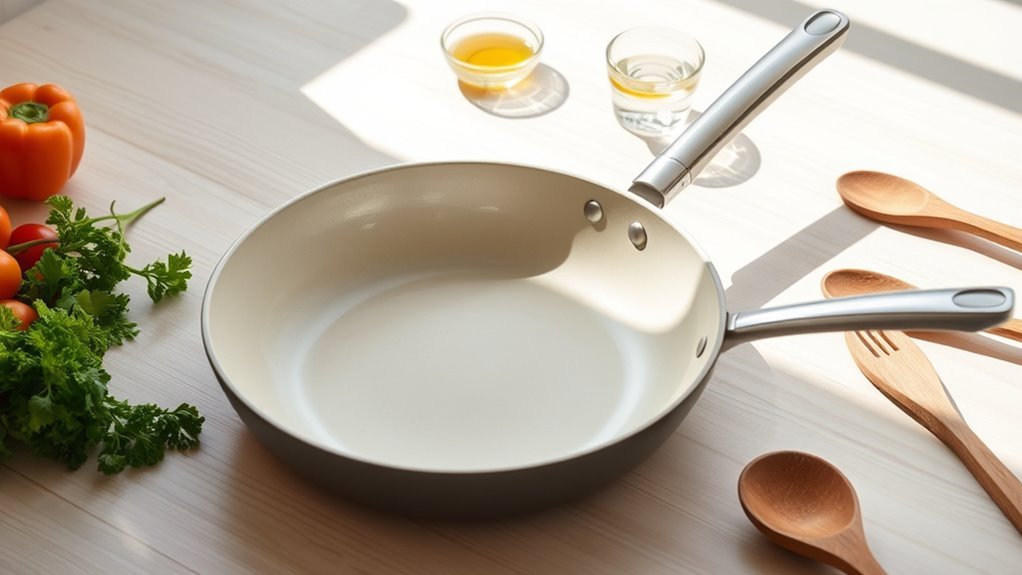
When it comes to ceramic cookware materials, understanding their composition is vital. Typically, ceramic cookware features a metal base, like aluminum or stainless steel, coated with a sol-gel ceramic layer derived from silica. This process creates what’s often termed “quasi-ceramic.”
Unlike solid clay, this mixture includes metal oxides and binders, enhancing durability. Reliable ceramic cookware is marketed as a safer alternative to traditional nonstick options, as it’s free from PFAS, PTFE, and PFOA—harmful substances often associated with traditional coatings.
Reputable brands guarantee that lead and cadmium levels in their products remain below FDA limits for safe food contact. However, it’s important to be aware of potential risks, such as toxic chemicals from proprietary compositions and the degradation of coatings from overheating.
The Safety of Ceramic Cookware vs. Traditional Nonstick
Ceramic cookware offers a promising alternative to traditional nonstick options, particularly regarding safety. When you choose ceramic cookware safe from harmful substances like PTFE and PFOA, you’re opting for non-toxic cookware that minimizes health risks.
Unlike nonstick pans coated with PTFE, ceramic nonstick coatings don’t emit toxic fumes during normal cooking temperatures, enhancing your kitchen environment. However, it’s crucial to be aware that the nonstick properties of ceramic pans can diminish over time, leading to sticking issues, especially with delicate foods.
Ceramic nonstick coatings enhance your kitchen environment by avoiding toxic fumes, though their nonstick properties may diminish over time.
Concerns arise from the lack of regulatory standards and thorough testing, which can leave you questioning the safety of proprietary coatings. To guarantee you’re using safe products, look for high-quality ceramic cookware that’s been tested enough to verify it’s free from heavy metals like lead and cadmium.
This approach helps you enjoy the benefits of non-toxic cooking without compromising safety.
Are Ceramic Coatings Safe and Non-Toxic?
How safe are ceramic coatings in your kitchen? These coatings are generally considered non-toxic, especially when free from harmful substances like PFAS, lead, or cadmium. They provide peace of mind during cooking, as many use silica-based sol-gels that don’t release toxic fumes at normal temperatures. Independent testing, such as by TÜV Rheinland, confirms that quality ceramic coatings meet safety standards, with lead and cadmium levels well below limits.
| Feature | Ceramic Coatings | Traditional Nonstick |
|---|---|---|
| Toxicity | Non-toxic | Often contains PTFE |
| Durability | Moderate | High |
| Safe with Metal Utensils | Yes | No |
While ceramic coatings offer a healthier alternative, be mindful of their long-term durability under high heat. Always check for third-party lab reports to back any safety claims.
Caring for Your Ceramic Cookware: Best Practices
To guarantee your ceramic cookware remains in peak condition, it’s important to adopt effective care practices. First, always cook at medium heat or lower; high temperatures can degrade the nonstick performance over time.
When stirring or serving, use silicone, wooden, or nylon utensils to avoid scratching the ceramic surface. This simple choice helps maintain the integrity of the nonstick coating.
After cooking, hand wash your ceramic cookware with warm water and mild soap. Avoid abrasive cleaners, as they can damage the surface.
When it’s time to store ceramic pans, do so carefully; use soft cloths or pan protectors to prevent scratches during stacking. Additionally, steer clear of sudden temperature changes, like placing a hot pan on a cold surface, to avoid cracking or warping.
How to Identify When Your Ceramic Pan Needs Replacement
To guarantee your safety and cooking efficiency, regularly check your ceramic pan for signs of coating damage, like scratches or discoloration.
If you notice food starting to stick more than usual, it’s a clear indication the pan’s nonstick performance is waning.
Additionally, keep an eye on its overall condition; any warping or significant wear could mean it’s time for a replacement.
Signs of Coating Damage
Although ceramic pans are known for their durability, recognizing signs of coating damage is crucial for maintaining both cooking performance and safety.
Look for visible scratches, chips, or peeling on the ceramic coating, as these can compromise its nonstick properties. If you notice food sticking more than usual, it’s time to inspect your pan for wear and tear.
Discoloration or a dull surface also indicates that the coating is deteriorating. Overheating beyond recommended temperatures can accelerate this damage, making regular inspections essential.
Damaged ceramic cookware not only performs poorly but may also pose health risks. Prioritizing these checks can help guarantee your cooking remains safe and enjoyable.
Loss of Nonstick Performance
When you notice food sticking more than usual despite using proper cooking techniques, it’s a clear indication that your ceramic pan may be losing its nonstick performance. Unlike PFAS-coated options, ceramic pans can wear out quickly, leading to frustration, especially with delicate foods. Here are key signs to identify when it’s time for a replacement:
| Sign | Description | Action |
|---|---|---|
| Scratches | Visible marks on the surface | Replace the pan |
| Discoloration | Change in color of the coating | Replace the pan |
| Increased Sticking | Food consistently adheres to the pan | Consider replacing |
Using non-metal utensils and proper maintenance can prolong lifespan, but once performance deteriorates, it’s time to invest in a new ceramic pan.
Health Risks of Overheating Ceramic Cookware
Overheating ceramic cookware poses significant health risks that you should be aware of, especially if you frequently cook at high temperatures.
When you exceed the safe cooking temperature of 450°F, the ceramic nonstick cookware can begin to decompose, compromising its nonstick properties. This degradation mightn’t release toxic fumes like PTFE, but it can still affect food safety.
Harmful substances could be released within months of excessive heat exposure, raising health concerns. Furthermore, as the ceramic surface loses its nonstick abilities, you’ll likely need to use more oil, which can alter the nutritional profile of your meals.
Monitoring heat levels is essential to maintain both the integrity of your cookware and the safety of your food. To guarantee a healthier cooking experience, always stay within recommended temperature limits and be vigilant about the state of your ceramic cookware.
Ceramic vs. PFAS Cookware: Environmental Impact
When comparing ceramic and PFAS cookware, it’s essential to assess their environmental footprints and production toxicity.
While ceramic options are often chosen for their perceived safety, their longevity and waste concerns can offset some benefits.
Understanding these factors can help you make an informed decision about which cookware aligns with your values and environmental priorities.
Environmental Footprint Comparison
While many consumers seek alternatives to traditional PFAS-coated cookware, the environmental impact of ceramic options is a complex issue. Here’s what you should consider:
- PFAS are “forever chemicals,” persisting in our environment and polluting ecosystems.
- Ceramic cookware can be more sustainable, but frequent replacements due to durability issues can undermine its benefits.
- Ceramic lacks rigorous environmental regulation, raising concerns about the sustainability of its materials.
Ultimately, while ceramic cookware is often marketed as a greener choice, its environmental footprint varies greatly based on manufacturing practices and longevity.
If you’re looking for non-toxic options, it’s essential to weigh the sustainability of both ceramic and PFAS alternatives carefully. Your choice can impact not just your health, but the planet’s future.
Toxicity of Production Processes
Ceramic and PFAS cookware differ markedly in their production processes, impacting both environmental safety and potential toxicity. While ceramic cookware is generally made from silica derived from sand and is often touted as nontoxic, concerns linger about harmful substances like lead and cadmium in some ceramic nonstick coatings. In contrast, PFAS production involves “forever chemicals,” which create significant environmental pollution and persist in ecosystems, contaminating water and soil. This process also contributes to high carbon emissions, worsening climate change. Here’s a quick comparison:
| Aspect | Ceramic Cookware | PFAS Cookware |
|---|---|---|
| Material Source | Silica derived from sand | Chemical-based |
| Environmental Impact | Lower pollution | High pollution |
| Toxicity Potential | Lead and cadmium possible | Forever chemicals present |
Longevity and Waste Concerns
The longevity of ceramic cookware raises important waste concerns, especially when compared to PFAS-coated options. While ceramic pans may seem like a sustainable choice, their nonstick properties often diminish within months, leading to frequent replacements. This results in significant waste and environmental impacts.
Consider these points:
- Frequent replacements mean more discarded pans, contributing to landfill overflow.
- Environmental threats from PFAS production contrast with the waste generated by less durable ceramic cookware.
- Health and sustainability are intertwined; choosing cookware impacts both personal well-being and ecological balance.
As you make your decision, weigh the longevity of ceramic against its environmental costs.
In the quest for sustainability, every choice matters, and understanding these factors can empower you to make informed, liberating decisions.
Making Informed Choices: What to Look For in Ceramic Cookware
When choosing ceramic cookware, what factors should you consider to confirm safety and performance? First, prioritize products labeled as free from harmful substances like PFAS, PTFE, and lead. This guarantees safer cooking and minimizes health risks.
Look for ceramic-coated pans that have undergone independent safety testing, such as TÜV Rheinland certifications, verifying that lead and cadmium levels are within food-contact limits.
Next, assess the durability of the ceramic coating; many pans may lose their nonstick properties faster than PFAS-coated options. Consider how long the coating will last with regular use.
Also, pay attention to the manufacturer’s care instructions. Proper maintenance—like using wooden or silicone utensils and avoiding high heat—can extend the lifespan of your ceramic cookware.
Finally, research brand reputation and user reviews to identify trustworthy options, as brands like Xtrema are recognized for their commitment to safety and quality.
Frequently Asked Questions
What Are the Risks of Using Ceramic Cookware?
Using ceramic cookware can pose risks like scratching, which affects its durability and cooking performance.
While it retains heat well, overheating can damage the nonstick surface, compromising food safety.
You should be cautious about brands that don’t disclose their materials, as some might contain harmful substances.
To maintain your cookware, avoid metal utensils and high heat.
Regularly check for signs of wear to guarantee you’re cooking safely and effectively.
What Is the Healthiest Pan to Cook With?
The healthiest pan to cook with is often cast iron or stainless steel.
Studies show that cast iron can improve iron levels in your diet, while stainless steel provides excellent heat retention and durability.
Unlike nonstick coatings, which may release harmful substances at high cooking temperatures, these options prioritize food safety.
Are Ceramic Pans Actually Non-Toxic?
Yes, ceramic pans can be non-toxic, especially when they’re free from harmful chemicals like PFAS and heavy metals.
Their ceramic coating durability enhances heat distribution efficiency, providing excellent cooking versatility. You’ll appreciate their food release properties, making cooking and cleaning easier.
However, always check for third-party testing to guarantee safety.
For maintenance, avoid metal utensils and high heat to extend their lifespan while minimizing environmental impact.
Choose wisely for healthier cooking!
Why Can’t You Use Olive Oil on Ceramic Pans?
Using olive oil on ceramic pans can feel like dancing on a tightrope—too high in temperature, and it turns into smoke that can ruin both your food’s flavor and the pan’s longevity.
Olive oil doesn’t handle heat well, risking sticking issues and compromising the cooking surface care you seek. For better heat distribution and to protect your ceramic pan, opt for oils with higher temperature limits, ensuring a harmonious cooking experience.
Conclusion
In the kitchen of life, your ceramic pan stands as a steadfast companion, free from the shadows of toxins. Like a trusted knight, it protects your health while crafting delicious meals. With proper care, it will serve you well, but heed the signs of wear, much like a weary warrior seeking rest. By choosing wisely and staying informed, you guarantee your culinary journey remains safe and satisfying, creating memories that sizzle without the worry of harmful fumes.
