
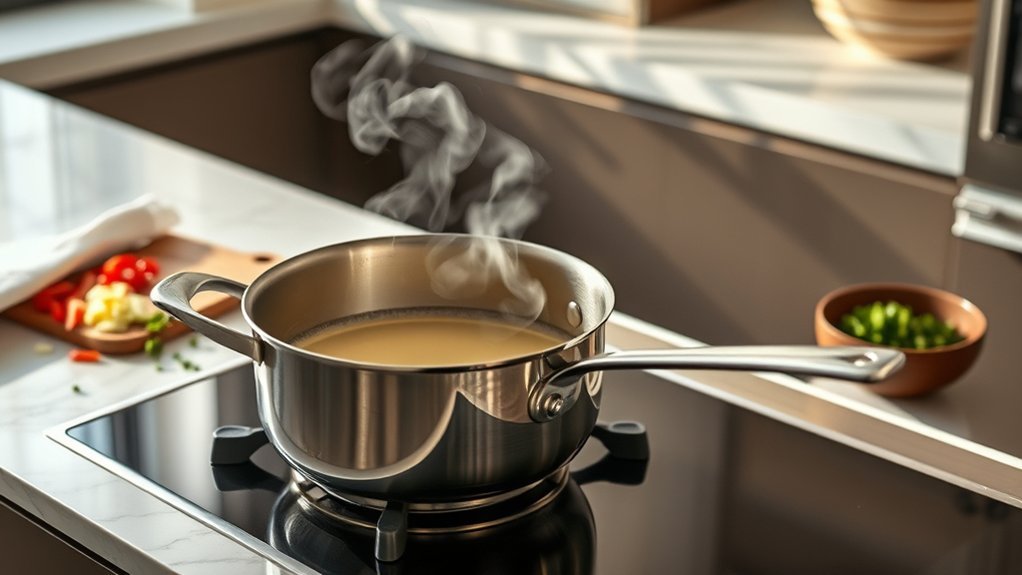
A saucepan is one of the most useful pieces of everyday cookware. Its relatively narrow base, tall sides, long handle, and usually fitted lid make it well suited to sauces, gravies, rice, grains, eggs, vegetables, soups, reheating, and small-batch boiling. The right size and material make these jobs easier while giving you better control over heat, moisture, and cleanup.
Quick Answer
A saucepan is mainly used for cooking foods with liquid or recipes that need controlled heating. It is ideal for sauces, rice, oatmeal, soup, boiled eggs, vegetables, small portions of pasta, reheating leftovers, melting ingredients, and gentle simmering. A 2- to 3-quart saucepan covers many everyday kitchen tasks.
Key Takeaways
- Saucepans work best for liquid-based and small-batch cooking, including sauces, grains, soups, vegetables, eggs, and reheating.
- A 2- to 3-quart saucepan is a versatile starting size for many home kitchens.
- Clad stainless steel is a durable all-purpose option, while nonstick can make delicate foods and cleanup easier.
- For induction cooking, check that the saucepan has a magnetic base; copper and some stainless cookware will not work by themselves.
- Use the lid when you want to retain moisture and remove it when you want liquid to reduce more quickly.
What Is a Saucepan Used For?
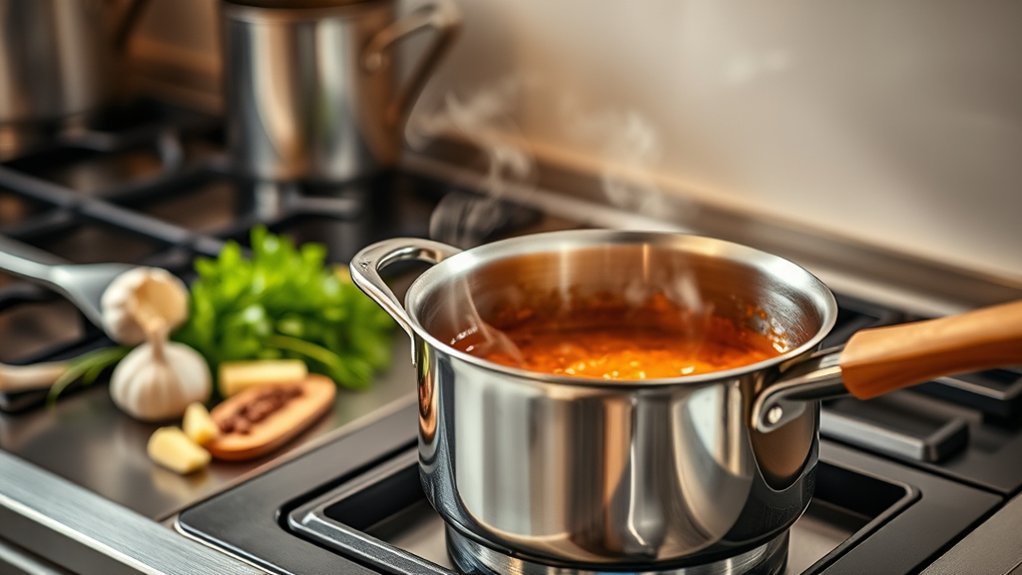
A saucepan is a deep, round cooking pan with relatively tall sides and a single long handle. Most models also include a lid. That shape makes a saucepan particularly useful when food needs to simmer, boil, reheat, or cook in a measured amount of liquid.
Common jobs include making sauces and gravies, cooking rice or quinoa, warming soup, preparing oatmeal, boiling eggs, blanching vegetables, reheating leftovers, and cooking modest portions of pasta. Manufacturers such as All-Clad also describe saucepans as useful for boiling, steaming, blanching, grains, and sauce preparation.
The tall walls help contain liquid and splatter, while the smaller cooking surface gives you more control than a broad skillet when working with sauces or small quantities. A lid can slow moisture loss during rice cooking or gentle simmering, while leaving the lid off allows a sauce or stock to reduce.
Pro Tip: Match the burner to the diameter of the saucepan base. An oversized flame or heating element can waste heat and make handles or sidewalls hotter than necessary.
What Can You Cook in a Saucepan?
Saucepans handle a surprisingly wide range of foods, especially when the recipe contains liquid or needs steady, controlled heating.
| Food or Task | Why a Saucepan Works Well |
| Sauces and gravies | Tall sides contain splatter, and the smaller base makes whisking and controlled reduction easier. |
| Rice, quinoa, and oatmeal | A fitted lid helps control steam and moisture during gentle cooking. |
| Eggs and vegetables | Small batches can be covered with water without requiring a large stockpot. |
| Soup and stew | A medium or large saucepan works well when you do not need a full stockpot. |
| Small pasta portions | Useful when there is enough room for the pasta and boiling water without overcrowding. |
| Reheating leftovers | Soups, curries, vegetables, and other moist foods can be reheated gently on the stovetop. |
| Melting butter or chocolate | A small saucepan gives good control over small quantities and gentle heat. |
| Steaming | A compatible steamer basket or insert can sit above simmering water for vegetables and other foods. |
A saucepan can also sauté a small quantity of onions, garlic, or spices before liquid is added. However, it is not usually the first choice when your main goal is strong browning or searing because a wider skillet or sauté pan provides more exposed cooking surface.
Note: Use the lid when you want to retain moisture, such as when cooking rice. Leave the lid off when you want water to evaporate and a sauce to thicken or reduce.
Saucepan vs. Pot vs. Sauté Pan
A saucepan, stockpot, sauté pan, skillet, and saucier can overlap in what they cook, but their shapes make certain jobs easier.
| Cookware | Typical Shape | Best Uses |
| Saucepan | Tall sides, relatively narrow base, one long handle, usually a lid | Sauces, grains, soup, boiling, reheating, small batches |
| Stockpot | Large capacity, tall walls, two loop handles | Stock, soup, large pasta batches, boiling larger quantities |
| Sauté pan | Wide flat base with relatively low straight sides | Browning, shallow frying, braising, one-pan meals |
| Frying pan or skillet | Wide base with low, usually flared sides | Searing, frying, eggs, pancakes, quick evaporation |
| Saucier | Rounded bottom corners and curved sides | Sauces, custards, risotto, and foods that need frequent whisking |
Saucepans commonly appear in sizes from roughly 1 to 4 quarts, while stockpots are designed for much larger volumes. For example, current All-Clad collections include 6-, 8-, and 12-quart stockpots. Sauté-pan capacity varies widely, so its wide cooking surface and lower walls are more useful identifiers than a fixed quart range.
How to Choose the Right Saucepan
The best saucepan depends on the volume you normally cook, your stovetop, the foods you prepare, and how much maintenance you want.
Choose the Right Saucepan Size
| Capacity | Good For |
| 1–2 quarts | Small sauces, melted butter, oatmeal, warming milk, a few eggs, small leftovers |
| 2–3 quarts | Versatile everyday use, including grains, vegetables, soup, sauces, and modest pasta portions |
| 4 quarts | Larger side dishes, soup, more substantial grain batches, and recipes that need extra headroom |
Le Creuset’s cookware guide similarly identifies a saucepan around 2 to 3 quarts as a practical general-purpose starting size.
Compare Saucepan Materials
Clad stainless steel: A strong all-purpose choice. Stainless steel provides a durable, nonreactive cooking surface, while quality clad pans typically use aluminum, copper, or another conductive layer to distribute heat more evenly.
Nonstick: Useful for foods that tend to stick and for easier cleanup. Follow the manufacturer’s temperature guidance and use silicone, nylon, plastic, or wooden utensils when recommended. The FDA Food Code 2026 specifies nonscoring or nonscratching utensils and cleaning aids for applicable perfluorocarbon-resin-coated cookware.
Enameled cast iron: Retains heat well and does not need the same seasoning routine as bare cast iron, but it is heavier than most stainless or aluminum saucepans.
Bare cast iron: Durable and excellent at retaining heat but heavy, slower to respond to temperature changes, and dependent on proper drying and seasoning.
Copper: Highly responsive to temperature changes, but construction matters. Many quality copper pans have a stainless-steel lining. Bare or unlined copper should not be treated as interchangeable with stainless steel for every food.
The best saucepan is not simply the heaviest or most expensive one. Match the size, construction, handle, lid, and stovetop compatibility to the foods you actually cook.
Check Stovetop and Oven Compatibility
Gas and conventional electric cooktops accept many cookware materials, but induction requires a magnetic base. According to GE Appliances, cast iron and many stainless-steel pans work on induction, while copper and aluminum without magnetic bases do not.
A simple check is to hold a magnet against the bottom of the saucepan. If it sticks firmly, the pan is generally suitable for an induction element. Still check the cookware manufacturer’s label or manual before buying.
Oven compatibility also varies by pan, lid, coating, and handle material. Never assume a saucepan is broiler-safe or safe at a specific oven temperature without checking its instructions.
Warning: Handles can become hot during extended stovetop or oven use. Use an oven mitt when needed, and follow the manufacturer’s maximum temperature limits for the pan and lid.
Common Saucepan Mistakes to Avoid
- Overfilling the saucepan: Leave enough headroom for boiling foods so liquid is less likely to foam or spill over.
- Using a saucepan that is too small for pasta: Pasta needs enough water and room to move. Use a larger pot when necessary.
- Using excessive heat on nonstick cookware: Many nonstick manufacturers recommend low to medium heat for routine cooking.
- Using sharp or abrasive utensils on nonstick: Choose nonscratching utensils and cleaning tools appropriate for the coating.
- Assuming every stainless or copper pan works on induction: Check for a magnetic base.
- Putting a very hot pan under cold water: Sudden temperature change can contribute to warping or other damage.
- Trying to sear a crowded batch: A skillet or sauté pan gives food more surface contact and allows moisture to escape more readily.
- Leaving thick sauces unstirred: Stir sauces, custards, and other thick mixtures regularly so food does not catch on the bottom.
How to Clean and Care for a Saucepan
Care depends on the saucepan material, so the manufacturer’s instructions should take priority. A few general habits will keep most saucepans performing well.
Stainless Steel
Wash stainless steel with warm, soapy water and a soft sponge or suitable nonabrasive cleaning pad. For stubborn food, soaking briefly or loosening residue with water and baking soda can help. Avoid cleaners or scrubbers that the manufacturer says can damage the finish.
Nonstick
Allow the pan to cool, then clean it with mild soap and a soft sponge or other coating-safe cleaning aid. Avoid sharp utensils, abrasive pads, and harsh cleaners unless the manufacturer specifically approves them. All-Clad’s care guidance, for example, recommends silicone, nylon, plastic, or wooden utensils for its nonstick cookware and warns against sudden cold-water cooling of a hot pan.
Cast Iron
Bare seasoned cast iron needs a different routine. Lodge recommends washing, drying the cookware completely, and applying a thin layer of oil. Do not leave bare cast iron soaking in water because prolonged moisture can encourage rust.
Copper and Enameled Cookware
Follow the specific manufacturer’s directions because exposed copper, lined copper, enamel, and other finishes have different cleaning requirements. The FDA Food Code limits contact between copper or copper alloys and acidic foods below pH 6 in covered food-service applications, illustrating why the food-contact surface and lining matter.
Warning: Do not plunge a very hot saucepan into cold water. Let it cool first. Rapid temperature change can warp some cookware and may damage certain finishes.
Frequently Asked Questions
What Is the Purpose of a Saucepan?
A saucepan is designed for relatively small quantities of food that need boiling, simmering, reheating, reducing, or other controlled stovetop cooking. Its tall sides and smaller footprint make it especially useful for sauces, grains, soup, vegetables, eggs, and other liquid-based foods.
What Can You Not Put in a Saucepan?
There is no single food that is unsuitable for every saucepan. Restrictions depend on the material. Avoid sharp metal utensils on coatings that can scratch, avoid exceeding safe fill levels, and follow manufacturer guidance for acidic foods and reactive surfaces such as exposed copper. Do not use a saucepan in the oven or under a broiler unless it is rated for that use.
What’s the Difference Between a Pan and a Saucepan?
“Pan” is a broad cookware term. If you mean a frying pan or skillet, it is wider and shallower than a saucepan, so it is better for frying, searing, browning, and fast evaporation. A saucepan has taller sides and is better suited to liquids, simmering, boiling, grains, and sauces.
Why Are They Called Saucepans?
The name reflects the saucepan’s traditional association with preparing and reducing sauces. Modern saucepans are much more versatile and are routinely used for grains, vegetables, soup, oatmeal, eggs, reheating, boiling, and many other everyday tasks.
Can You Fry Food in a Saucepan?
You can sauté or shallow-fry small quantities in some saucepans, but a skillet or sauté pan is usually better for browning because it has a wider cooking surface. Deep-frying also requires appropriate cookware, enough headroom for hot oil, and careful temperature control.
What Size Saucepan Is Most Useful?
For many kitchens, a 2- to 3-quart saucepan is the most versatile starting size. It is large enough for grains, vegetables, soup, sauce, reheating, and modest boiling jobs without being unnecessarily bulky for small tasks.
Conclusion
A saucepan is an everyday kitchen workhorse because it handles sauces, grains, soups, vegetables, eggs, reheating, and small boiling jobs without requiring a large pot. A 2- to 3-quart model is a practical starting point for many cooks, but material and stovetop compatibility matter just as much as size. Choose a secure handle and useful lid, follow the manufacturer’s heat and cleaning guidance, and the saucepan can cover a wide range of daily cooking tasks.
Sources
- U.S. Food and Drug Administration — Food Code 2026 — copper food-contact limitations and nonstick cookware guidance.
- GE Appliances — Induction Cooktops — magnetic cookware requirements and the induction magnet test.
- All-Clad — Why Every Kitchen Needs a Great Saucepan — common saucepan uses, lids, grains, boiling, and steaming.
- All-Clad — Use and Care Guide — nonstick utensils, cleaning, heat use, and thermal-shock precautions.
- Lodge Cast Iron — How to Clean Cast Iron — washing, drying, oiling, soaking, and rust prevention.
- Le Creuset — How to Build a Cookware Collection — saucepan uses and practical starter sizing.