
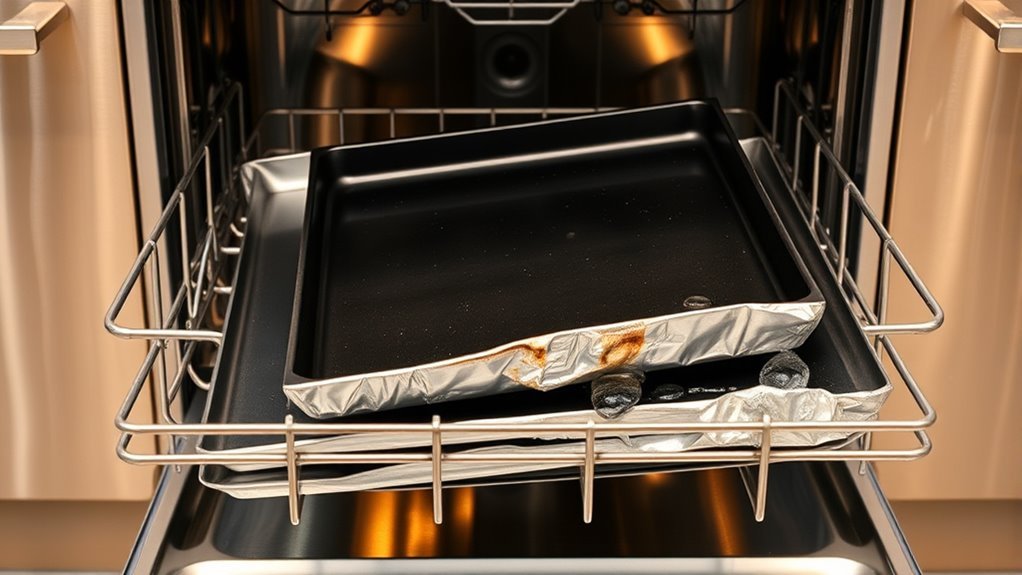
Are baking sheets dishwasher safe, or can a wash cycle damage your favorite tray? The answer depends on the metal, its coating, and the manufacturer’s care instructions. Knowing these differences helps you avoid dull finishes, damaged nonstick surfaces, and unnecessary replacements.
Quick Answer
Most uncoated aluminum and nonstick baking sheets are best washed by hand. Dishwasher detergent can discolor aluminum and shorten the life of some coatings. Stainless steel sheets are often dishwasher-safe, but individual products vary. Always follow your pan’s care label. Even when machine washing is allowed, gentle handwashing can help preserve its appearance.
Key Takeaways
- Dark gray discoloration on bare aluminum is often cosmetic and does not automatically make the pan unsafe.
- A dishwasher-safe label applies to a specific product, not every sheet made from the same material.
- Sudden temperature changes, especially rinsing a hot pan with cold water, are a major cause of warping.
- Deeply scratched or peeling nonstick coatings deserve more attention than ordinary stains.
- Thicker metal and reinforced rolled rims help baking sheets maintain their shape.
Are Baking Sheets Dishwasher-Safe? The Short Answer
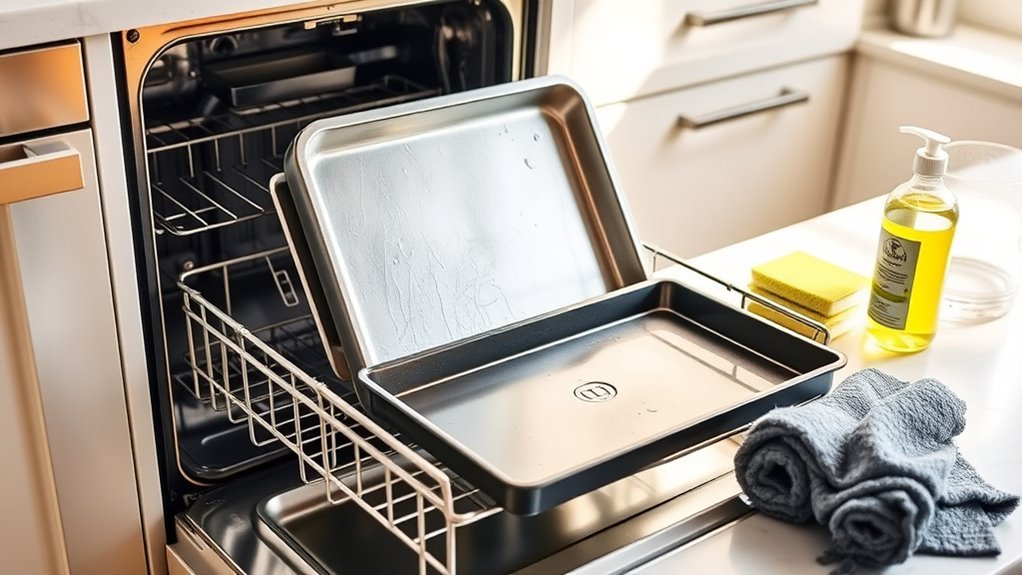
Some baking sheets can go in the dishwasher, but many should not. The safest choice depends on whether your pan is bare aluminum, stainless steel, or coated metal.
For example, a plain aluminum sheet may turn dark gray after machine washing. That change can look alarming, but it does not necessarily affect the pan’s baking performance.
A nonstick sheet has a different concern. Harsh detergent and repeated wash cycles can shorten the coating’s useful life, even when the metal underneath stays intact.
Stainless steel usually handles dishwasher conditions better. However, some stainless baking sheets still carry handwashing recommendations to preserve their finish.
The important distinction is between dishwasher-safe and dishwasher-recommended. A pan may tolerate machine cleaning while lasting longer or looking better when washed by hand.
Why Dishwashers Damage Aluminum and Nonstick Pans
Dishwashers expose baking sheets to alkaline detergents, hot water, and repeated wetting and drying. These conditions affect aluminum and nonstick coatings differently.
The most common problem with bare aluminum is surface discoloration. Nonstick sheets are more vulnerable to coating wear, scratches, and reduced food release.
What Happens to Aluminum in the Dishwasher?
Aluminum reacts with certain dishwasher detergents. The surface can become cloudy, dull, gray, or darkened after a wash cycle.
Repeated exposure may also contribute to surface pitting, especially when the metal is exposed to harsh cleaning conditions.
According to Nordic Ware’s aluminum bakeware care guidance, dishwasher discoloration is generally cosmetic and does not affect the safety or baking properties of its natural aluminum pans.
Therefore, you do not need to throw away an otherwise sound aluminum baking sheet just because its color changed.
What Happens to Nonstick Coatings?
Nonstick surfaces need protection from scratches, abrasive cleaners, and unnecessary chemical exposure.
Dishwasher detergents may gradually reduce the coating’s performance. Contact with other dishes or utensils can also scratch the surface.
Over time, you may notice:
- Food sticking more frequently.
- A dull or rough cooking surface.
- Visible scratches in the coating.
- Peeling or flaking in badly worn areas.
Not every nonstick sheet responds the same way. Some manufacturers approve dishwasher use, while others specifically prohibit it.
Can a Dishwasher Warp a Baking Sheet?
A dishwasher is not the main cause of most baking sheet warping. Uneven heating and sudden temperature changes during cooking or cleaning are more common causes.
For example, running cold water over a sheet immediately after removing it from a hot oven can make the metal contract unevenly.
Thin sheets are more likely to develop a permanent bend than sturdy pans with reinforced rims.
Dishwasher conditions may contribute to wear, but discoloration should not be confused with structural damage.
Which Sheet-Pan Materials Handle Dishwashers Best?
Stainless steel is generally the most dishwasher-tolerant common sheet-pan metal. Bare aluminum and most nonstick-coated sheets are better suited to handwashing.
However, the manufacturer’s instructions take priority over general material recommendations.
| Baking Sheet Material | Dishwasher Guidance | Main Concern |
|---|---|---|
| Uncoated aluminum | Handwash recommended | Gray discoloration, dullness, and possible pitting |
| Stainless steel | Often dishwasher-safe; confirm the model | Water spots, discoloration, or finish changes |
| Nonstick-coated aluminum or steel | Handwash unless specifically approved | Coating wear and reduced food release |
| Aluminized steel | Depends on coating and product instructions | Finish damage and corrosion if protective surfaces deteriorate |
| Cast iron baking trays | Do not put in the dishwasher | Seasoning loss and rust |
Whirlpool’s dishwasher material guidance identifies most stainless steel baking sheets as dishwasher-compatible while advising against machine washing many aluminum and nonstick items.
Still, stainless steel is not automatically maintenance-free. Some manufacturers recommend handwashing their stainless ovenware despite the metal’s dishwasher resistance.
For nonstick bakeware, USA Pan’s official care instructions recommend warm, soapy handwashing to help preserve the coating.
There are exceptions. The Wilton bakeware cleaning guide describes dishwasher-safe nonstick bakeware while still recommending handwashing for better care.
That is why you should identify the exact product rather than judge dishwasher safety by material alone.
Is Your Sheet Pan Dishwasher-Safe? How to Check
The most reliable way to check dishwasher safety is to read the instructions for your specific baking sheet.
Look for the cleaning recommendation on the packaging, product page, or manufacturer’s care guide.
- Find the manufacturer and model. Look for a stamped name, product code, or other identifying information.
- Read the care instructions. Check whether the manufacturer says dishwasher-safe, handwash recommended, or handwash only.
- Inspect the surface. Determine whether the tray is bare metal, nonstick-coated, or another treated material.
- Check for restrictions. Some products allow dishwasher cleaning but still recommend handwashing to preserve their appearance.
- Choose handwashing when uncertain. This is the lower-risk option for most baking sheets.
A dishwasher-safe symbol can be useful, but wording matters. A removable rack, lid, or accessory may have different cleaning instructions from the baking sheet itself.
Never assume two visually similar pans follow the same care rules.
If your sheet is approved for machine washing, load it securely so it does not strike other cookware or block the dishwasher’s spray arms.
Hand-Wash Aluminum and Nonstick Pans: Step-by-Step
Warm water, mild dish soap, and a soft sponge are the best starting tools for cleaning most aluminum and nonstick baking sheets.
This method removes everyday food residue while reducing the risk of scratches and finish damage.
Warning: Never place a baking sheet straight from a hot oven into cold water. The sudden temperature change can warp the metal. Let the pan cool naturally before washing.
- Let the sheet cool. Place it on a suitable heat-resistant surface until it reaches a safe handling temperature.
- Remove loose food. Wipe away crumbs, grease, and loose residue with a soft cloth or paper towel.
- Add warm, soapy water. Use a small amount of mild dish soap and enough water to loosen remaining grease.
- Wash gently. Clean the surface with the soft side of a sponge or a manufacturer-approved nylon brush.
- Loosen stubborn food. Allow a brief soak if the manufacturer’s instructions permit it. Avoid prolonged soaking of coated or uncoated aluminum pans.
- Rinse thoroughly. Remove soap and loosened food with clean water.
- Dry completely. Wipe the sheet with a clean towel, paying attention to corners and rolled rims.
For stubborn residue on suitable stainless steel bakeware, a longer soak of around 30 minutes may help. Avoid treating that time as a universal recommendation for every material.
Do not use steel wool, sharp scrapers, or harsh abrasive pads on nonstick coatings.
Uncoated aluminum is more tolerant of gentle mechanical cleaning, but aggressive scrubbing can still leave scratches.
Once dry, inspect the surface. A clean sheet should have no loose food, sticky grease, or remaining soap residue.
Remove Stains and Burnt Food Safely
Burnt-on food and dark stains do not always mean a baking sheet is damaged. Many marks can be removed with gentle cleaning, although some discoloration may remain permanently.
Use the cleaning method that matches your pan’s surface rather than treating every baking sheet the same way.
For Uncoated Aluminum Baking Sheets
Start with warm water, mild soap, and a nonmetal scrubber or soft sponge.
If the residue remains, try a small amount of baking soda mixed with water to make a soft paste, provided the manufacturer permits it.
Rub gently and rinse thoroughly. Do not scrape the metal with sharp tools or leave harsh cleaning mixtures sitting on the surface.
Some darkened aluminum may not return to its original silver color. That is not necessarily a problem.
For Nonstick Baking Sheets
Use the gentlest effective method. Warm soapy water and a soft sponge should be your first choice.
For baked-on grease, allow a short soak if the care instructions permit one. Then gently loosen the residue with a nonabrasive sponge.
Avoid steel wool, abrasive powders, and aggressive scrubbing. These methods can damage the finish you are trying to protect.
Do not automatically use baking soda paste or metal cleaners on a nonstick surface. Some manufacturers specifically prohibit abrasive cleaning products.
For Stainless Steel Baking Sheets
Stainless steel generally tolerates more thorough cleaning than nonstick-coated metal.
Try warm, soapy water first. For stubborn residue, use baking soda and water with a soft sponge or an approved nylon cleaning pad.
For surface discoloration, some stainless steel manufacturers recommend wiping with a little white vinegar and rinsing well.
All-Clad’s stainless steel bakeware instructions recommend gentle cleaning, immediate drying, and suitable methods for removing stains and discoloration.
Can You Use Bar Keepers Friend?
Bar Keepers Friend can be useful for removing stubborn marks from compatible uncoated metal cookware, particularly stainless steel.
However, it should not be applied indiscriminately to aluminum finishes or nonstick coatings.
The manufacturer’s Bar Keepers Friend precautions specifically warn against using the cleaner on nonstick surfaces.
For approved surfaces, follow the product label, avoid prolonged contact, and rinse completely. Do not leave the cleaner on for 30 minutes; its guidance calls for much shorter contact.
The goal is to remove food residue without sacrificing the pan’s usable surface.
When Staining or Warping Means Replace the Pan
Replace a baking sheet when its shape, surface, or performance is seriously compromised. Ordinary staining alone is rarely a reason to discard an otherwise usable metal pan.
The most important warning signs are permanent distortion, damaged nonstick coatings, and consistent cooking problems.
Visible Structural Warping
A baking sheet may flex or make a popping sound during heating. That does not automatically mean it needs replacing.
Some sheets temporarily change shape as the metal expands and return to normal after cooling.
To check for permanent warping:
- Let the sheet cool completely.
- Place it on a flat, level surface.
- Check whether the center bulges or the corners lift.
- Look for twisted or sharply bent edges.
- See whether the sheet rocks noticeably when touched.
A small bend may be mainly cosmetic. However, pronounced distortion can cause food, oil, or cooking juices to collect unevenly.
Replace a sheet if it cannot sit securely, has sharp damaged edges, or repeatedly causes serious cooking problems.
Persistent Surface Discoloration
Dark stains and discoloration are not reliable signs that a baking sheet is unsafe.
Uncoated aluminum commonly develops a darker appearance with use or after exposure to dishwasher detergent.
If the surface remains intact, the sheet lies flat, and food cooks normally, cosmetic discoloration alone does not justify replacement.
However, inspect any surface that develops deep pitting, corrosion, unusual roughness, or loose material.
A nonstick coating deserves extra care. Replace the coated sheet when the finish is peeling, flaking, or deeply scratched.
Do not confuse a darkened metal surface with a coating that is physically coming apart.
Loss of Cooking Performance
A baking sheet that consistently produces uneven results may need replacing, especially when its shape has changed.
Permanent distortion can affect how food and oil spread across the cooking surface.
Look for these problems:
- Food or liquid repeatedly pooling in one area.
- A sheet that rocks or sits unevenly on a level surface.
- Persistent uneven browning linked to the pan’s shape.
- Nonstick food release that remains poor after proper cleaning.
- Loose or peeling coating material.
Remember that oven hot spots can also cause uneven browning. Check the pan’s shape and condition before deciding it is the cause.
If damage affects safe handling or reliable cooking, replacing the pan is more practical than continuing to struggle with it.
Rescue Methods for Heavily Stained or Warped Pans
You can often restore a stained baking sheet, but permanent structural warping is harder to fix. Cleaning methods should match the metal and coating.
For a heavily stained, uncoated pan, begin with gentle cleaning before trying any stronger treatment.
- Cool the sheet fully. Never attempt repairs while it is hot.
- Remove loose residue. Wipe away crumbs and grease.
- Wash with mild soap. Use warm water and a nonabrasive sponge.
- Treat remaining stains. Use a baking soda paste or an approved cleaner only when appropriate for the material.
- Rinse and dry. Remove all cleaning residue and inspect the surface again.
For minor warping, first determine whether the pan returns to its normal shape after cooling.
If a small bend remains in an uncoated metal sheet, the manufacturer’s instructions may allow careful reshaping while the pan is completely cool. Do not force a badly distorted tray.
Nordic Ware’s explanation of baking sheet warping notes that mild bends may sometimes be corrected, while severely distorted pans are much harder to restore.
Warning: Do not rely on heating a warped baking sheet to 450°F for 10 minutes as a general repair method. Oven heat alone does not reliably flatten permanent damage, and excessive heat can harm coatings. Never hammer, bend, or handle a hot pan without an appropriate, manufacturer-supported repair procedure.
If a baking sheet has deep bends, damaged rims, or persistent instability, replacement is usually the safer and more reliable option.
A cleaned pan does not need to look brand-new. What matters is whether its surface is intact and it still performs properly.
Choosing a Durable Baking Sheet: Gauge, Material, and Design
A durable baking sheet combines suitable metal thickness, a stable rim, and a finish that matches your cooking habits.
Uncoated aluminum is popular for even heating, while stainless steel offers durability and potentially easier cleaning.
Look beyond the appearance of the pan. Construction and manufacturer care requirements matter more than a shiny finish.
Gauge and Heat Conductivity
Gauge describes metal thickness. In common sheet-metal gauge systems, a lower gauge number generally means thicker metal.
For example, an 18-gauge sheet is generally thicker than a 20-gauge sheet of the same metal under the same gauge standard.
Thicker metal usually provides more resistance to bending and warping, although the pan’s overall design also matters.
The Home Depot baking sheet buying guide explains how gauge relates to thickness and why sturdy pans are less likely to bend under heat.
Consider these material characteristics:
- Uncoated aluminum: Conducts heat well, heats and cools quickly, and supports even browning.
- Stainless steel: Durable and resistant to corrosion, but typically less conductive than aluminum on its own.
- Aluminized steel: Combines a steel base with an aluminum-based surface layer; performance and cleaning depend on its construction and coating.
- Nonstick-coated metal: Makes food release easier but requires protection from scratches and coating wear.
For everyday baking, a sturdy aluminum sheet with a reinforced rim is a practical choice if you do not mind handwashing.
If dishwasher convenience matters most, choose a sheet whose manufacturer specifically approves machine cleaning.
Rolled Edges and Sturdiness
Rolled edges improve a baking sheet’s rigidity by reinforcing its perimeter.
This extra support helps the pan resist bending when exposed to heat and the weight of food.
Look for these construction features:
- A reinforced or rolled rim.
- A flat, sturdy cooking surface.
- Metal thickness suitable for regular oven use.
- Secure construction without loose or damaged edges.
- An oven temperature rating appropriate for your recipes.
Rimmed sheets are useful for roasting vegetables and cooking foods that release juices.
Rimless or low-profile cookie sheets make it easier to slide baked cookies onto a cooling rack, but their construction still needs enough rigidity to resist distortion.
A heavier pan is not automatically better for every recipe. Choose a balance of durability, heat behavior, weight, and ease of handling.
Maintenance Habits to Extend Sheet-Pan Life (What to Avoid)
Simple cleaning and storage habits can help baking sheets maintain their appearance and performance for years.
The biggest priorities are avoiding unnecessary coating damage, preventing sudden temperature changes, and keeping pans dry between uses.
- Follow the care label: Do not assume a pan is dishwasher-safe because another sheet from the same brand is.
- Avoid thermal shock: Let hot sheets cool naturally instead of placing them directly under cold running water.
- Prevent baked-on buildup: Clean grease and food residue regularly rather than repeatedly heating old deposits.
- Protect nonstick coatings: Use silicone, wood, or suitable nylon utensils instead of sharp metal tools.
- Use liners when appropriate: Parchment paper or silicone baking mats can reduce sticking and simplify cleanup. Follow their temperature limits.
- Store pans dry: Avoid trapping moisture between stacked sheets or around rolled rims.
- Prevent scratches: Place a soft protective layer between nonstick sheets if you need to stack them.
- Check for damage: Inspect coatings, rims, and overall flatness from time to time.
Avoid harsh oven cleaners and bleach unless the manufacturer explicitly approves them for the surface.
Also remember that metal pans can develop a natural patina, or gradual surface darkening, through regular use. This does not always indicate damage.
With consistent care, a quality baking sheet can stay useful long after its original shine fades.
Frequently Asked Questions
Can You Put a Metal Baking Tray in the Dishwasher?
Sometimes. Stainless steel trays are often dishwasher-safe, while bare aluminum usually needs handwashing and nonstick trays depend on their specific coating and care label. Follow the manufacturer’s instructions for your exact pan, including any restrictions on cleaning methods or detergents.
Why Shouldn’t Aluminum Pans Go in the Dishwasher?
Dishwasher detergents can react with aluminum and leave a dull, gray, or darkened surface. Repeated harsh cleaning may also contribute to pitting. However, ordinary discoloration on uncoated aluminum is often cosmetic and does not automatically make the baking sheet unsafe or unusable.
What Is the Best Way to Wash Baking Sheets?
Handwashing with warm water, mild dish soap, and a soft sponge is the safest general method. Let the sheet cool first, gently remove stuck food, and rinse thoroughly. Dry it completely before storage. Use stronger cleaning products only when the manufacturer approves them for that surface.
Why Do My Baking Sheets Change Color When I Put Them in the Dishwasher?
Dishwasher detergents and hot water can change the appearance of aluminum surfaces. The metal may become cloudy, gray, or darker after cleaning. If the sheet remains structurally sound, the discoloration is usually cosmetic. Switch to handwashing to help prevent further changes.
Conclusion
Whether a baking sheet belongs in the dishwasher depends on its material, coating, and care instructions. Most bare aluminum and nonstick sheets benefit from handwashing, while some stainless steel models can handle machine cleaning.
Use mild soap, avoid sudden temperature changes, and replace pans only when damage affects their safety or performance. A little consistent care can keep your baking sheets working well without unnecessary replacements.
Sources
- Nordic Ware: Naturals Aluminum Bakeware: Aluminum cleaning recommendations, dishwasher discoloration, and surface care.
- Whirlpool: What Is and Isn’t Dishwasher Safe?: Dishwasher compatibility of stainless steel, aluminum, nonstick cookware, and cast iron.
- USA Pan: Bakeware Use and Care: Nonstick and uncoated bakeware cleaning precautions.
- Wilton: How to Clean Cookie Sheets and Other Bakeware: Cleaning advice for aluminum, stainless steel, and nonstick bakeware.
- All-Clad: Use and Care Guide: Stainless steel bakeware cleaning and discoloration treatment.
- Bar Keepers Friend: 8 Ways Not to Use Bar Keepers Friend: Restrictions on cleaning nonstick surfaces.
- Nordic Ware: Why Baking Sheets Warp: Causes, prevention, and limitations of repairing warped sheets.
- The Home Depot: Baking Sheet Buying Guide: Gauge, metal thickness, and baking sheet construction.
