
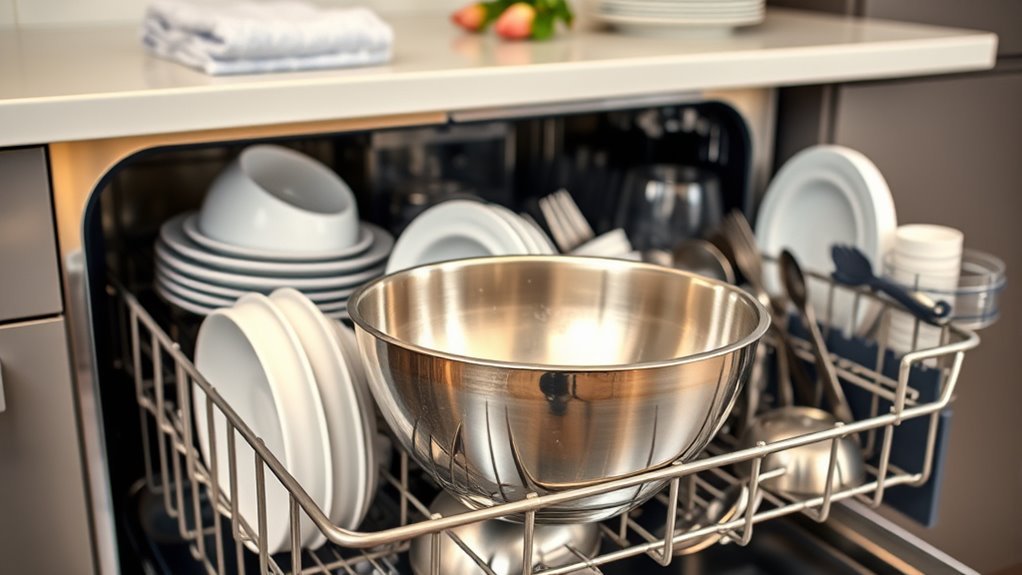
Are stainless steel bowls dishwasher safe? Most plain stainless steel bowls are, but coatings, lids, and grips can change the answer. About 70% of people mistakenly assume all stainless steel bowls are dishwasher safe. The safest approach is to identify your bowl’s materials, follow its care instructions, and load it correctly to prevent stains and scratches.
Quick Answer
Yes, most uncoated stainless steel mixing bowls can go in the dishwasher. However, always confirm that your specific bowl is labeled dishwasher-safe. Some decorative finishes, coatings, lids, and attached components need special care. Load bowls at an angle without nesting them, use appropriate dishwasher detergent, and dry them thoroughly to prevent water spots.
Key Takeaways
- A silicone or rubber base does not automatically make a stainless steel bowl unsuitable for dishwashing. The manufacturer’s rating determines compatibility.
- Small bowls usually fit on the upper rack, while larger dishwasher-safe bowls can go on the lower rack.
- Hard-water minerals can leave white spots. Rinse aid and prompt drying help reduce them.
- Chlorine bleach and ordinary steel wool can damage stainless steel. Mild dish soap and soft cleaning tools are safer choices.
- Citric acid is not automatically harmful to stainless steel. Prolonged contact with salty residues and chloride-containing cleaners is a greater corrosion concern.
What Does “Dishwasher Safe” Mean for Stainless Steel Bowls?
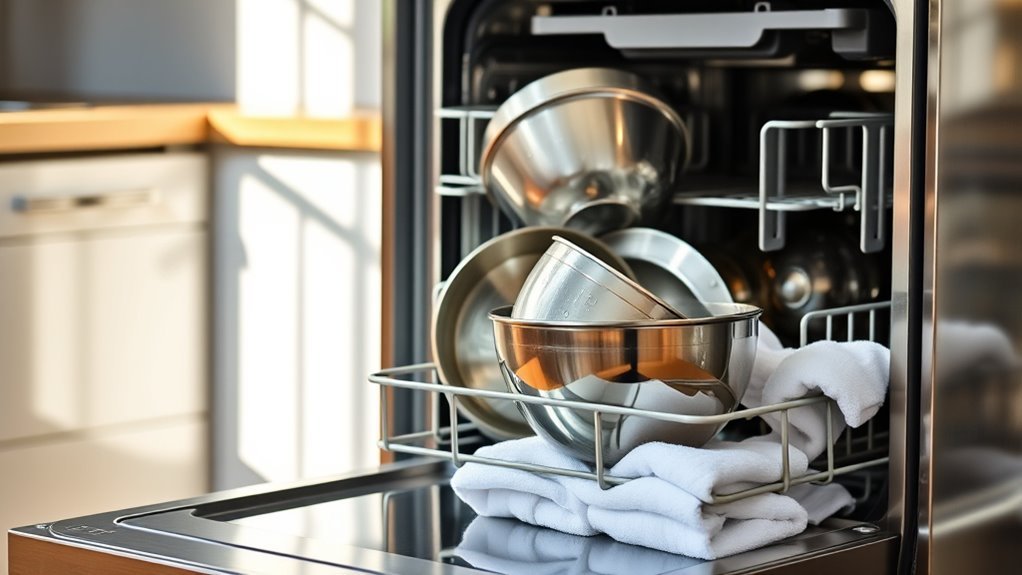
When a stainless steel bowl is labeled dishwasher-safe, its manufacturer considers it suitable for normal dishwasher cleaning. This includes exposure to hot water, detergent, and mechanical washing action.
However, dishwasher-safe does not mean scratchproof or permanently stain-free. Repeated washing can still affect the appearance of some finishes, especially when minerals or cleaning residue dry on the surface.
According to Whirlpool’s dishwasher-safe material guidance, most stainless steel bowls and similar kitchen items can be cleaned in a dishwasher.
Before washing yours, inspect these features:
- Material: Plain, uncoated stainless steel is generally suitable for machine washing.
- Surface finish: Decorative treatments and special coatings may need gentler cleaning.
- Attached components: Rubber grips, plastic exteriors, and silicone bases may have separate care requirements.
- Removable accessories: Lids, seals, and other attachments may not have the same dishwasher rating as the bowl.
Look for a dishwasher-safe symbol on the product packaging, base, or instruction sheet. If the manufacturer specifically recommends handwashing, follow that recommendation.
Are All Stainless Steel Bowls Dishwasher Safe?
No, not every stainless steel bowl is dishwasher-safe. The metal itself usually tolerates routine dishwashing, but the complete product may contain materials that require different care.
For example, some mixing bowls have nonslip silicone bases. These are not automatically unsafe for the dishwasher. A manufacturer explicitly identifies its silicone-base stainless steel mixing bowls as dishwasher-safe.
The important distinction is whether the manufacturer approves the entire bowl, not whether it contains silicone.
Stainless steel grades also vary in corrosion resistance. Common food-contact grades include 304 and 316, while 430 is used in some food-handling applications. The British Stainless Steel Association’s food-industry guidance explains these material differences.
For everyday washing, you do not normally need to identify the exact steel grade if the bowl already has clear dishwasher-care instructions.
Choose handwashing when:
- The manufacturer says the bowl is handwash-only.
- The bowl has a delicate decorative finish or coating with uncertain dishwasher compatibility.
- Attached plastic, rubber, or adhesive components are not rated for dishwasher use.
- The bowl has damaged seams, loose attachments, or visible corrosion that needs inspection.
If your bowl has no label and you cannot identify its model, handwashing with mild soap is the cautious option.
Best Practices for Washing Stainless Steel Bowls
Proper dishwasher loading helps stainless steel bowls come out clean without unnecessary scratches or trapped water. The goal is to let detergent and rinse water reach every surface while preventing the bowls from knocking against other dishes.
Follow these steps when your bowls are approved for dishwasher use.
- Remove food scraps. Scrape off leftover food. If the bowl contains salty or acidic residue and the dishwasher will not run soon, rinse it promptly.
- Choose the correct rack. Place smaller bowls on the upper rack. Larger dishwasher-safe bowls can go on the lower rack when they fit securely.
- Angle each bowl downward. Face the interior toward the spray and position the bowl so water drains instead of pooling inside.
- Leave space between items. Do not nest bowls together or press them tightly against other metal dishes.
- Check the spray arms. Make sure large bowls do not block the detergent dispenser or prevent the spray arms from turning.
- Use the appropriate wash cycle. Follow the dishwasher’s detergent and cycle instructions. Avoid extra-hot settings when the bowl has components that are not approved for them.
- Dry the bowls after washing. Remove any remaining water with a clean, soft towel before storage.
These recommendations follow the general principles in Whirlpool’s dishwasher loading instructions, which distinguish between small bowls on the upper rack and larger bowls on the lower rack.
Check your bowls after the cycle. Clean interiors, no detergent residue, and no trapped moisture indicate that the loading arrangement worked well.
Preventing Water Spots and Maintaining Shine
Water spots on stainless steel bowls are commonly caused by minerals left behind when water evaporates. They often appear as cloudy white marks, rings, or small spots, especially in homes with hard water.
These deposits are usually cosmetic and do not mean the stainless steel has rusted.
Stainless steel resists staining, but mineral-rich water can still leave visible marks. Thorough drying is one of the simplest ways to maintain its shine.
If you regularly use a dishwasher, check its rinse-aid dispenser. Rinse aid helps water spread and drain instead of forming droplets that dry into spots.
The KitchenAid dishwasher guidance on rinse aid explains how it improves drying and reduces spotting.
For bowls that already have mineral marks, try these steps:
- Wash the bowl with warm water and mild dish soap.
- For remaining mineral spots, wipe the uncoated stainless steel with a soft cloth dampened with diluted white vinegar.
- Rinse thoroughly with clean water.
- Dry immediately with a microfiber cloth.
Do not leave a concentrated vinegar-and-salt mixture sitting in the bowl. Extended contact with concentrated salt solutions can increase corrosion risk.
If spots remain, choose a stainless steel cleaner approved for food-contact surfaces. Follow its instructions and remove cleaning residue before preparing food.
What You Should Skip When Washing Stainless Steel Bowls
Avoid aggressive cleaning methods that can scratch stainless steel or damage its protective surface. Although stainless steel is durable, prolonged exposure to certain chemicals and trapped residues can cause discoloration or pitting.
Pitting means small holes or depressions forming in the metal surface. Unlike ordinary water spots, actual pitting is physical damage.
Avoiding High Heat
Ordinary dishwasher temperatures are generally not a problem for stainless steel bowls approved for machine washing. Stainless steel is designed to tolerate substantial temperature changes during normal kitchen use.
However, high-temperature wash and drying settings deserve extra attention when a bowl has plastic decorations, attached grips, coatings, or adhesive components.
These parts may deteriorate or become loose even when the metal bowl remains intact.
To reduce avoidable damage:
- Use the normal cycle unless the manufacturer recommends another setting.
- Follow the heat restrictions for plastic lids and detachable accessories.
- Avoid unnecessary high-heat drying when a product’s care instructions discourage it.
- Let hot bowls cool before handling or rinsing them with much colder water.
For bowls with uncertain heat tolerance, warm, soapy handwashing is the simpler choice.
Damage From Detergents
Strong cleaning chemicals can damage stainless steel when used incorrectly or left on the surface too long. In particular, chlorine-containing cleaners can cause surface staining and pitting.
The British Stainless Steel Association’s cleaning recommendations support using mild detergent, warm water, and non-scratching cleaning tools for routine care.
Warning: Avoid soaking stainless steel bowls in concentrated chlorine bleach or using cleaners containing hydrochloric acid. These chemicals can damage the steel’s protective surface and cause pitting. Never mix bleach with vinegar or other acidic cleaners.
Citric acid deserves a different explanation. It is not inherently harmful to stainless steel and is used in some stainless steel cleaning and passivation treatments.
The BSSA guidance on citric acid compatibility confirms that common stainless steel grades are suitable for many citric acid applications.
For dishwasher cleaning, use a detergent intended for automatic dishwashers and follow its dosing instructions. Do not pour concentrated detergent directly onto your bowls.
Tips for Hand Washing Stainless Steel Bowls
Handwashing is a reliable way to maintain the appearance of stainless steel bowls, especially those with polished finishes or delicate attachments. You need only warm water, mild dish soap, a soft sponge, and a clean drying cloth.
Use gentle pressure rather than aggressive scrubbing to remove food and residue.
Use Mild Detergent Only
For everyday handwashing, mild dish soap is usually enough to remove grease, food residue, and fingerprints from stainless steel bowls.
Fill the bowl with warm water, add a small amount of dish soap, and clean the inside and outside with a soft sponge.
If food has dried onto the surface, let the bowl soak briefly in warm, soapy water. This loosens residue and reduces the need for forceful scrubbing.
For stubborn discoloration, a suitable stainless steel cleaner may be more effective than ordinary soap. The All-Clad stainless steel care instructions also describe using white vinegar for discoloration and baking soda for difficult food deposits.
After cleaning, rinse thoroughly so no soap or cleaning product remains on the food-contact surface.
Avoid Abrasive Scrubbers
Ordinary steel wool, rough scouring pads, and abrasive cleaning powders can scratch stainless steel bowls. They may also leave behind particles that create rust-colored stains.
Choose cleaning tools that remove residue without damaging the finish.
- Use a soft sponge or microfiber cloth for normal washing.
- Soak stubborn food before scrubbing.
- Try a gentle baking soda and water paste on suitable uncoated stainless steel when necessary.
- Avoid using a pad that has previously cleaned ordinary carbon steel.
Use wooden, silicone, or other gentle utensils when mixing food if you want to minimize scratches inside polished bowls.
Minor surface scratches are often cosmetic, but deep scratches and rough areas deserve closer inspection.
Rinse Immediately After Use
Rinsing stainless steel bowls soon after use stops food from drying onto the surface. It is especially helpful after handling sticky ingredients, salty foods, or acidic sauces.
If you cannot wash a bowl immediately, remove leftover food and rinse away concentrated residue.
Do not leave highly salted mixtures sitting in stainless steel bowls for extended periods. Salt deposits can contribute to localized corrosion, particularly when moisture remains trapped against the surface.
After the final wash, dry the bowl completely before putting it away.
If you nest several bowls for storage, check that their outer surfaces and bases are also dry. Moisture trapped between stacked bowls can leave marks and encourage unwanted residue buildup.
Common Misconceptions About Stainless Steel Bowls in the Dishwasher
Several common dishwasher myths make stainless steel bowl care more confusing than necessary. The key is to separate normal cosmetic changes from actual damage and follow product-specific instructions.
Here are the most useful misconceptions to clear up:
- Myth: Every stainless steel bowl is dishwasher-safe. Most plain stainless steel bowls are suitable, but special finishes and attached materials can change the recommendation.
- Myth: Bowls with silicone bases must always be handwashed. Some manufacturers explicitly approve silicone-base bowls for dishwasher cleaning.
- Myth: All bowls belong on the upper rack. Small bowls often fit best there, but large dishwasher-safe bowls can be placed on the lower rack.
- Myth: Dishwasher-safe means the finish will never change. Mineral spots, dullness, and minor scratches can still develop over time.
- Myth: Citric acid always corrodes stainless steel. Citric acid is compatible with common stainless steel grades under appropriate conditions.
- Myth: Any orange spot means the bowl is ruined. Some rust-colored marks come from surface contamination and can be removed. Actual pitting needs closer attention.
Another mistake is assuming dishwasher compatibility also means microwave or oven compatibility.
Stainless steel bowls should not be used in ordinary microwave cooking unless the appliance manufacturer specifically permits the metal item. Likewise, do not use a mixing bowl in the oven or on a stovetop unless it is explicitly rated for that purpose.
These are separate safety requirements, not benefits included with a dishwasher-safe label.
Alternatives to Dishwashing Stainless Steel Bowls
Handwashing is the main alternative when you want more control over cleaning and drying. It also helps protect delicate finishes and components that may not tolerate repeated dishwasher cycles.
You can adjust your cleaning method based on the type of residue rather than using a strong cleaner every time.
Here is a practical comparison of routine cleaning methods:
| Method | Description | Tips |
|---|---|---|
| Handwashing | Wash with warm, soapy water and a soft sponge. | Suitable for routine cleaning and delicate finishes. |
| Stain Removal | Use a gentle baking soda paste for stubborn residue on uncoated stainless steel. | Apply gently and rinse thoroughly. |
| Drying | Wipe the bowl with a clean microfiber cloth. | Remove moisture before storing to reduce water spots. |
| Avoiding Damage | Use gentle cleaning tools and avoid harsh chemicals. | Protect the finish from scratches and chemical staining. |
If your bowls regularly come out of the dishwasher cloudy, try handwashing one with mild soap and drying it immediately.
This can help you tell whether the marks come from water minerals, detergent residue, or an existing change in the metal’s finish.
White deposits that wipe away are usually less concerning than small permanent pits, peeling coatings, or sharp damaged edges.
Replace a bowl when corrosion, deep pitting, or damaged attachments make it difficult to clean safely.
Frequently Asked Questions
Is Stainless Steel Safe in the Dishwasher?
Yes, most plain stainless steel bowls are safe in the dishwasher when the manufacturer approves them for machine washing. Place smaller bowls on the upper rack and larger bowls on the lower rack when appropriate. Avoid overcrowding and dry the bowls after washing to reduce water spots.
What Are Six Things I Should Never Put in the Dishwasher?
Six items generally better washed by hand are seasoned cast iron, bare aluminum cookware, enameled cast iron that is not dishwasher-approved, fine kitchen knives, nonstick cookware requiring handwashing, and wooden utensils. Some manufacturers approve specific products for dishwasher use, so always follow their care instructions rather than assuming every item in a category is identical.
What Metal Cannot Go in the Dishwasher?
Copper, pewter, seasoned cast iron, and many aluminum items should generally be handwashed. Dishwasher detergents can affect their finishes, while cast iron can lose its protective seasoning and develop rust. Some aluminum products are dishwasher-approved, so the manufacturer’s instructions take priority over general material advice.
What Should You Not Put in a Stainless Steel Bowl?
Avoid leaving highly salted foods or concentrated acidic mixtures in stainless steel bowls for extended periods. Ordinary food preparation with tomatoes, citrus, and other acidic ingredients is generally suitable for food-grade stainless steel. Rinse the bowl after use and avoid prolonged contact with concentrated bleach or corrosive cleaning chemicals.
Can Stainless Steel Bowls With Rubber Bases Go in the Dishwasher?
Yes, some stainless steel bowls with rubber or silicone bases are dishwasher-safe. However, compatibility depends on how the base is attached and whether the manufacturer approves the complete product for machine washing. If no care instructions are available, handwashing is the cautious choice.
Why Does My Stainless Steel Bowl Have Rust Spots After Dishwashing?
Rust-colored spots can develop from iron contamination, trapped food residue, or corrosion caused by prolonged exposure to salts and unsuitable chemicals. First, clean the affected area with a non-scratching stainless steel cleaner and rinse thoroughly. If the surface has permanent pits or rough damage, inspect the bowl before continuing to use it.
Conclusion
Most stainless steel bowls are dishwasher-safe, but the manufacturer’s instructions should guide your decision. Check attached components, load bowls without overcrowding, and remove moisture after washing.
For delicate finishes or bowls with uncertain care requirements, handwashing with mild soap is a reliable alternative. With simple cleaning habits, you can reduce scratches, prevent water spots, and keep your stainless steel bowls useful for years.
Sources
- Whirlpool: What Is and Isn’t Dishwasher Safe?: Confirms the general dishwasher compatibility of stainless steel bowls and explains material exceptions.
- Cuisinart: Stainless Steel Mixing Bowls With Non-slip Base: Provides a manufacturer-confirmed example of dishwasher-safe bowls with silicone bases.
- British Stainless Steel Association: Stainless Steels for Food Processing: Explains food-contact applications and corrosion resistance of common stainless steel grades.
- Whirlpool: How to Load a Dishwasher Properly: Supports upper- and lower-rack placement and proper bowl positioning.
- KitchenAid: Getting the Best Results When Using a Dishwasher: Explains rinse aid, water spotting, and dishwasher drying practices.
- British Stainless Steel Association: Cleaning Methods for Stainless Steel: Supports mild cleaning methods and warnings about abrasive tools, chloride cleaners, and bleach.
- British Stainless Steel Association: Stainless Steel Compatibility With Citric Acid: Confirms that citric acid can be used with common stainless steel grades under appropriate conditions.
- All-Clad: Use and Care Guide: Supports gentle stain removal and cleaning methods involving vinegar, baking soda, and soft cleaning tools.
