
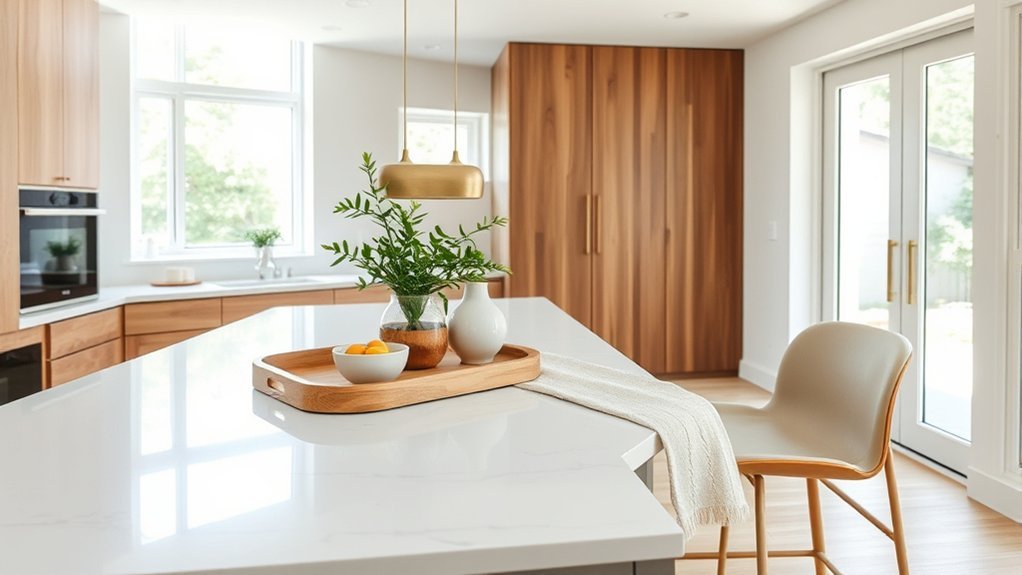
The best kitchen island decor looks intentional without taking over the surface. Start by deciding how the island is used for prep, serving, seating, washing, or cooking, then choose one compact focal grouping. A tray, bowl, vase, plant, or attractive cutting board can add color and texture while leaving enough open counter space for everyday tasks.
Quick Answer
Decorate a kitchen island with one main focal point or a small grouped arrangement, then keep the rest of the countertop open. Use a tray, vase, fruit bowl, plant, or cutting board for practical style. Match the decor to the island’s size and function, vary height and texture, and avoid clutter around sinks, seating, or cooktops.
Key Takeaways
- Keep most of the island open for food prep, serving, dining, and cleaning.
- Use one substantial centerpiece or one compact tray grouping instead of scattering small objects across the counter.
- Scale the arrangement to the island and keep seated sightlines clear.
- Choose functional decor such as fruit bowls, cutting boards, herbs, serving pieces, or attractive containers whenever possible.
- If the island contains a cooktop, keep decorative and combustible items well away from the cooking area.
At a Glance
| Time Required | About 10–20 minutes for a basic restyle |
| Difficulty | Easy |
| Tools Needed | No special tools; optional tray, bowl, vase, plant, cutting board, or seasonal accent |
| Cost | $0 if using items you already own; roughly $20–$100+ for new accessories |
Choose a Simple Kitchen Island Decor Base
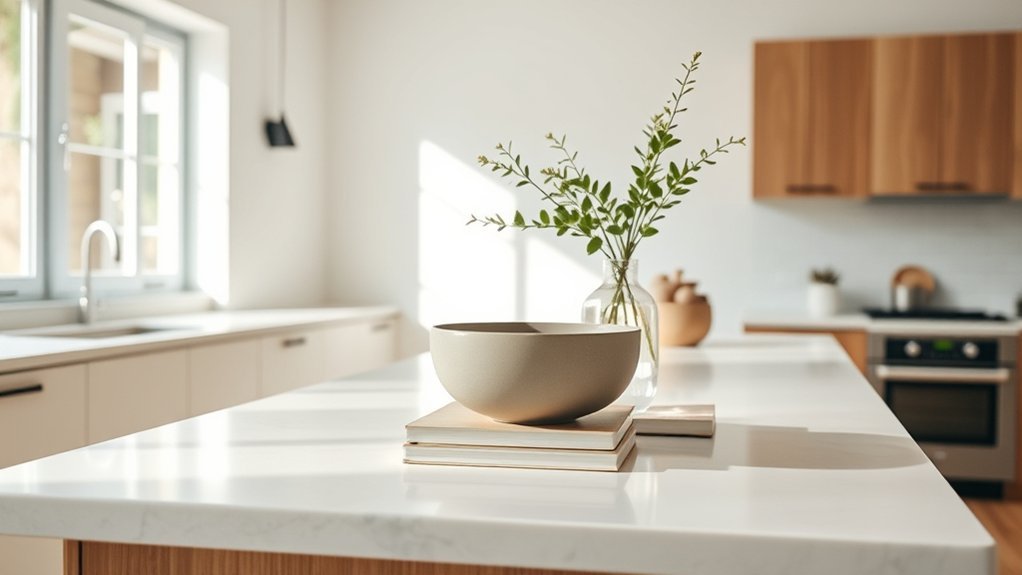
A simple kitchen island decor plan begins with function. Before adding anything, identify the part of the countertop that must stay clear for chopping, mixing, serving food, washing dishes, homework, or casual meals.
A neutral runner or placemat can ground a decorative island or serving zone, but it is not necessary on every island. On a heavily used prep surface, a removable tray, large cutting board, bowl, or vase is often easier to move and clean.
Choose one focal piece that suits the scale of the island. A substantial vase, fruit bowl, ceramic vessel, plant, or wood board can provide enough visual weight without requiring several smaller accessories.
If you want a layered arrangement, combine a few pieces with different heights and materials. For example, pair a low stone bowl with a medium-height plant and a wood board. The pieces should look related without being identical.
Pro Tip: Style the island so the main grouping can be moved in one motion. If clearing the counter for meal prep requires relocating several individual objects, simplify the arrangement.
Style Your Kitchen Island With a Tray
A tray is one of the easiest ways to organize kitchen island decor because it gives smaller objects a clear boundary. It can hold everyday essentials such as salt, pepper, napkins, or frequently used oils while keeping them from spreading across the countertop.
Match the tray material to the room rather than buying one simply because it is trendy. A wood or woven tray can add warmth to a white or stone-heavy kitchen, while metal, ceramic, or stone can work well in modern spaces.
Keep the tray compact enough that it does not become another obstacle. A useful arrangement might include a small plant, a salt cellar, and one decorative vessel. A bowl of fruit can replace a purely decorative piece and make better use of limited counter space.
Odd-number groupings such as three objects are a common styling technique, but they are not a rule. One large bowl can look better than three small accessories when the island is narrow or frequently used.
Match Decor to the Kitchen Island’s Size and Function
The same decorating formula does not work for every island. Size, seating, appliances, and daily routines should determine how much decor the surface can comfortably handle.
| Island Type | Best Decorating Approach |
|---|---|
| Small island | Use one bowl, vase, plant, or small tray and leave the remaining surface open. |
| Large or long island | Use one larger grouping or two restrained, related zones while keeping the main prep or serving area clear. |
| Island with seating | Favor low-profile decor near the seating side so flowers and accessories do not block conversation or reach into dining space. |
| Island with a sink | Keep the splash zone clear and choose washable, moisture-resistant items away from the faucet. |
| Island with a cooktop | Treat cooking space as a safety zone rather than a decorating zone and keep combustible accessories away from heat. |
Decor also does not have to sit directly in the center. An off-center arrangement can look intentional while leaving a larger uninterrupted section of countertop for prep or serving.
Add Height, Texture, and Seasonal Accents
Different heights help prevent an arrangement from looking flat. A vase with flowers or branches can provide the tallest point, while a fruit bowl, tray, or stack of cookbooks creates a lower layer.
Keep sightlines in mind. If people regularly sit across from each other at the island, use lower arrangements during meals or place taller decor toward an unused end of the counter.
Texture can come from woven baskets, wooden cutting boards, ceramic vessels, stone bowls, glass, or metal. Two or three contrasting materials are usually enough to create interest without making the island feel busy.
Functional pieces are especially useful. A wood board leaning against a backsplash, a bowl filled with fruit, a pot of culinary herbs, or attractive serving pieces can contribute to the display while still earning their place in the kitchen.
Seasonal flowers, greenery, fruit, branches, or a small color change can refresh the arrangement without replacing the entire setup.
Coordinate Island Decor With Color, Lighting, and Materials
Kitchen island decor should connect with the finishes already in the room. You do not need to match every color exactly. Instead, repeat one or two materials or tones from the cabinetry, hardware, countertop, backsplash, or lighting.
Current research also supports a warm, restrained approach. In the NKBA 2026 Kitchen Trends Report, 96% of surveyed kitchen-and-bath industry professionals identified neutrals as popular, while greens reached 86% and blues 78%. The same research found that 57% expected statement colors to appear on islands and 60% identified minimalism as a popular direction over the next three years.
That does not mean every island should become green, blue, or minimalist. Use trend data as inspiration rather than a requirement. A neutral island might gain color from fruit, flowers, pottery, or a small tray, while a strongly colored island may need only simple neutral accessories.
Lighting is part of the composition too. Decorative pendant lights already create a strong focal point above many islands, so an elaborate centerpiece underneath them can be unnecessary. Let the lighting and countertop share the visual attention.
In the 2026 U.S. Houzz Kitchen Trends Study, 58% of renovating homeowners reported adding or updating a kitchen island, showing how central the island remains to current kitchen projects.
Keep Kitchen Island Decor Practical
A kitchen island should still work as a kitchen surface after it has been decorated. Keep the primary work area open enough for chopping, mixing, serving, groceries, and other everyday tasks.
A single substantial vase, bowl of fruit, tray, or plant can serve as the focal point. Attractive dinnerware, serving boards, or containers can add style without introducing objects that have no practical purpose.
For an island used for dining, keep accessories away from place settings and stool positions. For a sink island, avoid placing books, wood objects, or other moisture-sensitive decor where they are repeatedly splashed.
If the countertop is polished stone, wood, or another surface that can scratch or stain, use clean felt pads, coasters, or protective feet beneath rough pottery and decorative objects. Wipe up standing water promptly and follow the countertop manufacturer’s care instructions.
Warning: If the island contains a cooktop, keep towels, paper, wood accessories, dried arrangements, and other combustible decor away from the cooking area. The U.S. Fire Administration advises keeping materials that can burn away from stovetops. For decorative light, flameless candles are a safer choice than an unattended open flame; the U.S. Consumer Product Safety Commission recommends battery-operated decorative lights instead of open-flame candles where practical.
Note: Kitchen planning should always take priority over decorating. The National Kitchen & Bath Association planning guidelines address clearances, seating, work areas, equipment, lighting, storage, and accessibility—useful reminders that the island must remain functional first.
Refresh Kitchen Island Decor for the Season
Seasonal updates can make the island feel fresh without rebuilding the whole display. Keep the main tray, bowl, or vase as an anchor and change only what goes inside or beside it. This approach is inexpensive, easy to maintain, and less likely to create clutter.
| Seasonal elements | Effect |
|---|---|
| Spring flowers or fresh greenery | Add light color and natural texture |
| Summer fruit or herbs | Add color while remaining useful |
| Autumn branches, pears, or warm-toned pottery | Introduce richer texture and warmer color |
| Winter evergreen sprigs or simple metallic accents | Create seasonal interest without covering the counter |
| Neutral vase, bowl, or tray | Provides a reusable base for every season |
Rotating dinnerware or one distinctive serving piece can also refresh the presentation. You can use an odd-number grouping if it suits the arrangement, but there is no need to force three or five items onto an island that looks better with one strong centerpiece.
Frequently Asked Questions
What Is the New Island Style for 2026?
Research from NKBA points toward multifunctional kitchens, smarter storage, integrated technology, natural materials, minimal details, and personalized spaces. For decor, that translates well to fewer but more purposeful accessories, warm natural textures, neutral foundations, and selective use of green, blue, or other statement colors rather than covering the island with decorative objects.
What Are Common Kitchen Island Mistakes?
Common mistakes include covering too much counter space, using many tiny accessories, choosing decor that is out of scale with the island, blocking seated sightlines, crowding the sink, and placing decorative items too close to a cooktop. Poor lighting, inadequate seating clearance, and insufficient storage can also make the island less useful.
How to Make a Kitchen Island Look Nice?
Start with one clear focal point, such as a vase, fruit bowl, plant, tray, or attractive cutting board. Add one or two contrasting textures if the island needs more interest, repeat colors or finishes already used in the kitchen, and leave plenty of empty countertop visible. Good lighting above the island can provide much of the visual impact on its own.
What Is the New Trend With Kitchen Islands?
Current research emphasizes islands as multifunctional hubs for storage, food preparation, dining, entertaining, appliances, and technology. NKBA also reports continued interest in natural materials, minimalism, and statement island color, while Houzz’s 2026 homeowner research shows that islands remain a major feature in kitchen renovations.
Should Kitchen Island Decor Be Centered?
Not necessarily. Centered decor works well when the island is mainly decorative or symmetrical, but an off-center arrangement can be more practical. Placing a tray or centerpiece toward one end leaves a larger uninterrupted area for prep, serving, homework, or dining.
What Should You Put on a Large Kitchen Island?
A large island can support a substantial vase, wide fruit bowl, tray grouping, plant, or a pair of related decorative zones. Keep the pieces connected through color or material and avoid filling the entire length. Leaving visible empty counter space helps a large island look intentional and keeps it useful for serving and food preparation.
Conclusion
A well-styled kitchen island should support the way the kitchen is actually used. Start with one focal piece or compact grouping, vary height and texture when needed, and preserve clear space for prep, serving, seating, and cleaning. Current interest in islands remains strong: the 2026 U.S. Houzz Kitchen Trends Study found that 58% of renovating homeowners add or update one. The most effective decor therefore treats the island as both a design feature and a working surface rather than simply another place to display accessories.
Sources
- National Kitchen & Bath Association — 2026 Kitchen Trends Report — supports current kitchen color, material, minimalism, technology, and multifunctional-layout trends.
- 2026 U.S. Houzz Kitchen Trends Study — homeowner renovation data and current kitchen-island trends.
- NKBA Kitchen & Bath Planning Guidelines — planning guidance covering clearances, seating, equipment, lighting, storage, and accessibility.
- U.S. Fire Administration — Cooking Fire Safety — supports keeping combustible materials away from cooking surfaces.
- U.S. Consumer Product Safety Commission — Candle and Decoration Safety — supports safer use of decorative lighting and avoiding combustible materials near open flames.