
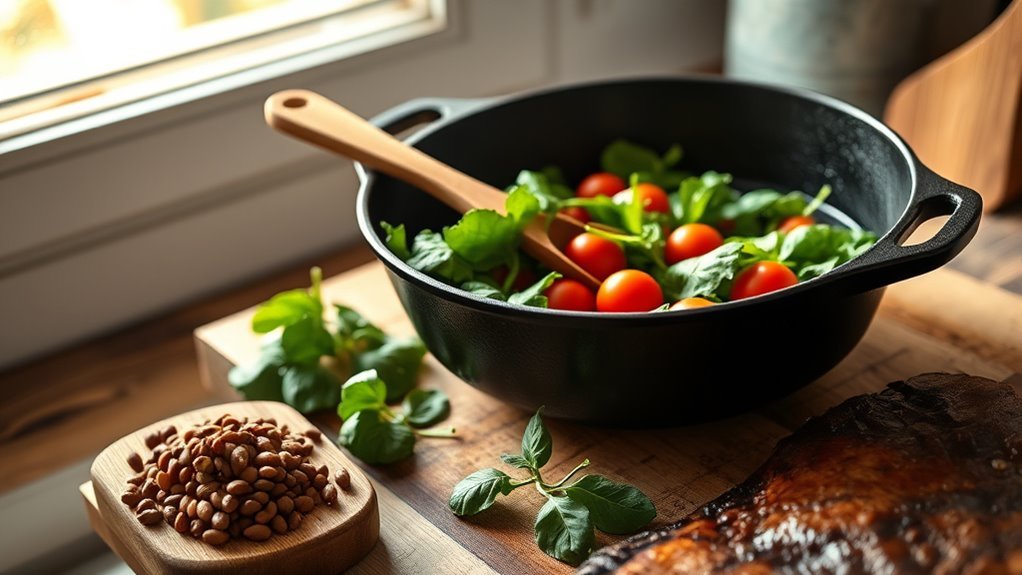
Using a cast iron skillet can markedly enhance your iron intake, especially when cooking certain foods. The process of iron transfer occurs primarily with acidic ingredients, which can pull trace amounts of iron from the skillet into your meals. While this can benefit those with low iron levels, it’s essential to understand the balance between gaining nutrients and the risk of excess. What should you consider to maximize these benefits while ensuring your safety?
What Are the Benefits of Cooking With a Cast Iron Skillet for Iron Intake?
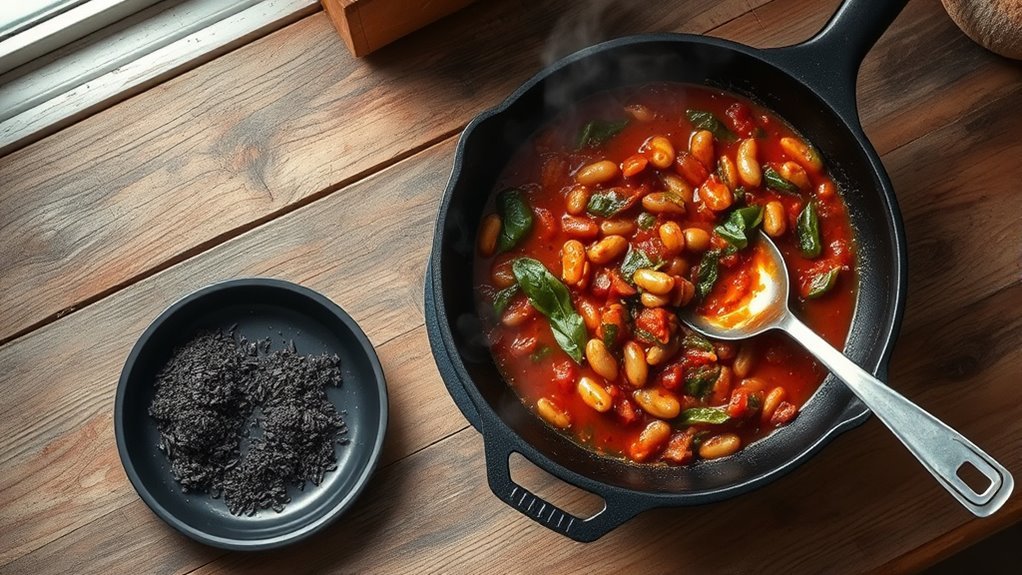
Cooking with a cast iron skillet offers a practical way to increase your iron intake, especially if you often prepare acidic dishes like tomato sauce.
Studies reveal that using cast iron cookware can considerably boost iron levels in your meals, adding 2 to 5 mg of iron per serving. This iron transfer is particularly beneficial for individuals with low dietary iron intake, such as vegetarians and pregnant women.
The amount of iron leached into food varies based on cooking time and temperature; longer cooking processes extract more iron. Regularly incorporating cast iron skillets into your cooking routine can help you meet daily iron requirements, enhancing your overall health.
Are There Risks of Iron Overload From Cast Iron Cookware?
Could using cast iron cookware lead to iron overload? For most people, it’s not a concern.
While studies show that food can absorb up to 20% of the iron from cast iron skillets, your body efficiently regulates dietary iron absorption. If you’re healthy, your body adjusts based on existing iron stores, making excess intake from cookware typically safe.
However, individuals with conditions like hemochromatosis must be cautious, as they’re at risk for iron overload. Cooking acidic foods or extending cooking times can enhance iron leaching, which may benefit those at risk for iron deficiency.
But in a balanced diet, the likelihood of iron overload remains low for most. Essentially, cast iron cookware can be a valuable tool for enhancing iron intake without the risk of excessive accumulation for the majority of users.
How Does Iron Transfer Occur When Cooking With Cast Iron?
When you cook acidic foods in cast iron, the acidity can react with the skillet’s surface, causing trace amounts of iron to leach into your dish.
This transfer can vary between 1 to 5 milligrams of iron per serving, depending on factors like cooking time and temperature.
Understanding these dynamics helps you manage iron intake effectively while enjoying the benefits of cast iron cooking.
Cooking Acidic Foods
While preparing acidic foods like tomatoes or vinegar-based dishes, you’ll notice that using a cast iron skillet can greatly influence the iron content of your meal. The acids in these foods react with the iron surface, leading to a significant iron transfer into your dish.
Studies show that some meals can absorb up to 5 mg of iron per serving when cooked this way. The level of iron leaching depends on the food’s acidity and the cooking duration; higher acidity and longer cooking times enhance this transfer.
However, well-seasoned pans minimize reactivity while still allowing for beneficial absorption. Keep in mind that excessive iron intake may not be suitable for individuals with conditions like hemochromatosis, which can lead to iron overload.
Iron Content Variation
Cooking with cast iron skillets notably influences the iron content in your meals, especially when you use acidic ingredients. Iron transfer occurs more markedly with foods like tomatoes and citrus, which can leach up to 5 mg of iron per serving. Factors such as cooking time and moisture also play an essential role; the longer you cook, the more iron your food absorbs. Newer cast iron skillets, with their reactive surfaces, enhance this transfer compared to well-seasoned pans.
| Factors Affecting Iron Transfer | Impact on Iron Content |
|---|---|
| Food Acidity | High |
| Cooking Time | Prolonged |
| Skillet Age | Newer = More Transfer |
While beneficial, the contribution to daily iron intake remains modest.
Maximizing Iron Transfer in Cooking
To maximize iron transfer when cooking with cast iron, you need to take into account several factors, including the type of food and cooking techniques.
Cooking acidic ingredients or dishes for extended periods can greatly enhance iron absorption.
Additionally, incorporating iron-rich foods like lean meats and legumes can further boost the iron content of your meals.
Factors Influencing Iron Transfer
When considering the factors that influence iron transfer in cooking, several key elements come into play that can greatly enhance the amount of iron leached into your food.
Cooking acidic foods, like tomatoes or citrus, considerably boosts iron transfer due to a chemical reaction with the iron surface. Additionally, the longer your food stays in contact with the skillet, the more iron it absorbs, making cooking time essential.
A well-seasoned cast iron skillet also improves this process by providing a stable surface for interaction. High temperatures further promote iron transfer, allowing more iron ions to enter your dish.
Finally, moist or fatty foods, such as stews, facilitate better iron absorption, maximizing the benefits of using cast iron.
Cooking Techniques That Enhance
Using specific cooking techniques can greatly enhance the transfer of iron from your cast iron skillet to your food. Employing the right methods not only boosts iron content but also amplifies the nutritional value of your meals.
Consider these effective cooking techniques:
- Cook acidic foods, like tomatoes or citrus, to increase iron transfer.
- Use moisture-rich dishes, such as stews or soups, which promote better leaching.
- Opt for longer cooking times with slow-simmered recipes to maximize iron release.
Additionally, pairing your dishes with vitamin C-rich ingredients, like bell peppers or broccoli, can further enhance iron absorption in your body.
Ideal Foods for Iron
While you might be surprised by the range of foods that can maximize iron transfer when cooked in a cast iron skillet, selecting the right ingredients plays a crucial role.
Acidic foods, like tomatoes and citrus sauces, enhance iron leaching from the skillet into your meals. Pair these with vitamin C-rich options, such as bell peppers and broccoli, to boost iron absorption considerably.
Incorporating iron-rich foods like red meats, beans, and dark leafy greens further elevates your meal’s iron content. Studies indicate that cooking in cast iron can increase iron levels by 20% to 60%.
Also, avoid dairy during these meals, as calcium can inhibit iron uptake, allowing you to fully benefit from your cast iron cooking.
Best Foods for Enhancing Iron Transfer in Cast Iron
Cooking with a cast iron skillet can markedly boost your iron intake, especially when you choose the right foods. Certain ingredients enhance iron transfer, allowing you to maximize the benefits of your cookware.
- Acidic foods: Foods like tomatoes and citrus fruits help leach iron from the skillet, increasing transfer.
- Moisture-rich dishes: Stews and braises provide better absorption due to their prolonged contact with the skillet’s surface.
- Vitamin C companions: Pairing iron-rich foods with vitamin C sources, such as bell peppers or broccoli, greatly enhances iron absorption in your body.
Regularly incorporating these foods into your cooking can’t only improve your iron intake but also support those at risk of deficiency.
Incorporating these foods into your meals can significantly enhance your iron intake and support those prone to deficiency.
The combination of cast iron and these strategic food choices creates a powerful tool for enhancing your overall health and well-being.
Debunking Myths About Iron in Cast Iron Cookware
Many people believe that cooking with cast iron cookware will dramatically increase iron levels in all dishes, but this isn’t entirely accurate. While studies confirm that using cast iron can enhance dietary iron intake—especially with acidic or moist foods—the amount of iron transfer varies.
Cooking time, food type, and even the skillet’s seasoning play significant roles. For instance, longer cooking times and acidic ingredients lead to higher iron leaching, with some foods absorbing up to 20 times more iron than those cooked in other materials.
However, be cautious: excessive iron intake can pose health risks, particularly for individuals with conditions like hemochromatosis. Proper seasoning your cast iron not only boosts its nonstick properties but also minimizes excessive metal transfer, ensuring safer cooking.
Ultimately, while cast iron can contribute to your iron needs, it’s essential to understand the nuances of iron transfer for ideal health.
Proper Care for Your Cast Iron Skillet to Ensure Safety?
To guarantee your cast iron skillet remains safe and functional, regular maintenance is essential. Proper care not only enhances its cooking performance but also safeguards your health.
Here are key steps to follow:
- Season regularly: Apply a thin layer of oil to maintain nonstick properties and prevent rust.
- Dry thoroughly: After washing, confirm the skillet is completely dry to avoid moisture buildup, which can lead to rust and food contamination.
- Limit acidic contact: When cooking acidic foods, keep contact time under 30 minutes to protect the skillet’s seasoning.
Frequently Asked Questions
What Are the Downsides of Using a Cast Iron Skillet?
Using a cast iron skillet has its downsides. You might struggle with rust if you don’t apply proper seasoning techniques regularly.
Its heavy weight can make it cumbersome, increasing the risk of spills. Additionally, rapid temperature changes can cause cracking, while acidic foods can leach too much iron, troubling those with iron overload conditions.
If you don’t maintain it well, you may also face food contamination issues.
Why Did People Stop Using Cast Iron?
You stopped using cast iron largely due to the rise of modern alternatives that promise convenience and ease.
Historical context shows that as non-stick and lightweight cookware became popular, many preferred their hassle-free maintenance.
Concerns about iron leaching, especially in acidic dishes, further shifted your focus to stainless steel and other materials.
The advent of specialized cookware and the convenience of dishwashers also diminished the appeal of traditional cast iron in everyday cooking.
Is It Healthier to Cook in a Cast Iron Skillet?
Cooking in a cast iron skillet can indeed be a healthier choice. It’s like inviting a nutrient-rich friend to your kitchen, enhancing your meals with health benefits and improved nutrient absorption.
Studies show that this cookware can release iron into your food, especially with acidic ingredients. However, moderation is key; too much iron mightn’t suit everyone.
Embrace the benefits while being mindful of your individual dietary needs for a balanced approach.
Is It Okay to Cook in Cast Iron Every Day?
Yes, it’s perfectly okay to cook in cast iron every day. Daily usage can enhance your cooking techniques, allowing for better heat retention and flavor development.
Regular use is generally safe, provided you maintain the skillet’s seasoning to prevent rust. Just be mindful of cooking acidic foods, which can increase iron transfer.
If you have specific health concerns, like hemochromatosis, keep an eye on your iron levels.
Enjoy your culinary freedom!
Conclusion
In summary, cooking with a cast iron skillet can notably boost your iron intake, especially when you choose acidic foods that encourage iron transfer. However, it’s essential to be mindful of your individual health needs, particularly if you’re at risk for iron overload. So, why not enhance your meals while reaping the benefits of increased iron? By understanding how to maximize and safely utilize your skillet, you can enjoy both flavorful dishes and improved nutrition.