Preparing stainless steel pans is like setting the stage for a culinary performance. You want your cookware to shine, not just in appearance but in functionality. With a few simple steps, you can transform your pans into non-stick powerhouses. Whether you’re sautéing vegetables or searing meat, the right prep makes all the difference. So, are you ready to master the art of prepping your stainless steel pans? Let’s get started.
How to Prep Your Stainless Steel Pans for Cooking
Preparing your stainless steel pans for cooking is essential for achieving ideal results. Start by washing your pans with warm, soapy water and a non-abrasive sponge. This step removes any manufacturing residues, ensuring a clean slate for your meal prep adventures.
Rinse thoroughly and dry completely to prevent pesky water spots that dull your pan’s shine.
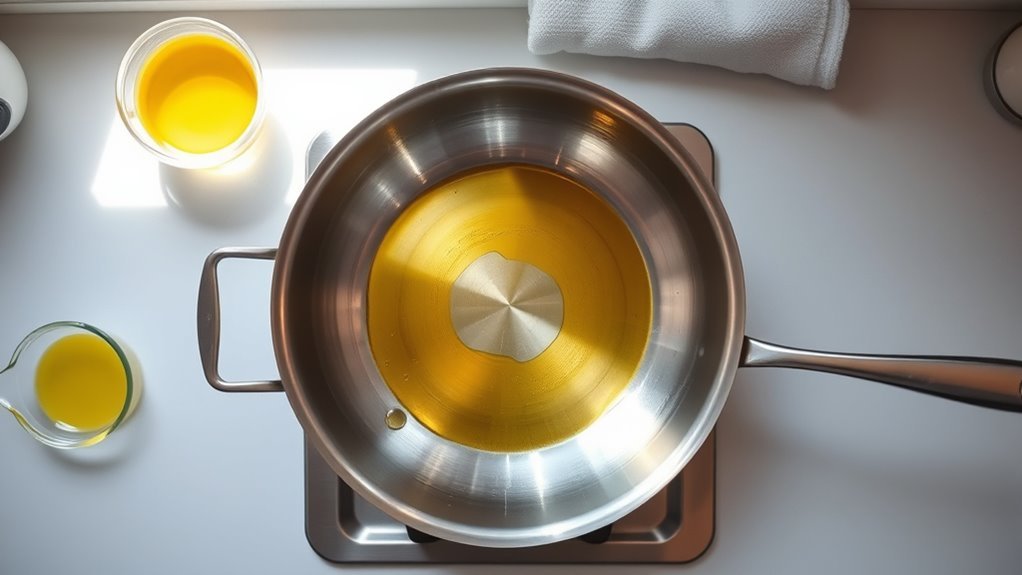
Next, preheat your pan on medium heat for a few minutes. This simple trick helps create a non-stick surface by allowing the oil to bond with the metal.
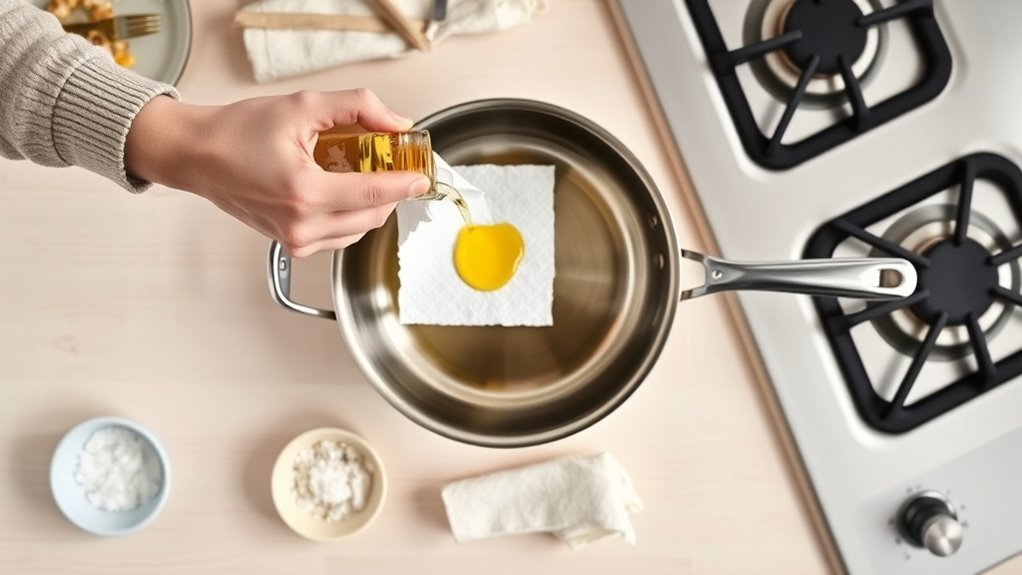
Choose a high smoke point oil like canola or grapeseed, applying a thin layer to coat the surface evenly. Wait for the oil to shimmer—this tells you it’s ready for cooking.
With these prep steps, you’re not just cooking; you’re liberating yourself from worries about sticking or uneven heat, ultimately helping you reduce food waste and enjoy every bite.
Step-by-Step Cleaning Process for Stainless Steel Pans
Once you’ve seasoned your stainless steel pans and enjoyed a delicious meal, it’s time to focus on keeping them in top shape. Start by letting your pan cool completely to avoid warping.
Next, grab some warm, soapy water and a non-abrasive sponge. Gently scrub the surface to remove any food residues or grease from your everyday cooking.
Using warm, soapy water and a non-abrasive sponge, gently scrub your stainless steel pans to remove food residues and grease.
If you encounter stubborn stains or burnt-on food, mix baking soda with water to create a paste. Apply it to the affected area, letting it sit for at least 15 minutes before scrubbing.
Rinse thoroughly with hot water, then dry the pan immediately with a soft cloth to keep food from sticking and to prevent water spots.
For an extra shine, occasionally use a stainless steel cleaner or a vinegar solution. This routine not only saves time but also guarantees your pans stay looking great for many meals ahead!
How to Season Your Stainless Steel Cookware
Seasoning your stainless steel cookware transforms it from a basic kitchen tool into a reliable non-stick companion. Start by cleaning the pan with warm soapy water to remove factory residues, then dry it completely.
Preheat your pan on medium heat until it reaches about 375°F (190°C) to open the metal’s pores.
Next, follow these steps for effective seasoning:
- Pour in a generous amount of high smoke point oil, like canola or grapeseed oil.
- Swirl the oil to coat the entire surface and heat until it shimmers, but doesn’t smoke.
- After 2-3 minutes, remove the pan from heat and let it cool. Wipe out the excess oil with a paper towel.
Repeat this process several times to build a natural non-stick layer, enhancing both the performance and durability of your stainless steel cookware.
Enjoy the freedom of cooking with ease!
Easy Maintenance Tips for Stainless Steel Pans
Maintaining the beauty and functionality of your stainless steel pans is just as important as seasoning them. Here are some easy maintenance tips to keep your cookware shining and performing at its best:
| Tip | Description |
|---|---|
| Regular Cleaning | Use a baking soda and water mixture to clean stainless steel pans, ensuring they shine without scratches. |
| Avoid Abrasives | Ditch steel wool and abrasive cleaners; they can damage your pans and hinder their performance. |
| Preheat for Success | Always preheat your pan before adding oil or food to prevent food from sticking. |
After cooking, let your pan cool before washing it with warm soapy water. For stubborn stains, soak in vinegar and water for a few minutes, then scrub gently with a non-abrasive sponge. Enjoy the liberation of effortlessly clean pans!
Common Mistakes to Avoid With Stainless Steel Cookware
Stainless steel cookware can elevate your culinary skills, but a few common mistakes can quickly turn your cooking experience into a frustrating one.
To guarantee your pans last and perform beautifully, avoid these pitfalls:
- Preheating empty pans: This can warp your cookware. Always add oil or food before heating.
- Using high heat: Stainless steel retains heat well, so cooking on high can lead to sticking and burning.
- Choosing abrasive cleaners: Scrubbing with steel wool or harsh cleaners can scratch the surface and diminish its non-stick qualities.
Frequently Asked Questions
How Do I Clean New Stainless Steel Pans Before Using Them for the First Time?
To clean new stainless steel pans before using them, start with an initial wash using warm soapy water to remove any manufacturing residues.
Rinse thoroughly under hot water to eliminate any soap, as it can affect your cooking.
For stubborn residues, try pre cleaning techniques like boiling a vinegar and water mixture in the pan.
Finally, dry the pans completely with a clean towel to keep them ready for your culinary adventures!
How Do I Keep Food From Sticking to My Stainless Steel Pans?
To keep food from sticking to your stainless steel pans, master your cooking techniques, choose the right oil, and embrace effective seasoning methods.
Preheat your pan until water droplets dance, then add a generous tablespoon of oil for that perfect barrier.
Cook in smaller batches to maintain temperature and let your food sear before flipping.
With these steps, you’ll liberate your culinary creations from the cling of stubborn residues, ensuring a seamless cooking experience.
What Foods Should Not Be Cooked in Stainless Steel?
You should avoid cooking acidic foods, like tomatoes and citrus, in stainless steel pans, as they can alter flavors and discolor the surface.
Delicate fish and low-fat ingredients often stick, making them tricky to handle. For sugary dishes, uneven heat can cause burning. Consider non-stick alternatives for these items.
Instead, use these cooking tips: incorporate fats and oils to create a better cooking surface, ensuring a smoother experience with your meals.
Do I Need to Do Anything With a Brand New Stainless Steel Pan?
Absolutely, you need to give your new stainless steel pan some love before diving in!
Start by washing it with warm, soapy water, then rinse and dry it thoroughly.
For excellent cooking tips, try seasoning it with a bit of oil to create that non-stick surface.
Embrace these seasoning techniques, and run the pan through a heat cycle for peak performance.
With proper pan maintenance, you’ll reveal its true culinary potential!
Conclusion
So, you’ve meticulously prepped your stainless steel pan, only to find it’s now your kitchen’s biggest diva, demanding just the right temperature and oil to shine. Ironically, the very tool designed for culinary mastery can sometimes feel like a high-maintenance partner. But with a little care and attention, you’ll transform this shiny metal into your best cooking companion. Embrace the quirks, and soon you’ll be whipping up meals like a pro, proving that even the “difficult” can be delightful!