
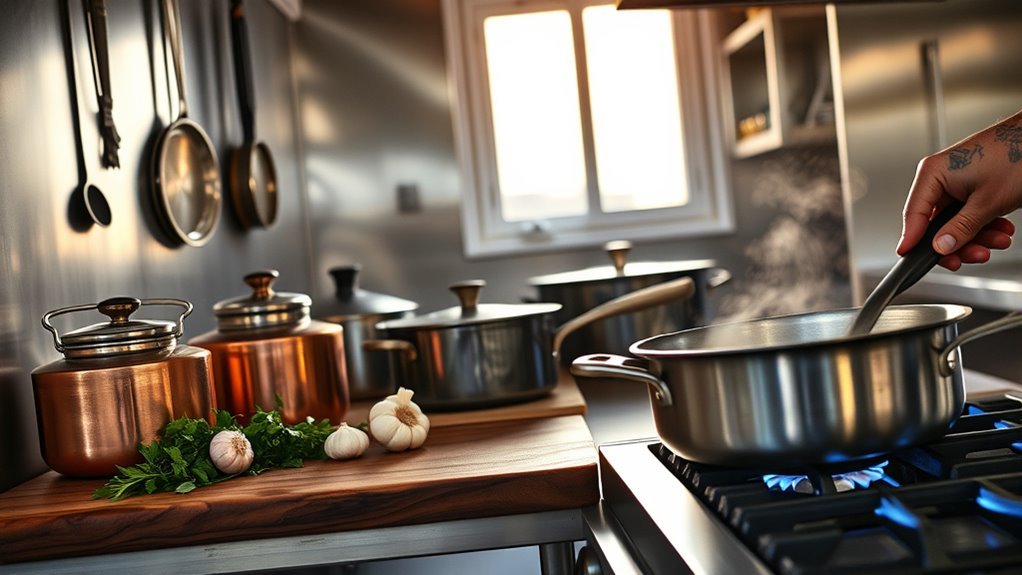
What cookware do chefs use? Most professional kitchens run on a short list of durable, hard-working pieces: stainless or aluminum sauté pans, carbon steel and cast iron for searing, a few nonstick pans for eggs and delicate fish, heavy stockpots and sauce pots, an enameled Dutch oven for braising, and plenty of half-size sheet pans. They rarely use matching boutique sets.
This guide covers the whole kitchen, pots, pans and bakeware. If you only want to know which skillets and sauté pans pros reach for, see our dedicated guide to what pans chefs use.
Chef Cookware at a Glance
| Piece | Typical material | What chefs use it for |
|---|---|---|
| Sauté or fry pan | Aluminum, stainless-clad, carbon steel | Searing, sautéing, pan sauces |
| Nonstick pan | Coated aluminum | Eggs, crêpes, delicate fish |
| Cast iron skillet | Cast iron | Deep sears, cornbread, fried chicken |
| Sauce pot or saucepan | Stainless-clad, aluminum | Sauces, grains, small-batch simmering |
| Stockpot | Stainless or aluminum | Stocks, soups, boiling pasta |
| Dutch oven or braiser | Enameled cast iron | Braises, stews, no-knead bread |
| Half sheet pan | Aluminum | Roasting, baking, holding prepped food |
The Core Pieces Professional Kitchens Rely On
Sauté and Fry Pans
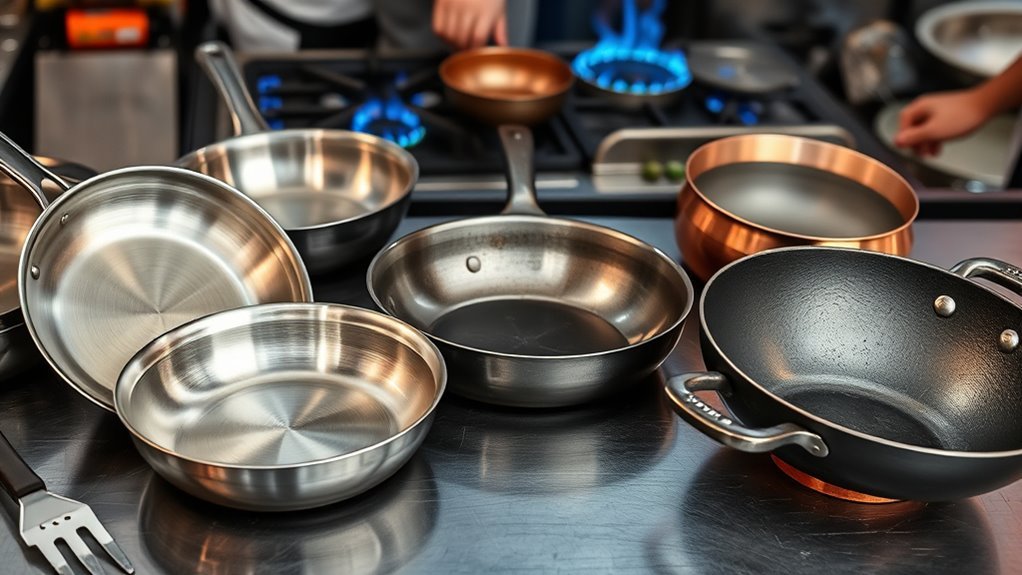
These are the busiest pans on any line. Restaurant versions are usually plain or anodized aluminum because it heats fast, responds quickly to heat changes, weighs little and costs little. Stainless-clad pans, which wrap an aluminum or copper core in stainless steel, are the other staple because they do not react with acidic ingredients like tomatoes or wine.
Carbon Steel and Cast Iron
Carbon steel is lighter than cast iron, heats faster and develops a naturally slick surface once seasoned. It is a common choice for searing fish and meat and for high-heat stir-frying. Cast iron is heavier and slower to change temperature, but it holds heat extremely well, which suits thick steaks and fried foods.
Nonstick Pans for Delicate Foods
Even in kitchens that prefer metal pans, one or two nonstick pans are kept for eggs, crêpes and flaky fish. Pros treat them as consumables: use moderate heat, avoid metal tools, and replace the pan once the coating is scratched or worn.
Pots, Stockpots and Dutch Ovens
Tall, heavy-bottomed stockpots handle stocks and soups. Smaller sauce pots handle sauces and reductions. For braises, many cooks use enameled cast iron Dutch ovens or shallow braisers because the thick walls hold steady, even heat for hours.
Sheet Pans and Specialty Pieces
The half sheet pan, 18 by 13 inches, is the workhorse for roasting, baking and staging prepped ingredients. Specialty pieces such as woks, saucier pans and copper sauce pots show up where a cuisine or technique calls for them. Copper conducts heat very well but costs more and needs polishing, so it is more common in specialty or French-style kitchens than on a typical line.
Which Materials Do Chefs Prefer, and Why?
| Material | Why chefs like it | Trade-off |
|---|---|---|
| Aluminum | Fast, responsive heat; light; affordable | Reacts with acids unless anodized or clad; dents more easily |
| Stainless-clad | Durable, non-reactive, easy to clean | Food sticks unless the pan is preheated and oiled |
| Carbon steel | Light, strong sear, seasons to a natural nonstick surface | Needs seasoning; can rust if left wet |
| Cast iron | Excellent heat retention, lasts for decades | Heavy; slow to heat and cool |
| Nonstick | Effortless release for delicate foods | Coating wears out; needs moderate heat |
| Copper | Very quick, precise heat control | Expensive; needs polishing |
Do Celebrity Chefs Endorse Specific Cookware?
Often, yes, and it is worth knowing what that means. Gordon Ramsay, for example, is an equity partner in HexClad, a hybrid line that combines stainless steel with a nonstick surface. That is a business relationship, so treat it as marketing rather than proof that every professional cooks with it.
Brand names you will often see in and around professional cooking include restaurant-supply lines such as Vollrath and Winco, French-style carbon steel and copper from makers like de Buyer and Mauviel, enameled cast iron from Le Creuset and Staub, and clad stainless from brands like All-Clad and Demeyere. Judge any of them on construction, weight, handle comfort and warranty, not on who endorses them. Our guide to All-Clad cookware explains what clad construction means.
How Restaurant Kitchens Differ From Your Kitchen
- Heat: Commercial ranges are very powerful, so pros favor pans that tolerate high heat and heat up quickly.
- Replacement: Inexpensive aluminum pans get worn out and replaced regularly. At home you probably want pieces that last.
- Weight: A line cook lifts pans all shift, so lighter pans are popular. If you cook for a family, comfort matters just as much.
- Cooktop: Many home cooks have induction or glass-top stoves, which means checking compatibility. Plain aluminum and copper will not work on induction.
How to Build a Chef-Style Kit at Home
- Start with one 10 to 12 inch stainless-clad or carbon steel skillet for searing.
- Add an 8 to 10 inch nonstick pan for eggs.
- Get a 3 quart saucepan with a lid and a 6 to 8 quart stockpot.
- Choose a 5 to 7 quart enameled Dutch oven for braising and baking bread.
- Buy a heavy half sheet pan, or two.
For sizes and quantities, our guide to the pans you actually need breaks this down by household size. If you are comparing materials for health reasons, see the healthiest cookware material.
Frequently Asked Questions
What cookware do most chefs use?
Most chefs use durable, simple pieces: aluminum or stainless-clad sauté pans, carbon steel or cast iron for searing, a nonstick pan for eggs, stockpots, a Dutch oven for braising and half sheet pans. Restaurants prioritize function, heat response and durability over matching sets.
Do professional chefs use nonstick pans?
Yes, but sparingly. Chefs typically keep a few nonstick pans for eggs, crêpes and delicate fish, and treat them as replaceable because the coating wears out. For searing and high-heat work they usually choose stainless, carbon steel, aluminum or cast iron.
Is stainless steel or cast iron better for cooking?
Neither is better in every case. Stainless steel heats evenly, is light and handles acidic foods, while cast iron holds heat for deep searing but is heavy and needs seasoning. Many cooks keep one of each for different jobs.
What cookware does Gordon Ramsay use?
Gordon Ramsay is an equity partner in HexClad, a hybrid stainless and nonstick line, and he promotes it. Because that is a business partnership, it does not show what other professional chefs use. Choose cookware based on construction and your cooking style.
Conclusion
Professional cooks choose cookware for performance, durability and the job at hand, not for a matching look. A few well-chosen pans, one or two pots, a Dutch oven and a sturdy sheet pan cover almost everything.
