
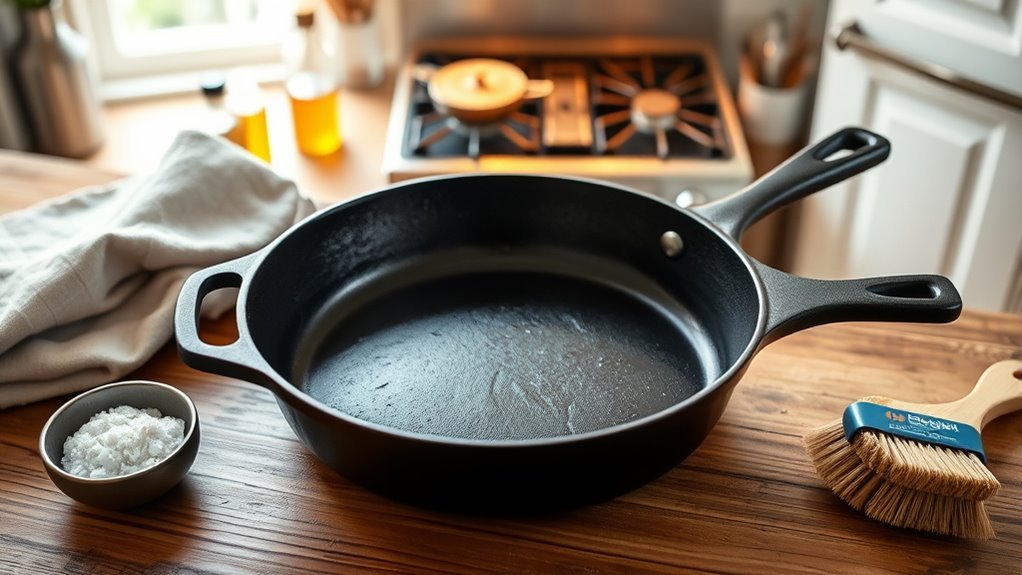
A new cast iron skillet can look pristine yet be poorly seasoned, so you’ll want a clear plan before you cook. You’ll start by washing and drying, then apply a thin oil layer and bake it for a strong base coat. Along the way you’ll learn how to tell if it needs reseasoning, how to clean and maintain that nonstick surface, and how to handle rust—so keep going to get it right.
Does Your Cast Iron Need Reseasoning? (How to Tell)
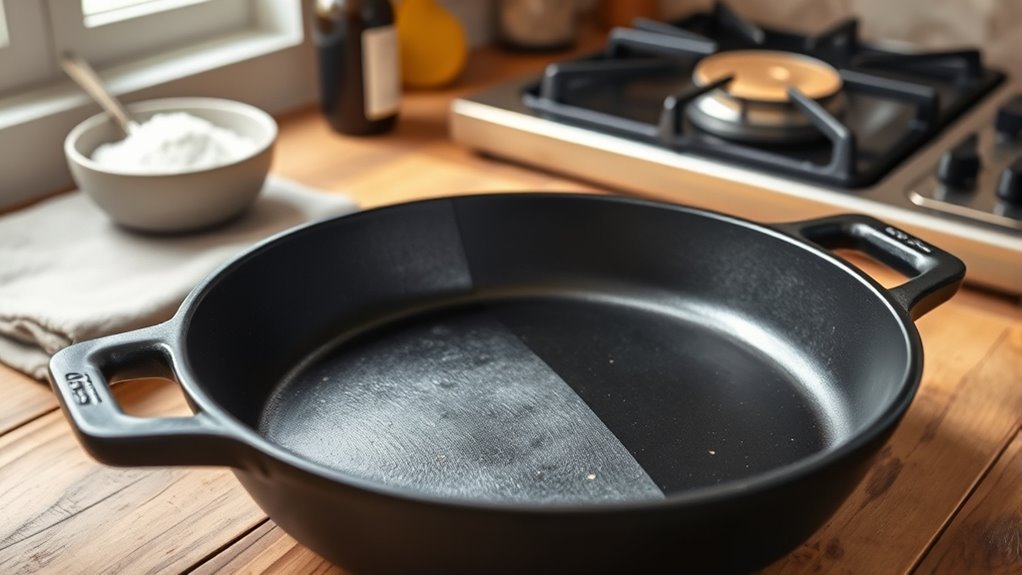
Wondering whether your new cast iron needs reseasoning? You’ll know by looking and testing: rust, a dull gray finish, or a sticky surface mean the protective layer of seasoning has degraded.
If food begins to stick or cooking produces odd food discoloration or a metallic taste, that’s a clear signal to start the reseasoning work. Frequent use of soap, harsh cleaning your cast iron habits, or repeatedly cooking acidic foods strips the seasoning process faster, so factor that into your routine.
To check, heat the skillet briefly; a well-built layer of seasoning will darken and may emit light smoke when hot—no smoke can mean insufficient seasoning.
Don’t wait for major damage: early reseasoning protects flavor and frees you from cautious cooking. You want a reliable pan that empowers you, not one that limits what you cook.
Reseasoning restores performance and keeps the skillet ready for bold, liberated cooking.
Quick Start: Wash, Dry, and Apply a Thin Oil Layer
Now that you can tell when seasoning needs work, start by giving your new skillet a proper first coat: wash it with warm, soapy water to remove factory residues, dry it thoroughly (towel then a minute on the stovetop flame if you like), and wipe every surface — inside, outside, and the handle — with a very thin, even layer of a high‑smoke‑point oil like vegetable or canola.
You’re preparing Cast Iron Skillets for real use: clean, dry, and oiled so polymerization will bond the film into a durable, nonstick layer. Buff until it looks dry, not greasy; that prevents sticky spots and helps seasoning adhere.
Prepare your cast iron: clean, dry, and lightly oiled so polymerized seasoning bonds into a durable, nonstick finish.
- Wash: warm, soapy water to remove factory residue.
- Dry: towel, then brief stovetop heat to eliminate moisture.
- Oil: thin, even coat of high-heat cooking oil (vegetable/canola) on all surfaces.
- Buff & preheat: remove excess oil, then preheat as directed so polymerization builds a resilient nonstick finish.
Do this to claim freedom from flimsy pans and cook with confidence.
Oven-Seasoning: Upside Down at 400–450°F (Best Oils & Tips)
If you want a durable, truly nonstick surface, oven‑season your skillet at 400–450°F (204–232°C): preheat the oven to that range so oil can polymerize and bond.
Choose high-heat oils—vegetable, canola, or grapeseed—to build a reliable finish; avoid flaxseed if you want to skip flaking.
Wipe a thin layer of oil over the entire cast iron skillet, handle included, then buff until it looks non-greasy.
Position the pan upside down on the middle rack with a baking sheet below to catch drips.
Run the seasoning process for 1 hour, then turn the oven off and let the skillet cool completely inside.
Repeat this cycle 3–4 times to develop a durable nonstick layer that frees you from constant worry about sticking and rust.
Each repeat strengthens the bond; cooling completely between sessions prevents tacky spots and yields an even, resilient surface you can trust.
Use and Daily Cooking to Build and Maintain Seasoning
Once your skillet has a few oven‑seasoning layers, start cooking with fatty foods—bacon, sausages, or duck—to reinforce and fill microscopic pores in the iron. You’ll build and enhance the nonstick surface fast by using fat as a bonding agent.
Cook on medium‑low heat for even use and to protect layers; don’t overheat.
Cook over medium‑low heat to protect and even out seasoning layers—avoid overheating to preserve your pan’s finish.
- Use eggs and other sticky foods regularly to polymerize oils and boost the Cast Iron Pan’s slickness.
- Avoid using highly acidic ingredients until seasoning’s robust; acids can strip layers.
- After cooking, do a quick rinse or gentle scraping for stuck-on food, then dry promptly to prevent rust.
- Lightly rub a thin film of cooking oil over the surface when cool to maintain seasoning and repel moisture.
Treat daily cooking as deliberate maintenance. You’re freeing yourself from fragile cookware norms: use, refine, and protect your pan through purposeful meals and brief post‑cook care.
Cast Iron Cleaning: Wash, Dry, Scrape, Then Lightly Oil
Start by washing your new cast iron skillet with warm, soapy water to remove factory residues, then dry it thoroughly to prevent rust.
You’ll treat your cast iron cookware with simple, empowering steps: if food’s stuck, simmer a bit of water for 3–5 minutes to loosen bits, then scrub with a pan scraper or stiff brush.
Scrape gently so you don’t harm the seasoning you’re building through use. After rinsing, dry on the stovetop over low heat until no steam remains — moisture invites rust, and you want the skillet ready to hold heat well.
Finish by wiping a thin coat of oil across the interior; lightly oiling maintains seasoning, prevents moisture buildup, and keeps the surface resilient even after cooking acidic foods occasionally.
This routine is minimalist, freeing, and effective: wash, dry, scrape, lightly oil.
When done, your skillet will be clean, seasoned, and good to go — truly some of the best cookware for liberated home cooks.
Fix Rust and Rebuild Flaky Seasoning (Step-by-Step)
1 clear process will get your skillet back in service: scrub away rust with a stiff brush or steel wool until bare metal shows, rinse and dry thoroughly, then rebuild seasoning with thin coats of high-heat oil baked at 450°F (230°C).
You’ll fix rust and rebuild flaky seasoning by stripping to clean metal, then polymerizing oil into a durable layer. Use a sturdy brush or steel wool to remove corrosion, wash, and dry completely so moisture can’t return.
Preheat oven to 450°F (230°C). Apply a thin coat of high-heat oil—vegetable or canola—wiping away any excess so no pooled oil remains. Place the skillet upside down on the rack with a sheet below; bake 30 minutes.
Repeat the coat-of-oil and bake cycle 3–4 times to restore nonstick properties. After reseasoning, free yourself by relying on regular cooking with fatty foods to strengthen the surface over time. Embrace cast iron cooking as a lasting tool you control.
- Remove rust with a sturdy brush
- Wash and dry thoroughly
- Apply thin coat of high-heat oil
- Preheat oven and bake, repeat 3–4×
Frequently Asked Questions
What Is the First Thing to Do With a Brand New Cast Iron Skillet?
The first thing you’ll do is wash it with warm, soapy water, dry thoroughly, then apply a thin coat of seasoning oils.
You’ll gain cast iron benefits like heat retention and durability features while learning cleaning methods and maintenance tips.
That prep improves cooking techniques and food compatibility, so you can explore recipe ideas confidently.
You’ll be liberated to cook boldly once the seasoning layers set and protect the pan.
Do I Need to Do Anything to a Brand New Cast Iron Skillet?
Like a blank canvas ready for bold strokes, you should do a bit: wash off residues, dry fully, then add thin oil and bake to boost seasoning.
Follow cast iron maintenance and seasoning tips, learn cleaning methods and cooking techniques for even heat distribution and food compatibility.
Embrace durability benefits, use smart storage solutions, and avoid common mistakes.
You’ll gain freedom to cook confidently and keep the skillet lasting.
How to Season a New Cast Iron for the First Time?
Season a new cast iron by washing, drying, then applying a thin layer of your chosen oil types (vegetable, canola, or corn).
Preheat oven to recommended temperature settings (450°F/230°C), bake upside down 30 minutes, repeat 3–4 times.
Follow cleaning tips: gentle soap sparingly, dry fully.
Maintain with a simple maintenance routine, use fatty cooking methods for flavor enhancement, prevent rust, and adopt storage solutions that keep it dry and ready.
How Do You Break in a Brand New Cast Iron Skillet?
You’re going to love it—this skillet will outlast empires. Wash, dry, oil thinly, then bake upside down at 450°F for 30 minutes; repeat 3–4 times for seasoning tips.
Use cooking techniques that favor fats to build seasoning, manage heat carefully, and follow cleaning methods that avoid harsh soap.
For rust prevention, store dry with a light oil coat.
Consider food compatibility, storage solutions, skillet maintenance, and purchasing advice as you cook.
Conclusion
So you bought a cast iron and now get to worship it properly. Don’t panic: if it looks shiny, rusty, or sad, a quick wash, dry, thin oil, and an hour in a 400–450°F oven fixes most sins. Cook fatty food, don’t scrub like it insulted you, and oil lightly after drying. Treat it like a low-maintenance pet that occasionally demands bacon and respect — your skillet will return the favor with lifetime nonstick magic.

